.webp&w=384&q=75)

Loading, please wait...
Loading, please wait...
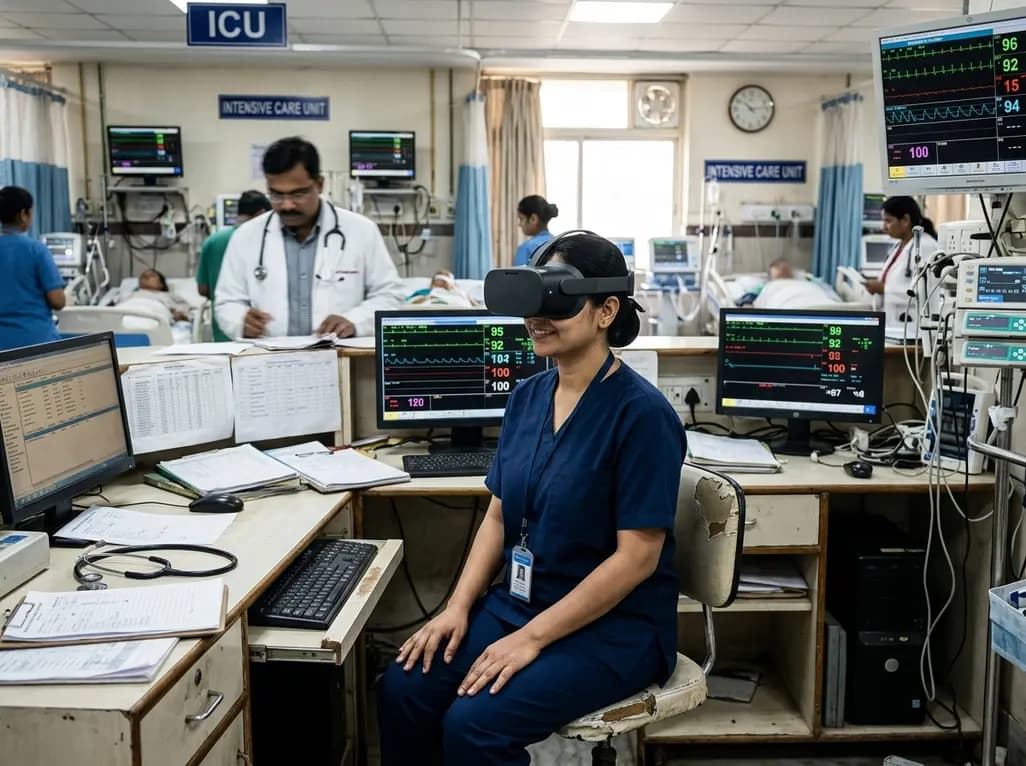
Intensive care units present high-stress clinical environments where acoustic overload directly threatens clinician health and patient safety. Consequently, healthcare leaders now utilize virtual reality relaxation to mitigate sensory exhaustion and support staff well-being. This review examines how targeted immersive experiences alleviate alarm fatigue and improve workplace quality of life.
Modern intensive care units rely on sophisticated monitoring technologies, mechanical ventilators, and infusion systems. However, these complex medical devices produce thousands of auditory warnings across every twelve-hour nursing shift. Research indicates that up to ninety percent of these alerts lack immediate clinical urgency. Consequently, continuous exposure triggers severe sensory desensitization among bedside healthcare professionals. When alarm desensitization occurs, clinicians experience diminished cognitive responsiveness and elevated emotional exhaustion. In addition, constant acoustic pollution disrupts essential communication and increases procedural errors. This ongoing sensory burden directly compromises diagnostic vigilance during acute clinical emergencies. Furthermore, unrelenting noise exposure contributes significantly to job burnout and rapid staff turnover across intensive care facilities. In resource-strained tertiary care centers, high patient-to-nurse ratios exacerbate this operational strain further. Therefore, clinical directors must prioritize evidence-based interventions to protect nursing staff from sensory overload. Preserving clinician well-being directly maintains high standards of critical care delivery. Without proactive sensory management, noise-induced exhaustion threatens institutional safety and clinician resilience. Thus, modern intensive care units require structured restorative solutions to protect healthcare personnel.
Virtual reality relaxation provides three-dimensional audiovisual immersion that decouples the sensory cortex from clinical alarms. Specifically, head-mounted displays transport healthcare workers into peaceful natural landscapes featuring soothing acoustic scenery. This sensory replacement rapidly attenuates sympathetic nervous system hyperactivity while promoting parasympathetic dominance. As a result, heart rate variability improves and muscular tension decreases during short work breaks. Unlike passive rest in noisy hospital staff rooms, immersive digital environments block ambient clinical sounds entirely. Moreover, virtual environments incorporate guided mindfulness exercises and controlled diaphragmatic breathing prompts. These structured relaxation techniques empower clinicians to decompress effectively before returning to acute patient care. Consequently, nurses achieve substantial cognitive recovery without requiring prolonged time away from their assigned duties. Healthcare institutions globally recognize the strategic value of non-pharmacological digital therapeutics for workforce preservation. Furthermore, immersive interventions provide a private emotional sanctuary that disrupts cumulative workplace stress efficiently. Ultimately, incorporating digital immersion during shifts fosters long-term emotional resilience and prevents professional burnout.
A recent randomized controlled intervention investigated sixty intensive care nurses divided into parallel groups. Nurses in the intervention arm completed three twenty-minute virtual reality relaxation sessions over one week. Meanwhile, control participants took their routine institutional breaks without access to immersive technology. The investigators utilized standardized tools, including the Alarm Fatigue Scale and the Professional Quality of Life questionnaire. Baseline measurements established equivalent levels of sensory exhaustion across both study cohorts. However, post-intervention evaluations demonstrated significant statistical improvements exclusively within the virtual reality cohort. Specifically, participating nurses experienced marked reductions in overall alarm fatigue scores immediately following the intervention. Furthermore, the active group exhibited notable gains in compassion satisfaction metrics compared to controls. Secondary analyses revealed meaningful decreases in burnout indicators and secondary traumatic stress symptoms. In contrast, control participants showed negligible changes across all measured psychological parameters. Therefore, the trial confirms that brief, repeated immersive relaxation sessions significantly alleviate occupational distress.
Alarm desensitization creates dangerous blind spots that directly threaten patient safety in critical care units. When clinicians become overwhelmed by non-actionable alarms, they may miss genuine physiologic deterioration. Consequently, delayed clinical responses can lead to preventable complications, cardiopulmonary arrests, and prolonged hospital stays. Furthermore, persistent cognitive fatigue impairs interprofessional communication during critical handoffs and emergency resuscitation procedures. Implementing structured digital relaxation tools helps clinicians maintain sharp mental focus throughout demanding shifts. When bedside nurses feel mentally restored, their diagnostic vigilance and situational awareness improve substantially. Moreover, enhanced psychological well-being strengthens interprofessional teamwork between attending physicians and nursing personnel. Healthcare systems also benefit from reduced medical errors, lower legal liability, and decreased nurse turnover rates. In addition, addressing clinician exhaustion directly enhances patient care satisfaction across critical care departments. Therefore, managing alarm fatigue serves as both an essential clinician welfare measure and a core patient safety strategy. Ultimately, investing in staff resilience safeguards vulnerable patients across intensive care units.
Integrating virtual reality relaxation into busy intensive care units requires structured organizational planning. First, hospital administrators should establish designated quiet respite rooms located near acute care wards. These dedicated spaces allow clinicians to recharge away from active monitor alarms and telephone interruptions. In addition, unit supervisors must schedule protected twenty-minute wellness intervals within daily shift rosters. Clinical managers must also enforce strict infection control guidelines for headset maintenance between uses. Medical-grade antimicrobial wipes ensure complete sanitation and prevent cross-contamination among team members. Furthermore, orientation programs should train staff on headset operation, navigation menus, and content choices. Clinicians can select personalized natural landscapes, such as tranquil forests, mountain vistas, or calm beaches. Department leaders should also collect regular user feedback to evaluate program adoption and staff satisfaction. Consequently, ongoing operational refinements ensure sustained engagement and long-term therapeutic utility. Ultimately, institutional leadership transforms novel digital technology into an indispensable component of occupational wellness.
Virtual reality relaxation replaces chaotic auditory and visual triggers with peaceful immersive scenery. This multimodal distraction decouples the sensory cortex from relentless medical alarms, calming the sympathetic nervous system rapidly. Consequently, clinicians experience lower mental exhaustion and diminished sensory overload. By lowering baseline neural stress during clinical breaks, nurses return to bedside duties with restored auditory processing and sharper clinical vigilance.
Clinical trials demonstrate that three twenty-minute virtual reality sessions completed across one single week produce statistically significant improvements. Brief twenty-minute sessions provide sufficient parasympathetic stimulation without interrupting daily unit staffing schedules. Furthermore, repeating these sessions over consecutive work shifts reinforces psychological recovery and enhances professional quality of life. Consistent implementation within protected rest intervals ensures maximum mental rejuvenation while maintaining seamless workflow across intensive care units.
Yes, healthcare institutions can safely integrate virtual reality programs by establishing designated quiet rooms and strict sanitation protocols. Utilizing hospital-grade disinfectant wipes on headsets between uses eliminates microbial transmission risks. Moreover, rotating nurses through structured twenty-minute recovery breaks maintains safe patient-to-nurse coverage ratios. Because these non-pharmacological interventions require minimal hardware and setup time, intensive care units can rapidly implement them without disrupting acute patient care workflows.
Disclaimer: This content is for informational and educational purposes only... Refer to the latest local and national guidelines for clinical practice.
References
Mirzahosseini F et al. Effect of Virtual Reality Relaxation on Alarm Fatigue and Professional Quality of Life Among Nurses in Intensive Care Units. Health Sci Rep. 2026 Oct undefined. doi: 10.1002/hsr2.73355. PMID: 42859736.
Lewandowska K, Weisbrot M, Cieloszyk A, et al. Impact of alarm fatigue on the work of nurses in an intensive care environment--a systematic review. Int J Environ Res Public Health. 2020;17(22):8409. doi: 10.3390/ijerph17228409.
Veling W, Lestestuiver B, Jongeneel A, et al. Virtual Reality Relaxation for Reducing Perceived Stress of Intensive Care Nurses During the COVID-19 Pandemic. Front Psychol. 2021;12:706527. doi: 10.3389/fpsyg.2021.706527.

Read summarized clinical updates, watch expert medical content, and earn CME certifications right from your smartphone.
Open your smartphone camera to scan and install.





A randomized intervention trial shows that immersive virtual reality relaxation significantly reduces alarm fatigue and enhances professional quality of life among intensive care unit nurses, offering a scalable digital wellness solution for high-stress critical care environments.
Today

In severe acute pancreatitis, initial normal calcium levels can mask primary hyperparathyroidism due to saponification. This case report highlights how serial calcium monitoring unmasked severe hypercalcemia, guiding life-saving emergency medical therapy and curative parathyroidectomy.
Today
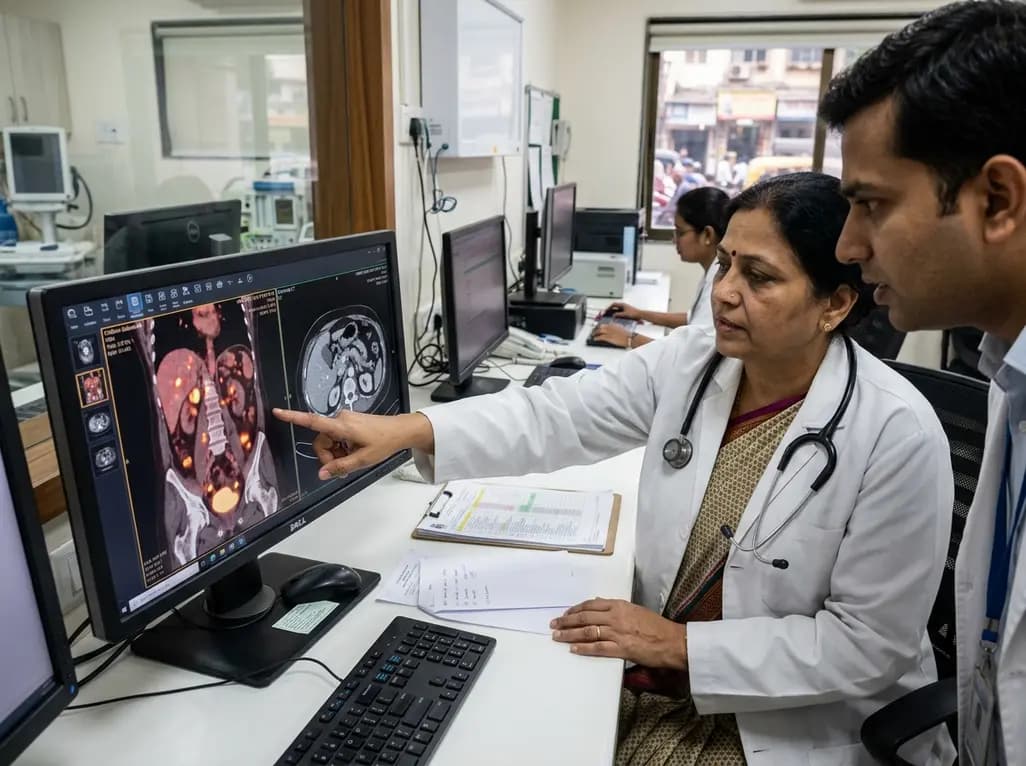
A landmark prospective study reveals gallium-68 FAPI PET/CT achieves 81.8% sensitivity in mapping peritoneal carcinomatosis in epithelial ovarian cancer, surpassing contrast CT. By resolving small bowel and mesenteric deposits, this molecular imaging alters treatment decisions in up to 21% of surgical candidates.
Today

Atherosclerotic cardiovascular disease guidelines often rely on European-derived lipoprotein(a) cutoffs. However, baseline Lp(a) levels vary widely across ancestries, including South Asians and Africans. Clinicians must interpret Lp(a) values within overall absolute cardiovascular risk.
Today
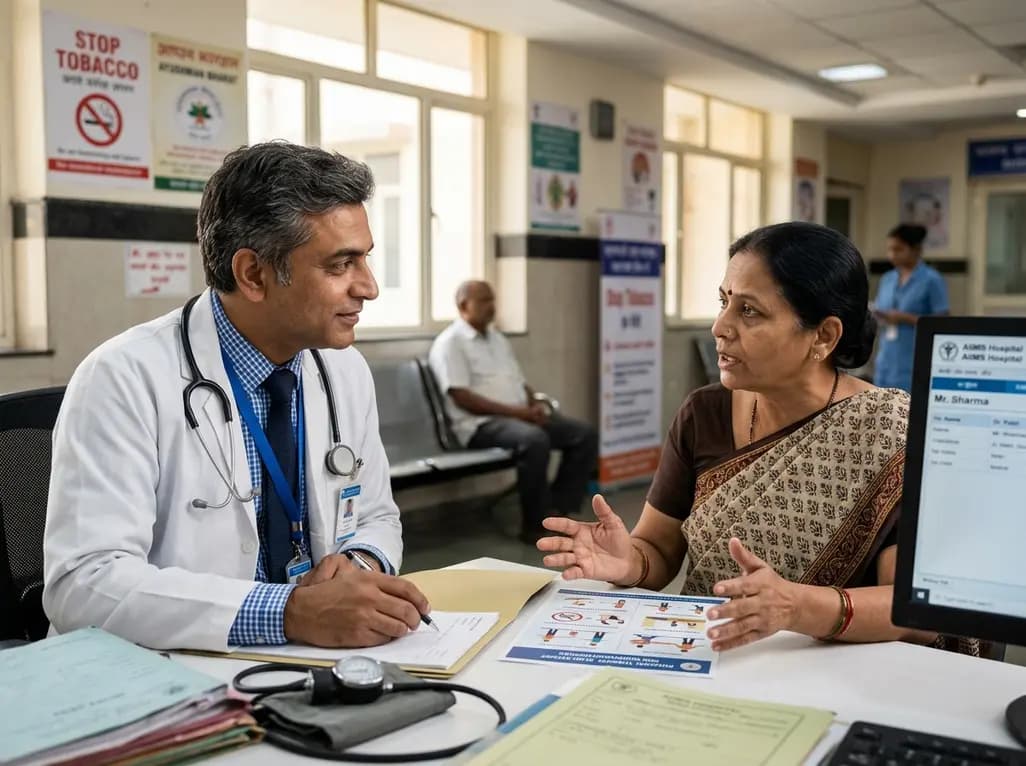
A longitudinal study of 1,055 chronic low back pain patients reveals that higher patient activation fosters constructive pain medication attitudes, reduces disability, and decreases short- and long-term opioid use through collaborative, multimodal care.
Yesterday

A review highlights how N-acetyl-L-cysteine influences pancreatic beta cells differently across metabolic states. While it protects islets during glucolipotoxicity and diabetes, excessive antioxidant exposure during physiological or aging states can induce reductive stress and impair insulin release.
Today
