.webp&w=384&q=75)

Loading, please wait...
Loading, please wait...
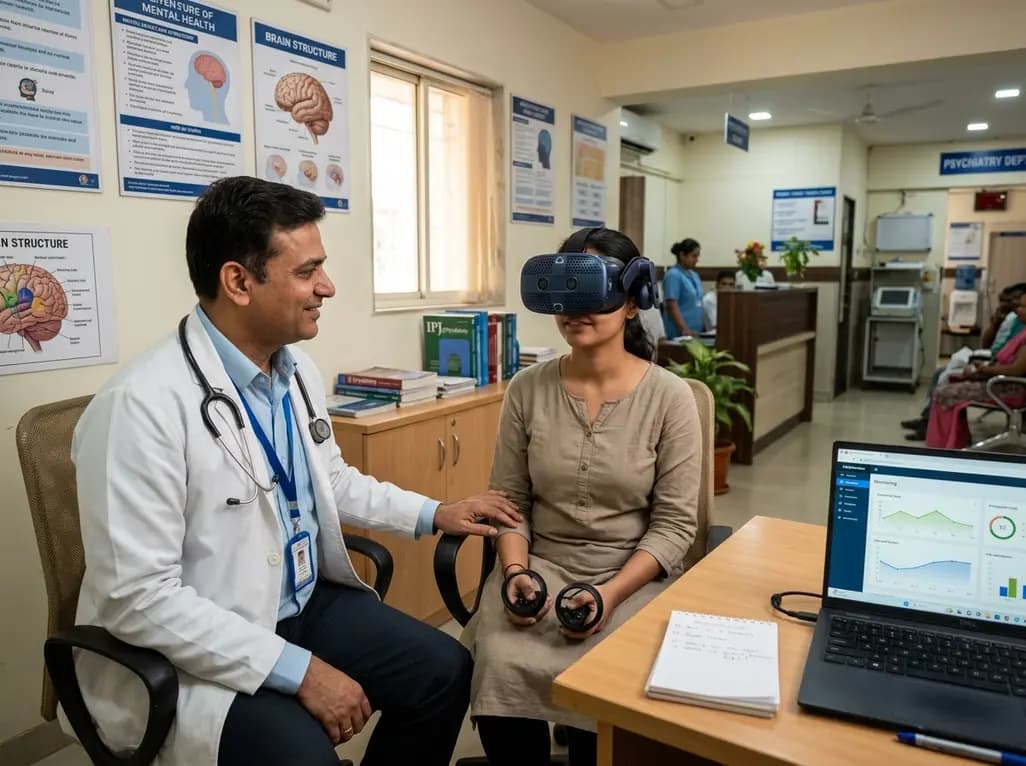
Major depressive disorder presents a significant clinical burden globally, frequently characterized by persistent negative affect, anhedonia, and heightened suicidal ideation. Traditional psychological interventions often emphasize cognitive symptom reduction, but emerging clinical paradigms highlight the necessity of cultivating psychological strengths, positive emotions, and life meaning. In this context, virtual reality positive psychotherapy has emerged as an innovative, highly immersive strategy designed to deliver experiential well-being interventions directly to affected individuals.
Positive psychotherapy shifts the conventional clinical focus from symptom remediation toward the systematic enhancement of positive resources, signature strengths, and subjective well-being. Although traditional face-to-face modalities show robust efficacy, clinicians frequently encounter barriers related to patient engagement, visualization difficulties, and treatment accessibility. Consequently, researchers have integrated modern digital therapeutics to bridge these operational gaps.
Virtual reality provides a multisensory, three-dimensional platform that fosters a profound sense of presence. When clinicians deliver psychotherapeutic exercises within interactive digital spaces, patients experience simulated environments that stimulate emotional engagement far more vividly than conventional imagery techniques. Furthermore, immersive simulations allow individuals with severe depressive symptoms to practice behavioral activation and savoring exercises in a controlled, emotionally supportive setting. Therefore, applying immersive technology to positive psychology represents a promising evolution in modern psychiatric practice.
Major depressive disorder impairs affective processing, frequently blunting the neural circuitry responsible for experiencing positive emotions and savoring pleasant events. Consequently, virtual reality positive psychotherapy addresses these specific neurocognitive deficits by combining cognitive reframing with vivid, real-time sensory immersion. Patients do not merely discuss positive memories; instead, they actively explore visually rich, customized digital landscapes designed to evoke gratitude, hope, and serenity.
Moreover, immersive digital delivery stimulates neurobiological pathways that support neuroplasticity and emotional regulation. By directly engaging attentional mechanisms, the headset minimizes external environmental distractions and disruptive rumination. In addition, experiential immersion facilitates the recall of positive autobiographical memories, thereby countering the pervasive negative cognitive triad characteristic of depression. Thus, this integrated approach creates an optimal mental space for restructuring cognitive patterns and fostering durable psychological resilience.
A recent sequential explanatory mixed-methods randomized controlled trial by Hosseini and colleagues evaluated the efficacy of this innovative digital intervention among 78 patients diagnosed with major depressive disorder. Researchers randomly allocated participants into two distinct cohorts: a virtual reality intervention group and an active face-to-face control group. Both cohorts completed three structured psychotherapy sessions focusing on signature character strengths, gratitude cultivation, and positive reappraisal.
The quantitative phase rigorously evaluated changes across sessions using validated psychiatric instruments, including the Positive and Negative Affect Schedule, the Satisfaction with Life Scale, and the Beck Scale for Suicide Ideation. Statistically, the data revealed a significant multivariate time effect, underscoring substantial improvements across affective and cognitive domains. Both delivery modes achieved comparable within-group effect sizes ranging from small to moderate. Importantly, the digital intervention demonstrated non-inferiority to standard in-person therapy, confirming that digital immersion preserves the therapeutic essence of positive psychology.
Suicidal cognitions in major depression frequently stem from intense psychological pain, pervasive hopelessness, and an inability to envision a meaningful future. Importantly, the clinical trial demonstrated that experiential positive psychotherapy significantly lowered suicidal ideation scores over the treatment course. By actively instilling hope and redirecting attention toward personal meaning, the intervention directly mitigated cognitive vulnerability factors associated with self-harm.
Furthermore, participants demonstrated marked shifts in affective balance, characterized by robust increases in positive affect and corresponding reductions in negative emotional states. Enhanced satisfaction with life scores suggested that even brief, three-session digital interventions can catalyze cognitive shifts regarding overall life evaluation. Consequently, digital therapeutic tools provide clinicians with a potent adjunctive modality for rapid affective stabilization and crisis de-escalation in outpatient psychiatric settings.
Following the quantitative trial phase, qualitative thematic analysis offered critical insights into the subjective experiences of patients using the virtual reality platform. Participants consistently described the technology as an engaging, user-friendly program that simplified complex psychotherapeutic concepts. Many reported that the visual and auditory immersion helped them bypass emotional numbness and achieve genuine relaxation.
In addition, participants characterized the protocol as an exceptionally efficient psychotherapy program that maximized emotional processing within relatively short sessions. Patients noted that interactive environments reduced the social fatigue occasionally experienced during conventional face-to-face clinical encounters. Furthermore, the high treatment completion rates confirmed excellent protocol adherence and safety, with no significant reports of simulator sickness or disorientation. Thus, digital immersion proves both clinically viable and highly acceptable to depressed individuals.
As psychiatric care embraces digital transformation, incorporating immersive modalities into routine clinical workflows offers distinct advantages. Clinicians can utilize standardized virtual reality modules to deliver structured psychotherapy protocols consistently across diverse patient populations. Moreover, these tools can serve as valuable adjuncts during the initial stabilization phase while awaiting pharmacotherapeutic response.
However, successful clinical implementation requires careful patient selection, adequate clinician training, and rigorous data security safeguards. Healthcare providers must recognize that digital therapeutics do not replace the fundamental therapeutic alliance but rather enhance experiential delivery. Therefore, future clinical trials should investigate long-term durability, optimal session dosing, and potential cost-effectiveness within scalable hybrid mental healthcare frameworks.
The intervention aims to enhance psychological well-being, positive emotions, and life satisfaction in depressed individuals. By utilizing immersive three-dimensional environments, it experientializes therapeutic exercises such as gratitude cultivation and strengths identification, effectively reducing negative affect and suicidal cognitions alongside standard psychiatric management.
Clinical trial findings indicate that virtual reality-based delivery produces therapeutic outcomes comparable to standard face-to-face positive psychotherapy. Both formats yield statistically significant improvements in positive affect, life satisfaction, and suicidal ideation, demonstrating that immersive digital tools maintain therapeutic efficacy while offering high user engagement.
Yes, under structured clinical supervision, virtual reality positive psychotherapy has demonstrated significant reductions in suicidal cognitions. The immersive modules focus on fostering hope, resilience, and emotional stabilization. However, clinicians must conduct thorough risk assessments and maintain standard suicide prevention protocols throughout treatment.
Disclaimer: This content is for informational and educational purposes only and does not constitute formal medical advice, diagnosis, or treatment recommendations. Healthcare providers should exercise independent clinical judgment and adapt findings to individual clinical scenarios. Refer to the latest local and national guidelines for clinical practice.
References
Hosseini FA et al. Assessing the effects of virtual reality-based positive psychotherapy on emotion, life satisfaction, and suicidal ideation in major depression: A mixed-methods randomized controlled trial. PLoS One. 2026. doi: 10.1371/journal.pone.0354610. PMID: 42531329.
Paul M et al. Extended reality-enhanced behavioral activation for the treatment of major depressive disorder: Randomized controlled efficacy trial. JMIR Ment Health. 2024;11:e52326.
Park MJ et al. Virtual Reality-Based Cognitive Behavior Therapy for Major Depressive Disorder: An Alternative to Pharmacotherapy for Reducing Suicidality. Yonsei Med J. 2024;65(11):645-654.
Gao Y et al. The effectiveness of virtual reality to improve depression: A systematic evidence map. Front Psychiatry. 2025;16:1498120.

Read summarized clinical updates, watch expert medical content, and earn CME certifications right from your smartphone.
Open your smartphone camera to scan and install.





A randomized controlled trial demonstrates that virtual reality positive psychotherapy significantly enhances emotional well-being, improves life satisfaction, and reduces suicidal ideation in major depressive disorder, offering clinical equivalence to traditional face-to-face therapeutic delivery.
last month

Chronic eosinophilic pneumonia can present with atypical bronchoalveolar lavage findings and an organizing pneumonia pattern, necessitating surgical lung biopsy.
Today

Discover the crucial distinctions between mesonephric and mesonephric-like proliferations of the female genital tract. Learn the key histomorphologic, immunohistochemical, and molecular differences essential for accurate diagnosis and clinical management.
Today
Kikuchi-Fujimoto disease rarely presents with refractory shock and sinus bradycardia in children. This case report highlights life-threatening hemodynamic instability requiring intensive care, preserved cardiac contractility, and the critical diagnostic role of early excisional lymph node biopsy.
Today

A narrative review investigates whether the articularis genus muscle functions as an independent anatomical entity or blends with the vastus intermedius. We evaluate its morphology, role in retracting the suprapatellar bursa, and direct clinical significance in anterior knee pain and arthroplasty.
Today

A Bayesian multilevel meta-analysis reveals that aerobic training combined with moderate carbohydrate restriction modestly lowers HbA1c in type 2 diabetes. However, sparse data and very low certainty leave incremental benefits over exercise or diet alone unproven, highlighting the need for individualized care.
Today
