

Loading, please wait...
Loading, please wait...

Cardiac implantable electronic devices save millions of lives across the globe each year. However, device-related infections, venous stenosis, and mechanical lead fractures frequently demand transvenous lead extraction to protect patient well-being. While interventional electrophysiologists regularly extract left-sided systems, right-sided implants remain far less common. Consequently, procedural outcomes and complication profiles for right-chest leads require thorough investigation. Understanding how anatomical laterality influences extraction safety is critical for clinicians who manage complex device revisions.
Most cardiac pacing and defibrillation leads enter the venous circulation via the left subclavian or axillary vein. Physicians usually favor the left pectoral region because the smooth venous curvature facilitates gentle lead positioning inside cardiac chambers. Conversely, operators select the right pectoral site primarily when anatomical barriers preclude left-sided access. Prior central vein occlusion, severe thoracic radiation damage, radical mastectomies, and previous device infections typically necessitate this alternative approach. In addition, dextrocardia or persistent left superior vena cava may require right-sided access. From an anatomical perspective, right-sided leads navigate a much sharper trajectory into the superior vena cava. This acute angulation alters mechanical shear stresses along the intravascular pathway. Over many years, endothelial cell proliferation encases these leads within dense fibrous tissue along vascular walls. Consequently, when chronic leads fail or become infected, freeing them requires overcoming formidable calcification. Understanding these distinct structural mechanics helps cardiologists anticipate the tactile resistance encountered during right-sided procedural dissection.
To evaluate how anatomical laterality impacts clinical outcomes, researchers analyzed comprehensive long-term data from the prospective Cleveland Clinic ExTRACT registry. Between 1996 and 2022, the registry enrolled 4,989 consecutive patients undergoing transvenous lead extraction procedures. Among this substantial cohort, 494 individuals underwent right-sided lead removals, representing approximately ten percent of all cases. Meanwhile, 4,495 patients underwent standard left-sided extractions. Baseline comparative analyses revealed critical differences between these two clinical groups. Most notably, right-sided systems exhibited significantly longer total lead dwell times compared to left-sided systems. Specifically, right-sided leads remained implanted for a mean of 13.83 years, whereas left-sided leads averaged 9.26 years. This significant chronological disparity reflects the clinical reality of right-sided implants, which frequently serve as secondary salvage systems. Furthermore, patients with right-sided implants presented with higher burdens of medical comorbidities and chronic infections. Despite these challenging baselines, multivariable regression models confirmed that skilled extraction teams can safely manage right-sided leads without escalating major clinical failures.
Because right-sided leads remain implanted for substantially longer durations, operators inevitably encounter extensive intravascular fibrotic binding. Fibrous tissue binds tenaciously along the innominate vein, superior vena cava junction, and right atrial wall. Therefore, clinicians performing right-sided procedures rarely rely solely on standard traction styles or manual locking stylets. Instead, electrophysiologists routinely utilize advanced powered extraction sheaths to dissect stubborn adhesions. Laser sheaths emit ultraviolet energy to vaporize dense protein bonds directly adjacent to lead coils. Alternatively, bidirectional mechanical rotational sheaths physically divide calcified connective tissue without thermal dissemination. Furthermore, right-sided cases require femoral snare retrieval strategies more frequently when proximal lead components fracture under mechanical stress. When transvenous traction fails from the superior approach, interventionalists achieve successful counter-traction through the inferior vena cava. Although these advanced technical adjuncts increase total operative time, they systematically improve complete procedural clearance. Modern extraction registries clearly demonstrate that specialized technological tools overcome the unfavorable anatomical geometry of right-sided thoracic implants.
Safety remains the highest priority during any high-stakes intravascular extraction procedure. Historically, clinicians expressed legitimate concerns that acute vascular angles in right-sided implants might elevate the risk of fatal superior vena cava laceration. However, robust data from large tertiary extraction registries offer substantial reassurance to interventional cardiologists. Procedural analyses show that right-sided approaches do not independently predict excess perioperative mortality or major catastrophic complications. Although right-sided extractions require greater procedural effort, skilled teams achieve complete procedural success in the vast majority of cases. Minor complications, including local pocket hematomas and transient venous injuries, occur at acceptable and manageable rates. In addition, prompt deployment of endovascular balloon occlusion catheters offers an essential safety net during unexpected vascular tears. By maintaining rigorous hemodynamic vigilance and real-time transesophageal echocardiography, specialized centers successfully mitigate life-threatening procedural emergencies. Consequently, patients requiring right-sided lead removal receive comparable clinical efficacy without experiencing disproportionate major adverse events.
These clinical findings carry profound implications for contemporary cardiovascular practice and interventional electrophysiology teams. Because right-sided implants indicate extended dwell times, physicians must conduct meticulous preoperative risk stratification for every patient. High-resolution computed tomography imaging effectively maps central venous patency, vascular calcification, and anatomical course prior to surgery. Furthermore, hospitals should perform complex right-sided extractions within fully equipped hybrid operating rooms. Immediate collaboration between interventional electrophysiologists, cardiac anesthesiologists, and cardiothoracic surgeons ensures optimal patient outcomes during catastrophic emergencies. In developing healthcare environments, including high-volume centers across India, structured referral networks must channel complex lead extractions to experienced tertiary institutes. Healthcare systems must invest in dedicated mechanical sheaths, rescue balloons, and ongoing training programs. Ultimately, thorough clinical preparation transforms potentially hazardous right-sided lead extractions into predictable, highly successful interventions that substantially improve patient survival.
Recent evidence confirms that transvenous lead extraction achieves high procedural success regardless of pectoral laterality. Although right-sided systems often present greater anatomical and mechanical challenges, skilled operators achieve comparable complete extraction rates to left-sided approaches. However, clinicians frequently require specialized powered sheaths and femoral snares to overcome dense fibrous tissue. Therefore, operators must prepare for escalated technical complexity while anticipating excellent long-term clinical clearance across diverse patient cohorts.
Right-sided pectoral implants commonly serve as secondary salvage configurations rather than initial primary implants. Most patients initially receive standard left-sided cardiac devices and only transition to right-sided chest pockets after encountering severe complications. Consequently, prior pocket infections, device erosions, or central venous occlusions often prompt these shifts. As a direct result, right-sided leads typically remain in place longer, accumulating substantial calcified binding sites that complicate subsequent removal attempts.
Because right-sided extractions involve older leads and altered vascular geometry, clinical teams should perform procedures in specialized hybrid operating suites. Furthermore, electrophysiologists must secure immediate cardiothoracic surgical backup and establish rigorous hemodynamic monitoring before sheath advancement. Additionally, clinicians should prepare endovascular occlusion balloons and maintain advanced rotational or laser extraction tools on standby. These comprehensive measures ensure rapid intervention if unexpected vascular tearing or severe pericardial tamponade suddenly occurs during dissection.
Disclaimer: This content is for informational and educational purposes only and is not intended as medical advice, nor does it replace professional judgment. Treatment decisions should always be made by a qualified healthcare professional based on individual patient assessment and prevailing clinical standards. Refer to the latest local and national guidelines for clinical practice.
References
Demian J et al. Safety and Efficacy of Transvenous Lead Extraction Using a Right-Sided Approach. JACC Clin Electrophysiol. 2026 Nov 13. doi: undefined. PMID: 43023968.
Kusumoto FM, Schoenfeld MH, Wilkoff BL, et al. 2017 HRS expert consensus statement on cardiovascular implantable electronic device lead extraction and management. Heart Rhythm. 2017;14(12):e501-e551.
Sharma S, Ekeruo IA, Nand NP, et al. Safety and Efficacy of Transvenous Lead Extraction Utilizing the Evolution Mechanical Lead Extraction System: A Single-Center Experience. JACC Clin Electrophysiol. 2018;4(2):212-220.
Blomström-Lundqvist C, Traykov V, Erba PA, et al. European Heart Rhythm Association (EHRA) international consensus document on how to prevent, diagnose, and manage cardiac implantable electronic device infections. Europace. 2020;22(4):515-549.

Read summarized clinical updates, watch expert medical content, and earn CME certifications right from your smartphone.
Open your smartphone camera to scan and install.





A registry study of 4,989 patients evaluates transvenous lead extraction for right-sided cardiac devices. Despite longer dwell times and older leads, right-sided extractions achieve high procedural success and comparable safety to left-sided approaches.
Today
Central chronotropic incompetence is an underrecognized sequela of rhombencephalitis causing exertional dyspnea despite normal resting cardiac function. Cardiopulmonary exercise testing unmasks this heart-brain uncoupling, guiding rate-responsive pacing and targeted rehabilitation.
Today
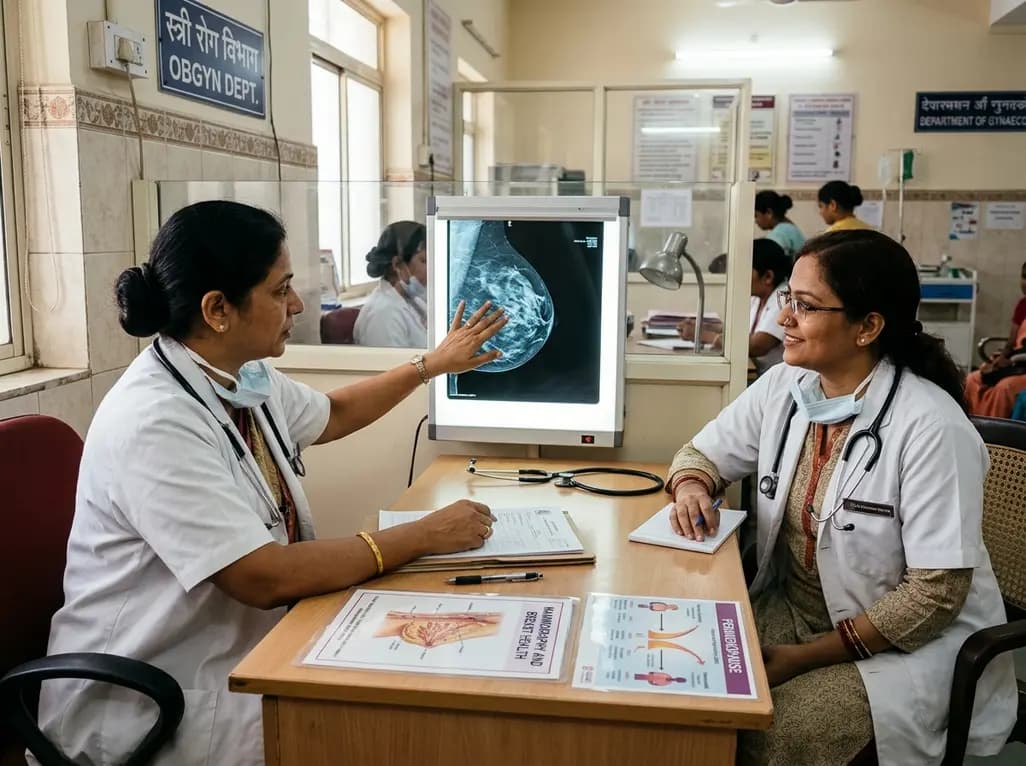
Perimenopause brings erratic hormonal surges and metabolic shifts that significantly affect breast tissue. This comprehensive clinical review examines benign breast conditions, cancer risk stratification, mammographic density challenges, and endocrine therapy transitions in midlife women.
Today
Recent crash analyses demonstrate significant variations in traffic injury severity across vehicle seating positions. Electric vehicle passengers face disproportionately higher trauma risks than drivers, particularly during airbag deployments, demanding adapted emergency assessment and clinical vigilance.
Today

Understand the causal role of Lipoprotein(a) in cardiovascular disease, why international guidelines recommend once-in-a-lifetime molar testing, and the clinical implications of recent phase 3 RNA outcome trials.
Today
