.webp&w=384&q=75)

Loading, please wait...
Loading, please wait...

Clinicians continuously seek reliable urothelial carcinoma biomarkers because they must predict disease progression and patient outcomes effectively. Recently, a cross-sectional study evaluated sixty Egyptian patients to assess vimentin and Ki-67 expression. This research is particularly significant because it improves risk stratification in conventional urothelial carcinoma (UC). However, conventional staging often falls short of predicting exact biological behavior. Consequently, identifying these markers helps differentiate between non-muscle-invasive and muscle-invasive bladder cancer. Furthermore, researchers emphasize that region-specific validation is essential for clinical accuracy. Therefore, this study provides a practical framework for using immunohistochemical markers in daily practice.
Specifically, the research team performed immunohistochemistry on archival cases from 2024 to analyze protein expression. The researchers defined vimentin positivity at a ten percent threshold. Additionally, they categorized the Ki-67 labeling index as high when it reached twenty percent. The results demonstrated that vimentin was positive in 33.3% of cases. Meanwhile, a high Ki-67 index appeared in 80% of the patient cohort. In addition, both urothelial carcinoma biomarkers showed a strong correlation with high tumor grade and advanced stages. Therefore, these proteins serve as indicators of tumor aggressiveness. Moreover, the study found a positive correlation between vimentin and Ki-67 expression levels. Because of this relationship, the markers may reflect a synergistic mechanism in tumor advancement.
Moreover, these findings suggest that urothelial carcinoma biomarkers like vimentin and Ki-67 provide vital prognostic insights for oncologists. High vimentin expression indicates epithelial-mesenchymal transition, which often leads to increased metastasis. Similarly, a high Ki-67 index reflects rapid cell proliferation within the tumor. Thus, combining these markers allows for a more accurate assessment of tumor behavior. In addition, incorporating these tests into routine diagnostics allows for a more tailored approach to treatment. Because of this, clinicians can better identify high-risk patients who require aggressive therapy. Nevertheless, further multi-center studies will help confirm these practical cutoffs and their long-term predictive value. In contrast to standard methods, these markers offer a molecular perspective on malignancy.
Vimentin is a marker of epithelial-mesenchymal transition (EMT). Its presence suggests that cancer cells are gaining the ability to migrate and invade surrounding tissues, often leading to a worse prognosis and higher tumor grade.
The Ki-67 index measures how fast tumor cells are dividing. A high index, such as over 20%, usually correlates with higher-grade tumors and a higher likelihood of muscle invasion, helping clinicians identify more aggressive cases.
Disclaimer: This content is for informational and educational purposes only. It does not constitute medical advice or a professional recommendation. Refer to the latest local and national guidelines for clinical practice.
References

Read summarized clinical updates, watch expert medical content, and earn CME certifications right from your smartphone.
Open your smartphone camera to scan and install.





A study of 60 Egyptian patients shows that vimentin and Ki-67 expression strongly correlate with high-grade and muscle-invasive urothelial carcinoma....
6 months ago
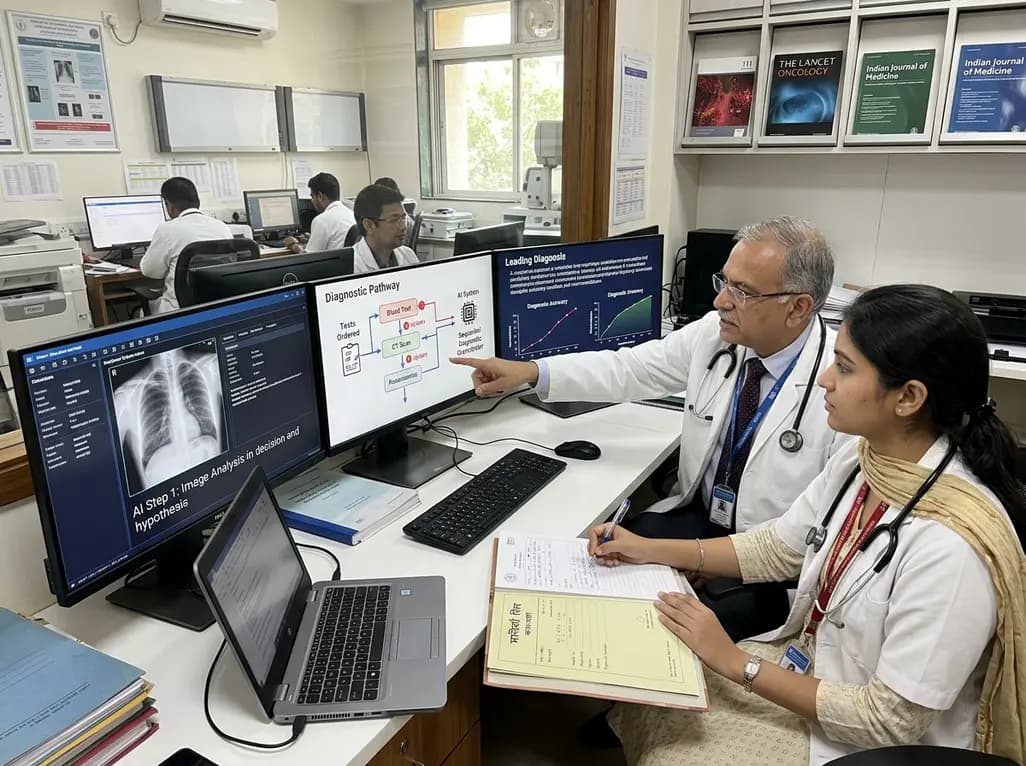
A breakthrough peer-reviewed study demonstrates that a sequential AI diagnosis system can mirror real-world clinical reasoning. By ordering stepwise tests and updating hypotheses dynamically, this multi-agent orchestrator achieved superior diagnostic accuracy while reducing investigative costs.
Today

A prenatal case highlights severe glutaric acidemia type II presenting as bilateral hyperechoic cystic kidneys at 18 weeks. Whole-exome sequencing revealed a novel homozygous ETFDH frameshift variant, demonstrating the power of rapid genetic testing in fetal renal anomalies.
Today

Review how tailored exercise programs benefit frail older patients with heart failure. Explore pathophysiological mechanisms, individualized training prescriptions, and strategies to overcome adherence barriers in clinical practice.
Yesterday

This comparative study evaluates posterior labral tears with and without glenohumeral instability, highlighting distinct demographic patterns, MRI underestimation in stable shoulders, and successful arthroscopic repair outcomes.
Yesterday

A clinical study demonstrates that early intervention with tocilizumab, either as monotherapy or bridged with corticosteroids, achieves significant proptosis reduction and resolves active inflammation in treatment-naive thyroid eye disease.
Yesterday
