.webp&w=384&q=75)

Loading, please wait...
Loading, please wait...
The U.S. government has launched a massive $281 million financial push targeting national addiction and mental health crises. Specifically, the Substance Abuse and Mental Health Services Administration (SAMHSA) announced this multi-million dollar funding package across fifteen programs. Consequently, this critical injection of resources aims to scale up community-level services and emergency response capabilities. Crucially, a significant portion of this federal initiative focuses on enhancing mental health funding across vulnerable populations. Ultimately, this comprehensive effort seeks to restore stability to families struggling with chronic substance use disorders. Therefore, healthcare professionals worldwide are closely watching these strategic developments.
The Substance Abuse and Mental Health Services Administration designed this funding package to address the entire spectrum of behavioral health care. Specifically, the initiative prioritizes evidence-based interventions that span early prevention education, active crisis response, and workplace reintegration. Consequently, local organizations can implement programs tailored to their specific demographic challenges. For instance, the funding will support comprehensive trauma care, recovery support services, and specialized training for first responders. Furthermore, these resources will empower emergency personnel to deliver immediate, life-saving care during overdose crises. Meanwhile, the administration is emphasizing the importance of cross-sector coordination between healthcare providers and community leaders. Subsequently, this collaborative model aims to establish more resilient networks for individuals seeking long-term recovery. However, implementing these complex programs requires sustained administrative commitment and clear regulatory frameworks. Ultimately, the success of this large-scale financial deployment rests on effective local execution. By addressing the root causes of behavioral health issues, these grants could redefine public health interventions. Healthcare providers must remain informed about these funding trends to adapt their community outreach efforts and improve patient care pathways. Indeed, establishing robust connections between public funding and clinical execution will optimize clinical outcomes.
The largest single allocation within this massive grant package focuses directly on the devastating opioid epidemic. Specifically, the department is dedicating $68.2 million to expand access to medication-assisted treatment for opioid use disorder. Consequently, this substantial investment will allow clinics to scale up their capacity to deliver FDA-approved pharmacotherapies. These evidence-based therapies combine medications like buprenorphine or naltrexone with counseling and behavioral therapies. Furthermore, clinical evidence consistently demonstrates that medication-assisted treatment significantly reduces overdose mortality rates and improves patient retention. However, many communities still face severe barriers to accessing these critical medical interventions. Therefore, these federal grants aim to dismantle systemic obstacles by supporting mobile clinics and telemedicine services. In addition, the funding will help train rural clinicians to prescribe these lifesaving medications safely. Ultimately, integrating medical treatment with behavioral support represents the gold standard of modern addiction medicine. Through this targeted funding, the administration hopes to reverse the alarming trends in synthetic opioid overdoses. Clinicians must leverage these newly available resources to provide comprehensive, compassionate care to affected patients. Indeed, these efforts are crucial for saving lives and restoring families nationwide.
Addressing mental illness and substance use during developmental years is crucial for preventing long-term psychiatric morbidity. Consequently, a substantial portion of the new grants will support school-based mental health services and youth trauma care. Specifically, these initiatives aim to identify early warning signs of distress in children and adolescents. For example, schools will receive resources to employ trained counselors and establish peer support networks. Moreover, this proactive approach helps reduce the stigma associated with seeking mental health support from a young age. Additionally, the funding addresses the acute need for trauma-informed care for children exposed to violence or family instability. Meanwhile, educators and school staff will undergo specialized training to recognize behavioral crises and respond effectively. Subsequently, this early intervention strategy can prevent minor emotional challenges from escalating into severe psychological disorders. However, success depends heavily on the seamless collaboration between school administrations, parents, and local clinical providers. Ultimately, safeguarding youth mental health lays the foundation for healthier, more resilient communities. By investing in the younger generation, the government aims to disrupt intergenerational cycles of trauma and addiction. Clearly, childhood intervention represents a highly cost-effective strategy for improving lifetime healthcare outcomes.
Historically, medical systems have treated physical and behavioral health in isolated silos, which often compromises patient outcomes. Therefore, the new grant opportunities specifically incentivize the integration of physical and behavioral healthcare within community clinics. Specifically, this integrated model ensures that patients receive holistic care that addresses both their medical and psychological needs. For instance, a patient presenting with chronic pain can simultaneously access physical therapy and substance use counseling. Consequently, this multi-disciplinary approach dramatically improves care coordination and reduces the likelihood of fragmented treatments. Furthermore, early research suggests that integrated care models lead to significant cost savings and better medication adherence. However, restructuring existing clinical workflows to accommodate this integration presents substantial operational challenges for many providers. Thus, the federal funding will help cover the transitional costs of training staff and upgrading electronic health records. In addition, the initiative supports college campuses in implementing integrated suicide prevention and crisis response programs. Ultimately, treating the mind and body as an interconnected system represents the future of clinical medicine. Indeed, providers must adopt these integrated structures to achieve optimal patient wellness and community healing.
The ongoing crisis has exposed critical shortages in the behavioral health workforce, which severely limits treatment capacity. Consequently, expanding mental health funding to address recruitment, training, and retention is a primary objective of these grants. Specifically, SAMHSA is directing resources toward training programs for first responders and community health workers. For example, these initiatives will equip frontline staff with advanced skills in overdose reversal and crisis de-escalation. Moreover, funding will support education efforts regarding federal behavioral health privacy regulations, ensuring compliance and patient trust. Additionally, these grants will bolster recovery support services, helping individuals transition from active treatment back into society. Meanwhile, policymakers recognize that a well-supported workforce is essential for sustaining the benefits of these investments. Subsequently, improving salaries, working conditions, and professional development opportunities will remain a critical focus area. However, local agencies must carefully manage these resources to ensure long-term sustainability after the grant period ends. Ultimately, this workforce expansion is vital for building a robust and responsive behavioral health infrastructure. Therefore, clinical educators and institutional leaders must actively participate in these developmental programs to secure a healthier tomorrow.
Q1: What is the main objective of the newly announced federal grants?
The primary goal of this $281 million funding package is to address the nationwide crises of addiction, overdose, and mental illness. Specifically, the initiative funds fifteen distinct grant programs targeting critical areas like substance use disorder treatment, suicide prevention, and youth trauma care. Consequently, these resources will help scale up community behavioral health services, expand crisis response capabilities, and establish stronger, more resilient long-term recovery support networks across vulnerable populations.
Q2: How does the funding address the ongoing opioid overdose crisis?
Specifically, the largest single portion of this funding, totaling $68.2 million, is dedicated to expanding medication-assisted treatment for opioid use disorder. This evidence-based approach combines FDA-approved medications with comprehensive counseling and behavioral therapies. Furthermore, the grants will support overdose response training for first responders and fund community-level prevention programs. Ultimately, these measures aim to reduce overdose mortality rates and provide frontline healthcare workers with lifesaving tools and clinical resources.
Q3: What role does integration play in these behavioral health programs?
This initiative heavily emphasizes the integration of physical and behavioral healthcare to improve patient outcomes. Historically, these two areas have been treated in isolation, which often leads to fragmented care. Therefore, the grants incentivize community clinics to provide co-located, holistic services addressing both physical and psychological needs. Additionally, funding will support college campuses in establishing integrated suicide prevention programs. Ultimately, this approach aims to make healthcare more accessible, cohesive, and patient-centered.
Disclaimer: This content is for informational and educational purposes only. It does not constitute medical advice or replace professional judgment. Refer to the latest local and national guidelines for clinical practice.
References

Read summarized clinical updates, watch expert medical content, and earn CME certifications right from your smartphone.
Open your smartphone camera to scan and install.





The U.S. Department of Health and Human Services has announced over $281 million in grant opportunities across 15 initiatives. This massive injection of capital will support medication-assisted opioid treatment, youth trauma care, school-based counseling, and workforce development to address addiction and mental health.
3 months ago

Explore vital recurrent stroke predictors in lacunar stroke patients managed with intensive blood pressure lowering. This analysis examines trial findings from SPS3 to uncover residual vascular risks, metabolic factors, and targeted secondary prevention strategies for high-risk neurological patients.
Today
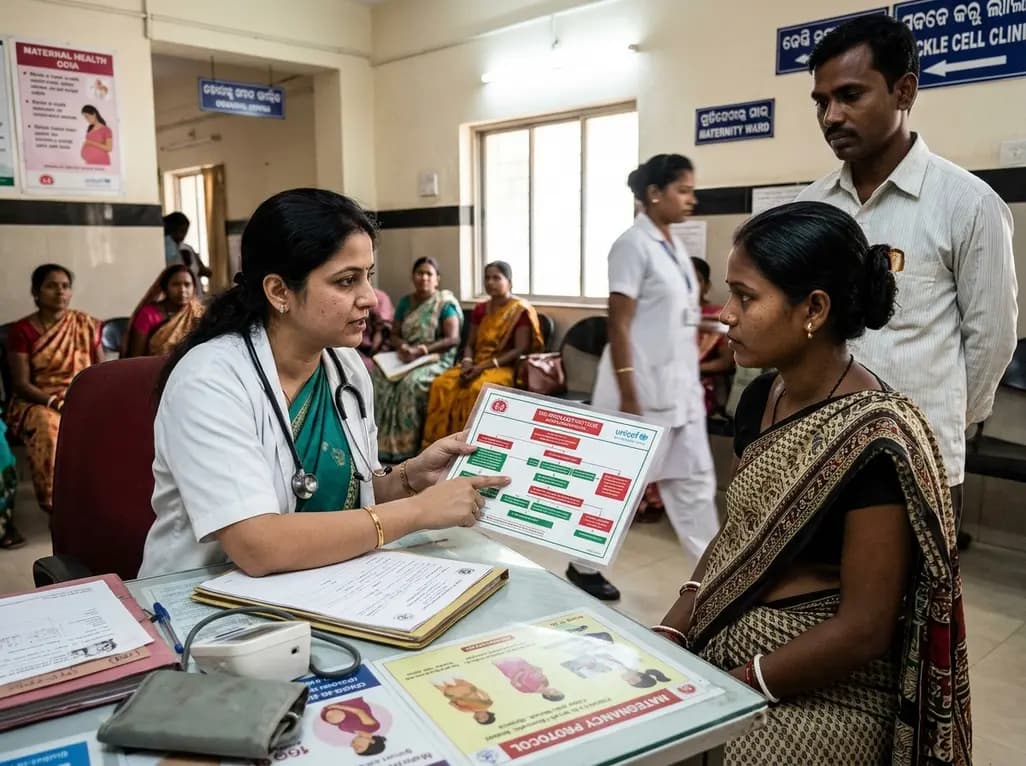
Odisha has established India's first state-level clinical protocol specifically tailored for pregnant women with sickle cell disease. Developed with NHM and UNICEF, the framework provides structured antenatal screening, crisis mitigation, standardized referral pathways, and specialized interdisciplinary care.
Today

India is advancing preventive healthcare by integrating genomics, artificial intelligence, and quantum technologies. With the SANGAM programme sequencing one million Indian genomes, clinicians can unlock personalized therapies, detect cardiometabolic risks early, and curb the burden of diabetes and heart disease.
Today

A randomized controlled trial demonstrates that an eight-week dual-task training intervention significantly improves static and dynamic postural control over standard balance exercises in individuals with chronic ankle instability, addressing critical neurocognitive deficits during athletic and daily activities.
Today

A retrospective cohort study of 7,716 ICU patients from the MIMIC-IV database demonstrates that Gradient Boosting Decision Trees significantly outperform traditional SOFA scores in predicting in-hospital mortality among patients with sepsis and diabetes, with SHAP analysis providing clinical interpretability.
Today
