.webp&w=384&q=75)

Loading, please wait...
Loading, please wait...

Objective biomarker monitoring plays a fundamental role in evaluating recovery progress among individuals diagnosed with alcohol use disorder. Clinicians routinely employ direct alcohol metabolites to establish abstinence, assess treatment compliance, and detect early relapse. Among these analytical markers, urinary ethyl glucuronide (uEtG) provides an extended window of detection compared to traditional breath or blood ethanol tests. However, healthcare providers often struggle to interpret how specific numerical thresholds correlate with real-world consumption patterns. Understanding the relationship between elapsed drinking intervals and established urine ethyl glucuronide cutoffs enables clinicians to interpret laboratory findings with higher diagnostic precision and therapeutic confidence.
Ethyl glucuronide is an established non-oxidative direct metabolite of ethanol formed via enzymatic glucuronidation in the liver. While systemic ethanol clears rapidly within hours, uEtG remains measurable in urine for multiple days. Consequently, addiction medicine specialists and toxicologists utilize uEtG immunoassays to objectively confirm abstinence during clinical trials and outpatient recovery programs. However, interpreting uEtG concentrations requires an understanding of assay thresholds. Laboratories typically categorize results using tiered urine ethyl glucuronide cutoffs, most commonly set at 100 ng/mL, 500 ng/mL, and 2000 ng/mL. Therefore, selecting the appropriate analytical cutoff directly influences clinical sensitivity and diagnostic specificity. A highly sensitive cutoff reliably detects minor or distant alcohol consumption, whereas higher thresholds target heavier, recent drinking events. Clinicians must balance these detection parameters to avoid misclassifying incidental exposure as active relapse while maintaining rigorous oversight during recovery management.
A central challenge in clinical addiction psychiatry involves determining whether a positive biomarker reflects recent light drinking or heavy consumption several days prior. Recent research demonstrates that the number of hours elapsed since the last drink strongly influences uEtG concentrations. As time progresses, hepatic conjugation and renal clearance steadily reduce metabolite levels according to first-order elimination kinetics. Therefore, recency serves as a primary determinant of whether a urine sample exceeds specific cutoff thresholds. While the absolute quantity of ethanol consumed also impacts total metabolite synthesis, the clearance timeline ultimately dictates detectability. Consequently, a patient who consumed heavy quantities four days ago may test below a high cutoff, whereas a patient who consumed a single standard drink twelve hours prior may test strongly positive. Clinicians must integrate detailed drinking timelines when evaluating laboratory values to ensure fair, individualized clinical interpretations.
Laboratory protocols apply stratified cutoffs to differentiate between varying degrees of alcohol exposure. Specifically, the ultra-sensitive 100 ng/mL cutoff exhibits high clinical sensitivity, effectively identifying any alcohol consumption within the preceding two to five days. However, this lower limit also carries an increased risk of capturing incidental exposure from environmental or dietary sources, including alcohol-based mouthwashes and hand sanitizers. In contrast, the 500 ng/mL threshold serves as the standard clinical benchmark recommended by regulatory agencies. This intermediate cutoff significantly reduces false-positive results from extraneous exposures while reliably detecting moderate to heavy drinking occurring within the prior 24 to 48 hours. Furthermore, the 2000 ng/mL cutoff represents a highly specific marker for severe, heavy drinking episodes occurring very recently. Applying these distinct thresholds allows physicians to tailor testing protocols to specific clinical and therapeutic goals.
In structured addiction treatment programs, objective monitoring supports therapeutic accountability and enhances patient trust. Incorporating serial uEtG testing enables clinicians to identify behavioral lapses before full clinical relapses occur. Moreover, understanding how elapsed time modulates biomarker concentration prevents inappropriate clinical decisions based solely on isolated laboratory numbers. For instance, when a patient presents with an elevated uEtG concentration, the medical team can correlate the finding with self-reported hours since the last drink to assess reporting honesty. If self-reported timelines align with expected biomarker kinetics, clinicians can maintain a collaborative, supportive therapeutic alliance. Conversely, significant discrepancies between reported intake and laboratory cutoffs indicate potential denial or minimization. Consequently, structured biomarker interpretation guides personalized psychotherapeutic interventions, pharmacotherapy adjustments, and level-of-care escalations to optimize long-term sobriety outcomes in recovery medicine.
Although uEtG provides exceptional diagnostic utility, clinicians must remain vigilant regarding potential pre-analytical and biological confounders. Bacterial contamination within urine specimens can alter metabolite concentrations; certain beta-glucuronidase-producing bacteria may degrade uEtG, resulting in false-negative outcomes. Conversely, in rare instances of severe glycosuria and yeast contamination, post-collection ethanol synthesis followed by bacterial glucuronidation could theoretically distort results. In addition, patients exhibiting severe renal impairment may demonstrate delayed urinary excretion, thereby prolonging the detection window beyond standard timelines. Similarly, excessive fluid consumption before specimen collection causes sample dilution, potentially lowering concentrations below established cutoffs. To mitigate these analytical risks, laboratories frequently assess urinary creatinine and specific gravity concurrently with uEtG assays. Furthermore, evaluating complementary biomarkers, such as ethyl sulfate or phosphatidylethanol, provides secondary confirmation in complex diagnostic scenarios.
The time elapsed since the last drink strongly dictates whether a sample exceeds specific uEtG thresholds. Because the body clears ethyl glucuronide rapidly through the kidneys, metabolite levels decrease predictably over time. Consequently, recent light drinking may produce higher immediate urinary concentrations than heavy drinking that occurred several days prior, making elapsed hours a key determinant in threshold crossing.
Yes, utilizing stratified cutoffs helps clinicians differentiate heavy alcohol consumption from unintentional exposure. While sensitive thresholds like 100 ng/mL can detect trace environmental or dietary ethanol, higher thresholds such as 500 ng/mL and 2000 ng/mL are virtually impervious to incidental exposure. Thus, higher cutoffs specifically confirm intentional, heavy, and recent alcohol consumption in clinical settings.
Outpatient de-addiction centers utilize uEtG testing to verify ongoing abstinence and detect early lapses before full relapse develops. Because uEtG remains detectable for up to 72 hours, twice-weekly testing provides continuous objective surveillance. This objective biological feedback reinforces therapeutic accountability, validates self-reported patient progress, and helps clinicians promptly adjust behavioral and pharmacological treatment plans.
Disclaimer: This content is for informational and educational purposes only. It does not constitute medical advice, clinical diagnosis, or treatment recommendations. Healthcare professionals must exercise their independent clinical judgment. Refer to the latest local and national guidelines for clinical practice.
References
Jett JD et al. Hours Since Last Drink Is Associated With Multiple Urine Ethyl Glucuronide Cutoffs Among Individuals With Alcohol Use Disorder. Drug Test Anal. 2026 Aug 14. doi: 10.1002/dta.70134. PMID: 42601343.
McDonell MG et al. Using Ethyl Glucuronide in Urine to Detect Light and Heavy Drinking in Alcohol Dependent Outpatients. Drug Alcohol Depend. 2015;157:70-77. doi:10.1016/j.drugalcdep.2015.10.006.
Substance Abuse and Mental Health Services Administration. The Role of Biomarkers in the Treatment of Alcohol Use Disorders. SAMHSA Advisory. 2012;11(2):1-8.

Read summarized clinical updates, watch expert medical content, and earn CME certifications right from your smartphone.
Open your smartphone camera to scan and install.





New clinical data reveal that elapsed time since the last drink strongly determines urine ethyl glucuronide cutoffs (100, 500, and 2000 ng/mL) in alcohol use disorder, providing critical guidance for clinicians evaluating abstinence, relapse timing, and biomarker dynamics.
last month

Evaluating concordance between patient-reported and clinician-assessed modified Rankin Scale scores reveals how nonmotor symptoms, caregiver reliance, and cultural factors affect functional disability ratings in chronic neurologic disorders.
Today

A scoping review evaluates 116 studies on AI in women's reproductive health, finding that 83.6% carry high risk of bias. While ensemble models show promise, disparities and lack of validation hinder LMIC deployment.
Today
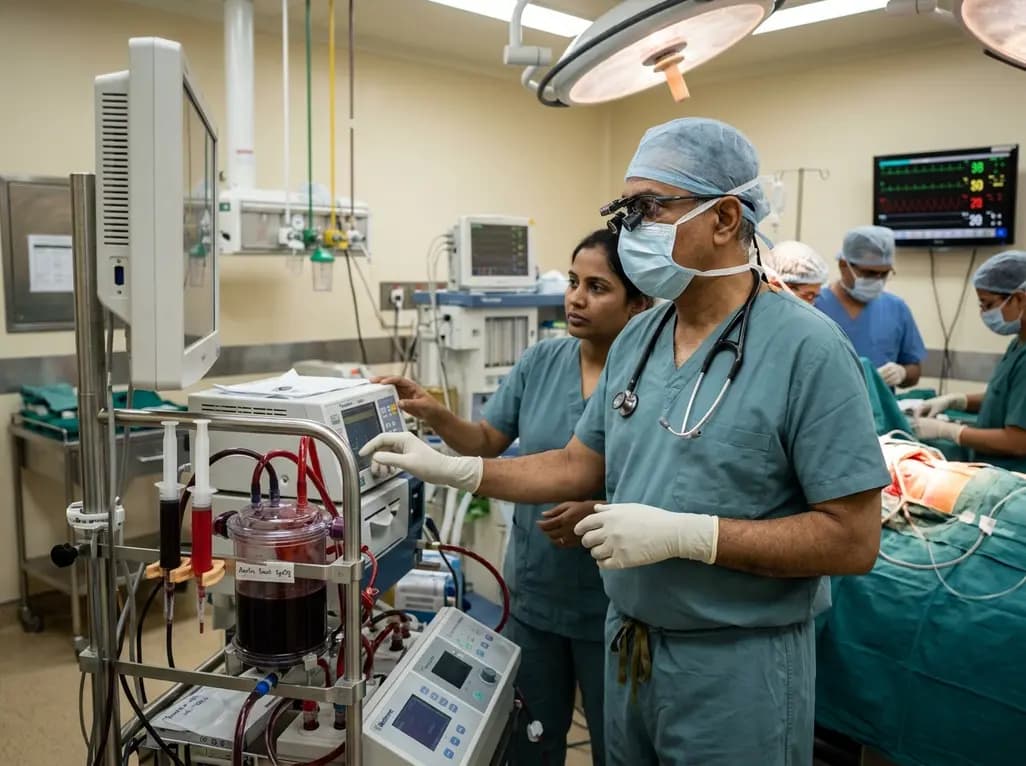
Differential oxygenation during peripheral TA-NRP can cause undetected coronary hypoxemia due to arch vessel clamping. A novel circuit with continuous aortic root monitoring detects desaturation early, facilitating left ventricular unloading and preventing allograft dysfunction and unnecessary heart discard.
Today

A longitudinal study reveals that patients undergoing staged bilateral hip arthroscopy experience progressive contralateral labral deterioration during surgical intervals. However, structural degradation does not compromise 2-year postoperative clinical outcomes or patient-reported satisfaction scores.
Today

A post hoc analysis of the PARM-T2D study shows pemafibrate exerts baseline-dependent effects on LDL-C and particle size in type 2 diabetes and hypertriglyceridemia. It lowers triglycerides and remnants while favorably remodeling atherogenic LDL particles based on initial lipid control status.
Today
