.webp&w=384&q=75)

Loading, please wait...
Loading, please wait...

The modified Rankin Scale serves as a premier metric for evaluating disability and functional recovery in neurology. Clinicians worldwide utilize this scale to track stroke recovery and disease progression in chronic neurological conditions. However, standard assessments primarily capture the clinician's external perspective rather than the patient's personal experience. In fast-paced outpatient settings, physicians frequently assign grades based on rapid motor exams and quick questions. Consequently, this provider-driven approach may miss nuanced limitations that affect daily living. Global research has therefore begun exploring how self-reported disability compares with formal neurological examinations across varied settings. A recent cross-sectional investigation in Zambia examined agreement between neurologist evaluations and patient questionnaires. Their findings offer critical insights into how individuals conceptualize physical dependency compared to medical specialists. Ultimately, integrating patient perspectives helps clinicians refine daily consultations. Furthermore, structured comparison demonstrates that patient-reported outcomes provide essential insights into functional status.
Recent investigative findings show substantial concordance between physician assessments and self-reported functional outcomes. In a cohort of 100 adults with chronic neurologic disorders, investigators noted an overall weighted kappa of 0.63. This result demonstrates substantial agreement between neurologist evaluations and self-reported functional surveys. Furthermore, exact score matches occurred in 46% of paired patient assessments. These findings indicate that patient-completed questionnaires generally reflect global physical ability with reasonable accuracy. However, meaningful discrepancies arose in more than half of the cohort. Physicians often assigned different disability categories than the patients selected for themselves. In several cases, clinicians underestimated disability because patients appeared ambulatory during brief consultations. Conversely, some participants underreported their limitations due to long-term adaptation. Therefore, reliance solely on overall correlation statistics can obscure vital clinical details. Consequently, active exploration of divergent scores remains essential during routine follow-up visits.
Qualitative findings emphasize that sociocultural context significantly shapes how individuals report physical disability. In many low-resource communities, multigenerational households and informal social networks absorb daily care duties. Consequently, patients frequently report high functional independence because supportive family members readily handle strenuous chores. When completing questionnaires, patients often describe assisted performance as personal autonomy. In contrast, examining physicians evaluate functional independence based strictly on unassisted personal ability. Furthermore, cultural expectations and traditional domestic roles deeply influence personal disability perceptions. For instance, female patients unable to manage kitchen duties perceive profound functional loss, despite preserved walking ability. Male clinicians may inadvertently overlook these domestic role cessations while focusing primarily on ambulation. In addition, translation nuances can impair questionnaire comprehension. Therefore, cultural expectations and domestic caregiving support can alter patient-reported disability scores. Healthcare professionals must interpret functional ratings within each patient's unique socioeconomic environment.
Discrepancies in disability ratings frequently arise from the overwhelming burden of nonmotor neurological symptoms. Standard assessment scales prioritize physical ambulation, transfer ability, and bodily hygiene. However, chronic neurological patients frequently endure debilitating fatigue, persistent pain, and severe sleep disturbances. These nonmotor manifestations restrict occupational productivity and leisure participation without directly altering locomotor function. For example, a patient may walk unassisted across an examination room yet experience cognitive fatigue that prevents employment. Consequently, a physician might score the individual as functionally independent, assigning a minimal disability rating. In contrast, the patient reports significant disability due to profound quality of life disruptions. Moreover, existing single-item scales lack sensitivity to capture emotional distress or neuropathic pain. Thus, patients feel that traditional functional assessments fail to reflect their daily challenges. Incorporating multidimensional outcome tools ensures comprehensive evaluation of chronic neurologic illness.
Integrating patient-reported metrics into everyday neurology practice improves clinical decision-making when managed effectively. Rather than replacing formal examinations, self-reported scales provide valuable conversational gateways. Outpatient teams can distribute self-administered functional questionnaires in waiting areas before consultations. Consequently, physicians can quickly identify discordance between patient-reported struggles and physical examination findings. Furthermore, structured interview formats minimize inter-rater variability and standardize functional staging across different providers. Inquiring specifically about family caregiving assistance helps clinicians distinguish unassisted capabilities from assisted activities. Similarly, routine screening for nonmotor symptoms like chronic pain and insomnia uncovers hidden sources of functional decline. Moreover, engaging patients directly in outcome reporting enhances therapeutic alliance and boosts treatment adherence. Therefore, modern neurological care should bridge objective clinician assessments with structured subjective feedback. This holistic practice ensures that functional evaluations accurately reflect real-world patient needs.
The discordance observed between clinician evaluations and patient reporting carries direct relevance for healthcare practitioners in India. In Indian society, strong familial bonds and joint household structures shape chronic illness management. Family members routinely assume daily living activities and personal care for recovering relatives. Consequently, patients may understate their functional disability, while caregivers might inadvertently foster dependence. Furthermore, neurology clinics in India manage immense patient volumes daily. Under intense time pressures, busy physicians naturally prioritize focal physical deficits over subjective nonmotor distress. However, conditions like post-stroke depression, neuropathic pain, and severe fatigue drastically impair financial independence. Because many Indian workers operate in manual or informal economies, subtle functional deficits cause immediate livelihood loss. Therefore, a clinician-assigned score reflecting mild disability may fail to capture catastrophic economic distress. Ultimately, integrating patient voices into routine evaluations fosters personalized neuro-rehabilitation and improves long-term outcomes.
Patient-reported scoring directly captures personal illness experiences, whereas physician evaluations emphasize observable physical impairment and objective motor performance. Patients often assign scores based on fatigue, pain, emotional wellbeing, and disrupted occupational roles. In contrast, clinicians typically focus on unassisted ambulation and basic activities of daily living. Consequently, score discordance frequently occurs when nonmotor symptoms severely diminish life quality despite preserved motor function.
Cultural norms and informal caregiving structures strongly affect how patients perceive personal dependence. In close-knit communities and multigenerational households, family members routinely take over domestic responsibilities, cooking, and self-care chores. As a result, patients may report minimal personal disability because relatives satisfy their daily functional needs. Clinicians, however, grade functional ability strictly on independent physical performance, leading to substantial discordance between questionnaire responses and objective clinical determinations.
Clinicians can enhance disability evaluations by pairing quick patient-reported questionnaires with brief structured interviews. Reviewing self-reported responses prior to physical consultation highlights discrepancies between patient perceptions and clinical signs. Furthermore, physicians should specifically query nonmotor complications, including sleep disruption, neuropathic pain, and mood disorders. Explicitly distinguishing unassisted capabilities from caregiver-assisted tasks ensures accurate staging, thereby facilitating targeted neuro-rehabilitation referrals and personalized therapeutic management in outpatient settings.
Disclaimer: This content is for informational and educational purposes only and should not be considered medical advice. Always consult a qualified healthcare provider for diagnosis and treatment recommendations. Medical research and guidelines are continuously evolving, and clinical decisions should be tailored to each patient's individual needs. Refer to the latest local and national guidelines for clinical practice.
References

Read summarized clinical updates, watch expert medical content, and earn CME certifications right from your smartphone.
Open your smartphone camera to scan and install.





Evaluating concordance between patient-reported and clinician-assessed modified Rankin Scale scores reveals how nonmotor symptoms, caregiver reliance, and cultural factors affect functional disability ratings in chronic neurologic disorders.
Today

A scoping review evaluates 116 studies on AI in women's reproductive health, finding that 83.6% carry high risk of bias. While ensemble models show promise, disparities and lack of validation hinder LMIC deployment.
Today

Differential oxygenation during peripheral TA-NRP can cause undetected coronary hypoxemia due to arch vessel clamping. A novel circuit with continuous aortic root monitoring detects desaturation early, facilitating left ventricular unloading and preventing allograft dysfunction and unnecessary heart discard.
Today
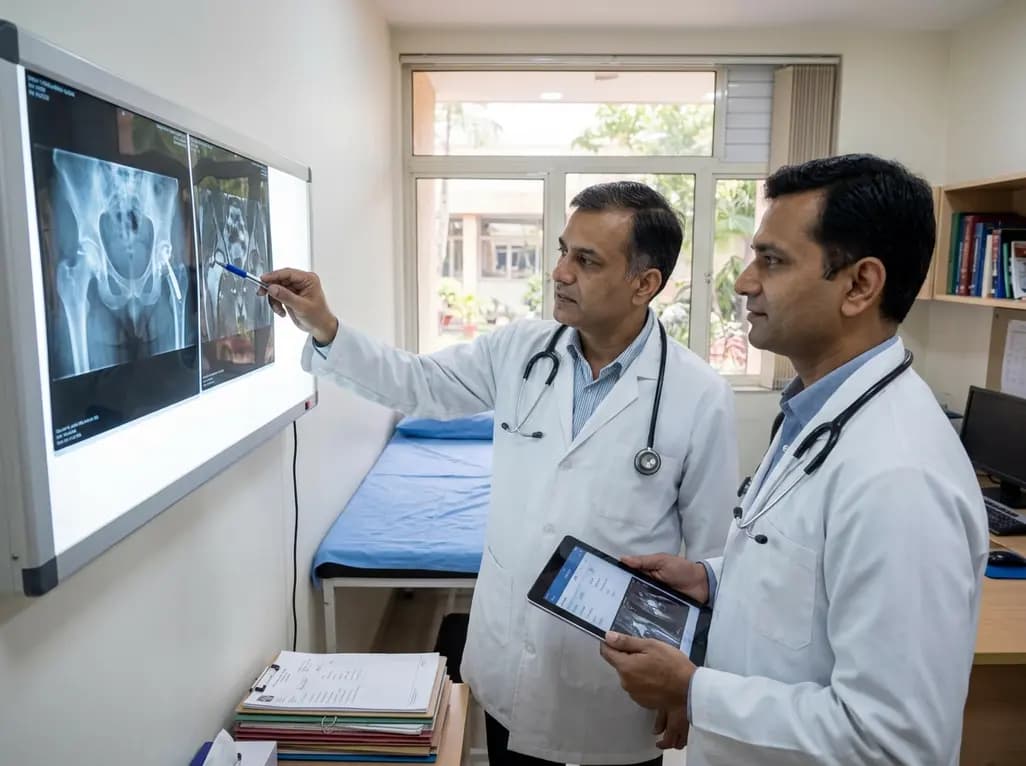
A longitudinal study reveals that patients undergoing staged bilateral hip arthroscopy experience progressive contralateral labral deterioration during surgical intervals. However, structural degradation does not compromise 2-year postoperative clinical outcomes or patient-reported satisfaction scores.
Today

A post hoc analysis of the PARM-T2D study shows pemafibrate exerts baseline-dependent effects on LDL-C and particle size in type 2 diabetes and hypertriglyceridemia. It lowers triglycerides and remnants while favorably remodeling atherogenic LDL particles based on initial lipid control status.
Today
