.webp&w=384&q=75)

Loading, please wait...
Loading, please wait...

Noninvasive imaging through scattering media remains a significant challenge in modern clinical diagnostics. Traditional optical techniques often struggle with narrow fields of view and complex tissue interference. Recently, researchers introduced UNI-Net, a groundbreaking framework for ultra-wide-field noninvasive imaging. This physics-guided adaptive dual-domain diffusion model promises to transform how we visualize structures through opaque biological barriers.
The UNI-Net model addresses the limitations of the optical memory effect (OME), which typically restricts the imaging range. Specifically, the research team developed a physical scattering model to generate large-scale pre-training data. Consequently, this innovation reduces the need for massive experimental datasets by an order of magnitude. Furthermore, the system uses a spatial-channel parallel attention block to handle speckle information efficiently. This allows for clear reconstruction even in complex scenes where previous methods failed.
Experiments demonstrate that UNI-Net achieves a peak signal-to-noise ratio (PSNR) of 31.23 dB at a 41x OME range. This performance is nearly 50% higher than current state-of-the-art approaches. Remarkably, the model remains reliable even at an extreme 164x OME range. Because it requires lower computational costs, it is highly suitable for real-time medical applications. Therefore, this technology represents a major step toward practical, high-resolution imaging in deep tissue.
For clinicians, the ability to see through scattering media means better diagnostic accuracy. Enhanced imaging can lead to earlier detection of pathologies in ophthalmology and dermatology. Additionally, the reduced reliance on real-world training data makes it easier to adapt the model for specific hospital settings. As deep learning continues to evolve, tools like UNI-Net will likely become standard in radiological assessments. However, further clinical validation is necessary before widespread adoption in surgical suites.
The optical memory effect is a physical phenomenon where the relative phase between scattered light waves remains constant over a small angular range. This effect typically limits the field of view in scattering media imaging, making wide-field reconstruction difficult without advanced algorithms.
UNI-Net utilizes a physics-guided scattering imaging model to synthesize high-quality pre-training data. By using synthetic data first, the model requires ten times less real experimental data to achieve superior results compared to purely data-driven models.
While currently in the research phase, UNI-Net's low computational and memory costs suggest significant potential for future real-time clinical and surgical applications. Its ability to process information with linear complexity makes it a candidate for high-speed diagnostic tools.
Disclaimer: This content is for informational and educational purposes only. It does not constitute medical advice or endorse any specific imaging technology for clinical use. Refer to the latest local and national guidelines for clinical practice.
References
Peng L et al. Ultra-Wide-Field Noninvasive Imaging Through Scattering Media Via Physics-Guided Deep Learning. Adv Sci (Weinh). 2026 May 07. doi: 10.1002/advs.75390. PMID: 42098903.
Yoon S, et al. Deep learning for imaging through scattering media: A review. Light Sci Appl. 2020;9:1-17.
Bertolotti J, et al. Non-invasive imaging through opaque scattering layers. Nature. 2012;491(7423):232-234.
"
Read summarized clinical updates, watch expert medical content, and earn CME certifications right from your smartphone.
Open your smartphone camera to scan and install.





UNI-Net leverages physics-guided deep learning to achieve ultra-wide-field noninvasive imaging through scattering media, overcoming optical memory effect li...
5 months ago

A landmark 12-year longitudinal study highlights significant reductions in opioid prescribing for nonspecific low back pain following clinical guidelines and prescription monitoring systems, emphasizing non-opioid multimodal pain care.
Today
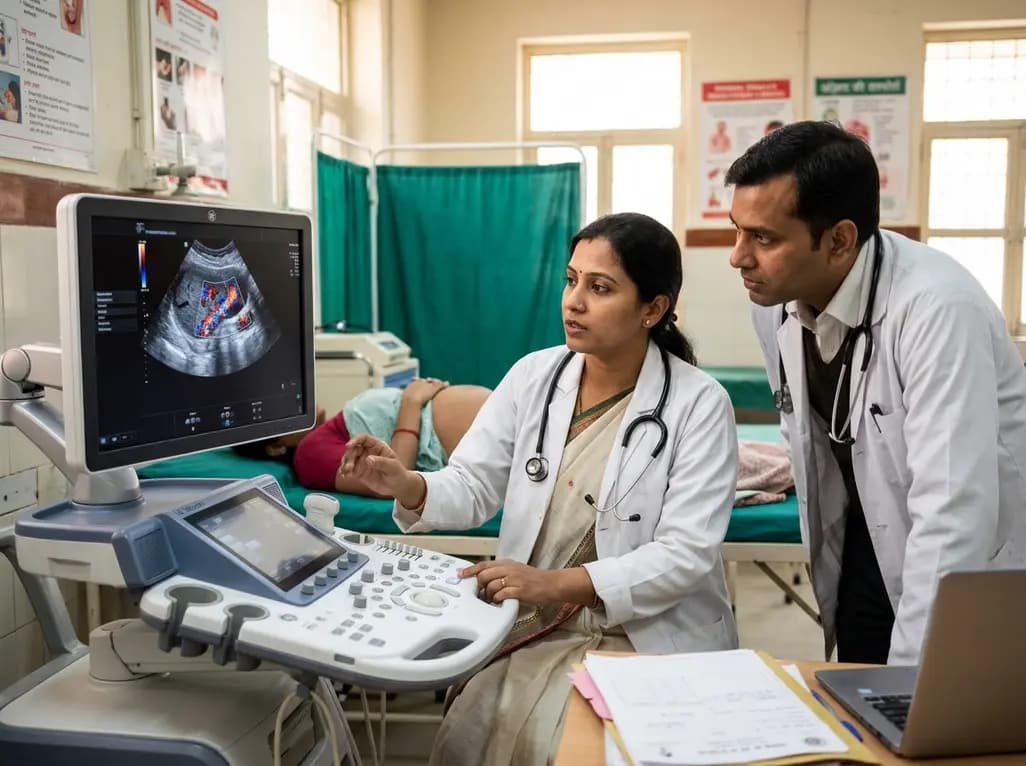
A study in Ultrasound in Obstetrics & Gynecology shows that quantitative vascularization of the anterior fornix/cervix with transvaginal ultrasound reliably identifies placenta accreta spectrum and predicts severe intraoperative hemorrhage, offering vital objective risk stratification.
Today
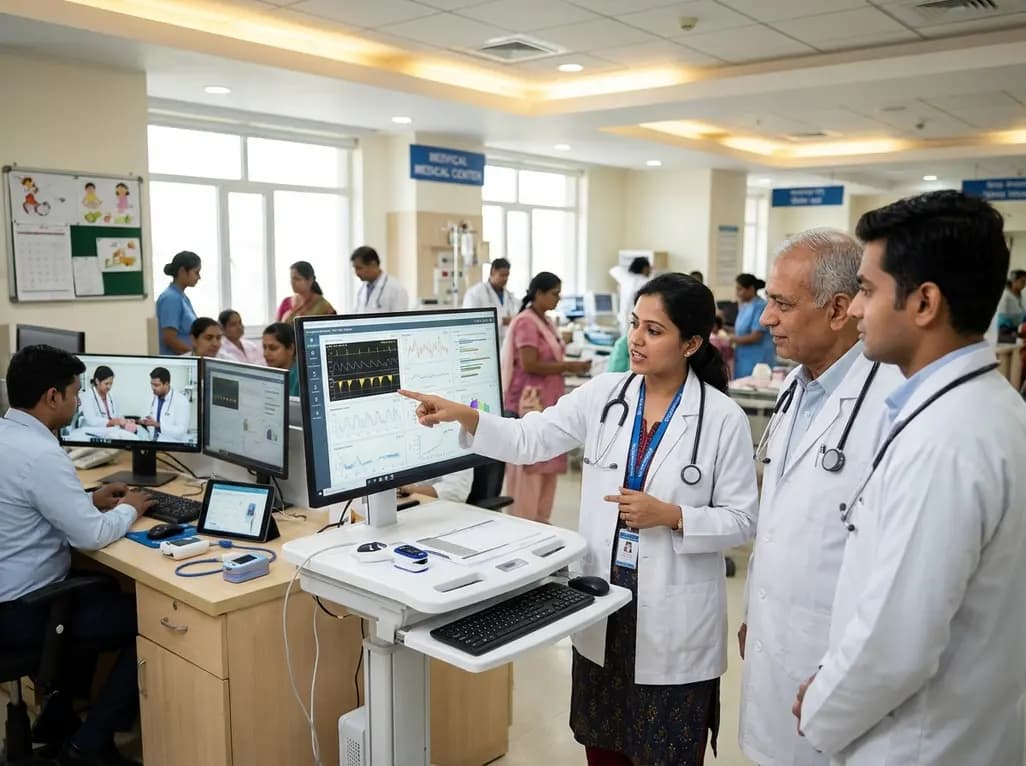
A landmark study details how an enterprise pediatric remote patient management model expanded from a single cardiology pilot to 16 diverse specialty programs by combining centralized digital operations with specialty clinical leadership.
Yesterday
A study evaluates vastus lateralis twitch kinetics, neural activation, and muscle architecture in 44 soccer players, showing dynamic neuromuscular measures predict jump and squat performance far better than ultrasound architecture alone.
Today
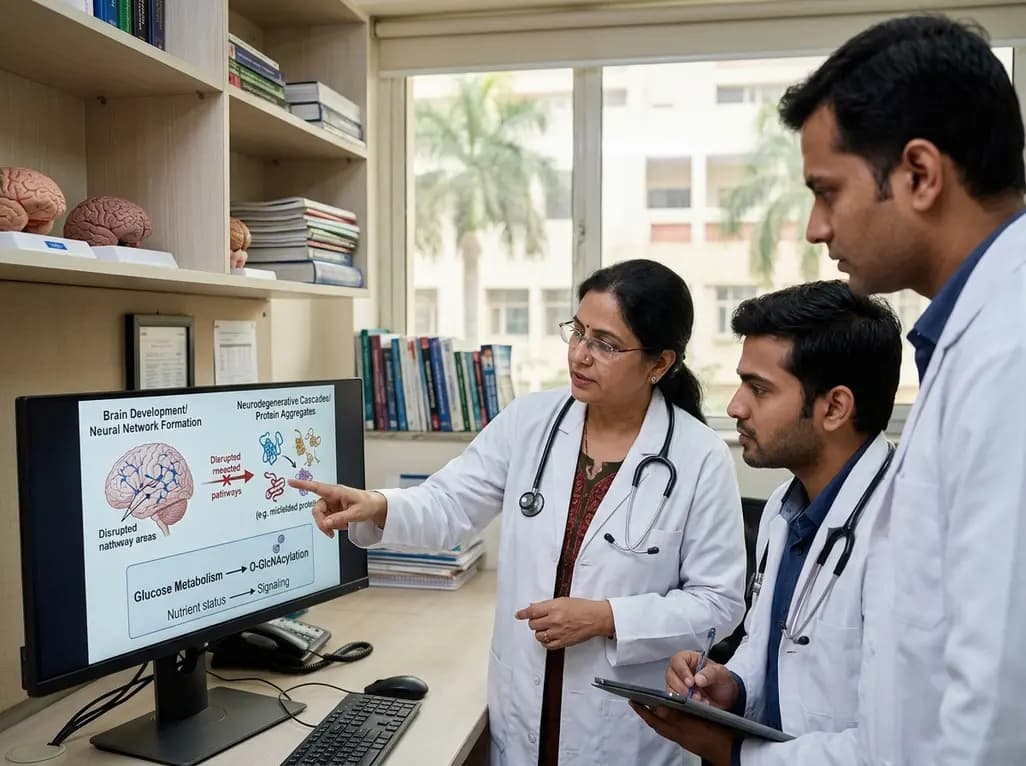
Protein O-GlcNAcylation couples cellular nutrient status to vital neuronal functions. This review explores how disrupted O-GlcNAc cycling drives both neurodevelopmental delays and neurodegenerative cascades, positioning metabolic post-translational modifications as therapeutic targets in clinical neurology.
Today
