.webp&w=384&q=75)

Loading, please wait...
Loading, please wait...

Early surgical intervention remains the established standard for managing hip trauma in older adults. However, clinicians often face complex scenarios when treating frail individuals with undisplaced femoral neck fractures. While surgical fixation or primary arthroplasty provides immediate mechanical stability, high surgical risks occasionally prompt conservative treatment. A recent five-year cohort study evaluated the clinical outcomes of initial nonoperative management in older patients with undisplaced intracapsular fractures. The researchers analyzed failure rates, conversion to delayed surgery, and short-term mortality. Their findings offer vital insights for orthopaedic surgeons and geriatricians balancing operative morbidity against conservative care risks.
Treating undisplaced intracapsular femoral neck fractures nonoperatively represents a deliberate clinical decision in orthogeriatric care. Most patients presenting with Garden stage I or II fractures, categorized as AO/OTA type 31-B1 injuries, possess baseline bony stability that might permit fracture union. Consequently, clinical teams consider conservative management for individuals with severe medical multimorbidity, advanced dementia, or elevated anesthetic risk. Furthermore, certain patients or their surrogate decision-makers actively decline surgical interventions after evaluating procedural risks. In these frail cohorts, avoiding immediate perioperative physiological stress appears beneficial. Nevertheless, conservative protocols require strict risk assessment because immobility introduces profound systemic complications. Clinicians must understand that nonoperative care is never passive neglect. Instead, it demands structured analgesia, early assisted mobilization, and vigilant multidisciplinary monitoring. Geriatricians and surgeons must collaborate closely to confirm that conservative management aligns with long-term patient goals.
The primary concern regarding nonoperative therapy remains the substantial risk of secondary fracture displacement. In the evaluated single-center cohort, 34% of patients initially treated conservatively experienced treatment failure requiring delayed surgical intervention. Specifically, 13 out of 38 patients underwent conversion surgery due to displacement, nonunion, or persistent intolerable pain. Among those requiring delayed surgery, clinicians most frequently performed hemiarthroplasty to restore mobility, while fewer patients underwent total hip arthroplasty or dynamic hip screw fixation. Moreover, the study demonstrated significant delays in surgical intervention. Patients requiring conversion waited a mean of 49 days from injury, with delays extending up to 208 days. Therefore, initial failure often exposed frail individuals to prolonged periods of pain and functional decline. These results highlight that conservative management carries a one-in-three failure rate, frequently leading to delayed major surgery.
Evaluating mortality outcomes is crucial when considering nonoperative pathways in frail geriatric trauma patients. In this five-year analysis, 30-day all-cause mortality reached 18%, and 90-day mortality climbed to 24%. These figures reflect the significant baseline frailty of the cohort, in which most individuals presented with ASA class II or III status. Furthermore, structured literature reviews show that conservative hip fracture management correlates with high short-term mortality. When fracture pain restricts patient mobility, individuals face heightened risks of hypostatic pneumonia, deep vein thrombosis, and pressure ulceration. Additionally, prolonged bed rest frequently accelerates muscle wasting and triggers delirium. Consequently, choosing nonoperative treatment does not eliminate mortality risks. Instead, clinicians must carefully determine whether avoiding surgical stress outweighs the serious hazards of prolonged recumbency and delayed rehabilitation.
Successful nonoperative care demands proactive radiographic and clinical surveillance. Because secondary displacement commonly occurs during early weight-bearing, orthopaedic services must establish structured follow-up pathways. Specifically, outpatient protocols should schedule serial pelvic radiographs at one week, two weeks, six weeks, and three months post-injury. Clinicians should instruct nursing staff and family caregivers to recognize key failure indicators, such as sudden limb shortening, external rotation, or acute pain exacerbation. Furthermore, physiotherapists must report any failure to progress with assisted ambulation. If follow-up imaging reveals displacement or loss of valgus impaction, teams must immediately trigger surgical reassessment. Delaying this transition compromises bone quality and complicates subsequent arthroplasty. Therefore, clear escalation triggers provide an indispensable safety net for patients undergoing conservative therapy.
Deciding between operative fixation and nonoperative care requires transparent, shared decision-making. Orthopaedic and geriatric teams must communicate realistic treatment expectations to patients and families. For example, clinicians should clearly explain that one-third of nonoperatively treated patients ultimately require delayed surgery. Furthermore, discussions must address the extended recovery timeframe and the potential risk of permanent functional dependence. Multidisciplinary teams should conduct comprehensive geriatric assessments to identify and optimize treatable comorbidities before making definitive decisions. Conversely, in palliative situations with extremely limited life expectancy, nonoperative care focused entirely on comfort and symptom control remains appropriate. Ultimately, standardized clinical pathways ensure that nonoperative treatment represents an intentional, carefully supervised strategy rather than an unmonitored default choice.
Clinicians consider nonoperative management when severe medical comorbidities make surgical or anesthetic risks excessively high. Additionally, some cognitively intact patients or surrogate decision-makers refuse surgical intervention after fully understanding the procedural risks. In rare circumstances, stable impacted fractures heal successfully with protected mobilization. This approach allows carefully selected, frail individuals to avoid acute perioperative physiological stress and potential operative complications.
Recent five-year clinical cohort data indicates that approximately 34% of patients initially managed nonoperatively require delayed surgical intervention. Most conversions occur due to secondary displacement, symptomatic nonunion, or intractable pain that prevents functional mobilization. Consequently, surgeons most commonly perform hemiarthroplasty or total hip replacement to restore stability and mobility, often taking place weeks or even months after the primary fracture event.
Nonoperative management requires a structured surveillance protocol involving serial pelvic radiographs at scheduled intervals, such as one, two, six, and twelve weeks. Multidisciplinary teams must evaluate pain levels, skin integrity, and functional mobility during every clinic visit. Furthermore, clinicians must establish clear escalation triggers to immediately identify fracture displacement, enabling rapid transition to operative salvage whenever conservative therapy fails.
Disclaimer: This content is for informational and educational purposes only and should not be taken as professional medical advice. Always consult a qualified healthcare provider for medical diagnosis, treatment, or health-related decisions. Refer to the latest local and national guidelines for clinical practice.
References

Read summarized clinical updates, watch expert medical content, and earn CME certifications right from your smartphone.
Open your smartphone camera to scan and install.





A five-year cohort study evaluates initial nonoperative management in older adults with undisplaced femoral neck fractures, revealing a 34% delayed surgery rate and highlighting the necessity of structured radiographic monitoring.
last month

A landmark cluster randomized trial demonstrates that community-based mass dog vaccination achieves superior coverage and sustains protective herd immunity against rabies far better than conventional campaign models, offering vital lessons for global and Indian elimination targets.
Today

Explore the crucial link between dietary protein and immunocompetence. This review examines how low-protein nutrition shifts metabolic resources away from pathogen defense toward early reproduction, compromising host survival and immunity against severe bacterial infections.
Today
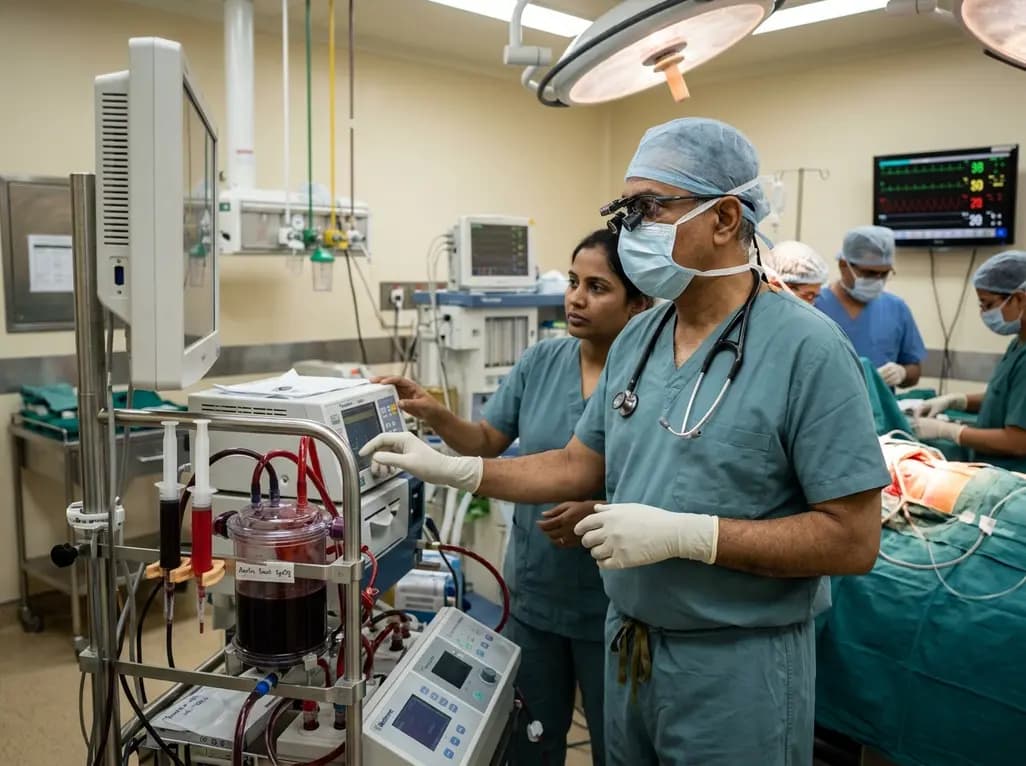
Differential oxygenation during peripheral TA-NRP can cause undetected coronary hypoxemia due to arch vessel clamping. A novel circuit with continuous aortic root monitoring detects desaturation early, facilitating left ventricular unloading and preventing allograft dysfunction and unnecessary heart discard.
Today

A longitudinal study reveals that patients undergoing staged bilateral hip arthroscopy experience progressive contralateral labral deterioration during surgical intervals. However, structural degradation does not compromise 2-year postoperative clinical outcomes or patient-reported satisfaction scores.
Today

A post hoc analysis of the PARM-T2D study shows pemafibrate exerts baseline-dependent effects on LDL-C and particle size in type 2 diabetes and hypertriglyceridemia. It lowers triglycerides and remnants while favorably remodeling atherogenic LDL particles based on initial lipid control status.
Today
