.webp&w=384&q=75)

Loading, please wait...
Loading, please wait...
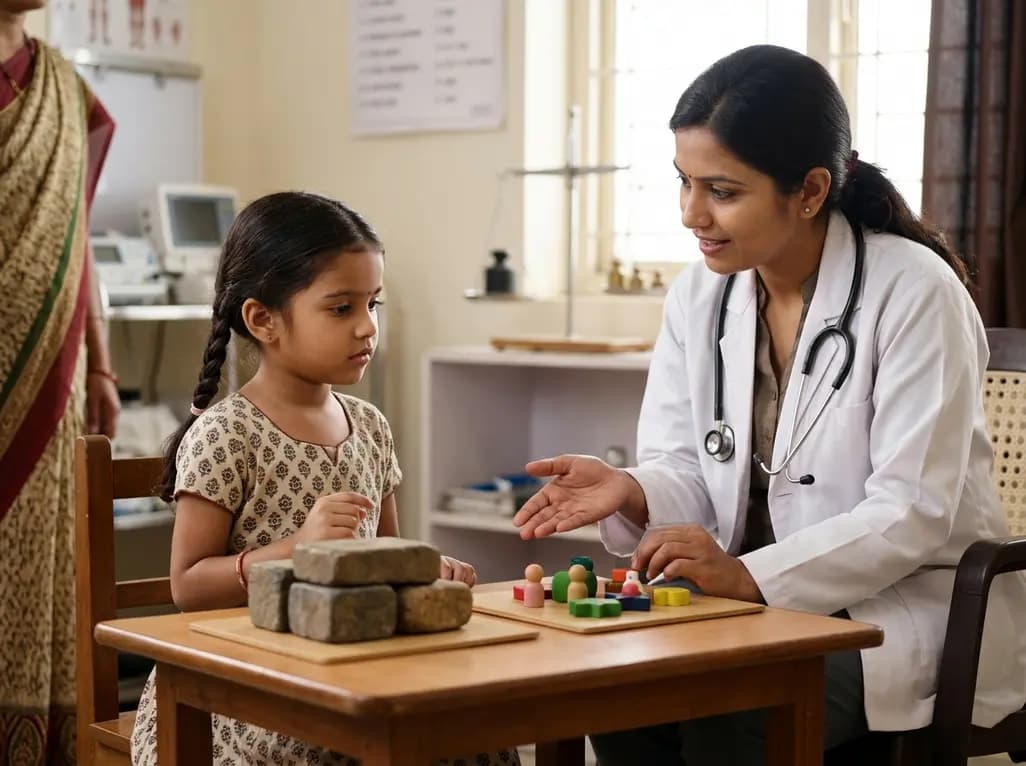
Understanding how young minds process new information is a fundamental challenge in developmental psychology and pediatrics. For many years, the prevailing view suggested that children were either overly rigid in their views or, conversely, too easily swayed by any new information they encountered. However, recent evidence suggests a much more nuanced reality regarding children's belief revision. Rather than being erratic, the process of updating one's worldview appears to follow a rational trajectory as children mature. This development is deeply intertwined with the emergence of a \"theory of mind,\" which allows children to understand that others have independent thoughts, certainties, and varying degrees of conviction. By examining how children aged four to eight judge the beliefs of others, researchers are uncovering a sophisticated system of cognitive checks and balances. Consequently, this suggests that the foundations of logical reasoning and evidence-based thinking are established during the preschool years. Understanding these mechanisms is crucial for clinicians and educators who work with children during these formative stages of development.
The recent research led by Li PH et al. explored children's belief revision through two meticulously designed preregistered studies involving nearly 200 participants. In these experiments, children were presented with characters who held identical beliefs but differed in their levels of certainty and conviction. Specifically, the studies aimed to determine if children recognize that a strongly held belief should be harder to change than a weakly held one. In the first study, the results showed that by the age of five, children begin to make distinct judgments about the stability of mental states. They increasingly viewed strong beliefs as both less possible and more difficult to change compared to weak ones. Moreover, when asked to explain why a character might change their mind, children predominantly pointed toward the presence of new evidence. This indicates that children do not view belief change as a random shift but as a response to objective data. Furthermore, these findings held true across various domains of knowledge, suggesting that this rational expectation is a generalized feature of cognitive development in early childhood.
A critical component of this developmental milestone is the child’s ability to appreciate the \"strength\" of a prior belief. In psychological terms, a prior belief consists of both the specific content of the thought and the magnitude of certainty associated with it. Rational agents typically require more evidence to overturn a deeply held conviction than a casual assumption. Interestingly, children by age five appear to incorporate this principle into their own theory of mind. Specifically, they use the perceived strength of a peer's prior belief to predict how that peer will respond to future counterevidence. In the second study of the research, children predicted that characters with weak priors would revise their beliefs more readily when faced with group testimony. Conversely, they expected characters with strong priors to remain steadfast or require significantly more convincing evidence. Consequently, this shows that children possess a burgeoning \"Bayesian\" approach to learning, where they weigh the strength of existing knowledge against the weight of new incoming information. This rational constraint prevents them from being unnecessarily fickle while allowing for growth.
The transition observed at age five represents a significant leap in social and cognitive sophistication. Before this age, children may struggle to differentiate between the nuances of belief certainty, often treating mental states as binary—either true or false. However, the shift toward understanding graded mental states allows for a more complex interaction with the social world. This evolution in theory of mind enables children to navigate social environments where different people hold conflicting views with varying degrees of passion. In addition, this developmental stage coincides with the period when children begin to master the false-belief task, a hallmark of psychological maturity. By recognizing that beliefs are constrained by their prior strength, children can better predict social outcomes and adjust their own communication strategies. For instance, they may realize that convincing a friend who is \"sure\" of something will require more effort than convincing one who is \"unsure.\" Therefore, this understanding serves as a vital tool for social cooperation and conflict resolution during the early school years.
Social testimony plays a pivotal role in how children update their knowledge, particularly in the context of group dynamics. In the research, children were shown how a group of peers providing disconfirming testimony could influence a character's stance. This mimics real-world scenarios where children are exposed to collective opinions that may contradict their own observations. The studies found that children prioritize evidence-based reasons for revision but are also sensitive to the social pressure of group consensus. However, the rational constraint remains: the children still expected characters with strong prior beliefs to resist the group more effectively than those with weak ones. This balance between individual conviction and social learning is essential for healthy cognitive growth. It allows children to benefit from the collective wisdom of their peers without losing their own sense of reality or logical consistency. Moreover, this ability to filter social information based on the strength of existing beliefs is a key precursor to critical thinking skills that will continue to refine throughout their academic lives.
For pediatricians, neurologists, and mental health professionals, these insights into children's belief revision offer valuable diagnostic and therapeutic tools. Recognizing that a five-year-old should begin to show rational constraints in their belief updating can help in identifying developmental delays in social cognition or theory of mind. For example, a child who remains completely rigid regardless of evidence strength, or one who is excessively swayed by even the weakest testimony, may require further evaluation for neurodevelopmental conditions. Additionally, when communicating health-related information to young patients, clinicians can benefit from assessing the child’s current level of certainty. If a child holds a strong prior belief about a medical procedure or a healthy habit, a simple statement may not suffice. Instead, providing high-quality, salient evidence or leveraging social testimony may be necessary to facilitate a healthy revision of their views. Ultimately, understanding that a child's mind is working to be rational—even when they are being stubborn—allows for more empathetic and effective clinical interactions and parental guidance.
Research indicates that by age five, children begin to view beliefs as graded states rather than simple on-off switches. When a child holds a belief with high certainty or magnitude, they judge it as more difficult to revise than a weakly held belief. This suggests that children's belief revision incorporates a rational assessment of evidence against the strength of their initial conviction, allowing them to resist minor contradictions while remaining open to significant counterevidence.
While children as young as four show an elementary understanding of belief states, a significant shift occurs around the age of five. At this developmental milestone, children begin to distinguish between strong and weak priors. They start predicting that individuals with weaker beliefs are more likely to update their views when faced with new information. This evolution in theory of mind highlights the transition toward a more complex, rational understanding of human cognition and social interaction.
For pediatricians and child psychologists in India, understanding children's belief revision is essential for effective patient communication and health education. Recognizing that a child's resistance to new health information may be a rational byproduct of a strong prior belief allows clinicians to tailor their explanations. By providing high-quality evidence or social testimony that specifically addresses the magnitude of a child's existing belief, providers can more effectively guide developmental milestones and encourage healthier behavioral changes.
Disclaimer: This content is for informational and educational purposes only and does not constitute medical advice or a professional relationship. Always seek the advice of a qualified healthcare provider for any questions regarding a medical condition. Refer to the latest local and national guidelines for clinical practice.
References
Li PH et al. Children expect prior belief strength to constrain belief revision. Cognition. 2026 Jul 19. doi: undefined. PMID: 42472507.
Bascandziev I et al. Predicting Learning: Understanding the Role of Executive Functions in Children's Belief Revision Using Bayesian Models. Topics in Cognitive Science. 2024.
Kimura K, Gopnik A. Rational Higher-Order Belief Revision in Young Children. Child Dev. 2019 Jan;90(1):91-97. doi: 10.1111/cdev.13143.
"
Read summarized clinical updates, watch expert medical content, and earn CME certifications right from your smartphone.
Open your smartphone camera to scan and install.





A recent study investigates how children’s developing theory of mind incorporates rational belief revision. Researchers found that by age five, children recognize that strong beliefs are harder to change than weak ones, a finding with significant implications for pediatric cognitive development understanding.
3 months ago

Discover the crucial role of glymphatic dysfunction in stroke, where perivascular clearance failure and neuroinflammation exacerbate cerebral edema and post-stroke brain injury.
Today

A prenatal case highlights severe glutaric acidemia type II presenting as bilateral hyperechoic cystic kidneys at 18 weeks. Whole-exome sequencing revealed a novel homozygous ETFDH frameshift variant, demonstrating the power of rapid genetic testing in fetal renal anomalies.
Today

Review how tailored exercise programs benefit frail older patients with heart failure. Explore pathophysiological mechanisms, individualized training prescriptions, and strategies to overcome adherence barriers in clinical practice.
Yesterday

This comparative study evaluates posterior labral tears with and without glenohumeral instability, highlighting distinct demographic patterns, MRI underestimation in stable shoulders, and successful arthroscopic repair outcomes.
Yesterday

A clinical study demonstrates that early intervention with tocilizumab, either as monotherapy or bridged with corticosteroids, achieves significant proptosis reduction and resolves active inflammation in treatment-naive thyroid eye disease.
Yesterday
