.webp&w=384&q=75)

Loading, please wait...
Loading, please wait...
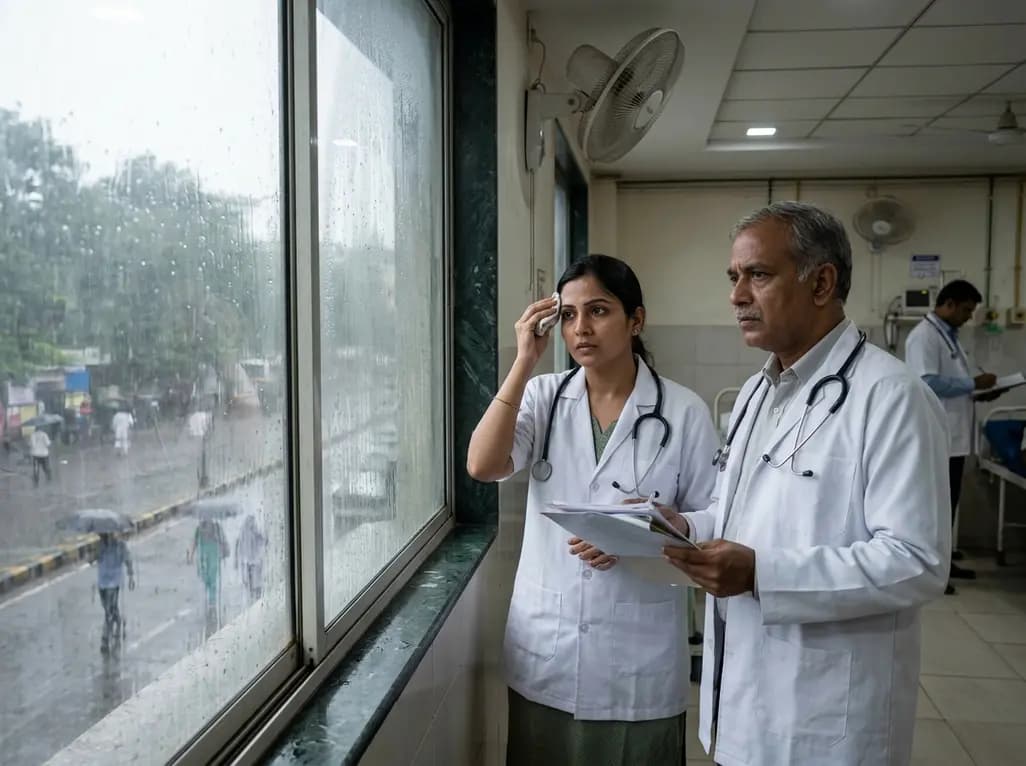
Recent research indicates that climate change will significantly alter India's weather patterns. Consequently, hot and humid conditions during the monsoon season could soon extend the summer's danger. Specifically, a major study warns about a rapid rise in uncompensable heat stress during the wet months of July to October.
This dangerous physiological state occurs when the human body can no longer cool itself through sweating. Therefore, sustained environmental heat and humidity can lead to severe clinical complications. For instance, patients may experience heat-related illnesses, organ failure, or even death.
Historically, this environmental hazard was limited in scope. For example, during the 1980s, extreme heat stress affected less than 0.01 million square kilometers of land. However, this footprint expanded dramatically to 0.04 million square kilometers by 2020. Traditionally, researchers associated this threat with the dry summer months of March to June. During this summer window, the hazard impacted nearly eight percent of the country. In contrast, only one percent of the land area faced similar issues during the monsoon season.
As a result, climate projections show a disturbing shift under a global warming scenario of two degrees Celsius. Under these conditions, monsoon heat stress will affect approximately 53 percent of India. Consequently, this virtually matches the 60 percent area impacted during the peak summer months. Furthermore, between 0.8 and 1.2 billion people could face these life-threatening conditions.
Physiologically, high humidity levels during the rainy season combine with moderately high air temperatures to block sweating. Specifically, researchers observed that monsoon-season stress occurs within a narrower temperature range of 35 to 38 degrees Celsius. As a result, even moderate summer temperatures become highly hazardous when the air is saturated. Geographically, northwestern regions like Punjab and the Gangetic Plain will experience the most frequent occurrences. Additionally, the eastern coastal regions face massive threats during pre-monsoon summer months due to inland moisture transport. Therefore, healthcare providers in these areas must prepare for an influx of heat-induced medical emergencies.
Medical practitioners in India should actively counsel patients on preventive care during the humid months. For example, vulnerable populations like outdoor laborers and elderly patients require targeted interventions. Moreover, clinicians must recognize the early signs of heat exhaustion and heat stroke, which humid conditions can rapidly accelerate. Ultimately, raising public awareness and updating clinical protocols are essential steps in building climate-resilient healthcare systems.
Q1: What is uncompensable heat stress?
It is a physiological state where the human body cannot dissipate heat through sweating or other mechanisms. Consequently, core body temperatures rise continuously, leading to severe health risks.
Q2: Why is the monsoon season becoming a major hazard for heat stress in India?
As global temperatures warm, high humidity combines with moderate air temperatures during the monsoon season. This combination prevents natural cooling, making the season nearly as hazardous as the dry summer.
Q3: Which regions in India face the highest threat of monsoon heat stress?
The Gangetic Plain and northwestern areas like Punjab are projected to face the most frequent occurrences. Additionally, coastal regions remain highly vulnerable due to strong pre-monsoon moisture transport.
Disclaimer: This content is for informational and educational purposes only. It does not constitute medical advice or replace professional judgment. Refer to the latest local and national guidelines for clinical practice.
References

Read summarized clinical updates, watch expert medical content, and earn CME certifications right from your smartphone.
Open your smartphone camera to scan and install.





A groundbreaking study warns that rising climate temperatures will soon expand dangerous humid heat stress into India's rainy monsoon season....
4 months ago

Discover the crucial role of glymphatic dysfunction in stroke, where perivascular clearance failure and neuroinflammation exacerbate cerebral edema and post-stroke brain injury.
Today

A prenatal case highlights severe glutaric acidemia type II presenting as bilateral hyperechoic cystic kidneys at 18 weeks. Whole-exome sequencing revealed a novel homozygous ETFDH frameshift variant, demonstrating the power of rapid genetic testing in fetal renal anomalies.
Today

Review how tailored exercise programs benefit frail older patients with heart failure. Explore pathophysiological mechanisms, individualized training prescriptions, and strategies to overcome adherence barriers in clinical practice.
Yesterday

This comparative study evaluates posterior labral tears with and without glenohumeral instability, highlighting distinct demographic patterns, MRI underestimation in stable shoulders, and successful arthroscopic repair outcomes.
Yesterday

A clinical study demonstrates that early intervention with tocilizumab, either as monotherapy or bridged with corticosteroids, achieves significant proptosis reduction and resolves active inflammation in treatment-naive thyroid eye disease.
Yesterday
