.webp&w=384&q=75)

Loading, please wait...
Loading, please wait...
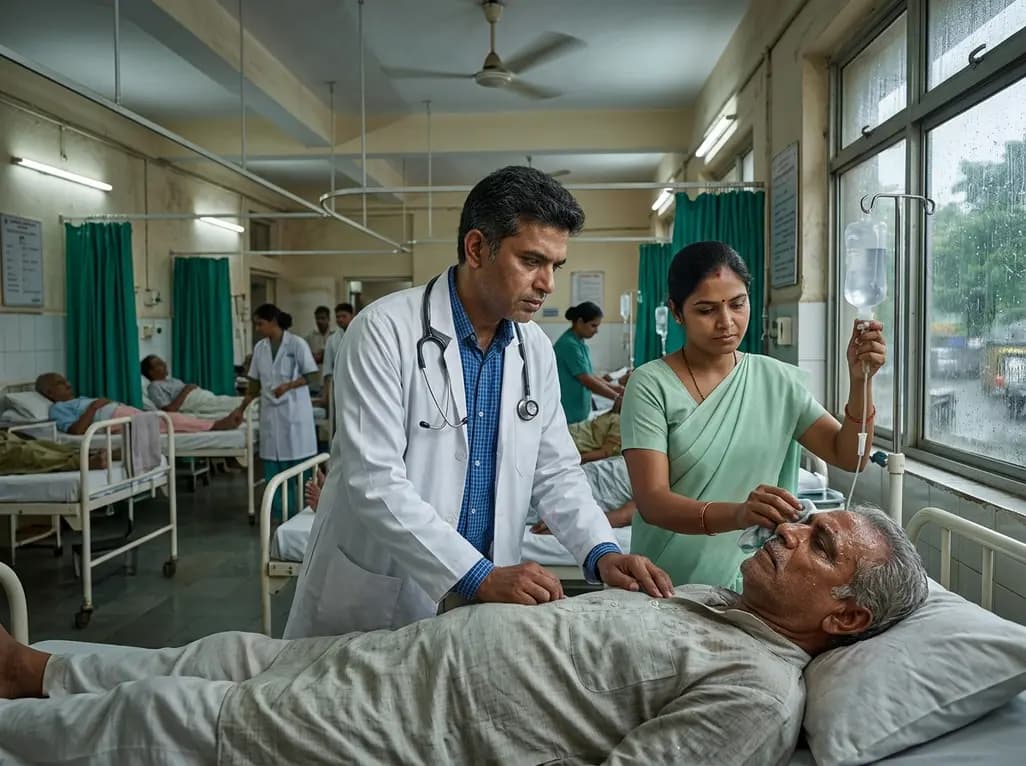
Indeed, India faces a major health crisis due to a surge in uncompensable heat stress during the monsoon season. Historically, extreme heat remained confined mostly to the dry summer months. However, climate change is now shifting this dangerous pattern. Consequently, a new study reveals that monsoon humidity will soon extend the threat of thermal overload. Specifically, researchers from IIT Gandhinagar, Stanford, and Purdue universities analyzed this emerging climate threat.
In fact, uncompensable heat stress occurs when the human body cannot cool itself down. Specifically, sweat fails to evaporate in highly humid conditions. As a result, the core body temperature rises rapidly to dangerous levels. Therefore, this physiological strain can lead directly to organ failure, heat stroke, or death. In the past, this condition affected less than 0.01 million square kilometers in India. However, that affected area expanded significantly to 0.04 million square kilometers by 2020.
Indeed, summer months historically accounted for nearly all heat-related deaths in the country. In contrast, only one percent of heat stress historically occurred during the monsoon season. However, future warming of 2 degrees Celsius will dramatically change this balance. Specifically, monsoon-season heat stress is projected to affect 53 percent of India. Consequently, this area is nearly equal to the projected 60 percent summer coverage. Furthermore, the Indo-Gangetic plain and northwestern regions like Punjab will become primary hotspots. Notably, monsoon breaks in these regions combine moderate heat with extreme humidity. Consequently, these conditions create a perfect storm for severe thermal loading.
Undoubtedly, clinicians must recognize that uncompensable heat stress affects multiple organ systems. For example, the cardiovascular system faces immense strain as the heart pumps faster to shed heat. Moreover, severe dehydration can cause acute kidney injury and electrolyte imbalances. Ultimately, sustained high temperatures can trigger systemic inflammatory responses. Therefore, prompt medical intervention is critical for patients showing signs of heat exhaustion.
To mitigate these risks, healthcare providers must adapt their clinical strategies for this extended heat season. First, clinicians should educate vulnerable patients about the dangers of high humidity. Second, emergency departments must prepare for an influx of heat-related illnesses during late monsoon months. In addition, hospitals should ensure adequate supplies of intravenous fluids and cooling equipment. Finally, local health boards should establish early warning systems that monitor both temperature and humidity.
Q1: What is uncompensable heat stress?
Uncompensable heat stress occurs when the human body's core temperature continues to rise because its natural cooling mechanisms, such as sweating, fail due to extreme ambient heat and high humidity.
Q2: Why is the monsoon season in India becoming more hazardous?
Climate warming of 2 degrees Celsius is projected to increase the occurrence of hot and humid conditions during the monsoon season. This combination severely limits the body's ability to cool itself, expanding heat stress into months that were historically considered safe.
Q3: Which regions in India are most vulnerable to monsoon-season heat stress?
The northwestern regions, including Punjab, and the Gangetic Plain are projected to face more frequent occurrences of uncompensable heat stress during the monsoon season than in summer under a warming climate.
Disclaimer: This content is for informational and educational purposes only. It does not constitute medical advice or replace professional judgment. Refer to the latest local and national guidelines for clinical practice.
References

Read summarized clinical updates, watch expert medical content, and earn CME certifications right from your smartphone.
Open your smartphone camera to scan and install.





Rising monsoon temperatures in India will expand uncompensable heat stress, threatening millions with severe health risks....
4 months ago

Following regulatory scrutiny from FSSAI regarding promotional representations and lean muscle preservation claims, Dr. Reddy's Laboratories and Nestlé Health Science are currently reviewing the branding and marketing strategy for their joint nutritional supplement Celevida GLP+.
Today
Demanding exhaustive hormonal profiling can inadvertently discourage clinical studies involving females. Methodological standards must align with the specific scientific question to expand, not restrict, equitable evidence for women.
Today

The Directorate General of Health Services directs Indian states to halt the hazardous reuse and reprocessing of single-use medical devices. Discover regulatory implications under the Drugs and Cosmetics Act, critical infection risks, legal liabilities, and operational changes required across clinical specialties.
Today

A novel calcium polyphosphate coacervate enables injectable bone implants with in situ hierarchical porosity via phase separation and gas foaming, significantly enhancing cell proliferation, energy metabolism, and osteogenic differentiation for minimally invasive bone defect repair.
Today

India is advancing preventive healthcare by integrating genomics, artificial intelligence, and quantum technologies. With the SANGAM programme sequencing one million Indian genomes, clinicians can unlock personalized therapies, detect cardiometabolic risks early, and curb the burden of diabetes and heart disease.
Today
