

Loading, please wait...
Loading, please wait...

Esophageal malignancies present a formidable therapeutic challenge worldwide, particularly across high-incidence regions such as India. Clinicians continuously seek robust biomarkers to improve early detection and risk stratification. Recent molecular investigations highlight the pivotal role of post-translational ubiquitin-like modifications in driving oncogenesis. Specifically, aberrant expression of UBE2L6 in esophageal cancer has emerged as a significant indicator of aggressive disease biology. Emerging evidence demonstrates that this enzyme actively reshapes cellular energetics. Consequently, understanding its interplay with lipid metabolic remodeling opens new diagnostic and therapeutic avenues for clinicians managing gastrointestinal malignancies.
Differential gene expression profiling reveals marked upregulation of ubiquitin-conjugating enzyme E2L6 in esophageal tumor specimens compared to adjacent normal mucosa. Researchers utilized weighted gene co-expression network analysis to screen transcriptomic datasets, identifying UBE2L6 as a central hub gene. Subsequent validation across bioinformatics repositories and tissue immunohistochemistry confirmed this striking overexpression. Importantly, receiver operating characteristic curve analysis demonstrated exceptional diagnostic precision, yielding an area under the curve of 0.889. This robust metric indicates that the biomarker reliably distinguishes malignant lesions from non-neoplastic esophageal epithelium. In clinical practice, distinguishing early neoplastic changes from severe chronic esophagitis remains technically demanding. Therefore, incorporating UBE2L6 quantification into diagnostic pathology panels could substantially enhance diagnostic certainty during endoscopic biopsy evaluation. Furthermore, quantitative assessment of UBE2L6 expression levels might aid pathologists in resolving ambiguous mucosal biopsies. Early and accurate diagnosis directly correlates with improved curative resection rates in esophageal carcinoma. Consequently, this high diagnostic accuracy underscores the translational promise of UBE2L6 as an ancillary tissue biomarker. Clinicians can potentially utilize this molecular target to stratify borderline lesions before extensive morphological disruption occurs.
Clinical analysis demonstrates a direct relationship between elevated UBE2L6 levels and aggressive disease parameters in esophageal cancer cohorts. Specifically, researchers observed statistically significant correlations between gene expression and advanced tumor stage, higher histological grade, and positive lymph node metastasis. Patients harboring high UBE2L6 levels experience markedly reduced overall survival compared to cohorts with low expression. Thus, UBE2L6 serves as an independent adverse prognostic factor for affected individuals. In addition, nodal dissemination represents one of the strongest determinants of systemic recurrence and post-surgical failure. The pronounced association with lymph node involvement suggests that UBE2L6 promotes invasive migratory capabilities in esophageal tumor cells. Moreover, high-grade poorly differentiated tumors consistently display the greatest expression intensities. Pathologists could therefore utilize immunohistochemical scoring of UBE2L6 to flag high-risk tumors during initial staging workups. Identifying these aggressive phenotypes early empowers surgical and medical oncologists to tailor systemic therapy regimens. For example, clinicians might consider intensified neoadjuvant chemoradiation or closer postoperative surveillance for patients exhibiting elevated expression. Ultimately, integrating this biomarker into baseline staging protocols provides valuable predictive information regarding biological aggressiveness and patient trajectory.
Malignant cells frequently reprogram their metabolic pathways to satisfy the energetic and biosynthetic demands of rapid proliferation. Recent metabolomic profiling reveals that UBE2L6 directly orchestrates widespread fatty acid metabolic remodeling in esophageal cancer cells. Rather than relying exclusively on classical glycolysis, aggressive esophageal tumors shift toward enhanced de novo lipogenesis and lipid oxidation. UBE2L6 facilitates this metabolic shift by altering key enzymes that regulate fatty acid synthesis, desaturation, and transport. Consequently, transformed cells accumulate diverse fatty acid metabolites that support membrane biogenesis and intracellular signaling cascades. Furthermore, altered lipid metabolites shield malignant cells from lipid peroxidation and oxidative stress within a hostile microenvironment. This metabolic adaptation also fosters therapeutic resistance, allowing cancer cells to survive nutrient deprivation and cytotoxic insult. In addition, fatty acid accumulation modulates intracellular lipid rafts, promoting continuous downstream oncogenic signaling. Understanding this metabolic dependency provides a compelling rationale for combinatorial therapies. Oncologists could theoretically pair conventional cytotoxic regimens with targeted inhibitors of lipid metabolism. Thus, dissecting UBE2L6-mediated metabolic rewiring uncovers critical vulnerabilities that clinicians can exploit to overcome treatment resistance in refractory esophageal tumors.
Functional in vitro assays provide definitive proof regarding the direct oncogenic properties of UBE2L6 in esophageal carcinoma cells. Knockdown of UBE2L6 markedly suppresses tumor cell proliferation, induces cell cycle arrest, and increases apoptosis in experimental models. Conversely, ectopic overexpression accelerates cellular division, accelerates transit through the G1/S checkpoint, and promotes cell migration. These findings explain the strong clinical correlation observed between elevated expression and distant lymph node metastases. Mechanistically, UBE2L6 alters ubiquitin-mediated proteasomal degradation and ISGylation pathways, stabilizing key cell cycle regulators and pro-migratory signaling molecules. Additionally, enhanced migratory capability enables malignant cells to breach the basement membrane and intravasate into lymphatic channels. This metastatic drive significantly worsens morbidity and limits curative surgical options. Therefore, therapeutic silencing of UBE2L6 or disruption of its downstream effectors could halt local invasion and metastatic seeding. In addition, experimental models indicate that depleting UBE2L6 restores cellular sensitivity to standard chemotherapeutic agents like 5-fluorouracil. Consequently, targeting this functional axis represents an attractive strategy to suppress tumor growth while preventing secondary dissemination in aggressive disease.
Esophageal carcinoma ranks among the most common and lethal digestive malignancies across India. Factors such as tobacco use, betel quid chewing, spicy dietary habits, and genetic predispositions contribute to high national incidence rates. Furthermore, Indian patients frequently present at advanced stages with extensive nodal involvement or unresectable disease. In this challenging setting, conventional staging modalities often fail to capture subtle molecular variations in tumor aggressiveness. Integrating molecular markers like UBE2L6 into Indian tertiary oncology centres could substantially refine risk stratification. Pathologists in resource-conscious settings can implement cost-effective immunohistochemistry assays on routine paraffin sections without requiring complex sequencing platforms. Moreover, identifying high UBE2L6 expression could alert multidisciplinary tumor boards to potential chemoresistance driven by altered lipid metabolism. Physicians can consequently optimize neoadjuvant chemotherapy schedules, selecting patients who genuinely benefit from aggressive radical resection. Additionally, public health researchers can evaluate whether specific dietary lipid patterns interact with UBE2L6-driven metabolic reprogramming in Indian populations. Ultimately, adopting targeted molecular biomarkers aligns Indian oncology practice with modern precision medicine paradigms, enhancing survival outcomes through individualized care.
Receiver operating characteristic curve analyses establish that UBE2L6 achieves an impressive area under the curve of 0.889 for esophageal cancer detection. This high diagnostic metric demonstrates remarkable sensitivity and specificity in discriminating neoplastic lesions from adjacent healthy tissue. Consequently, incorporating UBE2L6 immunostaining into standard pathology workflows can assist clinicians in confirming malignant transformation, especially in ambiguous endoscopic mucosal biopsies where standard histological assessment remains equivocal.
UBE2L6 drives significant metabolic reprogramming by altering key enzymes responsible for cellular lipid synthesis, oxidation, and fatty acid transport. This enzymatic remodeling prompts esophageal cancer cells to accumulate specific fatty acid metabolites necessary for rapid membrane formation, energy storage, and downstream oncogenic signaling. Additionally, this remodeled lipid state shields tumor cells from oxidative stress and cytotoxic insult, ultimately promoting aggressive tumor proliferation and conferring marked resistance against conventional chemotherapy regimens.
High UBE2L6 expression correlates strongly with advanced clinical stages, poor histological differentiation, and extensive regional lymph node metastasis in esophageal cancer cohorts. Functionally, elevated enzyme levels accelerate cell cycle progression and stimulate cellular migration, facilitating rapid local invasion and lymphatic dissemination. Patients exhibiting elevated expression consistently experience significantly shorter overall survival. Therefore, UBE2L6 serves as an independent adverse prognostic indicator that enables clinicians to identify patients requiring more aggressive multimodal interventions.
Disclaimer: This content is for informational and educational purposes only and does not constitute medical advice, endorsement, or diagnosis. Healthcare professionals must exercise independent clinical judgment. Refer to the latest local and national guidelines for clinical practice.
References

Read summarized clinical updates, watch expert medical content, and earn CME certifications right from your smartphone.
Open your smartphone camera to scan and install.





A landmark study reveals that elevated UBE2L6 expression predicts poor prognosis in esophageal cancer and drives aggressive tumor behavior by remodeling fatty acid metabolism. Discover the clinical and diagnostic implications for oncology practice.
Today

A retrospective CAHAL study comparing Amplatzer and Occlutech devices in 413 patients found no significant difference in moderate-to-large residual shunt rates at 6 months follow-up after percutaneous PFO closure, supporting clinical equivalence between both platforms.
Today

AIIMS researchers suggest yoga may alleviate gut dysbiosis in Polyendocrine Metabolic Ovarian Syndrome (PMOS) by modulating the gut-brain axis, lowering chronic inflammation, and enhancing parasympathetic tone to support metabolic and hormonal equilibrium.
Today
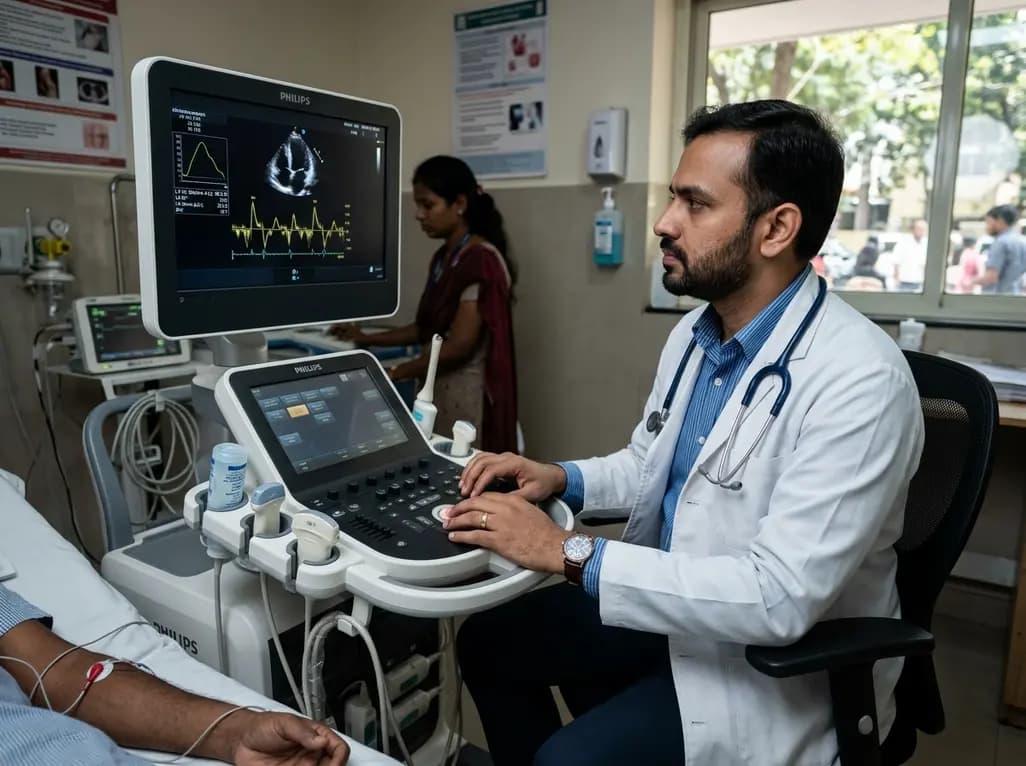
A structured practical guide to left atrial echocardiographic assessment covering biplane volumetry, phasic physiology, speckle-tracking strain, and hemodynamic filling pressure estimation for routine cardiovascular practice.
Today

Age-related spinal kyphosis is driven by vertebral fragility, disc degeneration, and paraspinal muscle dysfunction. Coexisting with locomotive syndrome and frailty, its management requires combined anti-osteoporotic therapy, spinal extensor rehabilitation, and comprehensive nutritional optimization.
Today

A longitudinal feasibility pilot study highlights that combining polygenic risk score disclosure with in-person lifestyle counseling significantly enhances genomic literacy in individuals at risk for type 2 diabetes, overcoming educational disparities and reinforcing patient motivation.
Today
