

Loading, please wait...
Loading, please wait...

Modern preventive healthcare increasingly incorporates precision genomics to identify individuals facing elevated metabolic risks. In this clinical setting, fostering genomic literacy type 2 diabetes understanding represents a vital priority for healthcare providers. While standard health literacy equips individuals to navigate basic medical advice, genomic comprehension demands advanced conceptual and numerical reasoning. Consequently, clinicians must evaluate how patients interpret multifaceted genetic predictions. A recent longitudinal feasibility pilot study addressed this clinical need by examining health and genomic literacy among high-risk individuals. The researchers analyzed baseline competencies, disclosed individual polygenic risk scores, and measured post-intervention changes. Ultimately, the trial demonstrated that structured communication transforms complex genetic data into actionable preventive knowledge.
Precision diabetology utilizes polygenic profiling to calculate cumulative genetic susceptibility toward chronic metabolic dysfunction. However, disclosing such probabilistic data requires effective clinical communication frameworks. Genomic literacy encompasses not merely scientific vocabulary, but also numeracy skills that help individuals interpret statistical probability. Therefore, healthcare providers must evaluate whether patients can accurately understand their test results. The feasibility pilot study explored this dynamic by recruiting sixty adult participants at high risk for diabetes. To establish reliable baseline profiles, investigators deployed validated instruments including the Everyday Health Information Literacy tool and the European Health Literacy Survey Questionnaire. In addition, the research team administered specialized genomic literacy surveys covering conceptual knowledge, numeracy, and perceived utility. Notably, the study focused on whether receiving personalized polygenic profiles altered overall health literacy or specialized genomic competence. Furthermore, the findings highlight that genomic education must complement routine metabolic screening.
Prior to receiving genetic results, participants exhibited distinct variations in baseline comprehension. Interestingly, the baseline assessment revealed no initial correlation between everyday health information literacy and foundational genomic concepts. Patients who easily navigated general lifestyle resources still struggled to interpret genetic terminology and probabilities. Hence, general health literacy does not automatically ensure genomic fluency. Furthermore, baseline statistical evaluations revealed that formal education significantly influenced initial genomic literacy scores. Individuals with higher academic degrees demonstrated superior understanding of genetic principles. In contrast, those with lower educational attainment experienced substantial difficulty with basic probabilistic concepts. Moreover, general health literacy remained relatively stable throughout the entire study period. As a result, the authors emphasized that generic educational materials cannot substitute for focused genomic explanations. Clinicians must therefore tailor their educational dialogues according to baseline numeracy rather than assuming broad literacy ensures comprehension.
Following baseline assessments, forty-nine participants received their personalized polygenic risk score for type 2 diabetes. Clinicians disclosed these numerical risk estimates during structured consultations alongside individualized lifestyle counseling. Subsequently, participants completed comprehensive post-intervention evaluations. The post-survey results revealed significant improvements in genomic literacy, particularly within Section A measuring conceptual knowledge. Thus, even brief educational interventions can markedly elevate patient comprehension of complex genetics. In addition, a statistically significant correlation emerged between everyday health information literacy and genomic literacy at post-survey. This shift suggests that receiving personalized genetic feedback activates deeper health information processing. Consequently, the disclosure process converted abstract genetic estimates into tangible, actionable concepts. Participant motivation also correlated strongly with both health literacy and genomic literacy measures during follow-up. Therefore, personalized risk disclosure acts as an effective educational tool, bridging knowledge gaps and inspiring positive lifestyle modifications.
One of the most remarkable outcomes of the study involved the diminishing influence of formal educational background. At baseline, academic attainment strongly predicted genomic literacy performance. However, this educational disparity completely disappeared after participants underwent personal risk disclosure and counseling. In-person discussions enabled clinicians to adapt complex medical terminology to individual learning styles. Consequently, participants from diverse educational backgrounds achieved comparable genomic literacy at post-survey. This finding provides crucial practical guidance for busy clinicians. When genetic test results arrive via impersonal digital portals, individuals with limited formal education often experience severe confusion. In contrast, direct clinician interaction demystifies statistical risk, reduces anxiety, and builds practical health competencies. Furthermore, personal consultations provide a safe forum for patients to ask clarifying questions about polygenic indices. As a result, patients leave the clinic feeling empowered rather than fatalistic about their metabolic health. Individualized counseling therefore serves as an indispensable equalizer in genomic medicine.
India currently faces an unprecedented burden of type 2 diabetes, often manifesting at younger ages and lower body mass indices. In this high-risk population, genomic risk stratification holds immense potential for early preventive intervention. However, deploying polygenic testing across diverse socioeconomic strata requires careful attention to health literacy. Indian clinicians must navigate significant linguistic diversity and varying numeracy levels among patients. Therefore, simply providing a commercial genetic report without contextual counseling could exacerbate patient distress or breed fatalism. Instead, physicians should adopt the personalized communication framework validated in this pilot trial. Specifically, clinicians must deliver polygenic risk scores through face-to-face discussions paired with culturally tailored dietary advice. Moreover, motivating patients by linking genetic insights to actionable lifestyle changes enhances long-term adherence. Primary care teams can play a pivotal role in this educational delivery. Ultimately, combining genetic risk disclosure with structured counseling ensures that patients comprehend their risks and implement lifelong preventive behaviors.
Traditional monogenic testing identifies rare single-gene mutations with large clinical effects, such as mutations causing maturity-onset diabetes of the young. In contrast, a polygenic risk score aggregates millions of common genetic variants across the genome, each contributing a modest effect to overall disease susceptibility. Therefore, polygenic scores provide a probabilistic estimate of disease predisposition rather than a definitive diagnosis, allowing clinicians to stratify patient risk and personalize preventive lifestyle interventions before symptoms develop.
Direct in-person disclosure allows physicians to tailor complex probabilistic information to the individual patient's literacy level and emotional state. Furthermore, personal consultations overcome educational disparities by clarifying difficult mathematical concepts and debunking genetic fatalism. Consequently, healthcare providers can immediately pair risk findings with practical lifestyle modifications. Delivering these sensitive scores through digital portals without professional guidance often causes unnecessary distress, whereas personal counseling enhances comprehension, builds trust, and fosters sustained motivation for preventive behaviors.
Genomic literacy itself does not alter cellular biology, but it significantly empowers patients to adopt and maintain healthy habits. When individuals clearly comprehend their genetic susceptibility, their internal motivation to implement lifestyle changes increases substantially. Moreover, personalized risk discussions demystify hereditary risks and highlight how dietary choices and physical activity mitigate genetic predisposition. Thus, by improving genomic literacy, clinicians enable patients to take active ownership of their metabolic health and delay or prevent clinical diabetes onset.
Disclaimer: This content is for informational and educational purposes only and does not constitute medical advice, diagnosis, or treatment. It is intended to support, not replace, the relationship between patients and their healthcare providers. Refer to the latest local and national guidelines for clinical practice.
References

Read summarized clinical updates, watch expert medical content, and earn CME certifications right from your smartphone.
Open your smartphone camera to scan and install.





A longitudinal feasibility pilot study highlights that combining polygenic risk score disclosure with in-person lifestyle counseling significantly enhances genomic literacy in individuals at risk for type 2 diabetes, overcoming educational disparities and reinforcing patient motivation.
Today
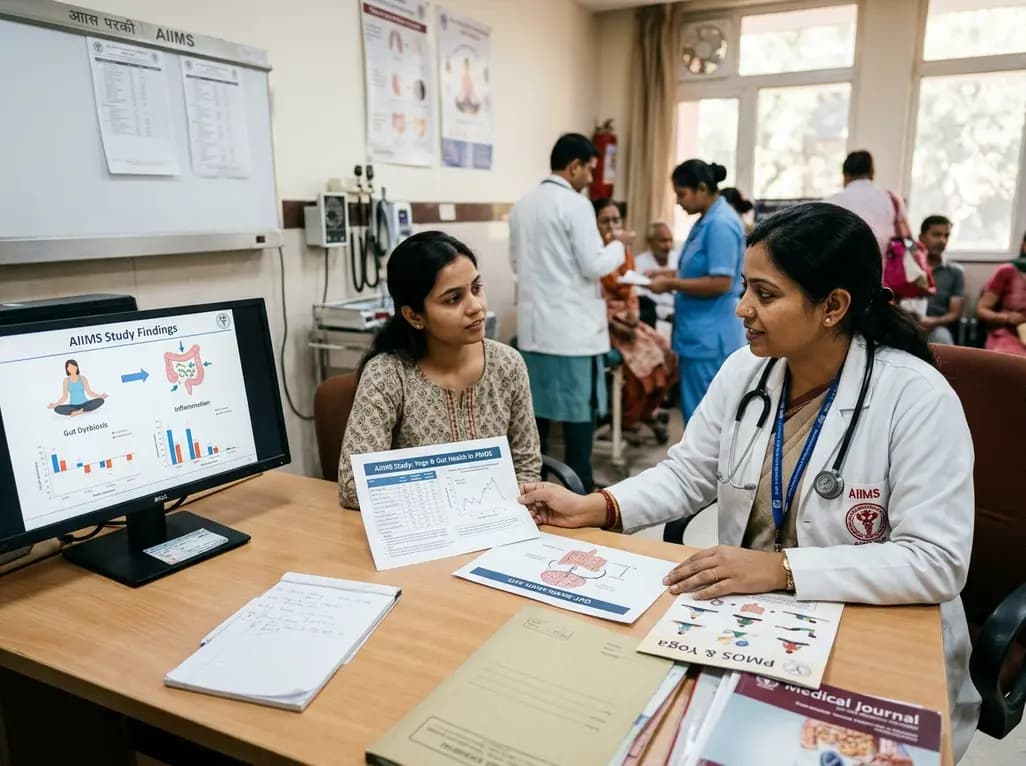
AIIMS researchers suggest yoga may alleviate gut dysbiosis in Polyendocrine Metabolic Ovarian Syndrome (PMOS) by modulating the gut-brain axis, lowering chronic inflammation, and enhancing parasympathetic tone to support metabolic and hormonal equilibrium.
Today

A prospective cohort study demonstrates that feeding tubes, formula exposure, aortic cross-clamp duration, and socioeconomic deprivation disrupt the neonatal gut microbiome in congenital heart disease, emphasizing the need for targeted nutritional and perioperative gut-protective strategies.
Today
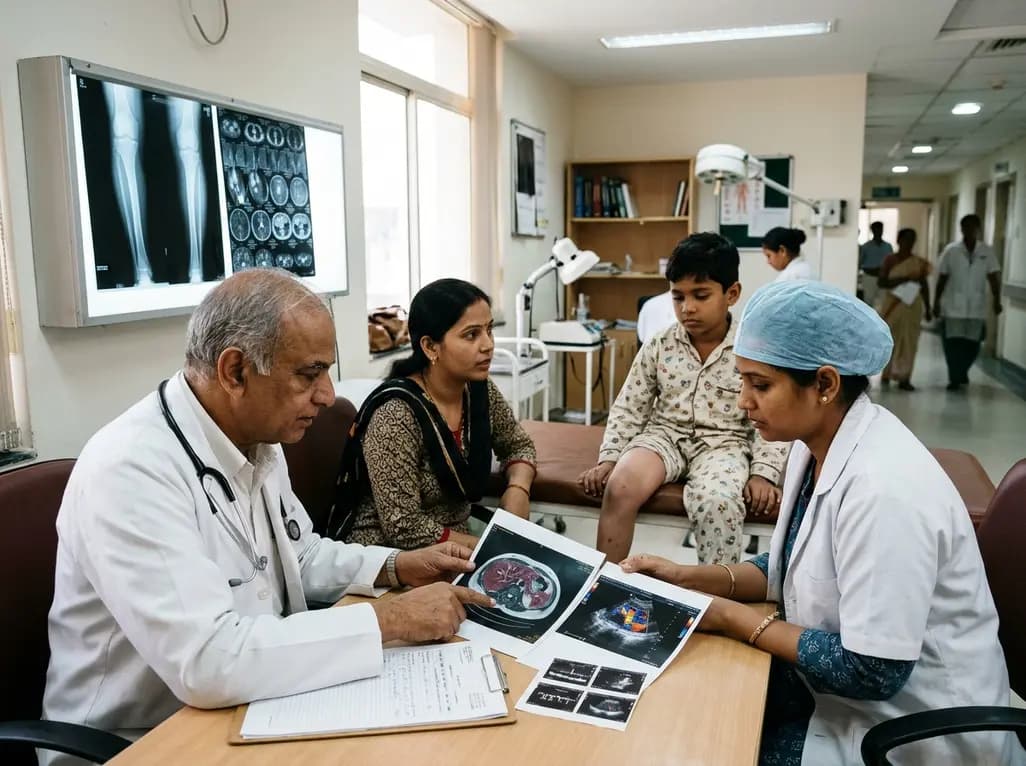
Deep intramuscular vascular malformations in pediatric Klippel-Trenaunay syndrome can mimic Maffucci syndrome. Multimodality imaging with Doppler ultrasound and MRI, along with histopathology, ensures prompt differential diagnosis, targeted surgical debulking, and optimized conservative surveillance.
Today

Modern management of adrenal incidentalomas is shifting away from universal testing toward risk-stratified biochemical evaluation. Guidelines suggest omitting metanephrine testing in lipid-rich adenomas (≤10 HU), while maintaining autonomous cortisol testing to prevent cardiometabolic complications.
Today
