

Loading, please wait...
Loading, please wait...

Therapeutic drug monitoring provides essential biological feedback to optimize complex pharmacotherapy, yet conventional clinical workflows frequently struggle with operational barriers and manual calculation constraints. Consequently, model-informed precision dosing has emerged as an indispensable strategy to personalize drug exposure using population pharmacokinetic models and Bayesian forecasting algorithms. Despite substantial advances in computational pharmacometrics, practical bedside deployment continues to depend heavily on scarce clinical pharmacology specialists. A landmark publication in JMIR Medical Informatics introduces Tucuxi-CDSS, an innovative open-source clinical decision support architecture designed to automate Bayesian dose individualization. This digital health system systematically bridges the gap between sophisticated pharmacological theory and front-line healthcare delivery. By standardizing complex dosing workflows, the software extends specialized expertise to clinical environments where trained pharmacologists remain severely limited.
The operational framework of Tucuxi-CDSS addresses long-standing challenges in digital health translation through an adaptable, modular infrastructure. Developers structured the platform around transparent XML-based drug model definitions, localized language files, and customizable clinical reporting templates. Consequently, clinicians can tailor dosing algorithms across diverse therapeutic classes without altering core system code. To establish computational dependability, investigators conducted rigorous unit testing, integration assessments, and systematic random input fuzzing. Furthermore, the platform integrates seamless communication interfaces that extract patient data from electronic health records and external point-of-care analytical devices. Therefore, the system transforms raw clinical measurements into structured inputs suitable for real-time mathematical simulation. This architectural modularity ensures that hospitals can adapt dosing rules to accommodate regional guidelines, shifting formulary requirements, and novel population pharmacokinetic models without software rebuilding.
A primary hazard in automated dosing calculations stems from erroneous clinical inputs, including inaccurate sample timing and charting discrepancies. Therefore, Tucuxi-CDSS introduces an automated data-validation engine that evaluates data integrity before initiating pharmacokinetic calculations. The system actively scrutinizes laboratory timestamps, dose scheduling histories, and physiologically implausible covariates through predefined plausibility rules. When discrepancies occur, the software flags suspected pre-analytical errors and alerts healthcare providers immediately. In an in silico stress test evaluating sixty virtual patient scenarios enriched with deliberate logging errors, the system demonstrated robust error detection. Specifically, the automated platform achieved a sensitivity of 53% compared to 45% achieved by an experienced human specialist. Although specificity was slightly lower at 83% versus 100%, this heightened vigilance creates an indispensable digital gatekeeper that prevents hazardous medication adjustments caused by flawed data entry.
The ultimate benchmark for algorithmic dosing tools lies in their tangible capacity to maximize therapeutic efficacy safely. During validation testing against an experienced clinical pharmacologist, Tucuxi-CDSS demonstrated superior overall therapeutic target attainment. Specifically, the software achieved successful target attainment in 55% of simulated cases, whereas the human expert attained target concentrations in only 37% of cases, representing a statistically significant improvement. However, this active optimization introduced four detrimental dosage adjustments in the decision support arm compared to none under human oversight. These rare deviations occurred when subtle clinical nuances conflicted with algorithmic boundaries, nudging previously stable profiles outside the target window. Thus, while automated systems aggressively drive superior target concentrations, they must function alongside vigilant clinical oversight to prevent unintended therapeutic shifts in borderline cases.
The global health significance of automated precision dosing becomes especially apparent in infectious disease management, particularly tuberculosis therapy. Under standard weight-banded regimens, rifampicin frequently produces subtherapeutic systemic exposure, driving treatment failure and facilitating antimicrobial resistance. To solve this dilemma, researchers initiated a real-world implementation trial of Tucuxi-CDSS in Tanzania to guide individualized rifampicin therapy. By integrating point-of-care drug concentration measurements with Bayesian pharmacokinetic forecasting, bedside providers can swiftly adjust daily doses. Consequently, clinicians achieve therapeutic targets without waiting days for off-site specialist consultations. Furthermore, parallel implementations with imatinib demonstrate how the software effectively manages covariate shifts such as body weight fluctuations and organ function changes. This operational flexibility proves that precision pharmacotherapy can thrive in resource-constrained environments that carry the highest burdens of communicable disease.
Integrating algorithmic support tools into routine hospital workflows demands a balanced appreciation of technological strengths and clinical judgment. Tucuxi-CDSS generates comprehensive, interpretable clinical reports that outline predictive pharmacokinetic trajectories alongside explicit rationale for every recommendation. Consequently, bedside clinicians do not interact with an opaque algorithm, but rather receive transparent pharmacological guidance. Furthermore, because automated rules occasionally execute overly aggressive adjustments, prescribers must maintain final therapeutic authority. Multi-disciplinary teams comprising physicians, bedside nurses, and hospital pharmacists must collaborate to confirm patient adherence and overall clinical trajectory. As digital therapeutics advance, open-source decision support systems will provide vital clinical infrastructure. Ultimately, combining automated pharmacometric precision with human clinical vigilance protects patient safety, elevates treatment efficacy, and democratizes individualized medicine globally.
Model-informed precision dosing improves traditional drug monitoring by combining mathematical population models with individual clinical characteristics and Bayesian forecasting. Instead of relying solely on static trough concentrations and trial-and-error adjustments, this computational strategy accurately estimates individual clearance and predicts optimal future dosing. Consequently, clinicians can achieve therapeutic drug targets much more rapidly, minimize drug-induced toxicity risks, and tailor treatments effectively even when blood sampling schedules deviate from strict standard protocols.
Automated dosing platforms incorporate multi-layered validation logic to intercept erroneous data inputs before calculating recommendations. The system checks laboratory timestamps, dosing intervals, and patient covariates against predefined physiological boundaries to identify transcription errors or sampling inaccuracies. Furthermore, transparent reporting features visually explain each proposed dose adjustment to attending clinicians. This transparent workflow ensures that healthcare professionals thoroughly review, evaluate, and approve all algorithmic recommendations before administering adjusted medication doses to patients.
Tuberculosis management often suffers from substantial inter-individual pharmacokinetic variability, causing many patients receiving standard weight-based rifampicin regimens to experience subtherapeutic plasma exposures. These low concentrations contribute directly to treatment failure and accelerate the development of antimicrobial resistance. Precision dosing tools enable clinicians in resource-limited clinics to evaluate measured concentrations rapidly against pharmacokinetic models, optimize daily rifampicin doses, and overcome physiological variations without requiring on-site pharmacological specialists.
Disclaimer: This content is for informational and educational purposes only... Refer to the latest local and national guidelines for clinical practice.
References

Read summarized clinical updates, watch expert medical content, and earn CME certifications right from your smartphone.
Open your smartphone camera to scan and install.





Tucuxi-CDSS provides an open-source clinical decision support system that automates model-informed precision dosing. By integrating robust error safeguards, it elevates therapeutic target attainment and delivers expert pharmacometric oversight to resource-limited healthcare environments.
Today
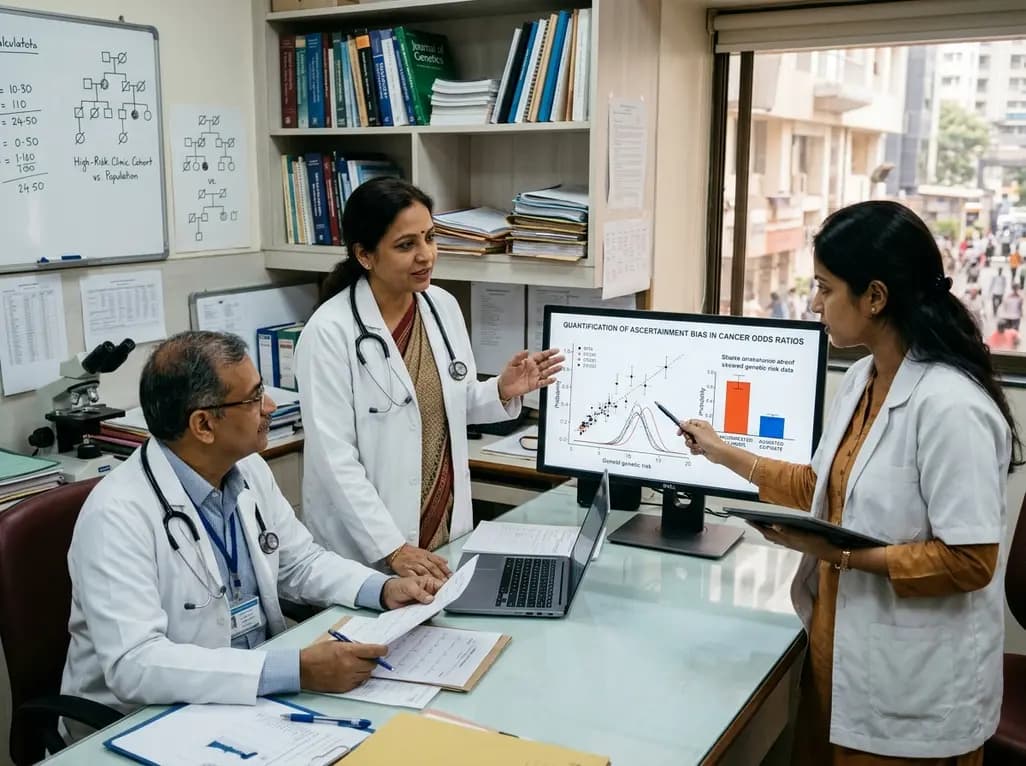
Ascertainment bias in cancer case-control studies inflates odds ratios and penetrance estimates when cases are drawn from high-risk clinics. A landmark modeling study demonstrates substantial bias ranging up to 23.72, highlighting the critical need for ascertainment adjustment in genetic risk counseling.
Today
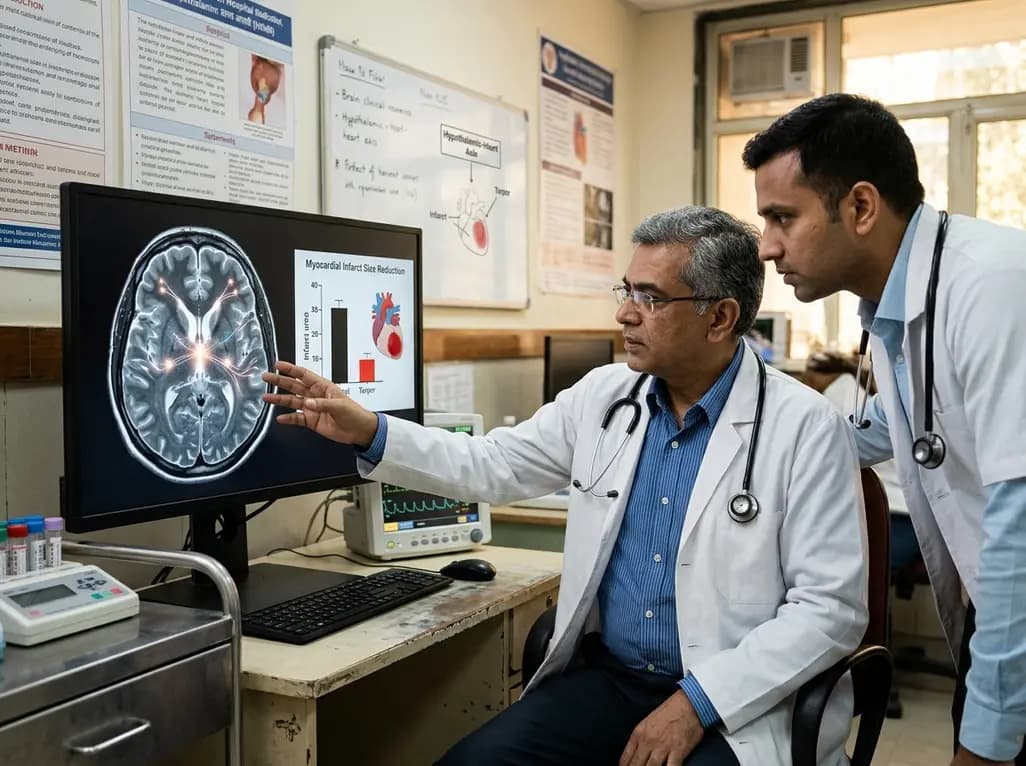
Researchers demonstrate that central induction of synthetic torpor in non-hibernating rats provides striking cardioprotection, reducing myocardial infarct size by ~40% during ischaemia-reperfusion injury through endogenous survival signaling, independent of hypothermia.
Today
A prospective study evaluates DeepSeek for knee osteoarthritis outcomes. While the model excels at baseline diagnosis and clinical scoring, its six-month prognostic predictions fall short of clinicians and simple persistence models, demonstrating high run-to-run variability.
Today
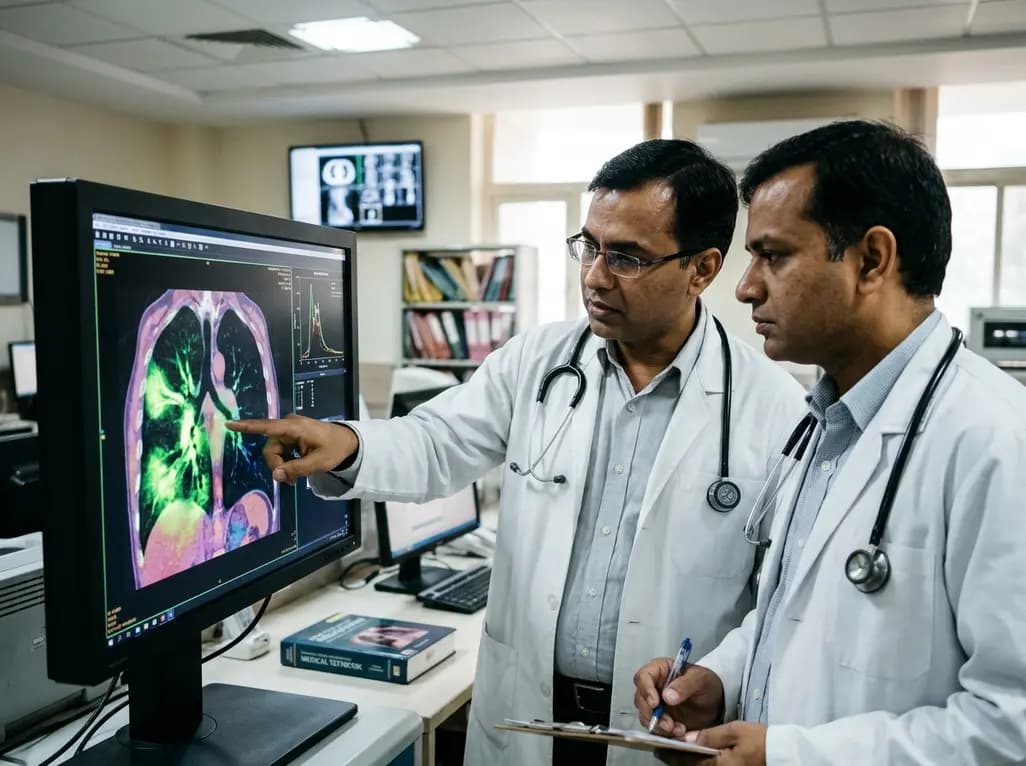
A novel fluorine-functionalized near-infrared copper fluorescent probe selectively illuminates lung tissue, revealing critical links between hyperglycemia, ER stress, and pulmonary malignancy for improved early diagnosis.
Today
