.webp&w=384&q=75)

Loading, please wait...
Loading, please wait...
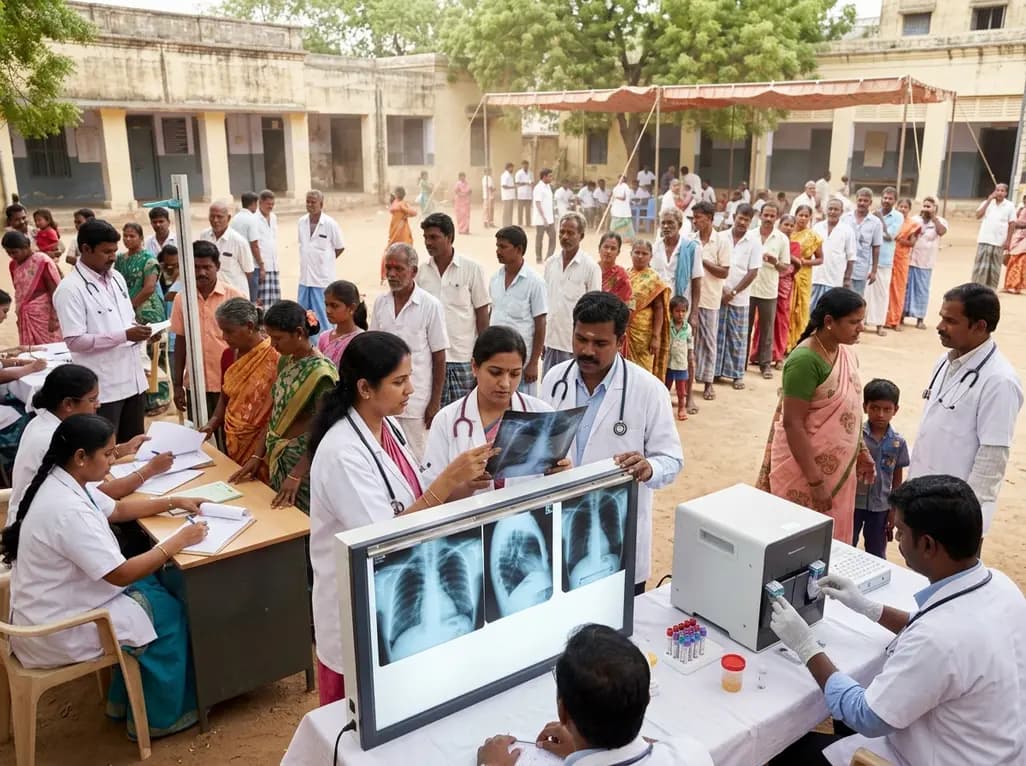
Tamil Nadu demonstrated commendable progress in public health management by identifying 48,469 tuberculosis patients during the first six months of 2026. This notable achievement follows the diagnosis of 93,203 cases in 2025. Health Minister K G Arunraj recently reviewed these findings during a high-level meeting with district deputy directors of tuberculosis in Chennai. Consequently, the state continues to execute robust public health measures under the National TB Elimination Programme (NTEP). A pivotal strategy in this ongoing initiative is systematic tuberculosis active case finding. This proactive approach enables healthcare teams to detect infections early and initiate treatment immediately, breaking community transmission chains across urban and rural sectors effectively.
Active surveillance serves as the cornerstone of modern disease control strategies across India. In Tamil Nadu, dedicated field teams target high-transmission rural villages and densely populated urban wards to identify symptomatic individuals promptly. Specifically, systematic tuberculosis active case finding uncovers undiagnosed cases that might otherwise remain hidden within vulnerable populations. Earlier detection directly reduces the duration of infectiousness, thereby protecting family members and close contacts from potential exposure.
Furthermore, state officials confirmed that all 48,469 individuals diagnosed between January and June 2026 are currently receiving appropriate antitubercular treatment. Prompt treatment initiation prevents clinical deterioration and lowers disease mortality among high-risk patient groups. Additionally, health authorities are expanding door-to-door screening drives in vulnerable geographic zones. These targeted initiatives focus on key demographics, including malnourished individuals, elderly citizens, factory workers in crowded environments, and people living with chronic comorbidities like diabetes or HIV. By shifting from passive healthcare seeking to proactive community screening, the health system bridges critical diagnostic gaps effectively. Consequently, Tamil Nadu ensures that every patient receives early, quality-assured care free of cost through public healthcare facilities.
Achieving rapid and accurate diagnosis requires state-of-the-art laboratory tools and modern imaging technologies. Under the revised national framework, Tamil Nadu health centers utilize chest X-rays alongside rapid molecular tests as primary frontline screening tools. Molecular diagnostic assays, such as cartridge-based nucleic acid amplification tests (CBNAAT) and TruNat, offer exceptional diagnostic precision. These advanced tools detect Mycobacterium tuberculosis DNA within hours while simultaneously identifying rifampicin resistance. Consequently, clinicians prescribe targeted, effective therapy regimens without unnecessary administrative or clinical delays.
Moreover, portable digital chest radiography has transformed field screening operations across remote rural blocks and urban slums. Mobile diagnostic vans equipped with artificial intelligence software facilitate rapid image interpretation in real time. As a result, field teams instantly identify radiological abnormalities and refer suspect individuals for confirmatory molecular testing. This integrated diagnostic pathway eliminates patient dropouts and drastically shortens the time between initial symptom identification and treatment onset. Furthermore, public health laboratories continuously expand testing capacity across peripheral health institutes to ensure equitable diagnostic access for every citizen regardless of socioeconomic status.
Preventing secondary infections is vital for achieving long-term disease elimination goals across the state. When an index patient receives a confirmed diagnosis, healthcare workers initiate contact tracing procedures immediately. Household contacts and close workplace associates undergo systematic clinical evaluation to rule out active pulmonary or extrapulmonary disease. Additionally, health personnel offer Tuberculosis Preventive Treatment (TPT) to eligible individuals who live in close proximity to infectious cases. This preventive therapy eliminates latent bacterial infection, reducing the risk of disease reactivation in susceptible individuals significantly.
Furthermore, health teams pay special attention to vulnerable pediatric contacts and immunocompromised household members. Standard preventive regimens, including daily isoniazid monotherapy or short-course rifapentine-based combinations, are provided free of cost under official supervision. Healthcare workers deliver regular adherence counseling and monitor contacts for potential drug adverse effects throughout the treatment period. Moreover, digital platforms like Ni-kshay track contact enrollment, treatment adherence, and clinical outcomes across all administrative districts. By combining active case detection with widespread preventive therapy, Tamil Nadu creates a robust dual barrier against endemic community transmission.
Sustainable disease elimination requires active, sustained participation from local governance bodies, civic institutions, and community leaders. In 2025, Tamil Nadu achieved a major milestone as 2,390 village panchayats received official certification as TB-free zones. This prestigious certification reflects rigorous epidemiological verification, high treatment success rates, and absent local transmission over sustained monitoring periods. Local panchayat leaders, grassroot health workers, and Accredited Social Health Activists (ASHAs) play indispensable roles in mobilizing rural communities for mass screening drives.
Additionally, community engagement initiatives reduce deep-seated social stigma surrounding tuberculosis diagnosis and treatment. Public education campaigns encourage individuals experiencing persistent cough, unexplained fever, weight loss, or night sweats to seek medical evaluation promptly without fear of discrimination. Furthermore, grassroots organizations help distribute nutritional support under schemes like the Pradhan Mantri TB Mukt Bharat Abhiyaan. Local volunteers, known as Ni-kshay Mitras, provide monthly food baskets, financial guidance, and emotional support to patients undergoing therapy. Consequently, social empowerment enhances treatment compliance, minimizes loss to follow-up, and strengthens public trust in state healthcare infrastructure.
Eliminating tuberculosis demands seamless collaboration across multiple government sectors, private medical providers, research institutions, and non-governmental organizations. Health Minister K G Arunraj emphasized that multi-departmental coordination remains essential for sustaining current public health momentum. Private healthcare providers handle a substantial portion of initial patient consultations in urban centers. Therefore, strengthening private-sector engagement through mandatory case notification on the Ni-kshay portal ensures standardized care and free drug distribution for every diagnosed individual across the state.
Furthermore, multi-sectoral partnerships enable comprehensive social support systems for underprivileged and vulnerable patients. Active collaboration with industrial welfare boards, tribal welfare departments, transport unions, and urban local bodies ensures tailored outreach in high-risk occupational environments. Regular review meetings led by district deputy directors allow program managers to monitor key performance indicators, resolve local supply chain bottlenecks, and reallocate diagnostic resources dynamically. As a result, Tamil Nadu demonstrates how aggressive surveillance, robust diagnostic infrastructure, and multi-stakeholder governance create an effective framework for sustainable disease eradication.
Q1: How does active case finding differ from routine passive case detection in tuberculosis management?
Passive case detection relies on symptomatic individuals visiting healthcare facilities on their own initiative. In contrast, active case finding proactively screens high-risk or vulnerable populations directly in their communities. Healthcare teams visit homes, workplaces, and high-density areas using chest X-rays and molecular tools. Consequently, active screening identifies undiagnosed cases earlier, preventing further disease transmission and improving overall treatment outcomes significantly across target populations.
Q2: Why is molecular testing preferred over traditional sputum smear microscopy for TB diagnosis?
Rapid molecular tests like CBNAAT and TruNat detect bacterial DNA with significantly higher sensitivity than conventional smear microscopy. Furthermore, molecular assays provide results within hours and simultaneously detect resistance to rifampicin, a critical first-line antitubercular drug. Consequently, molecular diagnostic tools enable immediate initiation of accurate, drug-susceptible or drug-resistant treatment regimens, thereby reducing diagnostic delays and preventing drug resistance spread.
Q3: What is the purpose of Tuberculosis Preventive Treatment for household contacts of TB patients?
Tuberculosis Preventive Treatment aims to eliminate latent infection in individuals exposed to infectious index cases. Household contacts, particularly young children and immunocompromised individuals, face a high risk of developing active disease. After active disease is ruled out through clinical and radiological evaluation, preventive medications are prescribed. TPT substantially lowers the risk of progression to active illness, protecting vulnerable family members.
Disclaimer: This content is for informational and educational purposes only. It does not constitute medical advice or replace professional judgment. Refer to the latest local and national guidelines for clinical practice.
References

Read summarized clinical updates, watch expert medical content, and earn CME certifications right from your smartphone.
Open your smartphone camera to scan and install.





Tamil Nadu intensified tuberculosis surveillance to identify 48,469 TB cases in the first half of 2026, building upon 93,203 cases diagnosed in 2025. With 2,390 panchayats certified TB-free, the state emphasizes active case finding, molecular diagnostic testing, chest X-rays, and contact preventive therapy.
3 months ago

Discover the crucial role of glymphatic dysfunction in stroke, where perivascular clearance failure and neuroinflammation exacerbate cerebral edema and post-stroke brain injury.
Today

A prenatal case highlights severe glutaric acidemia type II presenting as bilateral hyperechoic cystic kidneys at 18 weeks. Whole-exome sequencing revealed a novel homozygous ETFDH frameshift variant, demonstrating the power of rapid genetic testing in fetal renal anomalies.
Today

Review how tailored exercise programs benefit frail older patients with heart failure. Explore pathophysiological mechanisms, individualized training prescriptions, and strategies to overcome adherence barriers in clinical practice.
Yesterday

This comparative study evaluates posterior labral tears with and without glenohumeral instability, highlighting distinct demographic patterns, MRI underestimation in stable shoulders, and successful arthroscopic repair outcomes.
Yesterday

A clinical study demonstrates that early intervention with tocilizumab, either as monotherapy or bridged with corticosteroids, achieves significant proptosis reduction and resolves active inflammation in treatment-naive thyroid eye disease.
Yesterday
