.webp&w=384&q=75)

Loading, please wait...
Loading, please wait...

Recent national surveillance highlights a significant rise in mental health conditions across transitional age groups. Clinicians in outpatient and inpatient settings increasingly manage cases of anxiety in young adults who present with diverse psychosomatic complaints and emotional distress. Longitudinal data from 2020 through 2024 demonstrate that young adults face escalating rates of clinical anxiety diagnoses, routine prescription medication usage, and frequent debilitating symptoms. Understanding these demographic and epidemiological patterns enables clinicians to recognize vulnerable patient cohorts promptly. Consequently, targeted early intervention and structured primary care screening can mitigate long-term psychological and functional disability.
Surveillance data between 2020 and 2024 confirm a consistent upward trajectory in the prevalence of diagnosed anxiety disorders among emerging adults aged 18 to 25 years. Longitudinal logistic regression models indicate a 31 percent increase in the odds of receiving a formal anxiety diagnosis over this four-year surveillance window. In addition, the proportion of young adults requiring regular anxiolytic or antidepressant pharmacotherapy has climbed significantly. Clinicians must recognize that this shift represents more than transient situational distress. Instead, it signals an expanding burden of moderate to severe generalized anxiety, social anxiety, and panic disorders requiring formal medical intervention.
Furthermore, the frequency and daily intensity of self-reported anxiety symptoms have worsened. Many patients report that persistent worry impairs their academic performance, workplace productivity, and social relationships. Primary care physicians often encounter these individuals during routine visits for non-specific somatic complaints, such as tension headaches, gastrointestinal upset, palpitations, or chronic insomnia. Therefore, clinicians must maintain a high index of suspicion, as underlying psychological distress frequently drives recurrent somatic presentations in young adults.
Epidemiological analyses reveal profound disparities in anxiety prevalence across different biological and demographic categories. Female young adults consistently report higher rates of diagnosed anxiety and psychotropic medication utilization compared to their male peers. Biological variations in neuroendocrine stress reactivity, differences in healthcare-seeking behaviors, and distinct societal stressors contribute to this observed gap. However, clinicians must also remain vigilant with male patients, who often underreport internalizing symptoms and instead present with substance misuse, irritability, or severe avoidance behaviors.
Moreover, sexual minority young adults face disproportionately elevated risks for severe anxiety outcomes. Data demonstrate markedly higher symptom scores and diagnostic rates among lesbian, gay, bisexual, and queer individuals compared to heterosexual peers. Minority stress theory explains that chronic exposure to societal stigma, discrimination, and structural marginalization exerts a continuous burden on the autonomic nervous system. When sexual orientation intersects with racial and ethnic minority backgrounds, these compounding stressors further amplify psychiatric morbidity. Healthcare providers must therefore deliver culturally competent, affirming, and trauma-informed care during every clinical consultation.
The transitional developmental window between adolescence and adulthood represents an inherently vulnerable life stage characterized by substantial neurodevelopmental maturation. Concurrently, young adults navigate major psychosocial transitions, including educational demands, early career establishment, and financial independence. Economic instability, rising living costs, and competitive labor markets intensify baseline stress levels during this sensitive period. Consequently, chronic financial strain and housing instability frequently trigger or exacerbate underlying anxiety phenotypes in vulnerable individuals.
In addition to economic pressures, digital environments and social media engagement play a complex role in modulating emotional wellbeing. Excessive digital connectivity often fosters social comparison, sleep disruption, and fear of missing out, which directly destabilize mood and stress regulation pathways. Primary care practitioners should routinely evaluate sleep hygiene, screen time, and lifestyle habits during routine clinical assessments. Addressing these modifiable environmental contributors provides a comprehensive foundation for psychological resilience and symptom stabilization.
Given that young adults frequently utilize primary care and emergency departments for episodic care, routine mental health screening is essential. Standardized, validated instruments such as the Generalized Anxiety Disorder 7-item scale (GAD-7) offer rapid, reliable assessment of symptom severity. Incorporating these screening tools into electronic health records and routine triage protocols ensures early detection of subclinical and clinical anxiety. Consequently, clinical teams can identify deteriorating individuals before severe functional impairment occurs.
Furthermore, clinicians must conduct thorough diagnostic evaluations to differentiate primary anxiety disorders from secondary organic etiologies. Clinicians should rule out hyperthyroidism, cardiac arrhythmias, pheochromocytoma, and substance-induced anxiety states through appropriate physical examinations and targeted laboratory testing. Routine screening for co-occurring major depressive disorder and substance use disorders is equally vital, as psychiatric comorbidities significantly complicate treatment response and elevate suicide risk. A structured diagnostic approach ensures safe, accurate, and individualized treatment planning.
Optimal clinical outcomes require a multimodal management plan tailored to disease severity and patient preference. For mild to moderate presentations, evidence-based psychotherapies serve as frontline interventions. Cognitive Behavioral Therapy (CBT) effectively restructures maladaptive cognitive distortions, promotes behavioral activation, and enhances coping mechanisms. Additionally, mindfulness-based stress reduction and structured lifestyle modifications, including regular aerobic exercise and balanced nutrition, yield substantial clinical benefits.
When moderate to severe functional impairment persists, clinicians should combine psychotherapy with evidence-based pharmacotherapy. Selective Serotonin Reuptake Inhibitors (SSRIs) and Serotonin-Norepinephrine Reuptake Inhibitors (SNRIs) represent the first-line pharmacological agents for long-term anxiety management. Clinicians must educate patients regarding the delayed onset of therapeutic efficacy, which typically spans two to four weeks. Moreover, providers should exercise extreme caution with benzodiazepines, restricting their use to short-term acute crises due to risks of physiological dependence, cognitive blunting, and tolerance. Regular clinical follow-ups ensure optimal dose titration and adherence monitoring.
Sustained therapeutic success depends on robust care coordination across multidisciplinary healthcare teams. Integrating behavioral health specialists within primary care clinics facilitates warm handoffs, improves appointment adherence, and reduces treatment stigma. Collaborative care models foster continuous communication between primary care physicians, psychiatrists, clinical psychologists, and social workers. Consequently, young adults receive cohesive, patient-centered care that addresses medical, emotional, and social determinants of health.
Furthermore, clinicians should actively engage young adults in shared decision-making regarding their treatment trajectory. Educating patients about neurobiology, treatment options, and self-management strategies enhances agency and treatment compliance. Leveraging secure patient portals and digital teleconsultations can bridge accessibility gaps for busy college students and working professionals. By cultivating strong therapeutic alliances, healthcare providers empower young adults to achieve durable psychological recovery and long-term functional success.
Clinicians should screen all young adults for anxiety disorders annually using validated instruments like the GAD-7. Additionally, providers must re-screen patients whenever they present with chronic unexplained somatic symptoms, worsening sleep disturbances, or major psychosocial life transitions. Prompt opportunistic screening during routine checkups facilitates early identification, enabling timely therapeutic intervention before severe functional decline or psychiatric comorbidity develops.
Selective Serotonin Reuptake Inhibitors and Serotonin-Norepinephrine Reuptake Inhibitors represent the first-line pharmacological options for young adults with moderate to severe anxiety disorders. These agents provide robust efficacy and favorable long-term safety profiles. Clinicians should initiate therapy at low doses and titrate gradually to minimize transient side effects, while closely monitoring patients during the initial weeks for symptom response.
Demographic factors such as female sex, minority sexual orientation, and racial minoritization correlate with higher anxiety prevalence and elevated disease burden. Chronic minority stress, social stigma, and unequal healthcare access exacerbate psychological vulnerability. Recognizing these disparities allows clinicians to offer culturally competent, affirming interventions and connect high-risk individuals with supportive, specialized community and behavioral health resources.
Disclaimer: This content is for informational and educational purposes only, and does not substitute professional medical advice, diagnosis, or treatment. Refer to the latest local and national guidelines for clinical practice.
References
Villodas ML et al. Trends in Anxiety Among Young Adults Aged 18 to 25 Years in the United States, 2020-2024: Differences by Race, Sex, and Sexual Orientation. Am J Public Health. 2026 Aug 20. doi: 10.2105/AJPH.2026.308632. PMID: 42623586.
Bandelow B, Michaelis S, Wedekind D. Treatment of anxiety disorders. Dialogues Clin Neurosci. 2017;19(2):93-107.
Curry SJ, Krist AH, Owens DK, et al. Screening for Anxiety in Children and Adolescents: US Preventive Services Task Force Recommendation Statement. JAMA. 2022;328(14):1438-1444.

Read summarized clinical updates, watch expert medical content, and earn CME certifications right from your smartphone.
Open your smartphone camera to scan and install.





A comprehensive analysis of multi-year surveillance data reveals rising rates of anxiety in young adults, highlighting significant disparities across sex, race, and sexual orientation, with practical guidance for integrated clinical screening and primary care intervention.
last month

With post-monsoon dengue surges threatening South Asian health systems, physicians must refine triage and management. This guide covers vital warning signs, plasma leakage detection, crystalloid titration, and vector containment strategies to prevent mortality during seasonal arboviral epidemics.
Today

Findings from Project Viva indicate that sustained postpartum weight retention, rather than excessive gestational weight gain alone, directly worsens women's mid-life cardiovascular health, degrading blood pressure and glycemic parameters decades after delivery.
Today
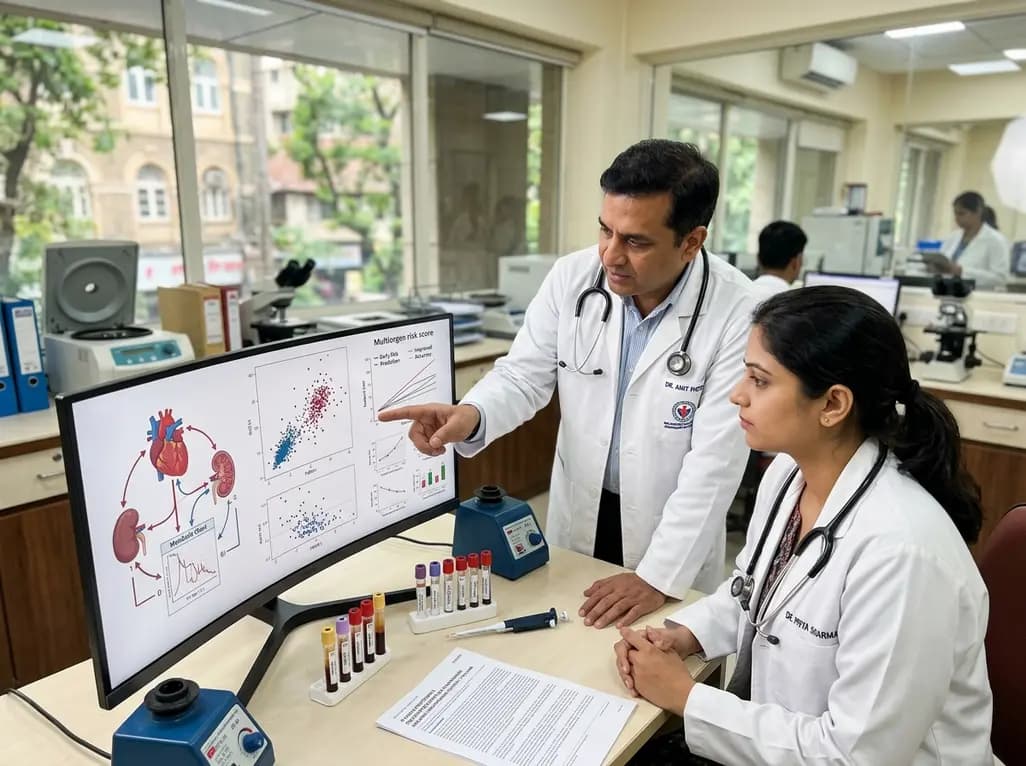
A large UK Biobank study reveals that plasma proteomic signatures capture preclinical organ damage and improve multiorgan risk prediction across early CKM syndrome stages 0 to 2 beyond traditional PREVENT clinical models.
Today

A retrospective CBCT study reveals that superior TMJ space asymmetry correlates moderately with occipital condyle-atlas-axis asymmetry in unilateral TMJ osteoarthritis, highlighting an imaging correlate between jaw biomechanics and upper cervical alignment rather than a standalone diagnostic marker.
Today

A Bayesian multilevel meta-analysis reveals that aerobic training combined with moderate carbohydrate restriction modestly lowers HbA1c in type 2 diabetes. However, sparse data and very low certainty leave incremental benefits over exercise or diet alone unproven, highlighting the need for individualized care.
Today
