.webp&w=384&q=75)

Loading, please wait...
Loading, please wait...

Traumatic spine injuries significantly impact healthcare systems worldwide. Recent research into traumatic spine fracture triage has uncovered significant inefficiencies within emergency healthcare systems. A large-scale retrospective study evaluated nearly 30,000 patients transferred to Level I and II trauma centers. Surprisingly, researchers found that clinicians managed over 80% of these cases nonoperatively. This finding suggests that many patients might not have required the highly specialized resources of top-tier trauma facilities. Furthermore, these results highlight a critical opportunity to optimize resource allocation across hospital networks.
Secondary overtriage (SOT) occurs when stable patients undergo unnecessary transfers between facilities. In this cohort, the SOT rate reached a substantial 18.2%. However, certain patient demographics and injury characteristics influenced these outcomes. Specifically, older patients and those with higher Injury Severity Scores (ISS) faced an increased risk of unnecessary transfers. Moreover, patients using Medicare or Medicaid were more likely to experience overtriage compared to those with private insurance. Conversely, those with lumbar spine fractures showed a lower likelihood of SOT. Consequently, medical professionals must refine traumatic spine fracture triage protocols to better distinguish between patients requiring advanced surgery and those stable enough for local care.
Therefore, improving the accuracy of initial assessments is paramount for modern trauma systems. In addition to reducing healthcare costs, efficient triage reduces the burden on specialized surgical teams. Clinicians should prioritize standardized imaging and neurologically focused physical exams at the initial point of care. Furthermore, involving spine specialists earlier in the transfer decision process could prevent unnecessary patient displacement. Ultimately, balancing safety with resource stewardship will lead to more sustainable trauma care frameworks globally, including in emerging healthcare sectors like India.
Secondary overtriage refers to the transfer of patients with relatively stable injuries to high-level trauma centers when their condition does not ultimately require the specialized surgical or intensive care services offered there.
Older patients often present with multiple comorbidities and complex medical histories. Consequently, referring physicians may favor transfer to ensure the highest level of caution, even if the spine fracture itself is stable.
Hospitals can improve triage by implementing standardized clinical guidelines and utilizing telemedicine to consult with specialists before initiating a transfer. This approach ensures that only patients needing specialized intervention occupy tertiary care beds.
Disclaimer: This content is for informational and educational purposes only. It does not constitute medical advice or a professional relationship. Always seek the advice of a qualified healthcare provider for any medical condition or treatment. Refer to the latest local and national guidelines for clinical practice.
References
Ye VC et al. Rates of nonoperative management and secondary overtriage in patients with spine fracture transferred to level I or II trauma centers. J Neurosurg Spine. 2026 Mar 06. doi: 10.3171/2025.10.SPINE25693. PMID: 41791108.
Haider AH, et al. Understanding Overtriage and Undertriage in Trauma. JAMA Surgery. 2024;159(2):145-152.
Mohanty CR et al. Trauma care in India: Current Scenario and Challenges. Indian Journal of Critical Care Medicine. 2023;27(1):12-18.

Read summarized clinical updates, watch expert medical content, and earn CME certifications right from your smartphone.
Open your smartphone camera to scan and install.





A study of 29,591 patients reveals high rates of nonoperative management (81.1%) and secondary overtriage (18.2%) in traumatic spine fracture transfers....
7 months ago
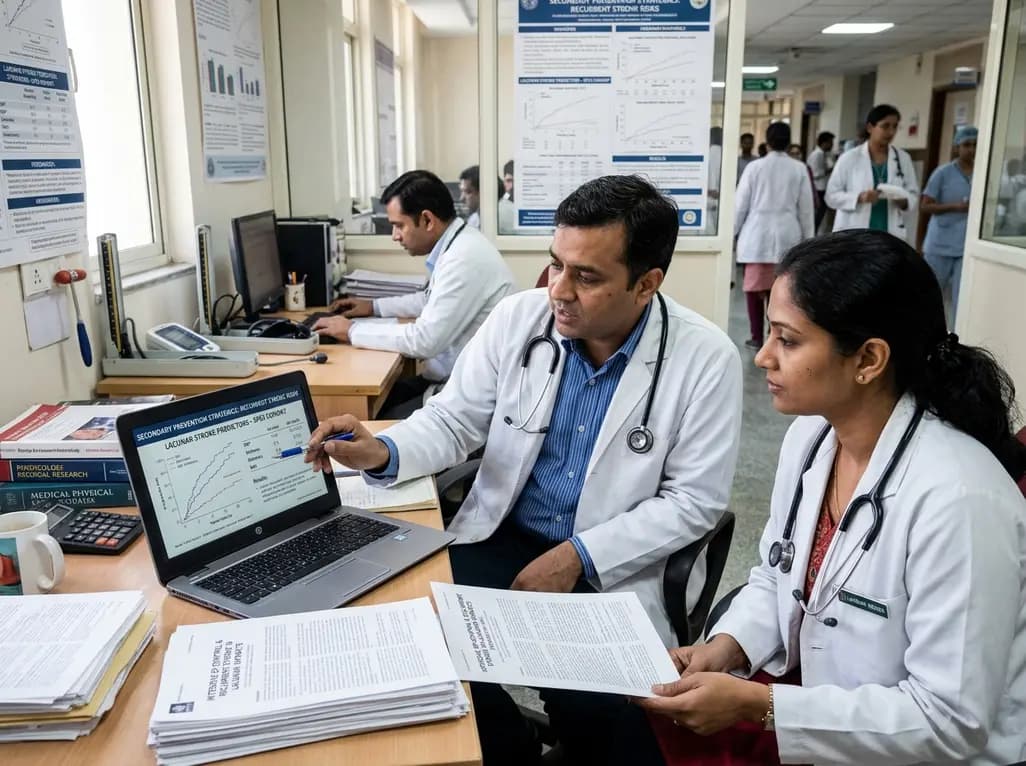
Explore vital recurrent stroke predictors in lacunar stroke patients managed with intensive blood pressure lowering. This analysis examines trial findings from SPS3 to uncover residual vascular risks, metabolic factors, and targeted secondary prevention strategies for high-risk neurological patients.
Today

A comprehensive scoping review synthesises evidence linking prenatal maternal mental health to long-term offspring neurodevelopment, evaluating neuroendocrine, inflammatory, and epigenetic pathways while highlighting clinical screening and future research priorities.
Today

The Directorate General of Health Services directs Indian states to halt the hazardous reuse and reprocessing of single-use medical devices. Discover regulatory implications under the Drugs and Cosmetics Act, critical infection risks, legal liabilities, and operational changes required across clinical specialties.
Today
Mitochondria-targeted nanoparticles self-assembled from EGCG and L-glutamic acid effectively restore mitochondrial homeostasis, suppress synovial inflammation, and attenuate chondrocyte senescence in osteoarthritis, offering a promising disease-modifying nanotherapy.
Today

India is advancing preventive healthcare by integrating genomics, artificial intelligence, and quantum technologies. With the SANGAM programme sequencing one million Indian genomes, clinicians can unlock personalized therapies, detect cardiometabolic risks early, and curb the burden of diabetes and heart disease.
Today
