.webp&w=384&q=75)

Loading, please wait...
Loading, please wait...
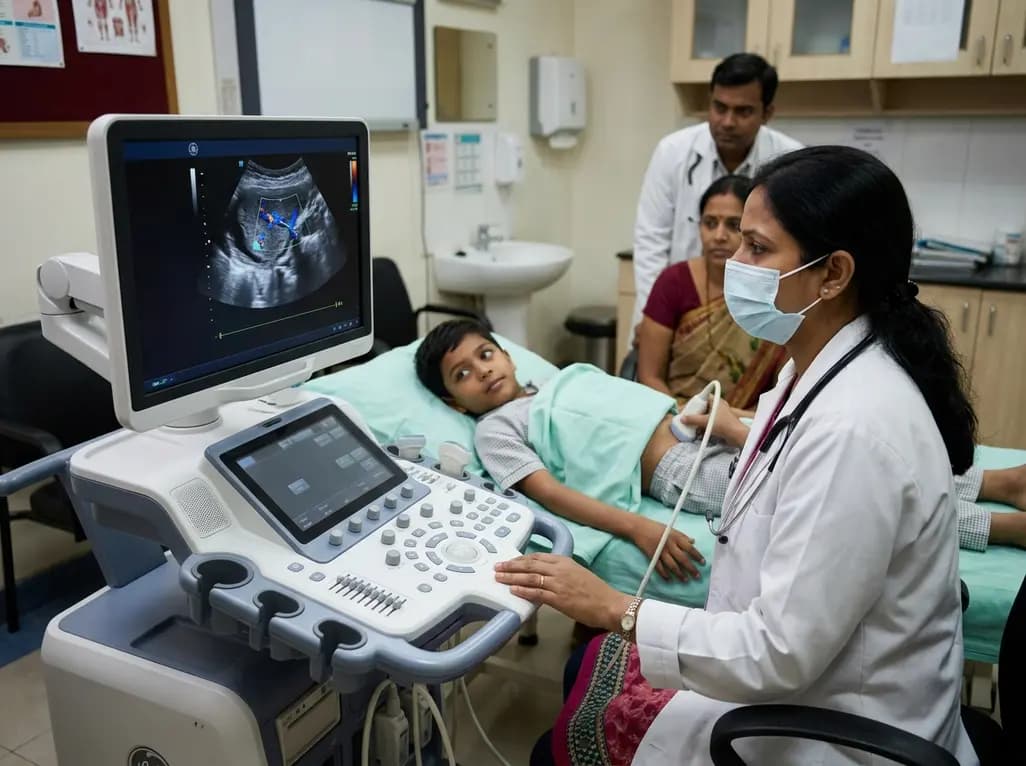
Perianal fistulizing disease represents one of the most debilitating manifestations of pediatric Crohn's disease, causing recurrent pain, discharge, and substantial psychological distress in young patients. Although pelvic magnetic resonance imaging (MRI) remains the gold standard for staging complex pelvic tracts, frequent MRI surveillance poses logistical challenges, high costs, and sedation requirements for younger children. Consequently, clinicians are actively exploring radiation-free bedside imaging alternatives. Recent research demonstrates that transperineal ultrasound in Crohn's disease provides reliable, real-time assessment of fistula activity and closely correlates with validated MRI activity scores, offering an accessible solution for disease monitoring.
Transperineal ultrasonography (TPUS) provides a non-invasive, dynamic, and well-tolerated approach for visualizing the perianal anatomy in pediatric patients. Unlike endoanal ultrasound, TPUS does not require painful intra-anal probe insertion, which is often intolerable in children with active anal fissure disease or strictures. Clinicians place a high-frequency curved or linear transducer directly over the perineum to scan the sphincter complex, ischioanal fossa, and subcutaneous tracts. Therefore, TPUS avoids the need for general anesthesia or sedation, which is frequently necessary during prolonged pediatric pelvic MRI scans. In clinical practice, point-of-care ultrasound empowers pediatric gastroenterologists and surgeons to quickly confirm active inflammation, detect subclinical fluid collections, and guide prompt therapeutic decisions.
In a recent retrospective investigation involving pediatric patients with Crohn's disease, researchers systematically analyzed transperineal ultrasound features against the magnetic resonance novel index for fistula imaging in Crohn's disease (MAGNIFI-CD). Multivariable linear regression demonstrated that two distinct ultrasound parameters independently predicted higher MAGNIFI-CD scores: longitudinal fistula length and intramural vascularity. Specifically, longer fistulous tracts and heightened vascular signals on color Doppler reflected deeper tissue penetration and severe inflammatory activity. Consequently, these specific ultrasound markers mirror the complex inflammatory burden typically quantified by cross-sectional MRI, proving that focused ultrasound assessment can reliably gauge anatomical severity without radiation exposure.
Monitoring treatment efficacy in pediatric fistulizing Crohn's disease requires objective biomarkers rather than relying solely on external skin closure. External healing often precedes internal tract resolution, creating a false impression of remission while active inflammation persists beneath the perineal surface. The study revealed that pediatric clinical responders exhibited a significant reduction in ultrasound vascularity compared to non-responders over time. As biologic therapies suppress local cytokine cascades, Doppler hyperemia diminishes rapidly within the fistula wall. Thus, tracking vascularity shifts on sequential transperineal ultrasound scans offers clinicians an objective, reliable readout of treatment response, allowing tailored optimization of immunomodulators and biologic agents before premature seton removal.
Perianal Crohn's disease frequently presents with complex branching, supralevator extensions, and occult fluid collections. Transperineal sonography excels at identifying acute purulent collections that require immediate surgical drainage prior to escalating immunosuppression. High-frequency grayscale imaging differentiates hypoechoic active tracts filled with fluid and debris from organized, hyperechoic fibrotic scars. Furthermore, color Doppler readily separates inflammatory hyperemia from avascular necrotic fluid pockets. While deep pelvic extensions above the levator ani may still require MRI confirmation, routine TPUS effectively screens for expanding abscesses and branching tracts during routine outpatient visits, preventing delays in source control and protecting sphincter integrity.
Incorporating transperineal ultrasonography into routine outpatient pediatric gastrointestinal clinics creates a practical, patient-centered monitoring algorithm. Pediatric patients can undergo quick point-of-care perineal scanning during their standard biologic infusion or follow-up appointments without dietary prep or sedation. When combined with clinical indices and serum biomarkers, ultrasound helps clinicians identify non-responders early, prompting therapeutic drug monitoring or dosage escalation. Pelvic MRI can then be reserved for initial baseline mapping or complex surgical planning. Consequently, adopting this dual imaging strategy minimizes medical costs, reduces hospital-related anxiety for young patients, and ensures timely adjustments to anti-inflammatory regimens.
Transperineal ultrasound positions the probe externally on the perineal skin rather than inserting it into the rectum. Children with active Crohn's disease frequently suffer from painful anal fissures, severe tenderness, or strictures, making endoanal probe insertion distressing and poorly tolerated. Transperineal scanning avoids anal trauma, requires no sedation, and allows comfortable serial monitoring in pediatric outpatient clinics.
Fistula wall vascularity directly mirrors active transmural inflammation and neoangiogenesis driven by pro-inflammatory cytokines. High Doppler flow indicates intense inflammatory activity within the fistulous tract, which strongly correlates with higher MRI activity scores. As medical therapies successfully suppress inflammation, vascular signals markedly decrease, serving as an early objective indicator of treatment response.
Transperineal ultrasound serves as an excellent adjunct rather than a complete replacement for pelvic MRI. While ultrasound accurately tracks tract length, vascularity, and superficial abscesses during routine follow-ups, MRI remains essential for comprehensive baseline anatomical mapping, evaluating high supralevator extensions, and confirming complete radiological healing before discontinuing maintenance therapies.
Disclaimer: This content is for informational and educational purposes only and does not constitute medical advice, diagnosis, or treatment. Healthcare professionals should exercise their independent clinical judgment when evaluating patients. Refer to the latest local and national guidelines for clinical practice.
References

Read summarized clinical updates, watch expert medical content, and earn CME certifications right from your smartphone.
Open your smartphone camera to scan and install.





A new study highlights the clinical utility of transperineal ultrasound (TPUS) in pediatric perianal Crohn's disease, showing that fistula tract length and Doppler vascularity strongly correlate with MAGNIFI-CD MRI scores and effectively monitor therapeutic response.
last month

With post-monsoon dengue surges threatening South Asian health systems, physicians must refine triage and management. This guide covers vital warning signs, plasma leakage detection, crystalloid titration, and vector containment strategies to prevent mortality during seasonal arboviral epidemics.
Today

Findings from Project Viva indicate that sustained postpartum weight retention, rather than excessive gestational weight gain alone, directly worsens women's mid-life cardiovascular health, degrading blood pressure and glycemic parameters decades after delivery.
Today
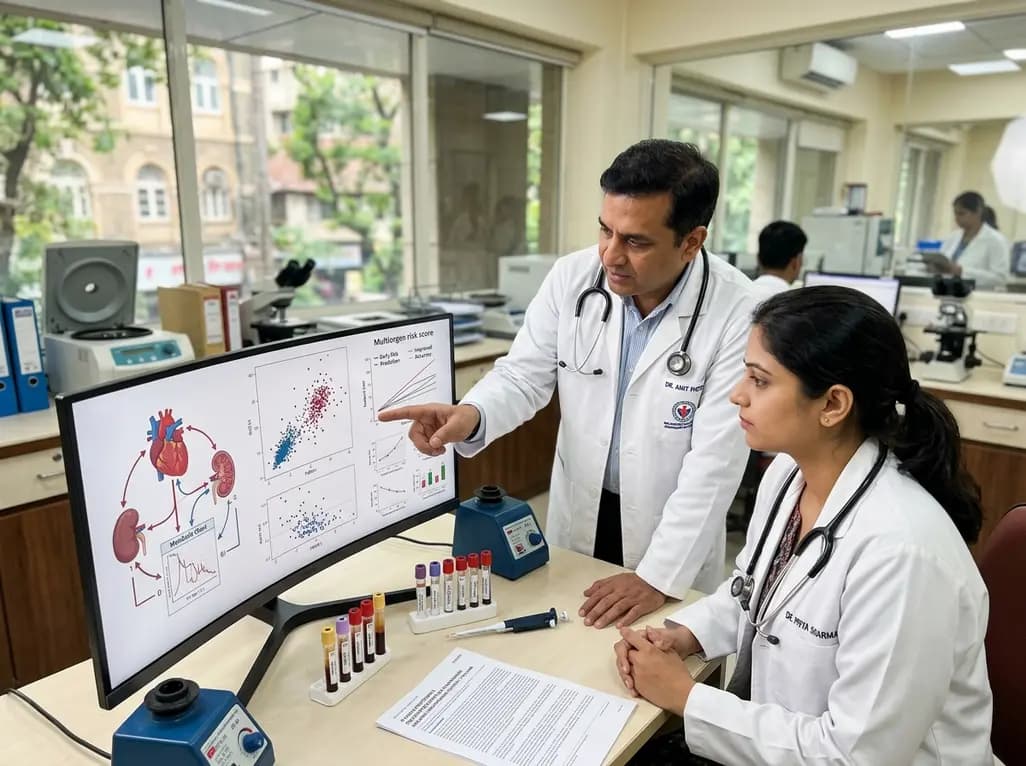
A large UK Biobank study reveals that plasma proteomic signatures capture preclinical organ damage and improve multiorgan risk prediction across early CKM syndrome stages 0 to 2 beyond traditional PREVENT clinical models.
Today

A retrospective CBCT study reveals that superior TMJ space asymmetry correlates moderately with occipital condyle-atlas-axis asymmetry in unilateral TMJ osteoarthritis, highlighting an imaging correlate between jaw biomechanics and upper cervical alignment rather than a standalone diagnostic marker.
Today

A Bayesian multilevel meta-analysis reveals that aerobic training combined with moderate carbohydrate restriction modestly lowers HbA1c in type 2 diabetes. However, sparse data and very low certainty leave incremental benefits over exercise or diet alone unproven, highlighting the need for individualized care.
Today
