.webp&w=384&q=75)

Loading, please wait...
Loading, please wait...
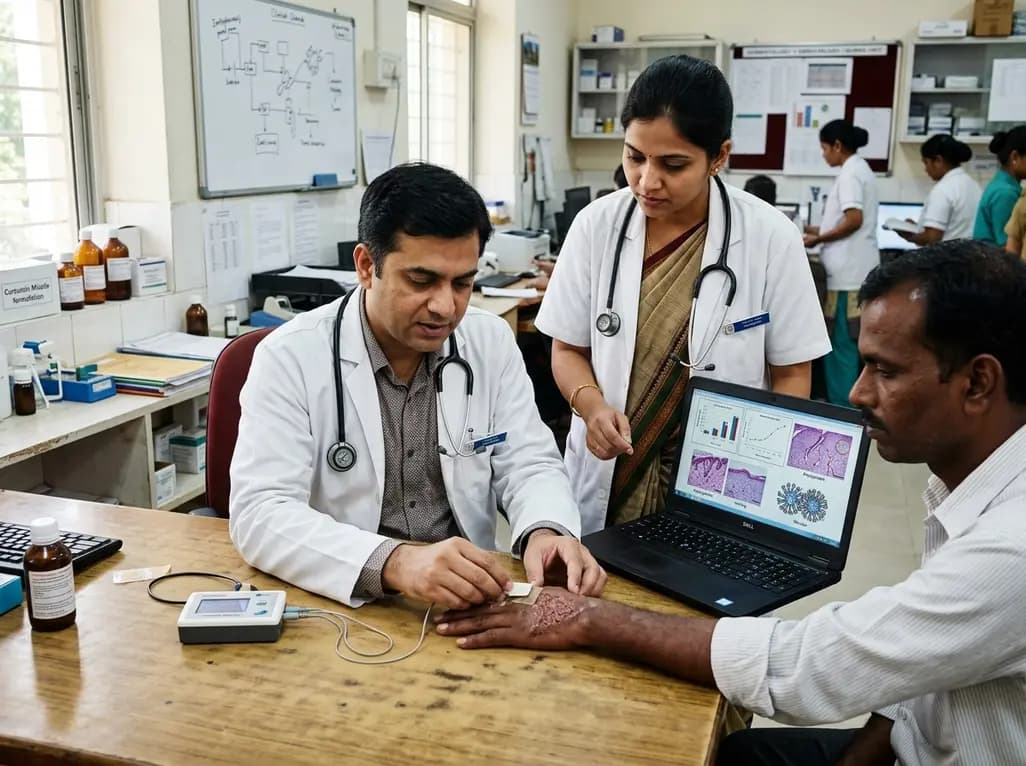
Poor aqueous solubility and the resilient stratum corneum barrier traditionally limit the non-invasive administration of lipophilic therapeutic agents. However, recent biomedical innovations in transdermal curcumin delivery demonstrate that combining nanotechnology with physical permeation methods can overcome these natural challenges. Curcumin exhibits potent anti-inflammatory, antioxidant, and tissue-regenerative properties, yet its clinical application remains hindered by poor bioavailability. By encapsulating curcumin within self-assembled polymeric micelles and pairing the formulation with mild electrical currents, clinicians may soon harness a powerful non-invasive modality to accelerate dermal repair and tissue regeneration.
The human epidermis serves as a formidable biological shield, where the lipid-rich extracellular matrix of the stratum corneum restricts molecular diffusion. Consequently, hydrophobic molecules such as native curcumin fail to achieve meaningful therapeutic levels within deeper cutaneous tissues. Researchers engineered self-assembled polymeric micelles using non-ionic surfactants, specifically Tween 20 and polyethylene glycol 400, to address these physicochemical restrictions. This carrier system encapsulates hydrophobic curcumin molecules inside a hydrophobic core while presenting hydrophilic outward chains to the biological environment. As a result, the formulation achieves a 170-fold increase in apparent aqueous solubility. Furthermore, the nanocarriers exhibit a compact mean hydrodynamic diameter of approximately 12.5 nanometers alongside a stable negative zeta potential of -12.5 millivolts. Therefore, this strategic nanostructuring provides an optimal vehicle for physical electro-kinetic driving mechanisms.
The physicochemical characteristics of drug carriers dictate their biological performance and cellular interactions. Specifically, maintaining a small particle diameter allows nanocarriers to navigate narrow intercellular lipid pathways within the epidermal layers. The self-assembled curcumin micelles exhibit remarkable structural uniformity and high encapsulation efficiency, which prevent premature drug precipitation in aqueous environments. In addition, the negative surface charge of -12.5 millivolts minimizes spontaneous aggregation through electrostatic repulsion, thereby preserving formulation stability over extended storage periods. Because the surfactant combination forms a flexible micellar shell, the system readily integrates with external electrical fields. Consequently, these structural attributes collectively establish an ideal platform for electromotive transdermal transport, enabling the bioactive payload to bypass primary resistance pathways without disrupting fundamental cellular viability.
When clinicians apply constant-current iontophoresis at a current density of 0.45 milliamperes per square centimeter, the micellar system exhibits responsive release kinetics. Experimental evaluations show a remarkable 44.2-fold increase in cumulative drug release within sixty minutes compared to passive diffusion controls. Furthermore, investigators observed a highly linear relationship between electrical current density and transdermal drug flux, yielding a correlation coefficient of 0.99. Interestingly, the micellar formulation demonstrates an electro-responsive release profile characterized by an initial lag time of approximately twenty minutes. This latency reflects the time required for charged micelles to rearrange within the electrical field and migrate through microscopic skin appendages. Pulsed electrical current regimens, incorporating four distinct stimulation cycles across a two-hour total exposure, nearly double the cumulative eight-hour drug release compared to continuous electrical protocols.
Electrical parameters and technical hardware configurations directly dictate the spatial distribution of the permeating formulation. Researchers demonstrated that adjusting both current density and electrode placement governs the precise depth and lateral width of micellar penetration within cutaneous tissues. Under optimized iontophoretic conditions, curcumin micelles penetrate excised skin barriers to a measured depth of 270 micrometers. Simultaneously, the active transport mechanism increases intradermal drug retention by 258 percent relative to passive administration. Confocal microscopic analyses reveal that electro-repulsive forces and electroosmotic flow actively propel the negatively charged micelles through hair follicles and intercellular lipid domains. Therefore, this synergistic approach prevents surface drug pooling, directing the therapeutic compound directly into vascularized dermal target zones where active tissue regeneration occurs.
The physiological benefits of this integrated delivery method translate into accelerated tissue recovery in preclinical second-degree burn models. Thermal burn wounds typically suffer from sustained inflammatory cascades, microvascular thrombosis, and impaired extracellular matrix deposition. However, applying iontophoresis-driven curcumin micelles significantly shortens the overall healing trajectory. Mechanistically, the localized delivery of bioactive curcumin downregulates key pro-inflammatory cytokines, preventing chronic tissue necrosis at the wound margin. In addition, the sustained intradermal concentration promotes robust angiogenesis, which restores microvascular perfusion to ischemic tissue beds. Histological evaluations further reveal enhanced fibroblast proliferation and organized collagen fiber deposition within treated wound beds. Consequently, the combination therapy achieves superior wound closure rates, minimal hypertrophic scarring, and accelerated epidermal re-epithelialization compared to conventional topical ointments.
These preclinical findings highlight a practical paradigm shift for managing acute burn injuries, chronic diabetic ulcers, and localized inflammatory dermatoses. Standard topical treatments frequently fail due to inadequate drug penetration, whereas systemic anti-inflammatory therapies often introduce undesirable systemic toxicities. By contrast, iontophoretic micellar delivery localizes high drug concentrations directly within affected cutaneous layers without causing systemic adverse effects. Moreover, medical device manufacturers can integrate pulsed iontophoretic circuits into wearable, flexible smart dressings to enable programmable, on-demand drug delivery. As clinical researchers refine personalized electrotherapy parameters, transdermal curcumin delivery may serve as a non-invasive, safe, and cost-effective standard for complex wound management and localized dermatological therapy.
Passive topical application cannot easily transport hydrophobic compounds past the stratum corneum barrier. In contrast, iontophoresis utilizes a mild, controlled electrical current to generate electro-repulsive and electroosmotic forces. These driving forces actively propel charged curcumin micelles deep into the dermis, yielding up to a 44-fold increase in cumulative drug permeation and significantly improving intradermal drug bioavailability for localized tissue repair.
Continuous electrical stimulation often polarizes the skin membrane, which progressively increases cutaneous electrical resistance and reduces drug transport over time. Conversely, pulsed electrical current provides brief resting intervals that allow skin capacitance to discharge. This mechanism prevents local tissue polarization, preserves cutaneous permeability pathways, and nearly doubles the cumulative eight-hour transdermal drug release compared to uninterrupted continuous currents.
Curcumin delivers multi-targeted therapeutic actions once it reaches the vascularized dermal layer. It suppresses pro-inflammatory cytokine expression, thereby reducing local tissue necrosis and excessive inflammation. Concurrently, it stimulates vascular endothelial growth factors to promote new blood vessel formation. These actions enhance nutrient delivery to the injured site, promote organized collagen deposition, and accelerate overall re-epithelialization.
Disclaimer: This content is for informational and educational purposes only and does not constitute medical advice, diagnosis, or treatment. Healthcare professionals should rely on their independent clinical judgment and consult relevant clinical literature before adopting novel delivery methods. Refer to the latest local and national guidelines for clinical practice.
References
Zhao P et al. Iontophoresis-Enhanced Transdermal Delivery of Curcumin Micelles: Mechanisms of Penetration and Wound Healing. J Drug Target. 2026 Aug 22. doi: 10.1080/1061186X.2026.2724404. PMID: 42632816.
Li H et al. Microcurrent Cloth-Assisted Transdermal Penetration and Follicular Ducts Escape of Curcumin-Loaded Micelles for Enhanced Wound Healing. J Control Release. 2023 Dec;364:128-141.
Cevc G, Vierl U. Nanotechnology and the transdermal route: A state of the art review and critical appraisal. J Control Release. 2021;338:70-95.

Read summarized clinical updates, watch expert medical content, and earn CME certifications right from your smartphone.
Open your smartphone camera to scan and install.





New research reveals that combining curcumin micelles with iontophoresis overcomes skin barriers, significantly boosting dermal penetration and accelerating burn wound healing through anti-inflammatory and angiogenic pathways.
last month

With post-monsoon dengue surges threatening South Asian health systems, physicians must refine triage and management. This guide covers vital warning signs, plasma leakage detection, crystalloid titration, and vector containment strategies to prevent mortality during seasonal arboviral epidemics.
Today

Findings from Project Viva indicate that sustained postpartum weight retention, rather than excessive gestational weight gain alone, directly worsens women's mid-life cardiovascular health, degrading blood pressure and glycemic parameters decades after delivery.
Today
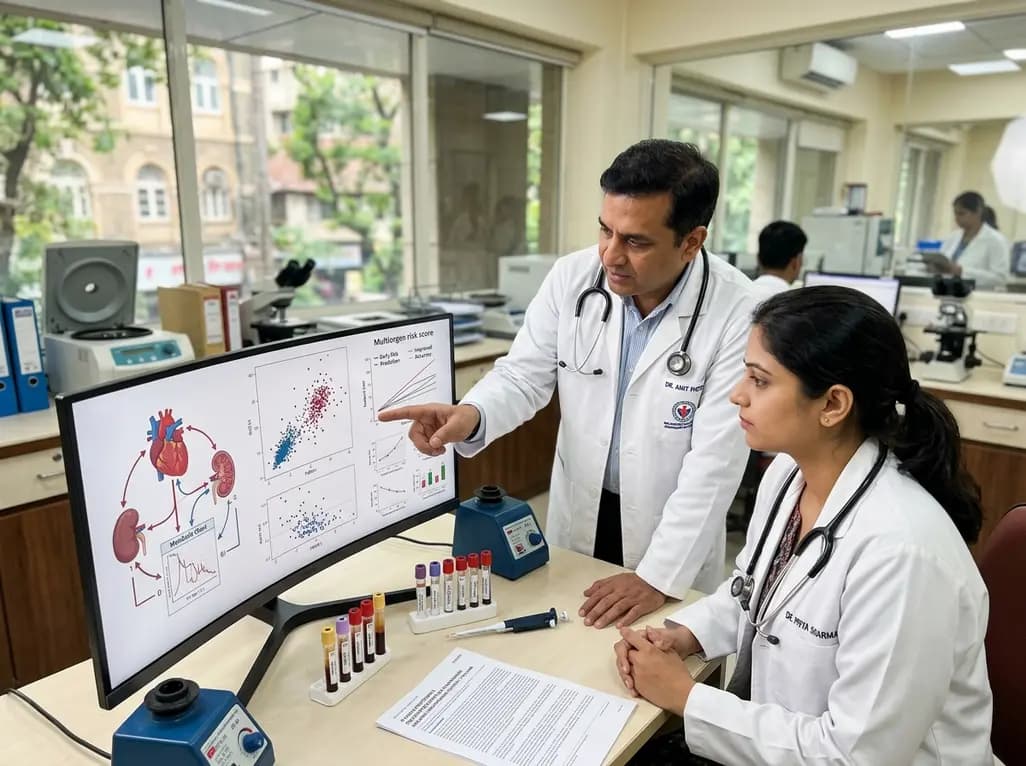
A large UK Biobank study reveals that plasma proteomic signatures capture preclinical organ damage and improve multiorgan risk prediction across early CKM syndrome stages 0 to 2 beyond traditional PREVENT clinical models.
Today
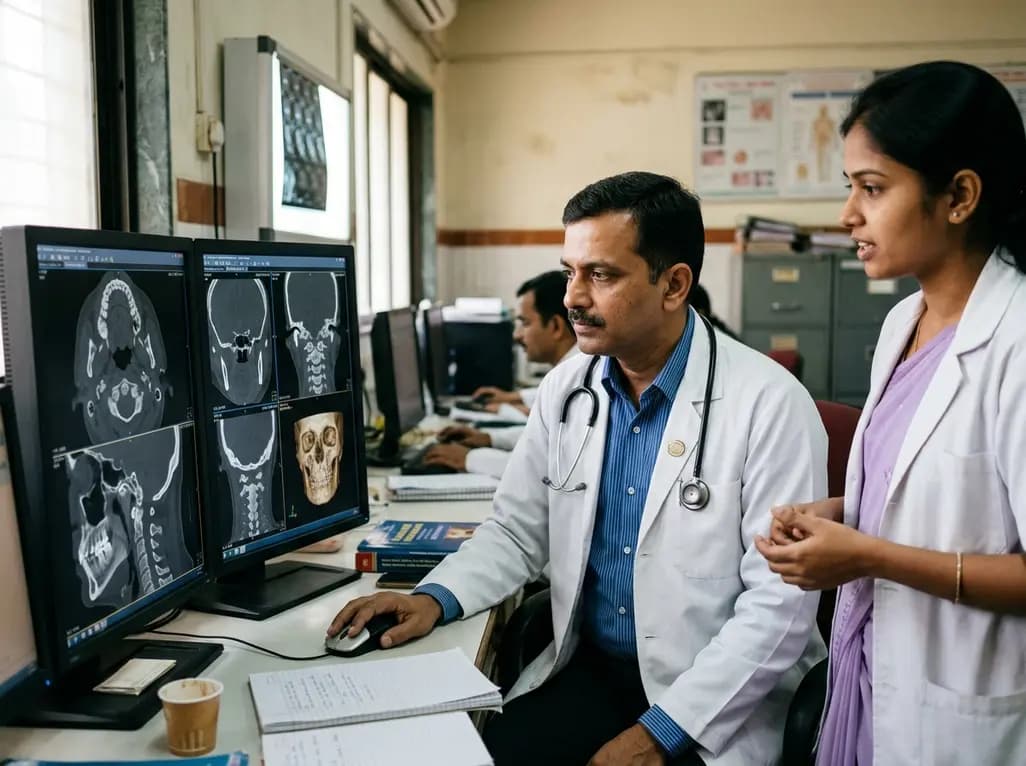
A retrospective CBCT study reveals that superior TMJ space asymmetry correlates moderately with occipital condyle-atlas-axis asymmetry in unilateral TMJ osteoarthritis, highlighting an imaging correlate between jaw biomechanics and upper cervical alignment rather than a standalone diagnostic marker.
Today

A Bayesian multilevel meta-analysis reveals that aerobic training combined with moderate carbohydrate restriction modestly lowers HbA1c in type 2 diabetes. However, sparse data and very low certainty leave incremental benefits over exercise or diet alone unproven, highlighting the need for individualized care.
Today
