.webp&w=384&q=75)

Loading, please wait...
Loading, please wait...
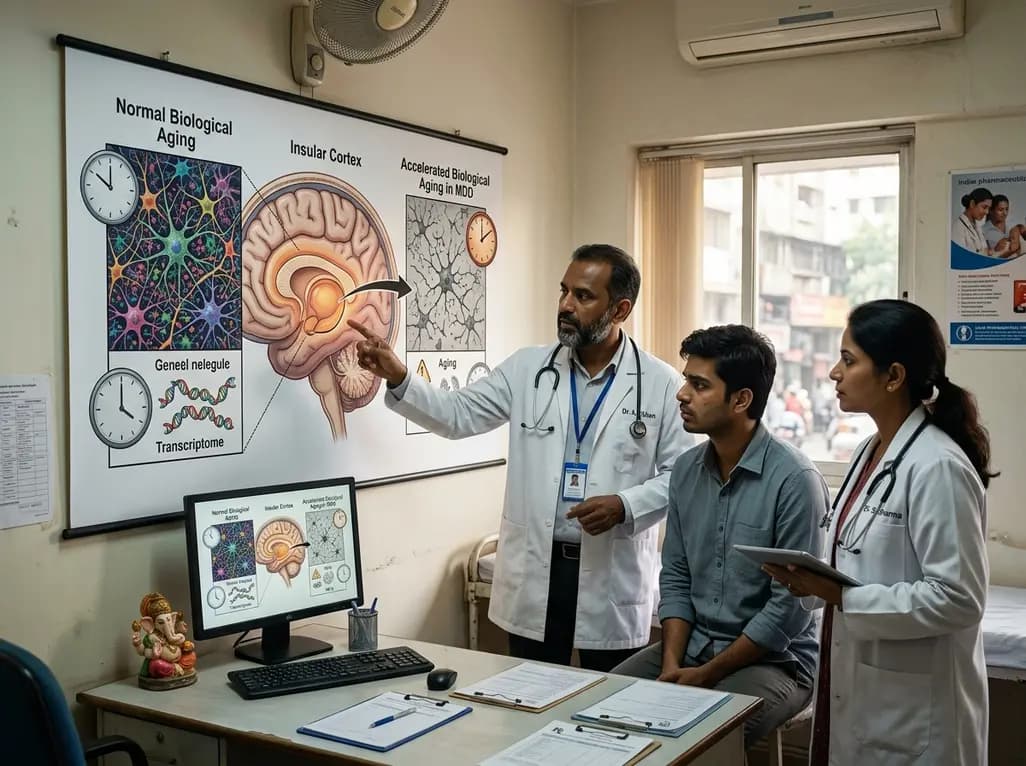
Major Depressive Disorder (MDD) remains a significant global health burden, particularly in India where mental health awareness is rapidly evolving in the clinical space. Recent scientific advancements have moved beyond simple neurotransmitter hypotheses, focusing instead on biological aging as a key driver of psychiatric pathology. Transcriptomic Aging in MDD has emerged as a particularly compelling area of study, suggesting that depression may actually accelerate the body’s internal biological clock. This acceleration is not merely a byproduct of the condition but may actively contribute to its pathogenesis and systemic progression. Consequently, understanding the molecular mechanisms behind this aging process is vital for modern clinicians aiming for holistic patient management. Researchers are now looking at peripheral blood RNA sequencing to estimate transcriptomic age, offering a unique window into the systemic impact of mental illness. This innovative approach allows for a more comprehensive view of the patient, effectively bridging the gap between psychiatric symptoms and physiological decline. By examining how biological age deviates from chronological age, doctors can better understand the unique health risks faced by patients with MDD. Furthermore, this research highlights the potential for personalized interventions that target biological aging pathways rather than just symptom suppression.
The concept of a biological clock is not new, but the precision of transcriptomic clocks represents a significant leap forward in medical diagnostics. Unlike epigenetic clocks that primarily look at DNA methylation, transcriptomic aging focuses on dynamic gene expression patterns in peripheral blood. This provides a real-time view of how environmental stressors and disease states influence biological function at a cellular level. In the context of Transcriptomic Aging in MDD, researchers calculate the residuals of transcriptomic age regressed on chronological age to determine aging acceleration. These residuals indicate how much "older" a person’s gene expression appears compared to their actual chronological years. Several factors likely contribute to this acceleration, including chronic systemic inflammation and increased oxidative stress, both of which are frequently elevated in psychiatric populations. Moreover, transcriptomic alterations are often enriched in pathways related to immune response and metabolic regulation, suggesting a systemic breakdown of homeostasis. Therefore, clinicians must consider the multisystemic nature of MDD rather than treating it solely as a localized brain disorder. By monitoring these peripheral markers, it may eventually be possible to identify individuals at higher risk for age-related comorbidities that are commonly associated with depression.
A landmark study by Yan Y and colleagues has provided significant evidence regarding the link between MDD and biological aging acceleration. The study analyzed peripheral blood RNA sequencing data from 141 individuals with MDD and 134 healthy controls to estimate biological age. Interestingly, participants with MDD exhibited significantly accelerated transcriptomic aging compared to their healthy counterparts. This acceleration persisted even after adjusting for variables like chronological age and sex, suggesting that the mental health condition itself is a primary driver of the aging phenotype. Furthermore, the enrichment analysis performed in this research explored the biological mechanisms underlying these transcriptomic changes. It revealed that aging-associated and MDD-associated transcriptomic alterations often overlap in critical biological pathways involving protein synthesis and immune function. These findings are particularly relevant for practitioners in India, where the prevalence of MDD is high and often coincides with other chronic lifestyle diseases. Additionally, the study examined associations with clinical, neurocognitive, and environmental phenotypes, finding that social stressors further exacerbate biological aging. This comprehensive approach reinforces the idea that MDD is a multisystem disorder that requires an integrated medical perspective for effective long-term management.
One of the most fascinating aspects of recent research is the connection between peripheral aging markers and structural brain changes. Specifically, the study identified the insular cortex as a key mediator in the relationship between transcriptomic aging and MDD onset. The insular cortex is a brain region involved in interoception, emotional processing, and cognitive control, making it central to psychiatric health. Researchers found that alterations in this area, particularly in terms of gray matter volume, could explain how systemic aging manifests as psychiatric symptoms. Transcriptomic Aging in MDD appears to correlate with specific structural phenotypes in the insula, suggesting a direct biological link between systemic blood markers and brain architecture. This mediation analysis is crucial because it provides a tangible structural target for understanding how systemic stress affects overall brain health. For example, if accelerated aging leads to insular cortex atrophy, this might explain the profound emotional dysregulation and physical symptoms common in depressed patients. Moreover, this finding shifts the focus toward neuroimaging as a diagnostic tool that can complement biological aging markers. Understanding this mediation helps clinicians visualize the physical impact of depression on the brain's architecture and long-term viability.
The relevance of these findings for doctors in India cannot be overstated, especially as the country faces an aging population with increasing mental health needs. Having objective biological markers like transcriptomic age could revolutionize how we approach diagnosis and treatment selection. Currently, MDD is diagnosed primarily through clinical interviews and symptom checklists, which can occasionally be subjective or influenced by cultural factors. Incorporating biological aging assessments could provide a more objective measure of disease severity and biological burden. Furthermore, understanding the role of the insular cortex allows for more targeted neuroimaging studies and potentially more precise neuromodulation therapies. Since lifestyle factors such as diet, air pollution, and chronic social stress are known to influence biological aging, Indian clinicians can tailor their management strategies to include robust lifestyle medicine. For instance, interventions that reduce systemic inflammation, such as yoga, exercise, and nutritional optimization, might slow down Transcriptomic Aging in MDD. This holistic approach aligns well with the growing trend of integrative medicine in the Indian healthcare landscape. Early identification of accelerated aging might also allow for preventive measures against age-related diseases like cardiovascular disorders.
As we look toward the future, the integration of transcriptomics into routine psychiatric practice remains a primary goal for precision medicine. Future research needs to validate these findings in larger, more diverse cohorts, including longitudinal studies that track aging acceleration over the course of treatment. It is also important to explore whether successful remission of MDD symptoms can reverse or slow down the transcriptomic aging process. If antidepressants or specialized psychotherapy can "reset" the biological clock, it would provide a powerful incentive for early and aggressive psychiatric intervention. Moreover, the exploration of other brain regions beyond the insular cortex may reveal a more complex network of biological mediation. The development of accessible and cost-effective RNA sequencing technology will be a critical factor in the widespread adoption of these markers in clinics across India. Consequently, the medical community must foster interdisciplinary collaboration between geneticists, neurologists, and psychiatrists to fully utilize these insights. By doing so, we can move toward a truly personalized psychiatry that addresses the unique biological profile of each patient. In conclusion, studying Transcriptomic Aging in MDD opens new avenues for understanding the profound biological impact of mental illness on the human body.
Chronological age refers to the actual number of years a person has lived. In contrast, transcriptomic age is estimated based on gene expression patterns in peripheral blood. In individuals with MDD, transcriptomic age often exceeds chronological age, indicating that their biological systems are aging faster than normal due to disease-related stress.
The insular cortex acts as a mediator between systemic biological aging and the clinical symptoms of depression. Accelerated transcriptomic aging is associated with structural alterations in the insula, which is responsible for emotional regulation. These brain changes help explain how systemic biological decline translates into the psychiatric manifestations seen in MDD.
Yes, lifestyle interventions like stress management, regular physical activity, and a balanced diet can potentially slow biological aging. Since MDD accelerates transcriptomic aging through inflammation and oxidative stress, interventions that target these pathways may improve both mental health outcomes and the overall biological age of the patient over time.
Disclaimer: This content is for informational and educational purposes only and does not constitute medical advice. It is not intended to be a substitute for professional medical advice, diagnosis, or treatment. Always seek the advice of your physician or other qualified healthcare provider with any questions you may have regarding a medical condition. Refer to the latest local and national guidelines for clinical practice.
References
Yan Y et al. Peripheral transcriptomic aging acceleration in major depressive disorder: the mediating role of insular cortex alterations. Psychol Med. 2026 Jul 08. doi: 10.1017/S003329172610498X. PMID: 42417024.
Han LKM, et al. Epigenetic aging in major depressive disorder. Am J Psychiatry. 2018;175(8):774-782.
Wolkowitz OM, et al. Psychoneuroendocrinology of depression: focus on the hypothalamic-pituitary-adrenal axis and biological aging. Psychiatr Clin North Am. 2011;34(1):117-139.

Read summarized clinical updates, watch expert medical content, and earn CME certifications right from your smartphone.
Open your smartphone camera to scan and install.





A recent study identifies accelerated transcriptomic aging in individuals with Major Depressive Disorder (MDD), significantly linked to alterations in the insular cortex. These biological markers offer new pathways for understanding the systemic impact of depression beyond psychological symptoms.
3 months ago

As monsoon seasons elevate arboviral disease threats, Tamil Nadu has initiated an ICMR-monitored evaluation of the tetravalent dengue vaccine in Tenkasi district. Clinicians emphasize clinical monitoring, public prevention, and high-quality early pediatric care to reduce disease morbidity across endemic regions.
Today

Leucine Rich Bio has introduced South Asia's first comprehensive vaginal microbiome test, BugSpeaks. By profiling microbial dysbiosis, pathogens, and antimicrobial resistance, this next-generation diagnostic platform provides clinicians with deeper insights into recurrent infections, fertility, and reproductive health.
Today

Review how tailored exercise programs benefit frail older patients with heart failure. Explore pathophysiological mechanisms, individualized training prescriptions, and strategies to overcome adherence barriers in clinical practice.
Today

This comparative study evaluates posterior labral tears with and without glenohumeral instability, highlighting distinct demographic patterns, MRI underestimation in stable shoulders, and successful arthroscopic repair outcomes.
Today

A clinical study demonstrates that early intervention with tocilizumab, either as monotherapy or bridged with corticosteroids, achieves significant proptosis reduction and resolves active inflammation in treatment-naive thyroid eye disease.
Today
