

Loading, please wait...
Loading, please wait...

Treatment-resistant schizophrenia represents a major therapeutic dilemma in contemporary psychiatric practice. Clozapine remains the gold-standard pharmacological intervention for patients who fail to respond to standard antipsychotics. Despite robust clinical evidence supporting its efficacy, clozapine prescribing continues to lag significantly worldwide. Clinicians often delay initiation for years, exposing vulnerable individuals to persistent psychotic symptoms and recurrent hospitalizations. Recent research highlights that practitioner hesitancy during specialty residency heavily influences this long-standing clinical challenge. Therefore, understanding junior doctors' educational preparedness is essential to eliminate systematic delays in refractory psychosis.
Approximately one-third of individuals diagnosed with schizophrenia fail to achieve remission with first-line antipsychotics. Clinicians classify these cases as treatment-resistant schizophrenia when patients show inadequate response to two successive antipsychotic trials. Consequently, clinical practice guidelines internationally designate clozapine as the definitive intervention for this population. Early initiation prevents cognitive decline, improves functional recovery, and markedly decreases mortality from suicide.
However, clinical audits across psychiatric facilities repeatedly demonstrate substantial gaps between evidence and practice. Clinicians frequently postpone clozapine initiation for several years. Instead, practitioners often resort to antipsychotic polypharmacy, which increases metabolic burdens without conferring symptom relief. Furthermore, this delay creates institutional inertia that normalizes suboptimal disease control. Clinicians frequently cite fears of adverse reactions and hematological monitoring as justifications for withholding therapy. Nevertheless, prolonged clinical delays directly exacerbate disability and caregiver distress. Addressing prescriber apprehension early in psychiatric training offers a vital strategy to resolve these care disparities.
A cross-sectional investigation conducted via the College of Psychiatrists of Ireland evaluated trainee psychiatrists to examine their clinical exposure and prescribing confidence. The study surveyed approximately 500 trainees, yielding 74 completed responses. Most respondents confirmed regular clinical exposure to patients taking clozapine across inpatient and community settings. Additionally, junior psychiatrists demonstrated strong theoretical knowledge regarding the primary indication for clozapine in refractory schizophrenia. They also expressed favorable attitudes toward the medication's therapeutic effectiveness and clinical value.
Nevertheless, the survey exposed substantial deficits in practical prescribing competencies and formal instruction. Fewer than one-third of respondents reported receiving structured clinical training dedicated to clozapine pharmacology. Consequently, trainee knowledge varied widely concerning therapeutic drug monitoring, titration schedules, and absolute neutrophil count parameters. While trainees felt confident diagnosing treatment resistance, their confidence dropped sharply when managing somatic complications. Specifically, respondents reported low comfort levels regarding metabolic monitoring, adverse effect mitigation, treatment interruption, and rechallenge protocols. Furthermore, trainees explicitly identified inadequate training as their primary barrier to independent practice.
The findings underscore numerous systemic and cognitive barriers that hinder proactive clozapine prescribing across training programs. Junior doctors consistently cite concerns regarding patient adherence, stringent absolute neutrophil count surveillance, and rare hematological toxicities such as agranulocytosis. In addition, trainees struggle to navigate the logistical complexity of inpatient bed availability, which frequently delays safe titration. These clinical apprehensions often mirror broader systemic challenges seen in diverse international healthcare settings, including Indian psychiatric practice.
Moreover, psychological hesitancy among prescribers often inflates the perceived risk of severe medical events. Although agranulocytosis occurs in less than one percent of treated individuals, ungrounded anxiety often overshadows the profound mortality benefit of clozapine. Clinicians must balance these rare hematological risks against the severe consequences of untreated psychosis, which include chronic institutionalization and suicide. Therefore, training institutions must demystify hematological monitoring protocols through standardized educational pathways. When academic centers establish dedicated point-of-care testing systems and outpatient teams, trainee confidence rises noticeably. Addressing operational bottlenecks allows junior clinicians to initiate therapy promptly without excessive administrative burden.
Bridging the transition from diagnostic theory to safe pharmacological execution demands targeted curricular reform. Trainees understand diagnostic criteria thoroughly, yet they hesitate when calculating serum trough concentrations or managing complex drug-drug interactions. For example, co-prescribing antiepileptic mood stabilizers or administering selective serotonin reuptake inhibitors can significantly alter hepatic cytochrome P450 metabolism. As a result, junior prescribers require practical guidance on therapeutic drug monitoring to prevent dose-dependent seizures or excessive sedation. Similarly, training programs must emphasize non-hematological adverse effects, such as clozapine-induced gastrointestinal hypomotility, which carries significant mortality.
Furthermore, educational modules must explicitly teach safe re-initiation guidelines following missed doses. When a patient misses doses for more than forty-eight hours, clinicians must re-titrate clozapine from the initial starting dose to avoid life-threatening cardiovascular collapse. Unfortunately, junior doctors frequently lack confidence when managing these urgent prescribing dilemmas. Academic departments can resolve these knowledge gaps by implementing standardized digital simulations and interactive workshops. Additionally, clinical case conferences focused on complex titration scenarios enable trainees to refine their clinical judgment safely.
Didactic lectures alone cannot substitute for longitudinal clinical experience under expert supervision. International research demonstrates that establishing dedicated clozapine outpatient clinics dramatically improves trainee competence and patient engagement. Within these specialized clinics, trainees evaluate patients alongside experienced consultants, clinical nurse specialists, and psychiatric pharmacists. Consequently, trainees master rapid physical health checks, electrocardiogram interpretation, and proactive management of benign adverse effects such as hypersalivation. This multidisciplinary environment normalizes routine monitoring procedures and dispels historical misconceptions regarding clinical toxicity.
Similarly, psychiatric residency programs benefit substantially from dedicated training rotations. When residency leaders integrate clozapine competencies into core milestone assessments, trainees actively seek clinical opportunities rather than avoiding them. Furthermore, structured supervision provides junior doctors with an essential safety net when addressing acute neutropenia or suspected myocarditis. Mentors can guide trainees through challenging clinical decisions, such as utilizing granulocyte colony-stimulating factors during benign ethnic neutropenia. Ultimately, immersive clinical apprenticeships cultivate resilient prescribers who possess both the practical expertise and ethical commitment required to deliver life-changing psychopharmacology.
To eliminate the widespread underutilization of clozapine, national psychiatric associations must formally establish prescribing milestones for specialty certification. Regulators should mandate that every trainee manages a designated minimum cohort of clozapine-treated patients before completing residency. Additionally, healthcare networks must invest in digital monitoring registries and point-of-care capillary blood testing to simplify outpatient surveillance. These innovative point-of-care devices provide immediate absolute neutrophil counts from a single finger-prick, substantially improving patient compliance.
Moreover, establishing national peer-consultation hotlines and digital decision-support tools can empower junior doctors working in remote or underserved settings. When novice prescribers have direct access to clozapine experts, therapeutic delays diminish rapidly. Ultimately, transforming trainee education creates downstream benefits for mental health systems. By replacing administrative anxiety with empirical confidence, educators prepare the next generation of psychiatrists to deliver timely, evidence-based care to individuals living with severe psychiatric disorders.
Clinicians frequently underutilize clozapine due to exaggerated fears of severe adverse reactions, particularly agranulocytosis and myocarditis. In addition, complex mandatory hematological surveillance and cumbersome administrative registries create significant logistical barriers for busy practitioners. Deficits in residency training further compound this problem, leaving early-career psychiatrists lacking confidence in practical dosage titration, physical health monitoring, and managing gastrointestinal complications. Consequently, doctors often resort to less effective antipsychotic polypharmacy rather than initiating clozapine promptly.
Prescribers must obtain baseline absolute neutrophil counts before initiating treatment to rule out preexisting cytopenias. Subsequently, clinicians must perform weekly blood counts for the initial eighteen weeks of therapy when agranulocytosis risk peaks. Monitoring intervals then decrease to fortnightly until the end of the first year, followed by monthly testing thereafter. If absolute neutrophil counts fall below safe thresholds, clinicians must immediately interrupt therapy, perform repeat testing, and consult hematology specialists.
When a patient misses clozapine doses for more than forty-eight consecutive hours, clinicians cannot resume the prior maintenance dose immediately. Because tolerance to alpha-adrenergic and histaminergic antagonism diminishes rapidly, abrupt re-administration risks catastrophic hypotension, respiratory arrest, syncope, and seizures. Therefore, prescribers must re-titrate the medication starting from twelve and a half milligrams once or twice daily. Clinicians should closely monitor vital signs during re-titration while progressively increasing the dose toward the target therapeutic level.
Disclaimer: This content is for informational and educational purposes only, primarily intended for healthcare professionals, and does not substitute formal clinical guidelines or expert medical advice. Dosage regimens, monitoring intervals, and safety protocols must be verified through official institutional policies and pharmaceutical prescribing information. Refer to the latest local and national guidelines for clinical practice.
References

Read summarized clinical updates, watch expert medical content, and earn CME certifications right from your smartphone.
Open your smartphone camera to scan and install.





A nationwide survey of psychiatry trainees reveals that while clinicians hold favorable views on clozapine for treatment-resistant schizophrenia, formal training and prescribing confidence remain deficient. Bridging these educational gaps is essential to reduce clinical hesitation and improve patient outcomes.
Today
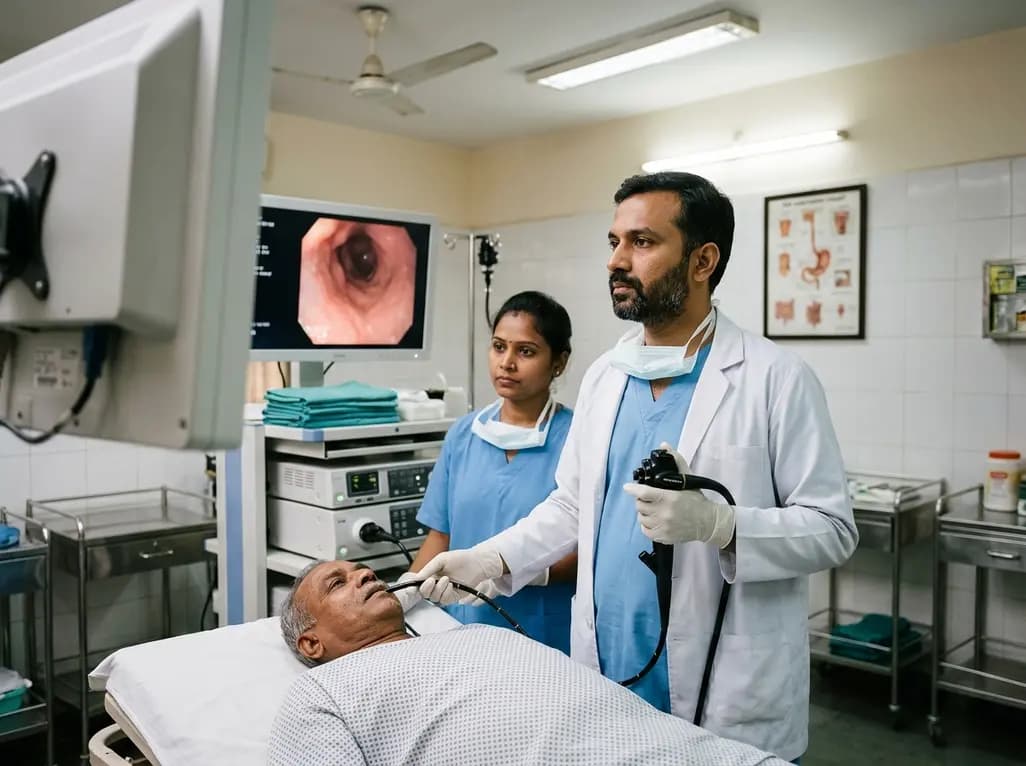
A large cohort study evaluating 1,245 patients demonstrates that unsedated gastroscopy is safe, feasible, and achieves high completion rates, offering an efficient alternative to sedated procedures.
Today

An intracranial EWSR1::CREM fusion sarcoma in a 31-year-old female manifested as a paraneoplastic inflammatory syndrome with anemia and secondary infertility. The dural mass mimicked meningioma, but gross-total resection resolved her systemic inflammation and restored natural fertility within one month.
Today

The DOMINO study protocol presents a multidisciplinary implementation mapping approach to overcome provider, patient, and payer barriers to antiobesity medications, offering vital insights for Indian clinicians managing the growing diabesity burden.
Today

An age-matched cross-sectional study reveals that lower muscle quality and impaired lower-extremity function strongly correlate with an increased fear of falling in older women, highlighting the necessity of targeted resistance training and balance interventions in geriatric care.
Today

Near-infrared autofluorescence provides real-time label-free optical guidance during endoscopic transsphenoidal pituitary surgery. By highlighting stark signal contrasts between normal pituitary gland and adenomas, this technique aids gross-total tumor resection while safeguarding critical endocrine function.
Today
