

Loading, please wait...
Loading, please wait...

Diagnostic upper endoscopy serves as a fundamental investigation for evaluating upper gastrointestinal disorders. While intravenous sedation improves patient comfort, sedative medications introduce significant cardiopulmonary risks and inflate departmental expenditures. Therefore, gastroenterologists increasingly evaluate the clinical utility of unsedated gastroscopy in routine practice. Recent evidence confirms that omitting sedation provides high diagnostic success while maintaining excellent patient safety. Consequently, clinical units expand outpatient capacity and eliminate prolonged recovery times. Furthermore, this approach eliminates escort requirements, allowing individuals to resume routine activities promptly.
Sedation-assisted endoscopy introduces specific pharmacological vulnerabilities that clinicians must manage proactively. For instance, elderly patients and individuals with cardiopulmonary comorbidities face elevated risks of hypoxemia, hypotension, and airway compromise. Therefore, performing unsedated gastroscopy presents a valuable alternative that circumvents adverse sedative events entirely. Furthermore, patients who bypass sedation experience no residual cognitive impairment or drug-induced drowsiness. Consequently, they can safely operate motor vehicles, complete professional obligations, and resume normal diets immediately after examination. This independence relieves family members from taking leave from work to provide transportation and post-procedural supervision. In contrast, patients requiring sedation need extended recovery times and specialized monitoring. In addition, endoscopy suites conserve critical operational resources by avoiding post-anesthesia recovery cubicles and continuous nursing oversight. Because patients leave promptly, endoscopists achieve shorter turnover times between consecutive procedures. Moreover, omitting intravenous cannulation eliminates local vein trauma, thrombophlebitis, and vasovagal syncopal reactions. As a result, the unsedated approach supports patient autonomy while enhancing hospital efficiency. Thus, clinical rationale combines personal convenience with institutional resource optimization.
Many practitioners worry that an awake patient cannot tolerate thorough mucosal inspection. However, large clinical studies demonstrate procedural completion rates consistently exceeding ninety-five percent across general patient cohorts. Endoscopists systematically inspect the esophagus, gastric body, antrum, and duodenal bulb without technical compromise. Furthermore, operators systematically examine mucosal folds without losing anatomical landmarks. Experienced examiners achieve comprehensive visualization before patient gagging causes significant distress. Modern high-definition endoscopes provide exceptional optical resolution and digital chromoendoscopy, enabling rapid identification of subtle mucosal abnormalities. Therefore, clinicians successfully obtain targeted mucosal biopsies for Helicobacter pylori testing, celiac disease assessment, or gastric lesion evaluation. In addition, routine diagnostic examinations require an average duration of only three to five minutes. Consequently, skilled operators finish detailed assessments before fatigue or oropharyngeal sensitivity disrupts patient cooperation. When endoscopists maintain steady scope control and avoid excessive air insufflation, image clarity matches sedated examinations. Moreover, cooperative awake patients follow simple breathing instructions, which facilitates smooth esophageal intubation. As a result, unsedated procedures preserve high diagnostic accuracy and deliver dependable clinical outcomes. Thus, rigorous clinical data decisively refute traditional doubts regarding procedural feasibility.
Sedation-related complications represent the principal cause of morbidity during diagnostic gastrointestinal procedures. Pharmacological agents such as propofol or midazolam frequently suppress ventilatory drive and destabilize autonomic vascular tone. In contrast, unsedated examinations eliminate acute medication-induced hypoventilation and catastrophic airway loss. Continuous monitoring indicates that unsedated patients maintain stable peripheral arterial oxygenation throughout scope manipulation. Furthermore, modest heart rate elevations reflect temporary sympathetic activation rather than true physiological distress. Major complications like perforation, aspiration pneumonia, or cardiac arrest occur with vanishing rarity during routine unsedated inspections. Consequently, high-risk patients complete diagnostic evaluations without experiencing cardiovascular instability. Clinicians safely examine individuals with advanced cardiovascular disease, severe pulmonary disease, or morbid obesity. Avoiding sedative medications also prevents paradoxical excitement reactions, which often disrupt procedures in elderly patients. Furthermore, clinical teams eliminate the need for pharmacologic reversal agents such as flumazenil or naloxone. Therefore, endoscopy units witness fewer acute medical emergencies and avoid emergency airway interventions. In addition, post-procedural delirium disappears entirely from outpatient recovery units. Accordingly, the safety profile of unsedated gastroscopy offers distinct protective advantages for vulnerable populations.
Careful candidate selection and empathetic communication dictate procedural success in unsedated endoscopy. Clinicians must identify patients who actively prefer staying awake or require rapid post-procedural discharge. Similarly, patients carrying elevated cardiopulmonary risk factors represent optimal candidates for this approach. However, patients with severe generalized anxiety or prior traumatic endoscopic experiences may require intravenous sedation. Transparent communication before the procedure significantly alleviates apprehension and establishes clinical rapport. Physicians should clearly describe the physical sensations of scope passage and explain the transient nature of gag reflexes. Furthermore, teaching slow diaphragmatic breathing techniques helps patients suppress involuntary retching during cricopharyngeal intubation. When patients realize they retain control and can signal discomfort through hand gestures, procedural anxiety declines rapidly. Similarly, clinical teams foster compliance by maintaining clear, continuous verbal reassurance. Additionally, nursing staff provide essential reassurance by maintaining a tranquil endoscopy room environment. Verifying proper fasting intervals ensures an unobstructed gastric lumen and prevents pulmonary aspiration. Consequently, well-prepared patients demonstrate higher procedural tolerance and report positive overall satisfaction. Ultimately, structured preparation transforms an intimidating procedure into a manageable outpatient evaluation.
Healthcare institutions face continuous pressure to optimize resource utilization and streamline diagnostic services. Unsedated upper endoscopy delivers immediate financial and logistical benefits by shortening total clinic transit times. Sedated individuals typically occupy post-anesthesia beds for sixty minutes under specialized nursing observation. Conversely, unsedated patients ambulate freely and leave the endoscopy facility within fifteen minutes following procedural completion. Therefore, clinical departments dramatically expand daily procedure volumes while preventing recovery room congestion. Furthermore, omitting sedatives reduces consumable expenditures, including intravenous catheters, infusion fluids, and monitoring disposables. Endoscopy units also optimize patient comfort by employing specific technical adjustments during scope insertion. For example, administering topical lidocaine spray numbs the pharynx and suppresses the gag reflex effectively. Clinicians should also choose small-caliber endoscopes whenever available, as narrower scopes reduce pharyngeal friction significantly. Additionally, utilizing carbon dioxide instead of room air minimizes post-procedure abdominal distension. Carbon dioxide absorbs rapidly across intestinal tissue, relieving bloating within minutes. Moreover, operators should minimize excessive mechanical torque on the gastroesophageal junction during advancement. Thus, integrating refined technical strategies creates an efficient, cost-effective, and patient-centered diagnostic service. Consequently, hospitals maximize procedural capacity while controlling healthcare expenditures.
Large clinical cohorts demonstrate that unsedated gastroscopy achieves procedural completion rates exceeding ninety-five percent, which closely rivals sedated examinations. Furthermore, experienced endoscopists routinely visualize the esophagus, stomach, and duodenum successfully without diagnostic compromise. Although severe patient gagging can occasionally hinder mucosal inspection, proper pre-procedure patient education, structured breathing coaching, and topical pharyngeal anesthesia ensure reliable completion in the vast majority of outpatient candidates.
Unsedated upper endoscopy carries an exceptionally favorable safety profile, with severe complications occurring in less than one percent of cases. The most frequent minor adverse events include transient throat soreness, mild epistaxis during transnasal passage, and temporary abdominal fullness from insufflation. Because the technique avoids intravenous sedatives, patients avoid medication-induced respiratory depression, paradoxical agitation, severe hemodynamic instability, and prolonged post-procedure grogginess.
Patients with severe cardiovascular disease, chronic respiratory disorders, or morbid obesity derive immense benefit from unsedated gastroscopy because they avoid anesthesia-induced complications. Furthermore, busy working professionals and elderly individuals who lack accompanied transportation value the rapid recovery. Patients requiring rapid diagnostic clearance, routine celiac biopsy confirmation, or recurrent surveillance can also undergo unsedated procedures safely and return immediately to their normal daily life.
Disclaimer: This content is for informational and educational purposes only... Refer to the latest local and national guidelines for clinical practice.
References

Read summarized clinical updates, watch expert medical content, and earn CME certifications right from your smartphone.
Open your smartphone camera to scan and install.





A large cohort study evaluating 1,245 patients demonstrates that unsedated gastroscopy is safe, feasible, and achieves high completion rates, offering an efficient alternative to sedated procedures.
Today

An intracranial EWSR1::CREM fusion sarcoma in a 31-year-old female manifested as a paraneoplastic inflammatory syndrome with anemia and secondary infertility. The dural mass mimicked meningioma, but gross-total resection resolved her systemic inflammation and restored natural fertility within one month.
Today

The DOMINO study protocol presents a multidisciplinary implementation mapping approach to overcome provider, patient, and payer barriers to antiobesity medications, offering vital insights for Indian clinicians managing the growing diabesity burden.
Today
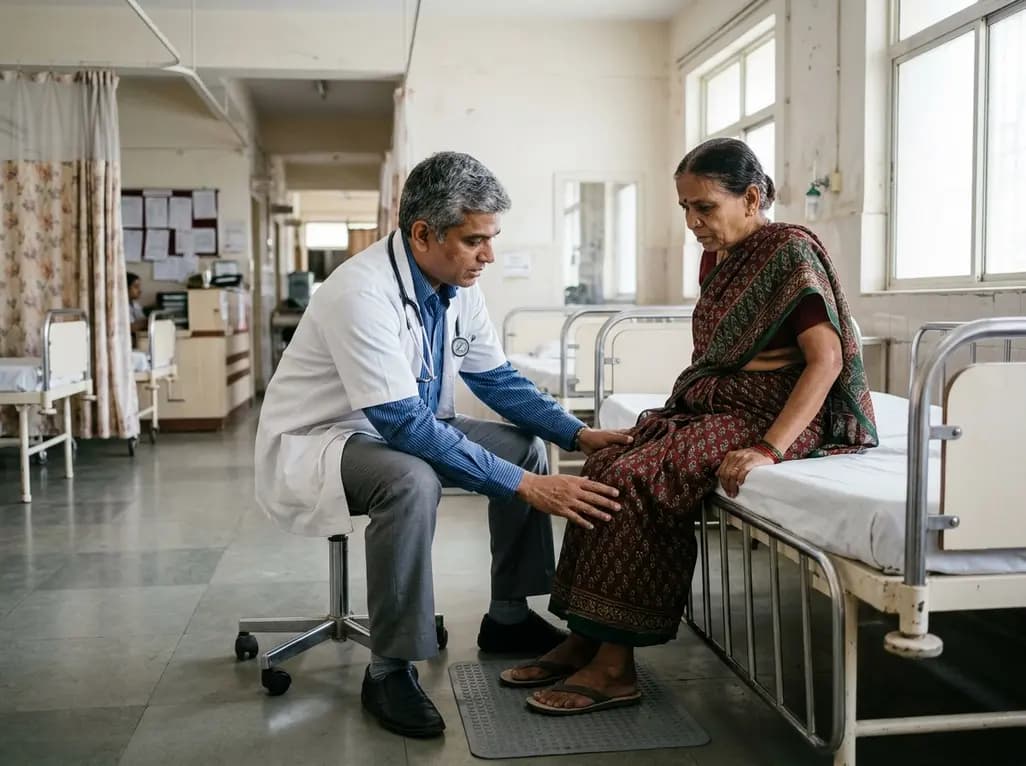
An age-matched cross-sectional study reveals that lower muscle quality and impaired lower-extremity function strongly correlate with an increased fear of falling in older women, highlighting the necessity of targeted resistance training and balance interventions in geriatric care.
Today

Near-infrared autofluorescence provides real-time label-free optical guidance during endoscopic transsphenoidal pituitary surgery. By highlighting stark signal contrasts between normal pituitary gland and adenomas, this technique aids gross-total tumor resection while safeguarding critical endocrine function.
Today
