.webp&w=384&q=75)

Loading, please wait...
Loading, please wait...
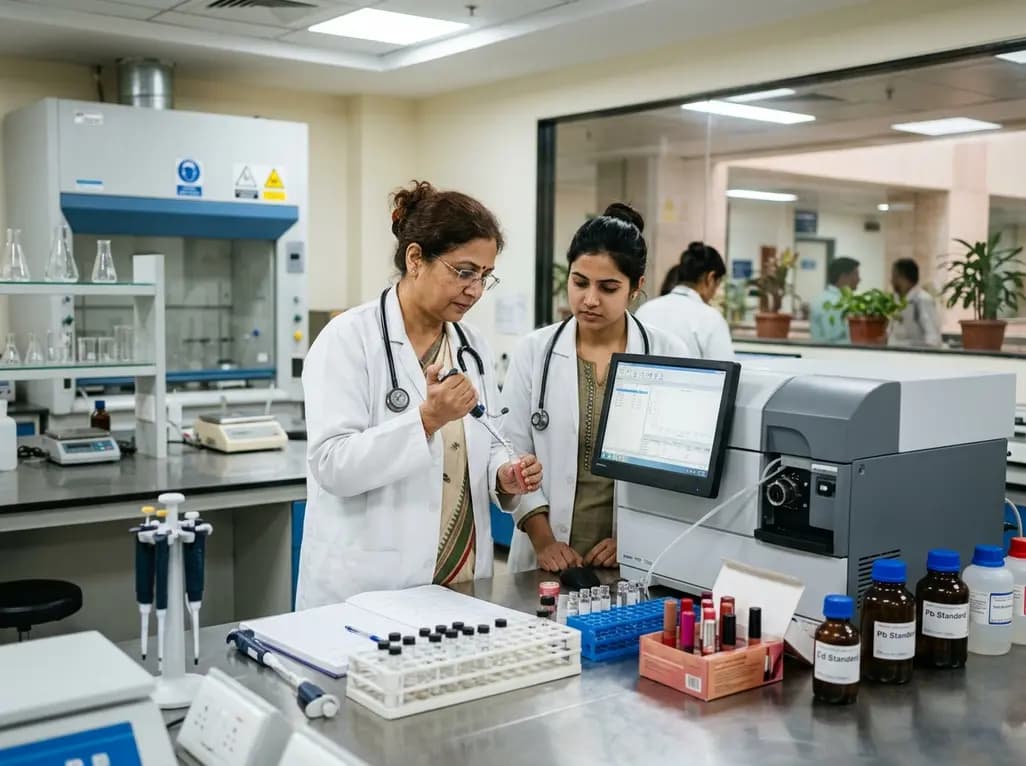
The global beauty and personal care market has witnessed exponential growth over the past decade, raising concerns regarding chemical safety. Daily topical exposure remains widespread, yet surveillance data frequently highlight the inadvertent presence of toxic elements in cosmetics. Lip products warrant specialized toxicological evaluation because consumers experience both continuous dermal contact and unavoidable oral ingestion. Consequently, medical practitioners must recognize potential systemic burdens and localized dermatological complications arising from unregulated cosmetic ingredients. Treating physicians need clear insights into risk assessment indices, heavy metal limits, and diagnostic approaches for persistent cheilitis.
Recent toxicological studies demonstrate that commercial lip preparations often contain detectable concentrations of hazardous heavy metals. Specifically, investigators evaluated thirty-two distinct commercial items spanning lipsticks, lip glazes, and lip balms using inductively coupled plasma mass spectrometry. The analytical results revealed distinct detection frequencies among seven targeted elements: lead, cadmium, mercury, arsenic, nickel, copper, and chromium. Remarkably, arsenic and copper exhibited the highest detection rates across the tested cohort, appearing in 65.6 percent of the samples. In addition, nickel and chromium demonstrated substantial prevalence in these formulations, whereas lead and cadmium occurred less frequently. However, nickel yielded the highest absolute concentration values among all quantified substances, followed sequentially by copper and chromium. These findings underscore significant formulation variability across product categories. For instance, glossy liquid formulations like lip glazes displayed higher aggregate metal concentrations compared to solid sticks. Therefore, clinicians must appreciate that different cosmetic vehicles present varying contamination profiles. Understanding these exposure patterns enables healthcare providers to evaluate vulnerable patient populations more effectively during routine clinical consultations.
Accurate quantification of trace metals requires sophisticated analytical platforms capable of detecting parts-per-billion concentrations. For this reason, inductively coupled plasma mass spectrometry serves as the gold standard for heavy metal profiling in complex cosmetic matrices. Furthermore, this method provides exceptional sensitivity, multi-elemental detection capability, and low limits of quantification. When analyzing pigmented lip cosmetics, researchers encounter significant matrix interference from waxes, natural oils, and inorganic colorants. Consequently, thorough microwave-assisted acid digestion must precede spectrometry to release bound metallic ions. The high detection values observed for nickel and copper reflect raw material contamination rather than intentional addition. In many instances, mineral pigments such as iron oxides and mica harbor unrefined elemental impurities. Moreover, synthetic color additives and lake dyes frequently contribute to residual heavy metal loads. Although international guidelines establish strict limits for traditional toxicants like lead and mercury, secondary metals receive less regulatory scrutiny. Thus, unmonitored production pipelines allow elevated quantities of nickel, copper, and chromium to persist in finished consumer items.
Toxicologists utilize standardized mathematical models to translate chemical concentrations into real-world human health risk assessments. Primarily, the hazard index estimates non-carcinogenic systemic harm, while the incremental lifetime cancer risk gauges malignant potential. In the evaluated study, the calculated hazard index demonstrated a distinct hierarchy, descending from lip glaze to lipstick and lastly lip balm. Consequently, lip glazes presented the greatest relative chronic systemic burden among all tested product classes. This elevation stems primarily from the frequent daily reapplication and sticky texture inherent to liquid glazes. However, toxicological calculations revealed reassuring results regarding long-term oncological hazards. Specifically, the incremental lifetime cancer risk values for lead, cadmium, arsenic, and chromium remained well within acceptable international safety thresholds. Therefore, current exposure levels from typical cosmetic usage do not indicate measurable carcinogenic risk for consumers. Nevertheless, cumulative non-carcinogenic risks from chronic ingestion warrant continued vigilance. As a result, maintaining lifelong exposure below toxicological action thresholds remains essential for consumer safety.
Cutaneous absorption through the vermilion border presents unique physiological vulnerabilities compared to standard keratinized epithelium. Because the lips lack a protective stratum corneum and sebaceous glands, external xenobiotics penetrate mucosal tissue rapidly. Furthermore, involuntary licking and swallowing ensure that a substantial portion of applied cosmetic formulation undergoes gastrointestinal absorption. Dermatologists frequently encounter patients presenting with intractable allergic contact cheilitis, perioral erythema, and mucosal hyperpigmentation. Notably, nickel is a well-established potent contact allergen and the leading cause of allergic contact dermatitis worldwide. When lipsticks deliver elevated nickel ions directly to broken or sensitive vermilion surfaces, localized type IV hypersensitivity reactions occur rapidly. In addition, chronic chromium and copper exposure can exacerbate chronic stomatitis and localized inflammatory dermatoses. Patients often mistake these allergic manifestations for simple environmental chapping, prompting increased application of irritating balms. Consequently, a self-perpetuating cycle of inflammation and toxic exposure develops. Clinicians must conduct targeted patch testing whenever patients exhibit persistent, unexplained lip eczema.
Cosmetic safety frameworks exhibit significant regional variations in mandatory testing requirements and elemental permissible thresholds. Globally, established safety frameworks enforce strict bans on primary heavy metals such as lead, cadmium, and arsenic. However, statutory limits for secondary elements like nickel, copper, and chromium remain fragmented and inconsistently enforced. In India, the Central Drugs Standard Control Organisation regulates cosmetic commodities under the Drugs and Cosmetics Rules. Additionally, the Bureau of Indian Standards mandates adherence to Indian Standard 6608 for lipstick formulations and IS 4707 for permitted raw materials. While Indian standards mandate compliance for arsenic and lead, independent verification for nickel and copper remains less stringent. As a result, manufacturing processes lacking rigorous raw material verification may produce batches with elevated elemental impurities. Furthermore, the proliferation of unorganized cosmetic manufacturing and informal e-commerce vendors increases consumer exposure to substandard batches. Therefore, regulatory authorities must update standardized testing protocols to encompass complete elemental profiles. Strengthening domestic surveillance will protect public health and align Indian manufacturing practices with international cosmetic benchmarks.
Current toxicological evaluations indicate that routine use of commercial lipsticks, lip glazes, and lip balms does not pose an elevated carcinogenic risk. Researchers measured incremental lifetime cancer risk values for arsenic, cadmium, chromium, and lead, finding all values well below international concern thresholds. Nevertheless, physicians should emphasize that non-carcinogenic toxic risks remain possible with long-term exposure. Consequently, consumers should choose properly certified cosmetic formulations to minimize cumulative systemic absorption over time.
Lip glazes demonstrate a higher hazard index primarily due to differences in formulation rheology, chemical vehicle composition, and consumer reapplication patterns. Viscous liquid glazes require specialized synthetic binders and mineral suspensions that frequently contain trace heavy metal impurities. Furthermore, individuals reapply liquid glazes more frequently throughout the day, significantly increasing involuntary oral ingestion. Therefore, the greater daily systemic intake combined with higher baseline concentrations of nickel and copper produces an elevated non-carcinogenic hazard index.
Clinicians should suspect cosmetic-induced contact dermatitis when cheilitis resists standard emollient therapy and correlates with cosmetic application. Unlike simple environmental xerosis, metal hypersensitivity typically causes localized pruritus, vermilion scaling, burning, and perioral edema. Furthermore, clinicians should perform patch testing utilizing standard European or Indian baseline series, focusing particularly on nickel sulfate and potassium dichromate. Consequently, identifying elemental sensitization allows dermatologists to recommend verified metal-free alternatives, rapidly resolving chronic mucosal inflammation.
Disclaimer: This content is for informational and educational purposes only... Refer to the latest local and national guidelines for clinical practice.
References

Read summarized clinical updates, watch expert medical content, and earn CME certifications right from your smartphone.
Open your smartphone camera to scan and install.





A recent ICP-MS study evaluated seven toxic elements in lip cosmetics. While carcinogenic risks remain negligible, elevated nickel and copper levels along with high hazard indices in lip glazes highlight the need for improved regulatory standards, clinical awareness of cheilitis, and patient education.
Today

A ten-year cohort study of ABU case logs reveals that URPS fellowship training significantly drives higher annual case volumes, advanced surgical complexity, and increased female representation in pelvic floor reconstruction, underscoring the vital need for structured subspecialty training.
Today

Systemic amyloidosis management is undergoing a therapeutic revolution. This clinical review synthesizes updates from the International Society of Amyloidosis, detailing novel plasma cell therapies, TTR stabilizers, silencers, translational models, and artificial intelligence in drug development.
Today

Posttraumatic pisotriquetral instability is a rare wrist injury causing severe hypothenar pain and weakness. Explore clinical examination, imaging, and pisiformectomy.
Today

A comprehensive review analyzes periconceptional GLP-1 receptor agonist exposure, revealing reassuring data on congenital anomalies and adverse perinatal outcomes while emphasizing the need for cautious patient counseling.
Yesterday
