

Loading, please wait...
Loading, please wait...

Medical educators constantly evaluate how barrier assessments prepare trainees for real-world medicine. The traditional bedside clinical examination remains a central pillar of physician certification across many jurisdictions. However, rapid diagnostic advancements and renewed curricula raise fundamental questions about test authenticity. A recent qualitative study investigated whether classic bedside cases still mirror actual workplace practice among physician trainees and fellows. Consequently, educators are re-evaluating whether historical exam routines truly capture the clinical acumen required in modern health systems. Understanding this alignment provides crucial insights into the evolving landscape of postgraduate medical education.
The long case assessment has anchored physician certification for several decades. During this task, trainees interview and examine an unselected inpatient before synthesizing a comprehensive diagnostic and management plan. Participants in the qualitative study consistently praised this format as an authentic reflection of clinical workflow. Specifically, the long case requires holistic diagnostic synthesis, nuanced communication, and therapeutic prioritization under realistic cognitive constraints. Fellows emphasized that real-world outpatient consultations and complex inpatient admissions closely mirror this comprehensive exercise. Moreover, trainees must uncover biopsychosocial subtleties that standard objective tests often overlook. Therefore, candidates cannot simply rely on memorized checklists to succeed in the long case. Instead, they must actively listen, adapt their line of questioning, and integrate messy clinical details into a sensible treatment roadmap. Furthermore, the format tests clinical reasoning under time pressure, mirroring the unpredictable demands of hospital wards. Because the long case replicates complete patient journeys, educators regard it as an indispensable safeguard of independent practice competence. Thus, the assessment retains powerful face validity across medical specialties. Additionally, direct observation allows examiners to evaluate bedside manner, empathy, and professional composure during challenging patient encounters. Such interpersonal dimensions remain vital for safe clinical practice and patient-centered communication.
In contrast to the long case, short cases received mixed appraisals depending on the clinical subspecialty examined. In traditional short cases, examiners ask candidates to demonstrate physical signs on a pre-selected patient within a few minutes. Trainees noted that neurology short cases maintain exceptional enduring validity. Neurological diagnoses still heavily depend on meticulous, localized physical signs such as reflex asymmetry or cranial nerve palsies. Consequently, bedside neurological examination skills remain directly translatable to daily clinical decisions. However, participants reported that cardiology short cases least reflected modern medical practice. In contemporary cardiology wards, clinicians use point-of-care ultrasound and rapid echocardiography to confirm murmurs and ventricular function. Therefore, spending excessive exam time grading faint murmurs or identifying rare physical artifacts feels artificial to junior doctors. In addition, physical findings in respiratory and abdominal cases often provide ambiguous guidance without immediate bedside imaging correlation. Modern clinicians rarely perform isolated, exhaustive regional routines without diagnostic instruments nearby. Hence, several short cases risk assessing rote performance rather than genuine clinical utility. Medical boards must acknowledge these specialty divergences to prevent assessments from becoming obsolete rituals. Furthermore, aligning examination expectations with actual clinical environments ensures that trainees cultivate practical skills rather than outdated examination theater.
Modern physician practice thrives on iterative clinical reasoning rather than rigid mechanical checklists. Experienced clinicians do not execute exhaustive head-to-toe routines on every admitted patient. Instead, they formulate initial differential diagnoses and execute focused physical maneuvers to test specific hypotheses. Unfortunately, traditional examination structures frequently penalize this practical efficiency by demanding ritualistic inspections. Trainees often memorize elaborate, performative examination rituals merely to satisfy examiner expectations. This disconnect creates unnecessary cognitive friction between daily ward duties and exam preparation. Therefore, researchers advocate transitioning toward hypothesis-driven short case formats. In such assessments, examiners provide concise clinical vignettes, prompting candidates to select high-yield maneuvers that directly confirm or exclude diagnoses. Furthermore, this format rewards purposeful clinical judgment rather than passive choreography. When candidates explain why they select a specific maneuver, examiners gain immediate insight into their higher-order problem-solving skills. As a result, trainees spend less time practicing theatrical gestures and more time refining diagnostic discernment. Such alignment bridges the gap between test day demands and real-life bedside clinical care. Consequently, junior doctors learn to approach patient encounters as investigative problem-solvers, reinforcing cognitive flexibility and clinical efficiency. Moreover, this goal-oriented method encourages trainees to prioritize patient comfort over redundant maneuvers.
Educational methodologists evaluate assessment quality by constructing structured validity arguments. Kane's validity framework offers a robust lens for this evaluation by analyzing four sequential inferences: scoring, generalization, extrapolation, and implications. The extrapolation inference examines whether test setting performance accurately predicts real-world clinical behavior. The recent qualitative evaluation represents the first study examining divisional physician examinations through this specific extrapolation lens. When short cases test obsolete techniques, the chain of extrapolation inference weakens substantially. For example, assessing obsolete cardiac maneuvers fails to predict how competently a doctor manages acute decompensated heart failure. Conversely, authentic assessment tasks strengthen extrapolation because exam performance directly reflects daily ward decisions. Moreover, Kane's framework highlights the downstream consequences, known as the implications inference. High-stakes examinations exert powerful backwash effects on trainee learning habits. When exams reward outdated routines, junior doctors prioritize test-taking choreography over evidence-based bedside evaluations. Consequently, revising examination tasks according to Kane's extrapolation principles protects both educational integrity and patient safety across health services. Ultimately, a defensible assessment must prove that test success translates directly into safe, autonomous clinical management.
Beyond evaluating clinical competence, high-stakes barrier assessments profoundly shape professional identity formation. Candidates do not experience the clinical examination merely as a measurement exercise. Instead, trainees view the rigorous preparation period as a defining rite of passage. Preparing for complex bedside cases requires months of intensive peer collaboration, ward rounds, and senior mentorship. Consequently, the shared emotional journey builds strong communal bonds among aspiring physicians. Senior fellows recall the examination as a pivotal milestone that solidified their confidence as fully autonomous decision-makers. Furthermore, this intense shared experience socializes doctors into the core professional values of thoroughness, patient advocacy, and intellectual humility. However, educators must ensure that this formative trial remains educationally constructive rather than unnecessarily punitive. Preserving authentic bedside interactions maintains the examination's noble tradition while fostering resilience and professional camaraderie. Thus, future reforms must protect this cultural legacy while updating individual testing mechanics. Balancing rigorous clinical appraisal with positive identity development ensures that new generations of physicians step forward with confidence. In this manner, the examination acts as an enduring communal foundation, uniting diverse generations of medical specialists.
The long case preserves high validity because it mirrors authentic physician workflows from start to finish. Candidates must gather histories, conduct targeted physical examinations, and formulate holistic management plans under realistic conditions. Furthermore, this format assesses communication skills and biopsychosocial context, which short tasks overlook. Consequently, the long case provides senior examiners with a comprehensive view of candidate reasoning, clinical communication, and practical patient care capabilities.
Kane's extrapolation inference examines whether a candidate's performance during an examination predicts their real-world clinical competence in daily practice. In physician assessments, validity weakens if test tasks demand obsolete maneuvers that modern clinicians rarely execute. Conversely, when examinations feature hypothesis-driven tasks reflecting contemporary ward decisions, the extrapolation inference strengthens substantially. Therefore, aligning examination requirements with current diagnostic tools ensures that passing scores genuinely indicate dependable, safe patient care.
Experts recommend shifting short cases toward hypothesis-driven evaluations rather than rigid, ritualistic physical examination routines. Trainees should demonstrate focused, high-yield maneuvers based on concise clinical scenarios instead of performing formulaic systemic checklists. In addition, assessment bodies should incorporate modern bedside diagnostic adjuncts and recognize differing specialty demands. These pragmatic adjustments reduce artificial test choreography, incentivize meaningful clinical learning, and strengthen overall assessment validity for future physician cohorts.
Disclaimer: This content is for informational and educational purposes only... Refer to the latest local and national guidelines for clinical practice.
References
Tridgell A et al. Does the adult divisional clinical examination still reflect how physicians practise? A qualitative study of Royal Australasian College of Physicians Fellows' and trainees' perceptions. Intern Med J. 2026 Nov 13. doi: 10.1111/imj.70667. PMID: 43026161.
Cook DA, Brydges R, Ginsburg S, Hatala R. A contemporary approach to validity arguments: a practical guide to Kane's framework. Med Educ. 2015;49(6):560-575.
Ramani S, Leinster S. AMEE Guide no. 34: Teaching in the clinical environment. Med Teach. 2008;30(4):347-364.

Read summarized clinical updates, watch expert medical content, and earn CME certifications right from your smartphone.
Open your smartphone camera to scan and install.





A qualitative study investigates whether traditional bedside clinical examinations still mirror contemporary physician practice. Findings support retaining long cases while reforming short cases toward hypothesis-driven assessments.
Today
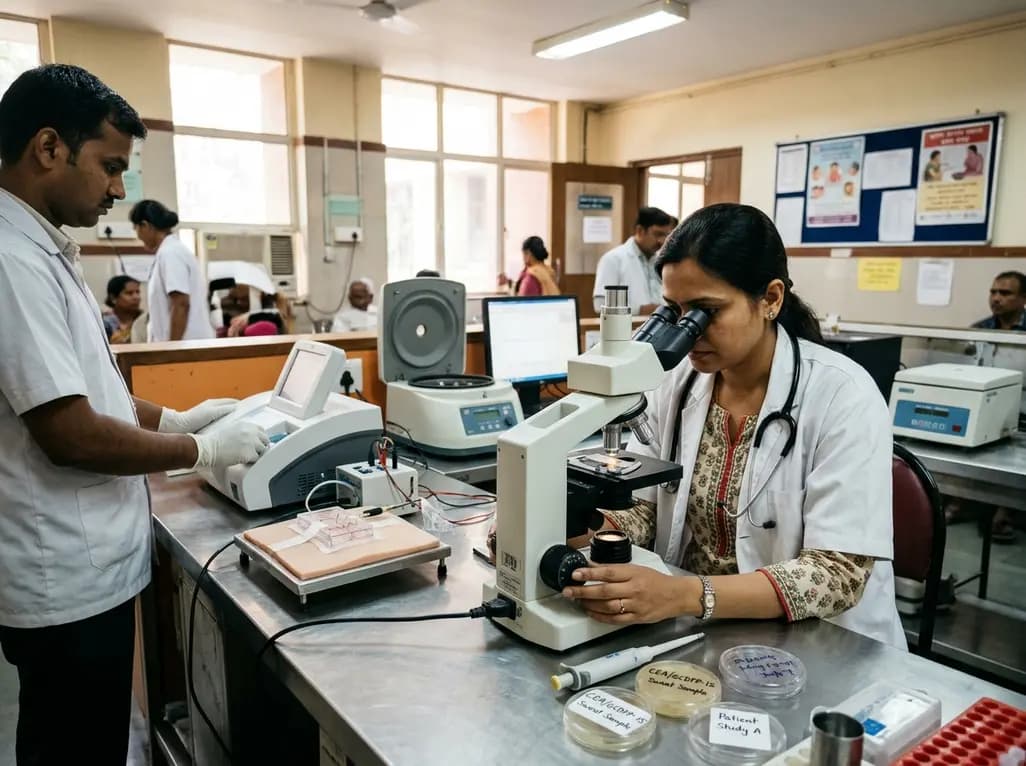
A pilot study evaluated WearDOXXN, a capillary microfluidic sweat patch, for noninvasive breast cancer monitoring by comparing sweat and serum CEA and PIP/GCDFP-15 levels.
Today
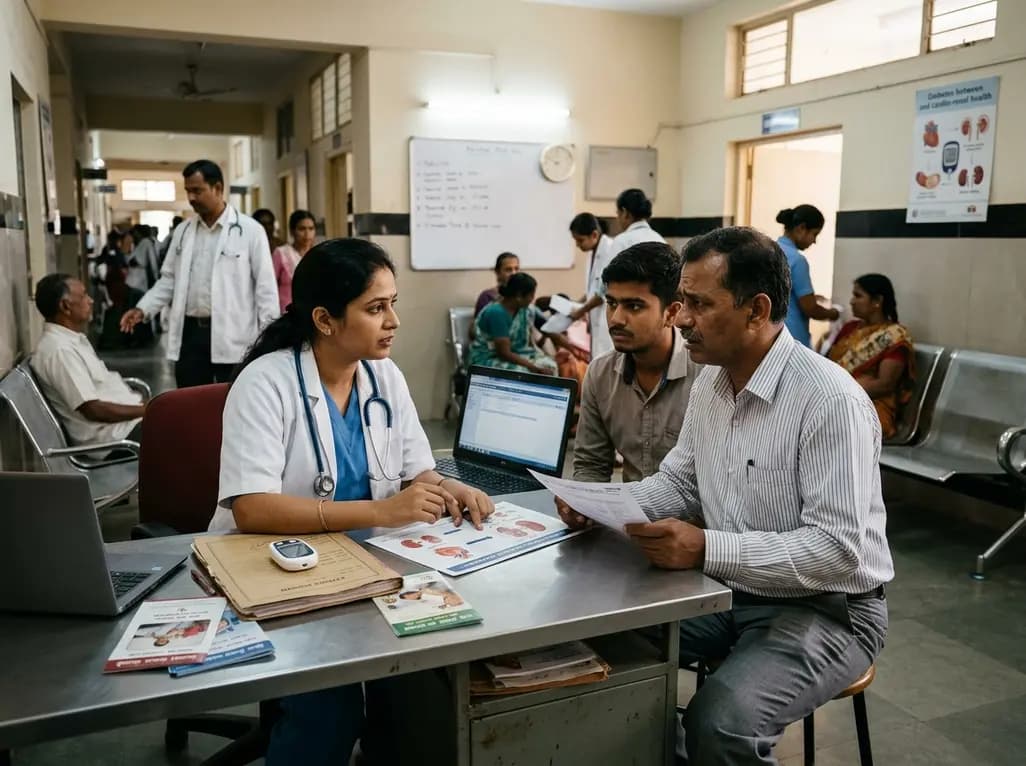
India faces a massive diabetes burden with over 89 million adults affected. Managing blood sugar in isolation fails to prevent severe cardiorenal complications. Clinicians must adopt an integrated metabolic ecosystem that prioritizes early detection, multifactorial risk assessment, and personalized therapies.
Today
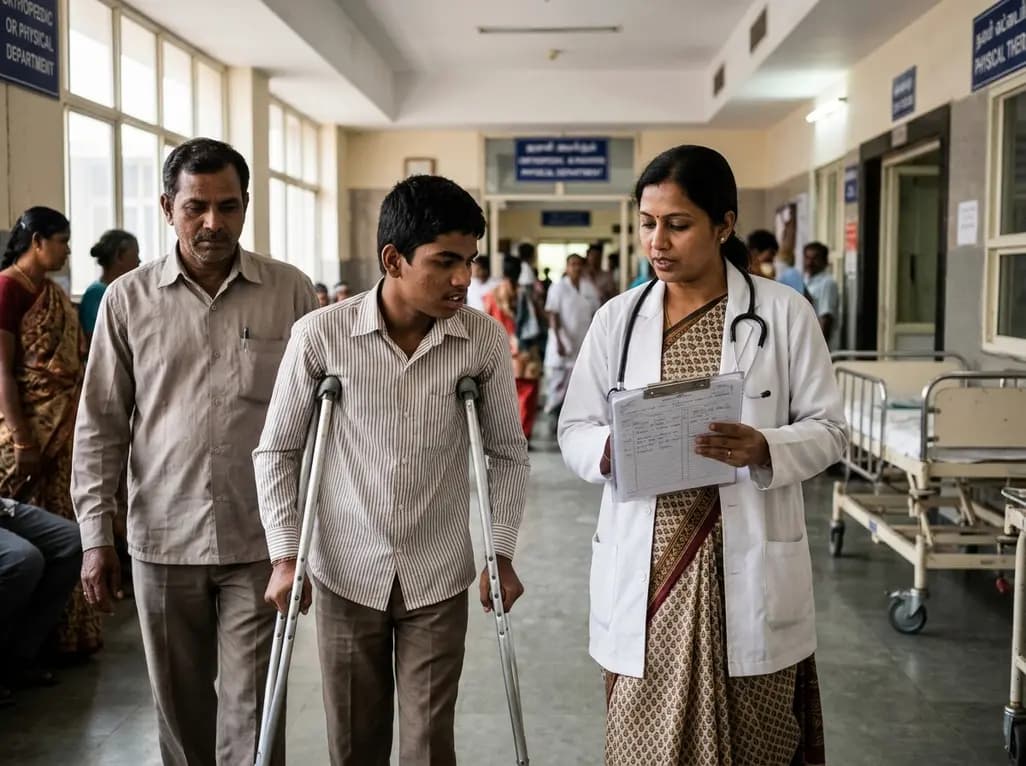
The Gross Motor Function Classification System (GMFCS) stops its validated age bands at 18. Recent evidence emphasizes that evaluating adult cerebral palsy requires purpose-sensitive documentation combining adolescent ratings with dynamic profiles of mobility, fatigue, pain, and community participation.
Today

A breakthrough 3D-printed piezoelectric collagen hydrogel activated by ultrasound accelerates diabetic wound repair, demonstrating 98.5% wound closure, robust antibacterial action, and enhanced vascularization without toxic chemical crosslinkers.
Today
