

Loading, please wait...
Loading, please wait...

External beam radiation therapy remains a standard curative modality for patients with advanced head and neck malignancies. However, high cumulative radiation doses often provoke severe acute cutaneous toxicities. Radiation dermatitis affects the vast majority of these individuals, frequently manifesting as painful erythema, dry desquamation, and debilitating moist desquamation. In severe instances, intense cutaneous damage compromises oncologic outcomes by forcing treatment interruptions and lowering chemotherapy compliance. Although supportive care exists, clinicians still lack a universally accepted standard of care to prevent or treat this acute morbidity. Consequently, researchers have turned to drug repositioning to develop targeted cutaneous interventions. Recent clinical trials are now investigating topical esomeprazole radiation dermatitis mitigation strategies to protect normal dermal tissues. By modifying a widely used proton pump inhibitor into an emulsion known as Dermaprazole, oncologists aim to shield the skin during high-dose curative radiotherapy. This novel formulation targets the fundamental biological pathways that drive acute radiation injury. Furthermore, it offers a non-invasive, accessible intervention for vulnerable oncology cohorts.
Ionizing radiation generates toxic reactive oxygen species that rapidly damage cellular lipids, proteins, and DNA in basal keratinocytes. As a result, dermal tissues suffer acute microvascular breakdown and chronic tissue remodeling. Preclinical studies demonstrate that esomeprazole acts far beyond simple gastric acid suppression. Specifically, the benzimidazole core of esomeprazole activates the nuclear factor erythroid 2-related factor 2 (Nrf2) antioxidant signaling cascade. This activation markedly upregulates downstream cytoprotective enzymes, most notably heme oxygenase 1 (HO1). Consequently, the drug neutralizes toxic free radicals before they inflict irreversible damage on dermal architecture. In addition to its potent antioxidant defense, topical esomeprazole dampens hyperactive inflammatory responses. The compound suppresses key pro-inflammatory cytokines, including interleukin-1 beta, interleukin-6, and tumor necrosis factor-alpha. Moreover, the formulation inhibits transforming growth factor-beta signaling, thereby decreasing downstream collagen overproduction and dermal fibrosis. Animal models confirm that topical esomeprazole accelerates re-epithelialization, preserves dermal integrity, and diminishes cutaneous necrosis. Therefore, Dermaprazole transforms a routine systemic drug into an effective local radioprotective agent.
To validate these promising preclinical discoveries, investigators launched a prospective, randomized, phase 2 clinical trial (ClinicalTrials.gov identifier: NCT04865731). The single-center study evaluates the safety, feasibility, and prophylactic efficacy of topical Dermaprazole against standard supportive care. Specifically, investigators selected Aquaphor healing ointment as the active supportive comparator. The trial randomized 45 adult patients with biopsy-proven head and neck malignancies using a 2:1 allocation scheme. All enrolled participants receive definitive chemoradiotherapy with a minimum cumulative radiation dose of 66 Gray. Patients apply their assigned topical regimen twice daily, initiating therapy at the time of computed tomography simulation. Furthermore, patients continue daily topical applications throughout their radiotherapy course and for two weeks post-treatment. This protocol ensures sustained dermal drug concentration during the cumulative peak of cutaneous radiation exposure. Researchers monitor participant compliance rigorously through daily application logs and weekly toxicity reviews. Ultimately, the trial assesses whether prophylactic topical esomeprazole radiation dermatitis regimens can significantly lower the incidence of grade 2 or higher skin reactions.
The primary clinical endpoint of the phase 2 study is the incidence and severity of acute radiation dermatitis. Treating radiation oncologists assess participants weekly during radiotherapy using the National Cancer Institute Common Terminology Criteria for Adverse Events (CTCAE) version 5. In addition, independent board-certified dermatologists perform blinded photographic reviews using standardized cross-polarized medical imaging. This rigorous methodology minimizes clinical evaluation bias and guarantees objective outcome assessment. Secondary endpoints provide comprehensive insight into patient recovery and biological response. For example, clinicians track the exact time to onset and healing of grade 2 or greater dermatitis. Furthermore, the study evaluates patient-reported quality of life using the validated Skindex-16 instrument at regular intervals. Researchers also correlate specific radiation dose-volume histogram parameters with observed skin toxicity thresholds. Finally, serial blood samples measure circulating inflammatory markers, including C-reactive protein, interleukin-6, and tumor necrosis factor-alpha. Therefore, the trial connects macroscopic skin protection with systemic molecular biomarker modulation throughout the therapeutic journey.
Head and neck cancers represent a tremendous healthcare burden across India, accounting for nearly one-third of all global cases. Due to the high prevalence of tobacco, areca nut, and gutkha consumption, Indian oncologists frequently manage locally advanced tumors. Consequently, definitive concurrent chemoradiation to doses exceeding 66 to 70 Gray represents a frontline standard of care in Indian centers. However, hot and humid tropical climates, combined with nutritional deficiencies, substantially increase the severity of radiation dermatitis among Indian patients. Severe moist desquamation causes unbearable pain, secondary bacterial infections, and costly hospitalizations. Even worse, severe cutaneous toxicity often forces unplanned radiotherapy breaks, which directly impairs locoregional tumor control. Current supportive practices across Indian institutions rely heavily on bland petroleum emollients or mild topical steroids, which offer inconsistent protection. Because esomeprazole is already manufactured widely across India with favorable cost economics, a successful topical formulation could provide an accessible, scalable remedy. Therefore, adopting topical esomeprazole radiation dermatitis protocols could transform supportive oncology and improve treatment completion rates across resource-variable environments.
Drug repurposing represents an efficient, cost-effective path toward addressing unresolved clinical challenges in cancer care. Proton pump inhibitors carry an extensive safety record spanning decades of clinical use in gastroenterology. Repurposing these established molecules as topical radioprotective formulations dramatically shortens traditional drug development timelines and avoids complex systemic toxicities. Interestingly, emerging radiobiological research indicates that proton pump inhibitors may exert dual opposing effects on normal versus malignant tissues. While topical esomeprazole shields normal keratinocytes through Nrf2 activation and HO1 upregulation, systemic proton pump inhibitors can alter tumor microenvironmental pH. In acidic hypoxic tumor niches, PPIs inhibit vacuolar ATPase pumps, thereby reversing chemoresistance and sensitizing cancer cells to ionizing radiation. Consequently, topically restricted formulations like Dermaprazole avoid systemic interference while delivering high local antioxidant protection. As investigators await final clinical trial outcomes expected by 2027, this study lays vital groundwork for larger multicenter trials. Ultimately, targeted topical formulations may establish a new supportive care benchmark across all radiation-treated anatomical sites.
Dermaprazole is a specialized topical cream formulation of esomeprazole, a well-known proton pump inhibitor. When patients apply it to irradiated skin, it activates the cellular Nrf2 signaling pathway and upregulates antioxidant enzymes like heme oxygenase 1. Consequently, it effectively neutralizes toxic reactive oxygen species and suppresses pro-inflammatory cytokines, including interleukin-6 and tumor necrosis factor-alpha. This biophysical mechanism protects basal keratinocytes and markedly reduces radiation-induced dermal inflammation and tissue fibrosis.
Aquaphor healing ointment represents one of the most widely utilized supportive care moisturizers in radiation oncology practice. Although clinical guidelines do not recognize Aquaphor as a formal curative standard of care, clinicians routinely recommend it to alleviate skin dryness and maintain dermal barrier hydration. Therefore, comparing prophylactic Dermaprazole against Aquaphor allows researchers to establish whether active pharmacologic radioprotection provides superior clinical efficacy over standard bland emollient therapy.
Preclinical evidence indicates that topical esomeprazole acts locally within cutaneous layers without diminishing radiation-induced tumor destruction. Because clinicians administer the formulation topically to superficial skin, systemic absorption remains negligible. Moreover, radiobiological studies demonstrate that proton pump inhibitors do not protect cancer cells; instead, they may sensitize tumor cells to radiation by disrupting intracellular pH regulation. Thus, topical application safely protects healthy dermal architecture without compromising locoregional tumor control.
Disclaimer: This content is for informational and educational purposes only. It should not be used as a substitute for professional medical advice, diagnosis, or treatment. Refer to the latest local and national guidelines for clinical practice.
References

Read summarized clinical updates, watch expert medical content, and earn CME certifications right from your smartphone.
Open your smartphone camera to scan and install.





A phase 2 randomized controlled trial evaluates topical esomeprazole (Dermaprazole) versus Aquaphor to prevent severe radiation dermatitis in head and neck cancer patients receiving definitive chemoradiation, highlighting novel antioxidant and antifibrotic pathways in supportive oncology.
Today

Overexpression of glycoprotein nonmetastatic melanoma protein B (GPNMB) mediates resistance to CDK4/6 inhibitors like abemaciclib and palbociclib in ER+ breast cancer through integrin-driven AKT/ERK signaling. Targeting GPNMB with antibody-drug conjugates like glembatumumab vedotin may overcome this resistance.
Today

A secondary analysis of the MOMS clinical trial reveals that infant sex does not influence neonatal opioid withdrawal syndrome severity in buprenorphine-exposed newborns. Maternal co-exposures and clinical factors drive outcomes, highlighting the need for objective assessment and supportive breastfeeding.
Today
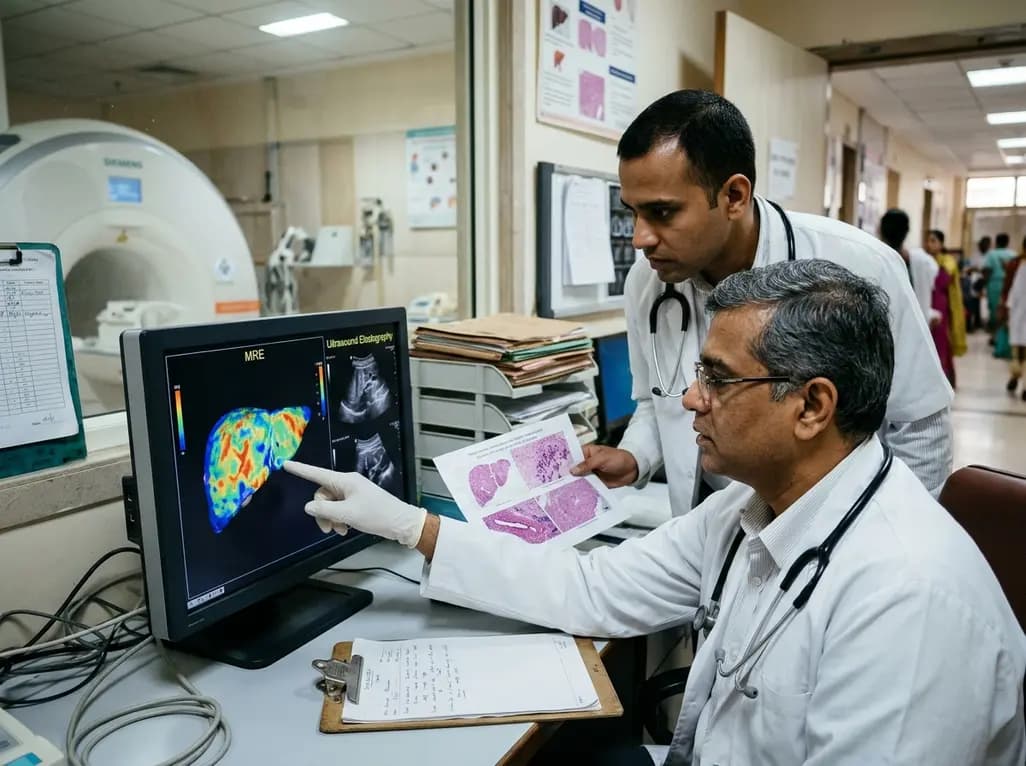
A comparative study reveals magnetic resonance elastography outperforms ultrasound elastography in assessing liver fibrosis in Fontan-associated liver disease, demonstrating stronger histological agreement and superior discrimination.
Today

A systematic review and meta-analysis highlights the substantial impact of plyometric jump training on jump performance, reactive strength, and landing kinematics in female team-sport athletes, providing evidence-based programming guidelines for sports medicine and orthopedics.
Today

A comprehensive review of the role of growth hormone in diabetic kidney disease and podocytopathy. Learn how elevated GH activates ZEB2, Notch, and TGF-beta1, driving podocyte loss and glomerulosclerosis, and explore novel targeted therapeutic approaches.
Today
