.webp&w=384&q=75)

Loading, please wait...
Loading, please wait...
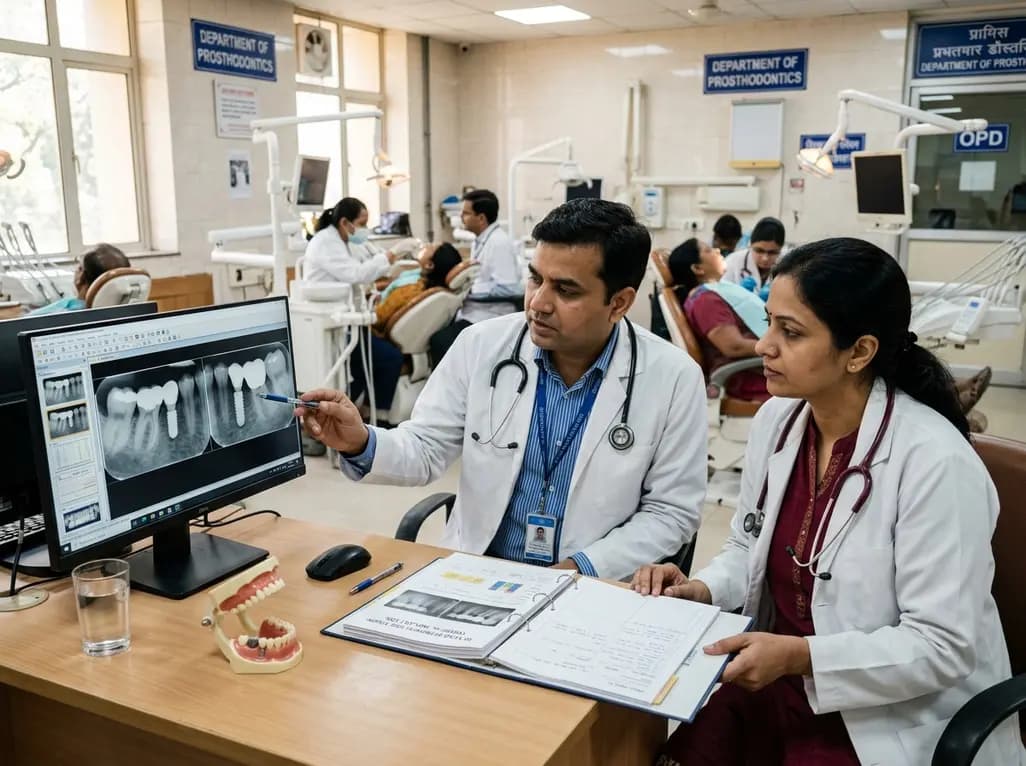
Rehabilitating partially edentulous posterior dentition remains a cornerstone of restorative dentistry. Clinicians frequently evaluate whether natural teeth or endosseous implants serve as the most predictable foundation for long-term function. Both modalities provide substantial functional and aesthetic restoration. However, comparative evidence evaluating long-term survival and complication profiles across extended follow-up periods is critical for modern prosthodontic treatment planning. Modern restorative protocols rely extensively on fixed dental prostheses to re-establish masticatory efficiency and occlusal stability.
Long-term clinical investigations provide indispensable insights into the durability of restorative interventions. Recent multicenter data spanning a 10-year observation period demonstrate remarkably high and comparable survival outcomes for both tooth-supported fixed dental prostheses (TSFDPs) and implant-supported fixed dental prostheses. At the 5-year benchmark, both restorative options achieved an identical cumulative survival rate of 98%. This finding underscores the immediate predictability of both modalities when clinicians adhere to standard surgical and prosthodontic protocols.
Furthermore, the 10-year cumulative survival rates remained exceptionally high across both cohorts, reaching 94% for tooth-supported prostheses and 93% for implant-supported alternatives. Statistical analysis revealed no significant difference in overall survival between these two approaches. Consequently, clinicians can reassure patients that both natural abutments and dental implants offer durable foundations for multi-unit and single-unit posterior restorations over a decade of continuous functional loading. Nevertheless, evaluating survival alone does not capture the full clinical picture, because secondary complications frequently influence long-term maintenance demands.
Although survival rates remain virtually equivalent, biological complication profiles diverge significantly between natural teeth and dental implants. Long-term multicenter observations indicate that biological complications occurred in 24.8% of tooth-supported restorations, compared to only 9.6% of implant-supported restorations. This statistically significant disparity highlights the distinct biological vulnerabilities inherent to natural abutment teeth under extensive prosthetic load.
Specifically, secondary dental caries, endodontic pathology, loss of pulp vitality, and localized periodontal breakdown represent the predominant biological challenges encountered around natural teeth. In contrast, implant abutments are entirely impervious to dental caries, eliminating a primary failure mode seen in natural dentition. However, implant sites remain susceptible to peri-implant mucositis and progressive peri-implantitis. Therefore, comprehensive pre-treatment risk assessment must evaluate individual caries susceptibility, endodontic status of proposed abutments, and periodontal susceptibility prior to selecting the final restorative modality.
In addition to biological health, technical and mechanical complications represent a frequent challenge in restorative dentistry. Over a 10-year evaluation period, technical complications occurred at comparable frequencies in both cohorts, affecting 29.9% of tooth-supported prostheses and 27.0% of implant-supported restorations. These findings confirm that mechanical forces in the posterior arch exert substantial stress regardless of the underlying support mechanism.
Common mechanical issues include ceramic chipping, framework fracture, retention loss, and screw loosening in implant-retained designs. Because natural teeth possess a periodontal ligament, they benefit from physiological mobility and tactile proprioception, which cushions occlusal forces. Conversely, rigid osseointegration transfers masticatory loads directly to the prosthetic components and bone interface. As a result, meticulous occlusal design, appropriate material selection, and precise passive fit remain paramount for mitigating technical complications across both restorative modalities.
Beyond clinical survival and complication metrics, patient-reported outcome measures offer crucial perspectives on therapeutic success. Evaluating oral health-related quality of life provides direct insight into patient comfort, masticatory confidence, and overall satisfaction. Using the standardized Oral Health Impact Profile-14 (OHIP-14) instrument, long-term assessments reveal remarkably low scores across all patient groups.
Specifically, patients restored with tooth-supported prostheses reported a mean OHIP-14 score of 4.8, while those with implant-supported prostheses recorded a mean score of 3.0. Patients rehabilitated with a combination of both modalities presented an intermediate score of 3.5. Lower numerical values on the OHIP-14 scale indicate minimal functional impairment and superior quality of life. Thus, both treatment strategies successfully resolve functional limitations, alleviate pain, and restore patient confidence in the posterior dentition over the long term.
Selecting between tooth-supported and implant-supported restorations requires careful balancing of anatomical, biological, and patient-specific parameters. When adjacent natural teeth present extensive coronal destruction, previous restorations, or endodontic therapy, utilizing them as abutments for a multi-unit prosthesis remains a conservative and cost-effective approach. This strategy restores the missing unit while simultaneously reinforcing compromised adjacent teeth.
Conversely, when adjacent teeth remain intact and disease-free, preparing sound tooth structure for prosthetic retainers carries biological penalties. In such scenarios, implant-supported single crowns or fixed partial prostheses offer an ideal solution by preserving virgin tooth structure. Moreover, implants prevent irreversible endodontic complications on healthy adjacent teeth. Consequently, clinicians must integrate anatomical feasibility, local bone volume, systemic medical history, financial considerations, and individual hygiene compliance into their treatment planning.
Achieving predictable 10-year outcomes necessitates structured supportive periodontal and peri-implant therapy. Because biological complications serve as the leading cause of complete prosthetic failure, customized recall regimens are essential for early detection and intervention. Tooth-supported prostheses require regular fluoride applications, meticulous marginal margin inspection, and periodic vitality assessments to prevent progressive caries and pulp necrosis.
Similarly, implant-supported restorations demand systematic probing, bleeding evaluations, and radiographic monitoring to intercept peri-implant bone loss before irreversible breakdown occurs. In addition, providing patients with personalized oral hygiene instruction, including interdental brushes and superfloss, preserves marginal tissue health. By implementing proactive maintenance strategies, clinicians ensure the sustained functional longevity of posterior restorations while reducing the incidence of catastrophic failures.
Biological failures in tooth-supported prostheses arise primarily from secondary dental caries beneath retainer margins, loss of pulpal vitality, recurrent endodontic lesions, and advanced periodontal attachment loss. Because natural abutment teeth remain vulnerable to bacterial plaque accumulation and biological degradation over time, rigorous preventive maintenance, dietary counseling, and frequent clinical evaluations are vital to intercept biological complications before irreversible structural failure occurs.
Technical complications occur with similar frequencies in both restorative designs but manifest differently. Tooth-supported restorations primarily exhibit cement dissolution, loss of retention, and veneering porcelain fractures. In contrast, implant-supported restorations more frequently experience abutment screw loosening, screw fracture, and framework chipping due to the rigid nature of osseointegration. Proper occlusal equilibration and appropriate restorative material selection help minimize these mechanical risks.
Patient-reported oral health-related quality of life remains high and comparable because both therapeutic options effectively re-establish posterior occlusal support, chewing efficiency, and dental aesthetics. Regardless of whether prostheses rest on natural abutments or titanium implants, successful fixed rehabilitation eliminates functional disability, enhances dietary comfort, and restores psychological confidence, yielding exceptionally favorable patient satisfaction scores over long-term follow-up periods.
Disclaimer: This content is for informational and educational purposes only. It is not intended to provide medical advice or to be a substitute for professional clinical judgment, diagnosis, or treatment. Patients should seek the advice of a qualified healthcare provider with any questions they may have regarding a medical condition. Practitioners should rely on their own professional expertise and review relevant medical literature and guidelines when making clinical decisions. Refer to the latest local and national guidelines for clinical practice.
References
1. Athab Abduljabbar Z et al. Clinical Outcomes of Fixed Dental Prostheses Supported by Teeth or Implants in the Posterior Region-A Long-Term Retrospective Multicenter Study. Clin Oral Implants Res. 2026 Aug 22. doi: 10.1111/clr.70169. PMID: 42630111.
2. Pjetursson BE, Thoma D, Jung R, Zwahlen M, Zembic A. A systematic review of the survival and complication rates of implant-supported fixed dental prostheses (FDPs) after a mean observation period of at least 5 years. Clin Oral Implants Res. 2012;23(Suppl 6):22-38.
3. Muddugangadhar BC, Amarnath GS, Sonakeshabharathi, Garg A, Rao KP. Meta-analysis of failure and complication rates of tooth-supported fixed dental prostheses. J Indian Prosthodont Soc. 2015;15(3):197-206.

Read summarized clinical updates, watch expert medical content, and earn CME certifications right from your smartphone.
Open your smartphone camera to scan and install.





A 10-year retrospective multicenter study evaluates the long-term survival, biological complications, and technical outcomes of tooth-supported versus implant-supported fixed dental prostheses in the posterior region, highlighting crucial factors for clinical decision-making.
last month
According to WHO data, average lifespan reached 73.3 years in 2023, recovering from pandemic lows. However, healthy life expectancy lags at 62.8 years due to surging noncommunicable conditions like cardiovascular disease and dementia, demanding proactive primary screening and sustained chronic care.
Today
A nationwide South Korean study shows underreporting of smoking among women dropped from 57.4% to 36.4% between 2008 and 2021. However, over one-third of female smokers still conceal their habit, highlighting the critical role of cotinine verification in clinical risk assessment.
Today
Medical robotics is transitioning beyond operative suites into diagnostics, cardiology, and endocrinology. Explore how innovations in tele-robotics, AI integration, and nanomedicine are overcoming geographical barriers and transforming precision healthcare delivery across India's evolving disease landscape.
Today
A new study evaluates the rheological stability of decellularized peripheral nerve matrix hydrogels under varied storage conditions. Findings show -80°C storage and freeze-drying preserve gelation kinetics and mechanical stiffness, offering key insights for shipping and translational clinical applications.
Today
A qualitative meta-synthesis highlights the complex interplay between gender dysphoria, minority stress, and eating disorders in transgender and gender-diverse individuals. Clinicians must recognize these distinct drivers to offer supportive, gender-affirming, and interdisciplinary eating disorder care.
Today
