

Loading, please wait...
Loading, please wait...

The LATE-MT trial was a multicentre, prospective, randomized, open-label, blinded-endpoint trial at stroke centres in China that compared mechanical thrombectomy plus standard medical care with standard medical care alone in patients with anterior-circulation large-vessel occlusion presenting 24 to 72 hours after they were last known well, selected by perfusion imaging. A total of 336 patients were analysed, 168 in each group. Thrombectomy produced a more favourable distribution of modified Rankin Scale scores at 90 days (common OR for better functional outcome 1.74). Successful recanalization was achieved in 82% of the thrombectomy group. However, symptomatic intracranial haemorrhage occurred in 4.8% of patients after thrombectomy and in none of the control group, and 90-day mortality was 6.0% versus 1.8%. The authors concluded that in carefully selected patients with anterior-circulation large-vessel occlusion, thrombectomy 24 to 72 hours after onset improved 90-day functional outcome but was associated with higher rates of symptomatic intracranial haemorrhage, death and serious adverse events.

Read summarized clinical updates, watch expert medical content, and earn CME certifications right from your smartphone.
Open your smartphone camera to scan and install.





The LATE-MT trial was a multicentre, prospective, randomized, open-label, blinded-endpoint trial at stroke centres in China that compared mechanical thrombectomy plus standard medical care with standard medical care alone in patients with anterior-circulation large-vessel occlusion presenting 24 to 72 hours after they were last known well, selected by perfusion imaging. A total of 336 patients were analysed, 168 in each group. Thrombectomy produced a more favourable distribution of modified Rankin Scale scores at 90 days (common OR for better functional outcome 1.74). Successful recanalization was achieved in 82% of the thrombectomy group. However, symptomatic intracranial haemorrhage occurred in 4.8% of patients after thrombectomy and in none of the control group, and 90-day mortality was 6.0% versus 1.8%. The authors concluded that in carefully selected patients with anterior-circulation large-vessel occlusion, thrombectomy 24 to 72 hours after onset improved 90-day functional outcome but was associated with higher rates of symptomatic intracranial haemorrhage, death and serious adverse events.
Today

A clinical decision-support framework using health checkup data from 231,683 adults predicts incident obesity with high discrimination (AUROC 0.918). The system integrates temporal survival analysis and risk-factor explanations to prioritize individualized preventive interventions.
Today

A large cohort study demonstrates that fetal growth restriction in a first pregnancy raises maternal cardiovascular risk within five years postpartum, including elevated rates of heart failure, stroke, and myocardial infarction. Clinicians must initiate proactive postpartum screening and cardiovascular prevention.
Yesterday

A multicenter observational study evaluated an 8-week digital health monitoring platform using wearable sensors in ambulatory heart failure. While participants achieved high daily wear-time of 11.7 hours and 80% completion, initial recruitment revealed significant technology-related onboarding barriers.
Today

A paired cadaveric study compared triple and quintuple percutaneous Achilles tendon lengthening. While quintuple hemisection showed numerically greater elongation, differences were not statistically significant.
Yesterday
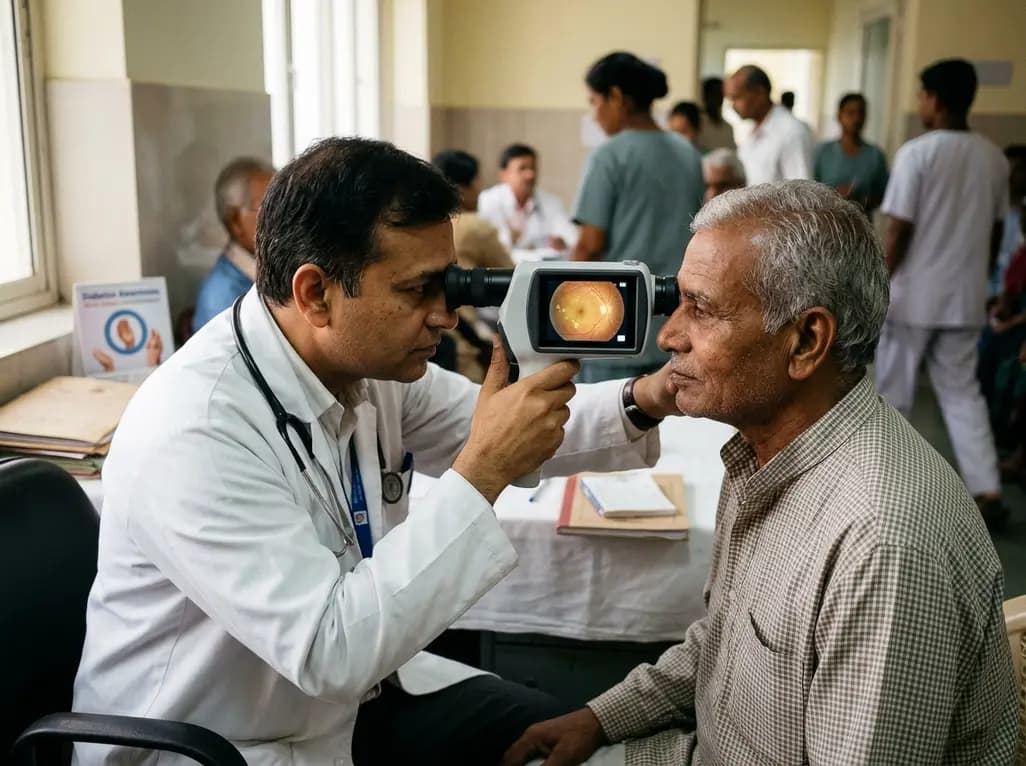
Diabetic retinopathy remains a leading cause of preventable visual impairment. This review outlines key strategies for screening, systemic risk factor control, advanced diagnostic imaging, and timely specialist referrals within primary and multidisciplinary care models.
Today
