

Loading, please wait...
Loading, please wait...

Ambulatory heart failure care requires vigilant physiological observation to identify decompensation early and avert hospitalizations. Consequently, digital health monitoring has emerged as an innovative paradigm to connect patients with clinical care teams. By combining continuous wearable sensors with dedicated mobile apps, remote platforms capture vital signs and activity patterns. In addition, these systems detect early signs of fluid retention in real time. Nevertheless, successful real-world implementation hinges on sustained patient adherence and voluntary technology adoption. A recent prospective multicenter observational study evaluated these critical parameters among ambulatory heart failure patients across international medical centers.
Heart failure presents a relentless global disease burden characterized by recurrent decompensation events and frequent hospital admissions. Therefore, remote surveillance strategies seek to detect occult hemodynamic deterioration long before overt pulmonary edema develops. Novel non-invasive sensor platforms now collect multiparametric data outside conventional clinic visits. Specifically, these integrated platforms record electrocardiograms, heart rate variability, peripheral oxygenation, activity levels, and self-reported symptoms. However, clinical researchers often encounter notable resistance during patient onboarding. Researchers screened 3386 individuals with NYHA class I to III symptoms across six centers in the United States and Singapore. Surprisingly, only 520 patients met full clinical eligibility criteria, representing approximately 15.4 percent of the screened cohort. Furthermore, among eligible candidates, only 66 individuals provided informed consent. The primary barrier to enrollment involved technology-related reluctance, as many candidates felt intimidated by wearable hardware and daily digital tasks. Consequently, this recruitment bottleneck highlights an urgent clinical priority. Medical technology must prioritize user accessibility and intuitive interfaces to engage diverse patient populations.
The trial required active and continuous participation over an eight-week monitoring period. Enrolled individuals received two distinct wearable devices: an Everion multisensor armband and an Apple Watch. In addition to wearing these biosensors continuously, participants performed active diagnostic assignments every day. For example, patients recorded daily single-lead electrocardiograms and completed daily structured symptom questionnaires. Moreover, the protocol mandated weekly standardized voice recordings to assess speech cadence. Patients also completed biweekly Kansas City Cardiomyopathy Questionnaires to track clinical status. Overall, 65 patients formally entered the observational study, presenting a mean age of 56.5 years with male predominance at 81.5 percent. Despite the demanding nature of multiple daily interactions, 52 participants completed the entire eight-week duration, yielding an impressive 80 percent retention rate. Thus, motivated participants can maintain excellent protocol consistency when supported by dedicated study staff. Additionally, no serious platform-related adverse events occurred during follow-up, confirming the fundamental physical safety of multicomponent wearable arrays in ambulatory cardiovascular cohorts.
Adherence benchmarks revealed intriguing differences between passive automated data collection and active patient tasks. Study investigators defined successful sensor wear-time as at least eight hours per day. Remarkably, enrolled participants recorded a mean daily wear-time of 11.7 hours, significantly surpassing the predetermined trial threshold. This robust wear-time proves that ambulatory patients tolerate dual wearable devices throughout regular daily activities. Similarly, active data tasks achieved respectable completion rates across the eight weeks. Patients submitted their scheduled electrocardiograms and symptom reports with steady consistency during the initial four weeks. However, active task compliance gradually waned toward the later stages of the study period. Investigators observed that daily survey completion required substantial cognitive and behavioral effort compared to passive biometric recording. Consequently, passive biosensors offer clear logistical advantages over repetitive questionnaires for long-term physiological tracking. Cardiologists must acknowledge this behavioral fatigue when designing longitudinal remote management protocols. Automated data acquisition reliably captures vital metrics without placing excessive burdens upon fatigued patients.
Although adherence was strong among enrolled individuals, the initial recruitment yield of 1.9 percent exposes substantial real-world friction. Most candidate exclusions stemmed not from anatomical contraindications, but from self-reported discomfort with technology. Many older patients express deep anxiety regarding digital complexity, Bluetooth syncing errors, and device charging routines. Therefore, healthcare systems cannot simply hand out wearables and expect universal participation. Instead, clinicians must establish dedicated onboarding pathways featuring comprehensive digital navigation assistance. Specifically, nurse navigators or community health workers can deliver individualized device training before discharge or during outpatient visits. Furthermore, hardware developers must streamline user interfaces by minimizing interactive steps and automating telemetry synchronization. Addressing these technical barriers remains imperative for equitable care delivery. If digital platforms cater only to technologically savvy individuals, vulnerable demographics will suffer wider health disparities. By investing in structured educational support, clinical practices can bridge the digital divide and democratize remote cardiovascular care for all patients.
The findings from this multicenter study hold profound relevance for cardiovascular medicine across India. In India, heart failure frequently affects younger demographics compared to Western nations, often striking individuals during their most productive working years. Furthermore, rapid urban-rural migration and concentrated tertiary medical centers make frequent in-person clinic visits impractical for millions of rural patients. Consequently, remote physiologic monitoring represents an extraordinary opportunity to decentralize chronic disease management throughout diverse Indian states. However, clinicians must overcome distinct infrastructural hurdles, including patchy cellular connectivity and variable socioeconomic access to commercial smartwatches. Low-cost biosensing armbands and vernacular smartphone software offer practical, cost-effective alternatives for Indian ambulatory programs. Additionally, family members frequently act as informal caregivers in Indian households. They offer a strong support network to assist elderly patients with daily device compliance. By integrating automated telemetry into primary health networks, cardiologists can detect decompensation early, avert emergency admissions, and mitigate severe economic strain.
Collecting continuous physiological metrics produces immense clinical value only when translated into prompt therapeutic adjustments. Cardiologists cannot review millions of raw data points without experiencing severe alert fatigue. Therefore, automated analytical platforms must synthesize raw biosensor outputs into actionable clinical summaries. For instance, artificial intelligence algorithms can combine heart rate patterns, nocturnal respiration changes, and voice acoustics to generate early warning indices. When an alert triggers, clinical teams can rapidly adjust diuretics or uptitrate medical therapy before decompensation requires hospital admission. Furthermore, international guidelines from the American College of Cardiology and European Society of Cardiology increasingly advocate structured remote patient workflows. Nevertheless, successful programs require established protocols that define clinician response times and liability parameters clearly. As wearable sensors become more durable and unobtrusive, continuous surveillance will redefine outpatient management, improve quality of life, and prolong survival.
Many candidates decline digital health platforms primarily because of apprehension regarding technological complexity and daily operational demands. Elderly patients frequently worry about navigating unfamiliar smartphone applications, managing Bluetooth synchronization failures, and charging multiple devices. Furthermore, some individuals perceive continuous tracking as intrusive or fear that hardware malfunctions might trigger unwarranted alarms. Addressing these valid anxieties through personalized patient education remains critical. Clinicians must offer simplified user interfaces and empathetic reassurance to expand enrollment.
Ambulatory heart failure patients consistently demonstrate significantly higher compliance with passive wearable sensors than active reporting tasks. Passive monitors seamlessly record heart rate, physical activity, and bioimpedance in the background without interrupting daily routines. In contrast, requiring patients to manually record electrocardiograms, answer symptom surveys, and submit voice clips demands ongoing cognitive effort. Over time, active reporting fatigue leads to declining response rates. Consequently, passive continuous monitoring provides far more reliable data for long-term clinical surveillance.
Indian clinicians should prioritize accessible, low-cost wearable devices supported by intuitive applications available in regional languages. Furthermore, care teams must establish structured patient onboarding programs. Nursing staff or community health workers can train patients and family caregivers thoroughly. Involving family members creates an effective local support structure that ensures proper device charging and reliable data transmission. Finally, health systems must integrate automated triage algorithms to prevent clinician alert burnout while maintaining high-quality patient care.
Disclaimer: This content is for informational and educational purposes only and should not be considered professional medical advice. Always consult a qualified healthcare provider for diagnosis and treatment decisions. Refer to the latest local and national guidelines for clinical practice.
References

Read summarized clinical updates, watch expert medical content, and earn CME certifications right from your smartphone.
Open your smartphone camera to scan and install.





A multicenter observational study evaluated an 8-week digital health monitoring platform using wearable sensors in ambulatory heart failure. While participants achieved high daily wear-time of 11.7 hours and 80% completion, initial recruitment revealed significant technology-related onboarding barriers.
Today
A clinical decision-support framework using health checkup data from 231,683 adults predicts incident obesity with high discrimination (AUROC 0.918). The system integrates temporal survival analysis and risk-factor explanations to prioritize individualized preventive interventions.
Today

A large cohort study demonstrates that fetal growth restriction in a first pregnancy raises maternal cardiovascular risk within five years postpartum, including elevated rates of heart failure, stroke, and myocardial infarction. Clinicians must initiate proactive postpartum screening and cardiovascular prevention.
Yesterday

A paired cadaveric study compared triple and quintuple percutaneous Achilles tendon lengthening. While quintuple hemisection showed numerically greater elongation, differences were not statistically significant.
Yesterday
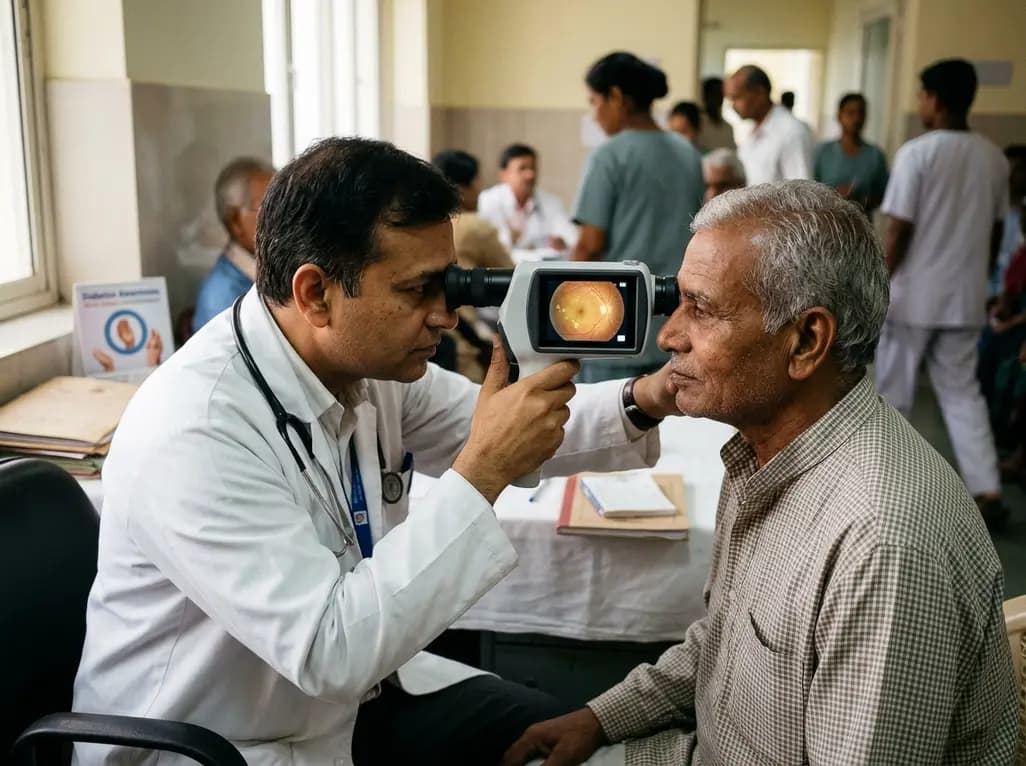
Diabetic retinopathy remains a leading cause of preventable visual impairment. This review outlines key strategies for screening, systemic risk factor control, advanced diagnostic imaging, and timely specialist referrals within primary and multidisciplinary care models.
Today
