.webp&w=384&q=75)

Loading, please wait...
Loading, please wait...
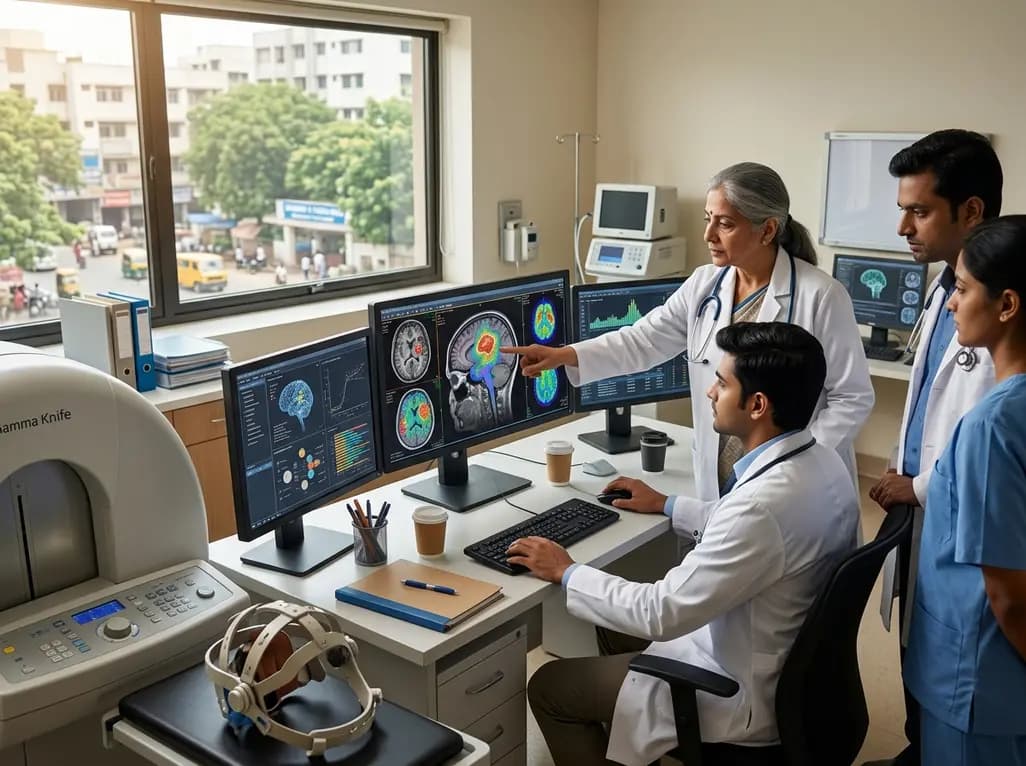
Managing recurrent glioblastoma remains one of the most formidable challenges in modern neuro-oncology. Historically, clinicians have relied on a combination of generalized protocols and subjective clinical judgment to determine treatment paths. When utilizing Gamma Knife radiosurgery, the process of prescription dose selection is often highly individualized. Physicians typically consider factors such as tumor volume, anatomical constraints, and previous radiation exposure. However, this approach frequently lacks patient-specific estimates regarding the risk of second progression. Consequently, there is a significant clinical need for objective tools that can predict individual outcomes. The introduction of the THINKERS-GBM AI model represents a significant leap forward in addressing this gap. By integrating complex neural reasoning with established knowledge-based systems, this framework offers a new paradigm for dose evaluation. Therefore, clinicians may soon have access to data-driven insights that refine the decision-making process. This technological advancement aims to move beyond empirical observations toward a truly personalized therapeutic strategy. As we continue to refine these digital tools, the focus remains on improving survival rates and quality of life. Furthermore, the integration of artificial intelligence into radiosurgery allows for a more nuanced understanding of tumor dynamics and patient-specific responses.
The THINKERS-GBM AI model utilizes a sophisticated mixture-of-experts architecture to process clinical data. Specifically, this framework combines multiple neural networks that specialize in different aspects of the patient's diagnostic profile. By employing discrete-time survival modeling, the system can provide detailed temporal predictions regarding disease progression. This specific design allows the model to act as a queryable engine for clinicians. For instance, a physician can input various candidate doses to observe how different radiation levels might impact the risk of second progression. Moreover, the hybrid intelligence aspect ensures that the model respects both empirical data and established medical logic. This synergy is crucial for maintaining clinical relevance in high-stakes environments like neurosurgery. Additionally, the model facilitates a deeper exploration of how dose variations influence individual patient outcomes over time. Because the system is built on robust survival modeling, it accounts for the longitudinal nature of glioblastoma treatment. Ultimately, this architecture transforms static clinical variables into dynamic, actionable insights. By doing so, the THINKERS-GBM AI model empowers medical teams to visualize potential futures for their patients based on specific therapeutic choices.
To develop the THINKERS-GBM AI model, researchers conducted a retrospective single-center study involving 200 patients with recurrent glioblastoma. Every patient in this cohort had undergone Gamma Knife radiosurgery, providing a rich dataset for training. The team focused on variables available either before or at the time of treatment to ensure the model's utility in real-time clinical settings. These variables included anatomical measurements, previous treatment histories, and specific tumor characteristics. Throughout the training process, the developers utilized grouped 5-fold cross-validation to maintain high standards of internal accuracy. This method involves partitioning the data into distinct sets to prevent the model from simply memorizing specific cases. Consequently, the resulting algorithm demonstrates a high degree of generalizability across different patient profiles within the study group. In addition to cross-validation, the researchers used a grouped holdout test split to provide a final, unbiased assessment of the model's predictive power. This rigorous methodological approach ensures that the performance metrics reflect true predictive capability rather than statistical noise. Therefore, the internal validation provides a strong foundation for the model's potential clinical application. Notably, the inclusion of prescription dose as a queryable input was a critical design choice that enables comparative dose-policy evaluation.
The performance of the THINKERS-GBM AI model in internal validation was remarkably robust. During grouped cross-validation, the model achieved a calibrated mean area under the receiver operating characteristic curve (AUC) of 0.839 for predicting 12-month second progression. When tested against the grouped holdout set, the calibrated AUC reached an impressive 0.870. This high AUC value indicates a strong ability to distinguish between patients at low and high risk of early progression. Furthermore, the model demonstrated excellent calibration, as evidenced by a Brier score of 0.009. A low Brier score suggests that the predicted probabilities of progression are very close to the actual observed outcomes. Additionally, the mean absolute error (MAE) for the expected time to progression was only 1.03 months. This level of precision is vital for clinicians who need to manage patient expectations and schedule follow-up interventions. Because the model provides such specific temporal estimates, it helps in planning the subsequent phases of glioblastoma care. These results collectively suggest that the THINKERS-GBM AI model can accurately simulate the clinical course of the disease. Consequently, the data supports the transition of this framework from a research tool toward a potential clinical decision support system.
One of the most innovative features of the THINKERS-GBM AI model is its ability to generate individualized dose-response profiles. Through a technique known as dose-sweeping, the model evaluates a range of radiation doses for a single patient and predicts the corresponding risk for each. This capability allows oncologists to identify the "sweet spot" where therapeutic efficacy is maximized while minimizing potential toxicity. Historically, dose selection has been somewhat rigid, often following standardized increments. However, the dose-sweeping functionality reveals that different patients may have vastly different sensitivities to radiation. For some, a slight increase in dose might significantly delay progression, whereas for others, it may offer diminishing returns. By visualizing these profiles, clinicians can justify specific dose choices with empirical evidence tailored to the individual. Moreover, this transparency helps in communicating treatment plans to patients and their families. When a physician can demonstrate the predicted outcome of a 16 Gy dose versus an 18 Gy dose, it enhances shared decision-making. Consequently, the THINKERS-GBM AI model facilitates a move toward more ethical and precise radiation therapy. Therefore, it serves as a bridge between high-level data science and the practical needs of the oncology clinic.
The development of the THINKERS-GBM AI model marks a pivotal moment in the integration of artificial intelligence into neuro-radiosurgery. By providing a validated framework for predicting second progression, it addresses a major clinical uncertainty in the management of recurrent glioblastoma. The model’s ability to perform dose-policy evaluation offers a level of personalization previously unavailable in standard practice. Nevertheless, the researchers emphasize that external validation is a mandatory next step. While the internal results are promising, testing the model on diverse datasets from other institutions will ensure its reliability across different populations and clinical practices. Furthermore, the implementation of such AI tools must always be balanced with expert human oversight. In the future, we can expect these models to become even more sophisticated as they incorporate genomic and proteomic data. This evolution will likely lead to even more precise refinements in glioblastoma treatment. Ultimately, the THINKERS-GBM AI model serves as a powerful example of how hybrid intelligence can augment medical expertise. By reducing the reliance on subjective judgment, we can provide more consistent and effective care for patients facing this difficult diagnosis. The journey toward fully AI-integrated oncology is just beginning, and this model is a significant milestone along that path.
The THINKERS-GBM AI model improves dose selection by providing patient-specific estimates of progression risk. Unlike traditional methods based on physician judgment, it uses a mixture-of-experts neural network to simulate different dose scenarios. This allows clinicians to visualize individualized dose-response profiles and choose the most effective radiation level for each specific patient.
The framework was validated using several rigorous statistical metrics. The primary measure was the area under the receiver operating characteristic curve (AUC), which reached 0.870 for 12-month progression. Other critical metrics included the Brier score for calibration accuracy and the mean absolute error (MAE) for predicting the exact time to disease progression.
While the internal validation results are highly positive, the model is not yet ready for widespread clinical deployment. The authors state that external validation in different clinical settings is required first. This ensures the model's predictions remain accurate across various patient demographics and different hospital protocols before it influences actual treatment decisions.
Disclaimer: This content is for informational and educational purposes only. It is not intended to be a substitute for professional medical advice, diagnosis, or treatment. Always seek the advice of your physician or other qualified health provider with any questions you may have regarding a medical condition. Refer to the latest local and national guidelines for clinical practice.
References
Reyes JS et al. Therapeutic Hybrid Intelligence with Neural and Knowledge-based Expert Reasoning for SRS (THINKERS): an AI model for GBM. J Neurooncol. 2026 Jul 09. doi: 10.1007/s11060-026-05702-4. PMID: 42423808.

Read summarized clinical updates, watch expert medical content, and earn CME certifications right from your smartphone.
Open your smartphone camera to scan and install.





The THINKERS-GBM AI model introduces a mixture-of-experts framework to personalize Gamma Knife radiosurgery doses for recurrent glioblastoma, improving progression risk estimates and treatment precision.
2 weeks back
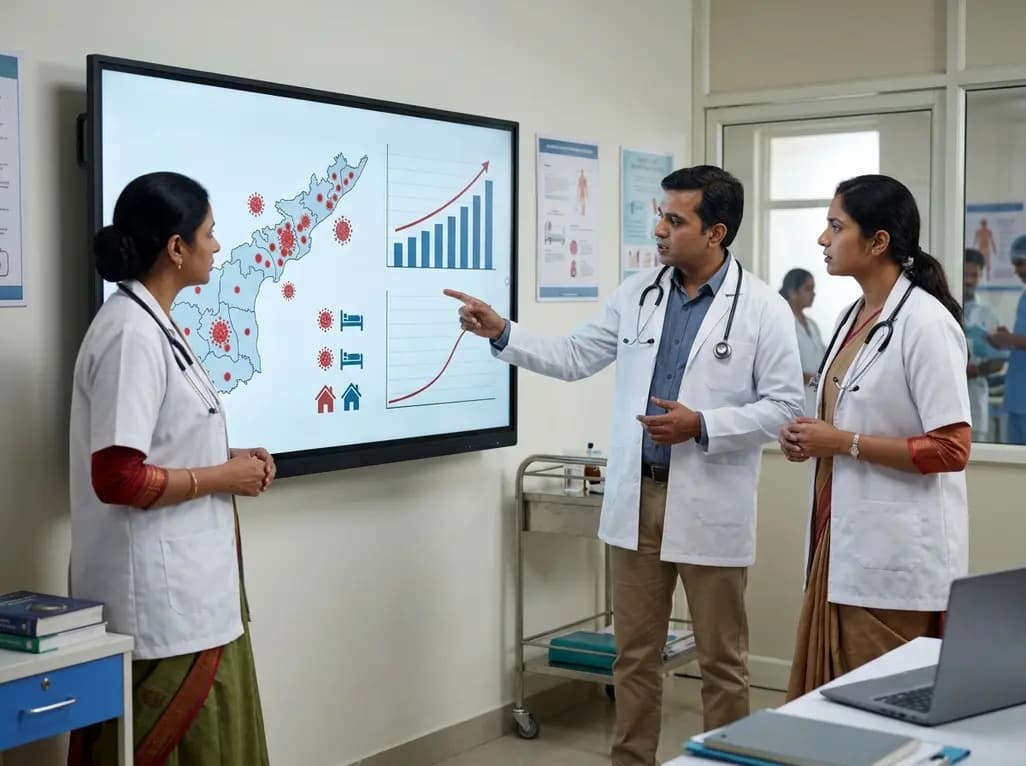
Andhra Pradesh reported 10 new Covid-19 cases, taking the state tally to 49 while deaths remain at four. With 24 patients hospitalized and 16 under home isolation, the Health Department has intensified monitoring. Medical professionals should review regional distribution, diagnostic protocols, and management plans.
Today

An 11-year Swedish registry study of 618 uterine sarcoma patients found that minimally invasive surgery yielded survival comparable to open surgery in early stages. However, adjuvant chemotherapy conferred no survival benefit in localized or advanced disease, highlighting stage and histology as key outcomes.
3 days back

A cross-sectional study evaluates post-intensive care syndrome in cardiac patients 2-4 weeks post-ICU discharge, highlighting cognitive, psychological, and functional impairments and the need for structured multidisciplinary rehabilitation.
3 days back

Anterior cruciate ligament reconstruction failure lacks uniform definition. A narrative review proposes an integrative framework incorporating objective and subjective instability, persistent pain, restricted motion, graft rupture, and secondary meniscal injury to standardize clinical reporting.
3 days back
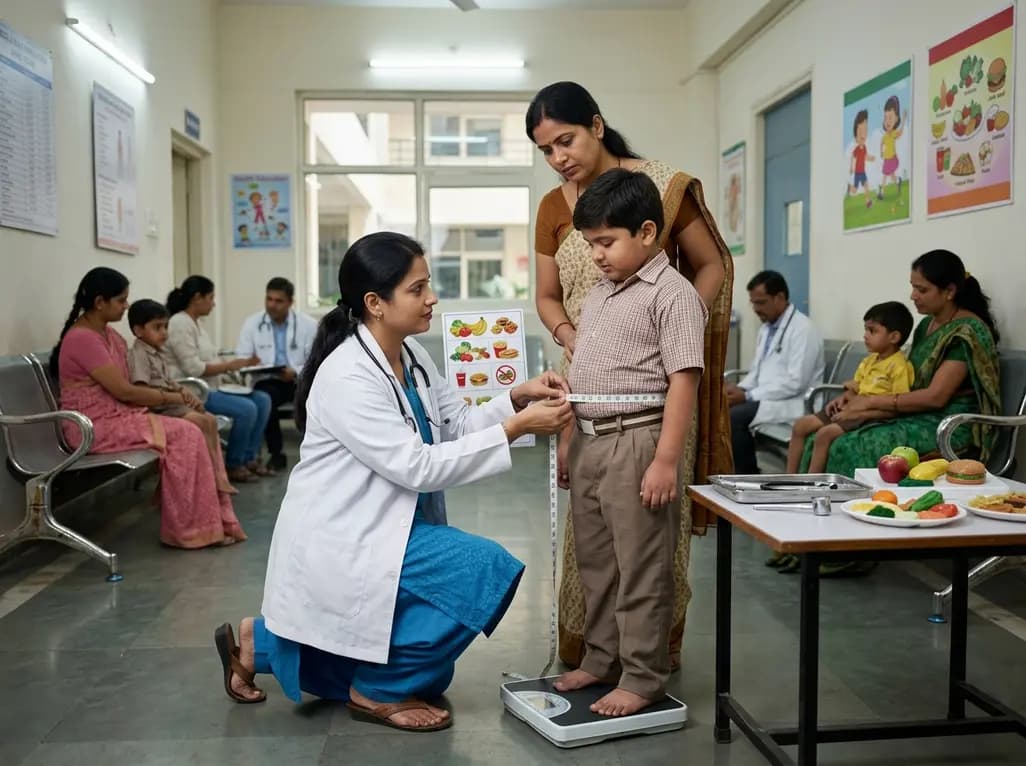
With World Obesity Atlas data warning that over 41 million Indian children are overweight or obese, ICMR and NIN have unveiled a 10-point policy roadmap. The initiative calls for mandatory front-of-pack labeling, HFSS taxes, strict marketing bans, and healthier school environments to curb non-communicable diseases.
Today
