.webp&w=384&q=75)

Loading, please wait...
Loading, please wait...

Chronic wound management presents substantial clinical challenges across surgical recovery, dermatology, and diabetic care. Traditional dressings protect injured tissue, yet they fail to track microenvironmental changes or provide responsive therapeutic stimulation. Recent bioengineering innovations address these limitations by creating autonomous, multifunctional biomaterials. A breakthrough study introduces a self-powered thermogalvanic hydrogel dressing capable of real-time monitoring and active tissue regeneration. This novel platform combines advanced chemical engineering with digital health technology. Consequently, it establishes an autonomous closed-loop paradigm for modern wound management without external batteries or repeated traumatic dressing changes.
Non-healing chronic wounds represent a major healthcare burden worldwide. In surgical wards and outpatient clinics, conditions such as diabetic foot ulcers, pressure injuries, and extensive surgical incisions frequently exhibit impaired healing cascades. Furthermore, continuous tissue inflammation and localized bacterial colonization compromise normal cellular proliferation. Conventional gauze and standard hydrocolloid patches offer moisture retention. However, they remain passive barriers that cannot alert clinicians to early wound deterioration.
Additionally, detecting occult infection or delayed tissue closure currently requires physical dressing removal. This recurring disturbance disrupts fragile granulation beds and increases patient discomfort. Although modern electronic smart dressings offer diagnostic and electrotherapeutic capabilities, existing devices face significant technological bottlenecks. Most electronic prototypes rely on bulky external power packs, rigid wiring, and non-breathable polymeric substrates. These limitations impede patient mobility, limit cutaneous gas exchange, and macerate surrounding skin. Consequently, clinicians urgently need an integrated, comfortable, and breathable biomaterial that senses microenvironmental parameters while concurrently delivering therapeutic stimulation. Specifically, overcoming the decoupling between diagnostic monitoring and active therapeutic delivery remains the primary hurdle in regenerative wound care. By uniting autonomous energy harvesting with therapeutic biophysical cues, next-generation biomaterials can overcome these longstanding clinical constraints.
To address these technical hurdles, researchers developed a thermogalvanic hydrogel dressing utilizing state-of-the-art material synthesis. The team constructed an interpenetrating double-network hydrogel matrix using poly(vinyl alcohol) and poly(ethylene glycol) diacrylate. This specialized polymer architecture provides robust tensile elasticity, high tear resistance, and exceptional biocompatibility. Furthermore, the porous structure facilitates physiological gas exchange, preventing tissue hypoxia and wound maceration during prolonged wear.
Importantly, the developers incorporated digital light processing (DLP) 3D-printing technology during fabrication. This high-resolution additive manufacturing enables clinicians to customize dressings precisely according to individual wound geometry and anatomical contours. Within this polymeric scaffold, scientists loaded an electrochemically active iron redox couple consisting of hexacyanoferrate ions. Therefore, the dressing harnesses natural thermal gradients between warm mammalian skin and cooler ambient air.
This thermogalvanic conversion generates continuous, low-voltage direct current through spontaneous thermodynamic electron shuttling. Moreover, the fabrication process preserves high water-retention capacity, mimicking native extracellular matrix mechanics. As a result, the biomaterial conforms seamlessly to uneven wound beds, delivering an optimal microenvironment for tissue repair without requiring exogenous drug additives or external power sources.
Beyond energy generation, the thermogalvanic hydrogel dressing functions as an advanced multimodal biosensor. The material integrates thermogalvanic sensitivity with an active piezoresistive effect. Consequently, the dressing simultaneously tracks physiological wound temperature fluctuations and mechanical tissue deformation in real time. Elevated temperature often indicates occult bacterial infection or severe inflammation, whereas abnormal mechanical strain can highlight tissue dehiscence.
Additionally, the hydrogel platform incorporates colorimetric components that visualize wound pH shifts and quantify wound exudate accumulation. Because healing wounds transition from alkaline states toward slightly acidic pH values, visual monitoring guides timely clinical decisions. To process this complex physiological data stream, researchers coupled the sensor outputs with an advanced deep learning algorithm.
Subsequently, the neural network analyzed multivariate sensor inputs to predict tissue status. Remarkably, the integrated deep learning framework achieved 96.5% diagnostic accuracy in classifying wound severity levels. Thus, the system eliminates human subjective assessment during routine wound evaluations. Furthermore, healthcare teams can detect early subclinical complications remotely before overt physical deterioration occurs. This seamless analytical synergy provides clinicians with reliable objective metrics, fundamentally upgrading decentralized wound surveillance.
In addition to diagnostic surveillance, endogenous bioelectric fields play an indispensable role during natural wound re-epithelialization. When cutaneous injury occurs, disrupted epithelial barriers generate lateral transepithelial potential differences that guide directional cell migration. Unfortunately, chronic ulcerations lose these endogenous electrical fields due to persistent inflammation and tissue necrosis.
Therefore, the self-powered dressing reinstates these critical bioelectric cues through continuous, biomimetic electrical stimulation. Without requiring external electrical cords or pharmacological agents, the thermogalvanic current creates a localized electric field across the wound margin. In vitro evaluations demonstrated that this mild bioelectric field significantly stimulates keratinocyte and dermal fibroblast migration toward the injury center.
Moreover, electrical stimulation activates voltage-gated calcium channels, promoting intracellular signaling cascades that accelerate neovascularization and collagen deposition. In murine full-thickness cutaneous wound models, the dressing markedly accelerated tissue repair kinetics. Specifically, treated wounds achieved an outstanding 98.09% wound closure rate by day 14. Histological examinations confirmed dense capillary formation, organized collagen bundle remodeling, and mature epidermal stratification. Consequently, this biomimetic intervention bridges physiological repair processes rapidly and safely.
These preclinical findings demonstrate substantial translational value across diverse surgical and dermatological environments. In acute trauma, plastic surgery, and extensive oncologic resections, maintaining sterile closed-loop wound environments prevents surgical site infections. Similarly, in chronic diabetes management, diabetic foot ulcers frequently cause severe limb-threatening morbidity. Therefore, deploying a self-powered dressing that continuously detects wound infection and accelerates re-epithelialization could revolutionize outpatient wound protocols.
Furthermore, the 3D-printing manufacturing approach permits personalized fabrication tailored to irregular anatomical locations, such as calcaneal ulcers or joint flexures. Because the dressing functions without external cords or bulky battery packs, patients can maintain daily physical activities unhindered. Thus, compliance rates among elderly and ambulatory patients will improve considerably.
In resource-limited settings, such autonomous platforms eliminate frequent clinical visits for wound monitoring, reducing hospital expenditures. Nevertheless, future investigations must establish human safety profiles, optimize shelf-life stability, and evaluate production scalability under industrial manufacturing regulations. Ultimately, this smart dressing represents a major paradigm shift toward autonomous, personalized, and proactive tissue engineering.
The dressing utilizes a specialized thermogalvanic reaction driven by the natural temperature gradient between warm skin and cooler ambient air. Within the double-network hydrogel, loaded iron redox couples undergo continuous oxidation-reduction reactions. Consequently, this thermodynamic electron transfer generates a sustained, low-voltage direct current directly across the wound bed. This autonomous process completely eliminates bulky batteries, heavy wiring, and external power hardware while delivering safe biomimetic electrical stimulation.
This smart platform monitors multiple critical physiological variables simultaneously through integrated sensing mechanisms. By coupling thermogalvanic and piezoresistive effects, it continuously tracks localized wound temperature and mechanical tissue deformation. Furthermore, integrated optical components detect wound exudate volume and visualize wound pH shifts through colorimetric changes. When processed by deep learning algorithms, these collective signals provide clinicians with continuous diagnostic surveillance, identifying emerging infections and wound breakdown early.
The integrated deep learning algorithm processes real-time sensor streams comprising temperature variations, tissue strain, pH, and exudate levels. By synthesizing these diverse inputs, the neural network achieved 96.5% accuracy in classifying wound severity stages. Consequently, it removes subjective visual ambiguity and alerts clinicians to subclinical complications before visible tissue breakdown occurs. This automated intelligence enables precise, timely therapeutic interventions while optimizing outpatient wound monitoring protocols for vulnerable patients.
Disclaimer: This content is for informational and educational purposes only... Refer to the latest local and national guidelines for clinical practice.
References
Wang C et al. A Self-Powered Thermogalvanic Hydrogel Dressing for In Situ Wound Monitoring and Enhanced Healing. ACS Sens. 2026 Oct 07. doi: 10.1021/acssensors.6c03280. PMID: 42842869.
Xin J, Gao L, Zhang W, et al. A thermogalvanic cell dressing for smart wound monitoring and accelerated healing. Nat Biomed Eng. 2025; doi: 10.1038/s41551-025-01440-6.
Cao S, Li H, Zhao Y, et al. Self-powered thermoelectric gel dressings for chronic wound monitoring and therapy. Adv Mater. 2026; doi: 10.1002/adma.202601245.

Read summarized clinical updates, watch expert medical content, and earn CME certifications right from your smartphone.
Open your smartphone camera to scan and install.





A novel 3D-printed thermogalvanic hydrogel dressing achieves battery-free multimodal wound monitoring and biomimetic electrical stimulation. Integrated with deep learning, it provides 96.5% diagnostic accuracy and accelerates wound closure to 98% in preclinical models.
Today

The CARE study protocol introduces a multilingual, RAG-powered conversational interface designed by IIT Bombay to support tobacco cessation in India. Evaluating feasibility and behavioral outcomes across three cessation centers, this digital health initiative aims to enhance quitting support for diverse users.
Today

A large UK cohort study of 1.4 million women shows that pregnancy complications, including gestational diabetes, hypertension, and preterm birth, substantially raise long-term risks for hypertension, chronic kidney disease, type 2 diabetes, and cardiovascular events, highlighting early postpartum intervention needs.
Today
A cross-sectional study reveals that hypertension knowledge, illness perceptions, depression, and substance use significantly predict self-care behaviors. Addressing mental health and cognitive beliefs in primary care is crucial for optimal blood pressure control and cardiovascular disease prevention.
Today
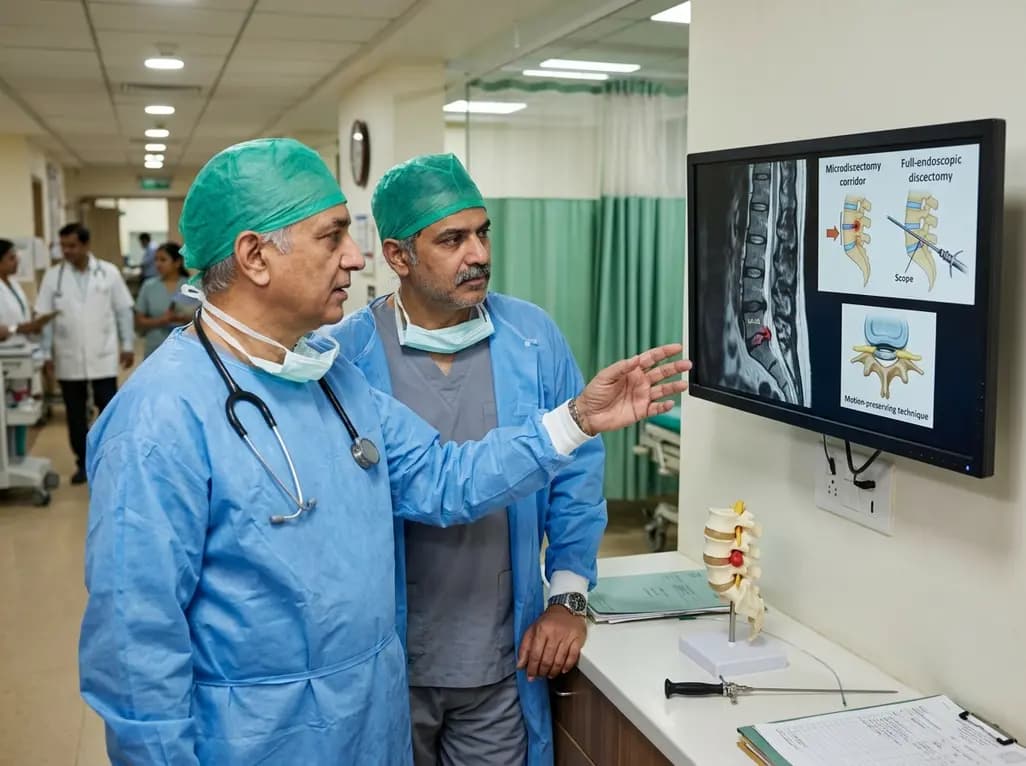
This clinical overview examines recent advancements in lumbar disc herniation surgery, comparing microscopic and full-endoscopic discectomy while highlighting biportal techniques and emerging motion-preserving innovations for spine specialists.
Today

Small interfering RNA (siRNA) therapeutics harness RNA interference to degrade disease-causing messenger RNA. By delivering hepatocyte-targeted, durable gene silencing, agents targeting PCSK9, LPA, and angiotensinogen offer potent cardiovascular risk reduction with infrequent, biannual dosing schedules.
Today
