.webp&w=384&q=75)

Loading, please wait...
Loading, please wait...
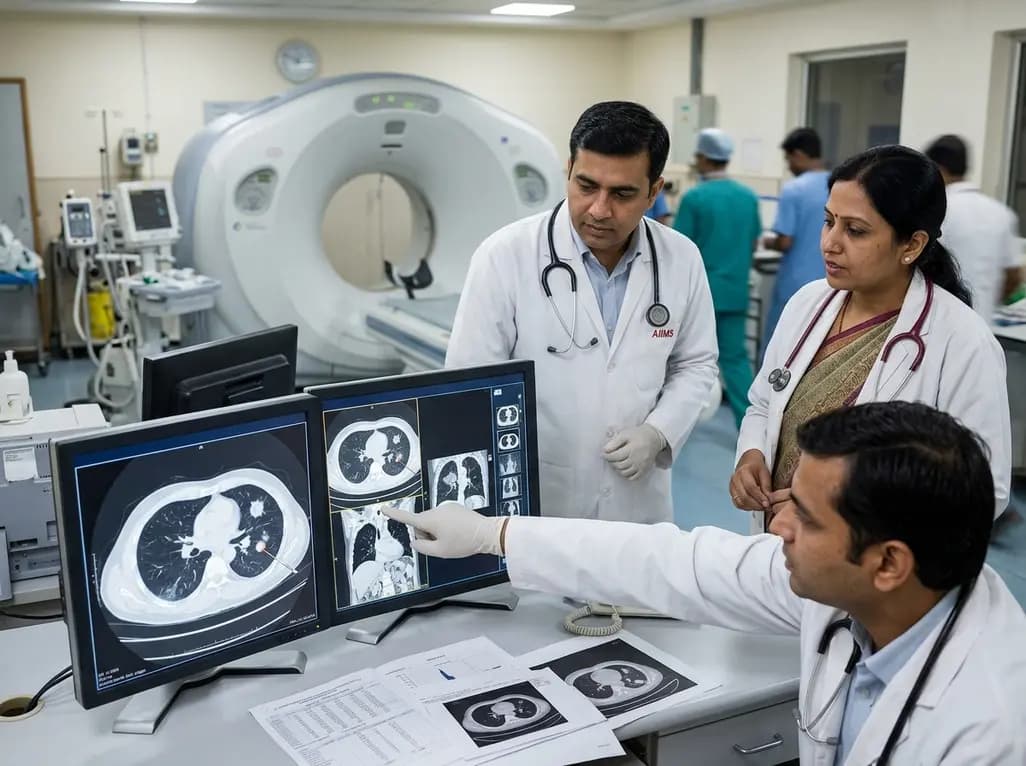
Modern interventional oncology increasingly adopts thermal ablation pulmonary metastases techniques to manage secondary thoracic malignancies. Pulmonary metastasectomy remains a definitive standard for oligometastatic spread. However, many oncologic patients cannot undergo surgical resection due to compromised respiratory reserve or severe medical comorbidities. Image-guided percutaneous ablation provides a lung-preserving alternative that destroys neoplastic lesions with minimal morbidity. Consequently, clinicians must assess how thermal modalities achieve durable local tumor control and safeguard long-term survival.
Percutaneous lung ablation harnesses localized thermal energy to induce cellular coagulation necrosis. Clinicians predominantly utilize radiofrequency ablation, microwave ablation, and cryoablation to treat pulmonary secondary lesions. Each energy modality offers distinct physical advantages. For example, microwave ablation generates higher intratumoral temperatures and overcomes heat-sink effects near pulmonary vessels. Conversely, cryoablation preserves the collagenous architecture of adjacent bronchi and blood vessels. Furthermore, cryoablation permits direct intraprocedural visualization of the ice ball on non-contrast computed tomography.
A recent clinical investigation analyzed twenty-one consecutive patients who underwent CT-guided ablation for metastatic pulmonary lesions. Specifically, operators utilized cryoablation in fourteen patients, microwave ablation in five, and radiofrequency ablation in two. The technical success rate reached one hundred percent across all interventions. Moreover, the procedural team maintained precise probe trajectories using serial cross-sectional computed tomography. These technical choices demonstrate how interventionalists can tailor energy delivery to individual tumor characteristics. Consequently, image-guided thermal ablation delivers targeted tumor eradication while preserving functional lung capacity.
Long-term disease control defines the primary benchmark for any local ablative intervention. In this retrospective investigation, researchers evaluated patients over a median follow-up of 50.8 months. Kaplan-Meier survival analysis demonstrated local tumor control of 89.9 percent at six months. Furthermore, the local control rate stabilized at 84.7 percent at both twelve and twenty-four months. These robust local control rates highlight the durable cytoreductive efficacy of percutaneous thermal ablation.
Additionally, the study demonstrated an impressive five-year overall survival rate of 82.5 percent. However, distant disease progression occurred in 66.7 percent of the treated patients. This finding underscores the systemic nature of advanced metastatic cancer. Fortunately, repeat ablation successfully treated one patient who experienced targeted lesion failure. Thus, thermal ablation functions effectively as a repeatable, parenchyma-sparing cytoreductive tool. When combined with systemic immunotherapies or targeted therapies, percutaneous ablation helps clinicians maintain disease stability. Consequently, interventional radiologists play an indispensable role in contemporary oligometastatic management.
Achieving complete oncologic destruction requires thorough pre-procedural planning and adequate safety margins. In the evaluated single-center cohort, five patients developed local tumor failure during surveillance. Univariate analysis revealed that larger tumor size significantly correlated with local failure. Specifically, lesions with greater diameters presented greater risks of incomplete eradication. Moreover, the total ablation-zone diameter and the minimal ablation margin showed significant associations with treatment breakdown.
Therefore, interventional radiologists must secure a circumferential ablation margin of at least five millimeters around the tumor periphery. Suboptimal margins often leave residual microscopic malignant foci along the outer edge. In addition, large tumors disperse thermal energy unevenly and dissipate heat through nearby vascular structures. Although these univariate associations remain exploratory due to small cohort numbers, they align with broader oncologic principles. Clinicians should carefully evaluate tumor dimensions before scheduling percutaneous intervention. Consequently, establishing rigorous margin thresholds minimizes local recurrence and improves long-term clinical outcomes.
Percutaneous transthoracic lung interventions inherently involve pleural puncture risks. In this clinical study, pneumothorax represented the sole procedural complication, occurring in 57.1 percent of patients. Importantly, the cohort experienced zero procedure-related mortalities, and no patient suffered major hemorrhagic events. Statistical analysis demonstrated that the number of inserted probes did not increase complication rates. Furthermore, pneumothorax occurrence was not significantly associated with nodule laterality, pulmonary lobe location, or pleural proximity.
Nevertheless, interventional radiology teams must anticipate and actively manage pneumothorax during recovery. Operators typically monitor patients with post-procedure chest radiography or immediate low-dose thoracic computed tomography. In most instances, minor pneumothoraces resolve spontaneously with conservative observational management. Conversely, larger symptomatic pneumothoraces require simple catheter aspiration or small-bore chest tube placement. Furthermore, patients with preexisting chronic obstructive pulmonary disease demand vigilant peri-procedural monitoring. Thus, percutaneous thermal ablation maintains a predictable and acceptable safety profile when practiced in specialized interventional centers.
Optimal management of pulmonary metastatic disease requires structured multidisciplinary collaboration. Tumor boards comprising medical oncologists, thoracic surgeons, pulmonologists, and interventional radiologists should evaluate each patient individually. Surgical resection remains the historical benchmark for isolated metastases. However, thermal ablation provides equivalent local control for lesions under two to three centimeters while sparing vital lung parenchyma. Furthermore, ablation causes fewer physiological disruptions and allows prompt continuation of systemic chemotherapy.
In clinical practice across developing healthcare ecosystems like India, minimally invasive ablation expands treatment options for medically inoperable patients. Many patients present with reduced pulmonary reserve due to smoking, biomass smoke exposure, or post-tuberculosis fibrocavitary disease. For these vulnerable individuals, surgical metastectomy carries prohibitive respiratory risks. In contrast, CT-guided thermal ablation achieves local tumor destruction without worsening vital lung capacity. Therefore, oncologic institutions should actively integrate interventional radiology into therapeutic pathways. By carefully selecting candidates based on tumor size and expected ablation margins, clinicians optimize survival while safeguarding patient quality of life.
Interventional radiologists select the ablation modality based on tumor size, anatomical location, and proximity to critical structures. Microwave ablation heats tissue rapidly and resists heat-sink vascular cooling, making it ideal for vascular-rich perihilar zones. Conversely, cryoablation provides superior visualization of the ice ball on computed tomography and causes less procedural pain. Furthermore, cryoablation preserves the structural integrity of bronchial walls. Therefore, clinicians tailor modality selection to optimize patient safety and margins.
Pneumothorax represents the most frequent adverse event following percutaneous lung ablation. Interventional teams identify pleural air through immediate post-procedure thoracic computed tomography or standard chest radiography. Small, asymptomatic pneumothoraces typically resolve with bed rest and conservative supplemental oxygen therapy. However, large or symptomatic air leaks require prompt manual aspiration through an existing puncture needle or small-bore chest tube placement. Consequently, diligent peri-procedural monitoring ensures that pneumothorax rarely compromises long-term clinical safety.
Clinical evidence demonstrates that lesions smaller than two to three centimeters achieve the highest rates of sustained local control. Larger metastatic lesions frequently harbor microscopic peripheral extensions that escape the primary thermal coagulation zone. Furthermore, extensive tumors experience irregular energy distribution due to tissue impedance variations and regional vascular perfusion. Therefore, treating teams achieve superior oncologic outcomes when applying percutaneous thermal ablation to small, early-detected oligometastatic pulmonary nodules with adequate circumferential margins.
Disclaimer: This content is for informational and educational purposes only and does not constitute medical advice. Healthcare professionals should make clinical decisions based on their independent judgment, individual patient evaluation, and established medical standards. Refer to the latest local and national guidelines for clinical practice.
References

Read summarized clinical updates, watch expert medical content, and earn CME certifications right from your smartphone.
Open your smartphone camera to scan and install.





A retrospective clinical study evaluates CT-guided percutaneous thermal ablation of pulmonary metastases, demonstrating favorable local tumor control, low complication rates, and prolonged five-year survival, while identifying tumor size and ablation margins as key factors influencing local failure.
Today

A fresh Gavi analysis shows next-generation tuberculosis vaccines rolling out from 2029 could save 7.3 million lives and yield $135 billion in economic gains by 2050. Achieving this clinical milestone requires addressing domestic financing gaps, building manufacturing capacity, and ensuring affordable access.
Today

A comprehensive meta-analysis of over 278,000 women demonstrates that maternal atopic dermatitis significantly increases risks of premature rupture of membranes and low birth weight. Discover essential clinical insights on disease mechanisms, serial antenatal growth monitoring, and safe therapeutic interventions.
Today

Over 60 international public health researchers have advised FSSAI to mandate front-of-pack warning labels for any packaged product high in even one critical nutrient: sugar, saturated fat, or sodium. This reform counters phased rollouts to accelerate consumer protection and address India's chronic disease burden.
Today

India's premier scientific bodies have joined the Armed Forces Medical Services to solve unique physiological and operational challenges faced by soldiers. The national collaboration covers combat casualty care, artificial intelligence diagnostics, bionic prosthetics, and extreme-environment physiological resilience.
Today

A cross-sectional study reveals that elevated METS-IR is independently associated with higher myopia odds in adolescents, showing biological synergy with obesity and highlighting the need for metabolic screening in pediatric eye care.
Yesterday
