.webp&w=384&q=75)

Loading, please wait...
Loading, please wait...
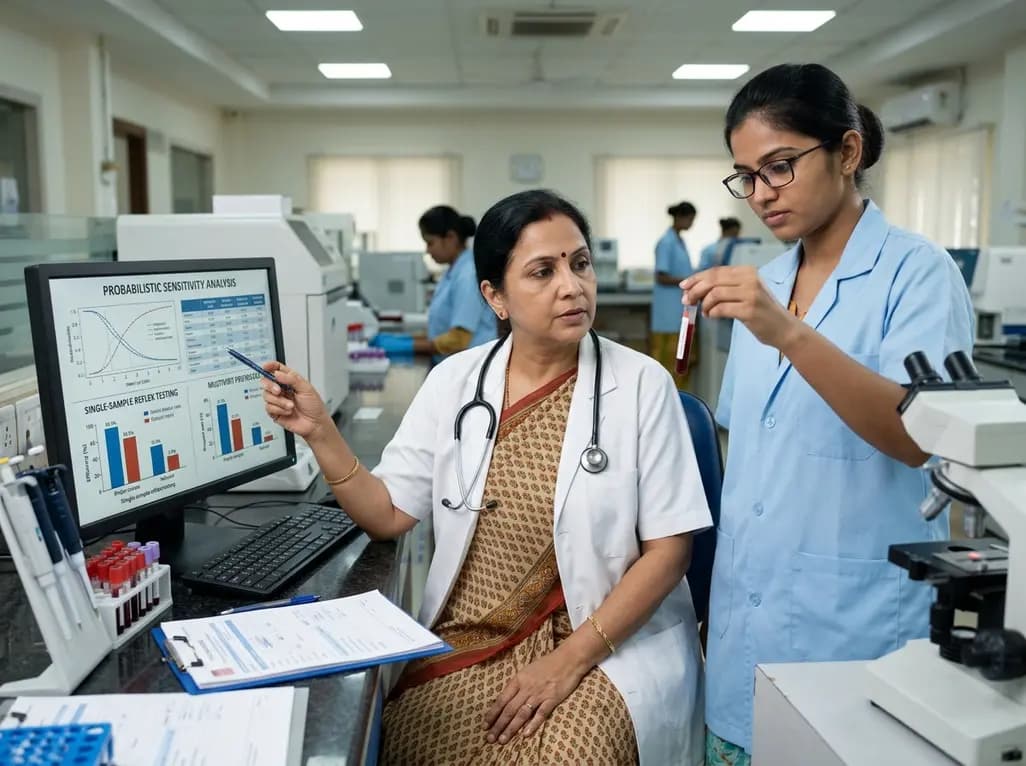
Public health programs targeting inherited hemoglobin disorders face substantial operational hurdles. Achieving high diagnostic completion remains a vital goal for population screening. A robust thalassemia screening cascade ensures that individuals undergoing initial testing receive definitive diagnostic confirmation and genetic counseling. Historically, national programs have relied on multivisit sequential testing. In these traditional models, individuals first provide a blood sample for a complete blood count and red cell indices. When indices show microcytosis or hypochromia, patients must return for subsequent venipunctures to perform hemoglobin electrophoresis, high-performance liquid chromatography, or confirmatory molecular testing.
However, sequential multivisit protocols introduce critical points of patient attrition. Significant dropout rates undermine screening efficiency, leaving potential carriers unaware of their genetic status. Recent health technology evaluations highlight that retaining a single primary blood sample for automated reflex testing completely eliminates visit-dependent dropouts. By shifting from multivisit appointments to single-sample reflex testing, health systems can streamline diagnostic pathways and maximize detection rates. This structural optimization ensures that vulnerable individuals do not slip through diagnostic gaps, significantly improving overall reproductive risk stratification and disease prevention strategies across diverse clinical settings.
Sequential multivisit screening protocols inherently struggle with real-world adherence. When patients must attend secondary and tertiary appointments for blood sampling, logistical challenges and financial constraints often cause significant loss to follow-up. For instance, data from national school and community screening initiatives reveal visit-based dropout rates reaching twenty percent or higher. Consequently, underserved rural populations experience disproportionately high loss rates due to travel burdens and limited clinical accessibility. This substantial loss to follow-up dilutes the clinical and preventive value of population-wide screening programs.
In contrast, a single-sample three-tier testing framework stores sufficient blood from the initial phlebotomy. Laboratories then automatically perform reflex testing on the retained sample when initial parameters indicate carrier risk. The initial complete blood count triggers automated high-performance liquid chromatography, which subsequently prompts reflex molecular DNA analysis when indicated. Therefore, patients require only one clinical interaction to complete the entire diagnostic workup. This architectural transition completely eliminates visit-related attrition. Furthermore, it significantly accelerates the diagnostic turnaround time, allowing clinicians to deliver definitive genetic counseling and timely family cascade screening without prolonged waiting periods.
Health economists utilize advanced modeling techniques to evaluate whether single-sample testing provides superior economic and diagnostic returns under real-world uncertainty. A rigorous probabilistic sensitivity analysis evaluated 65,990 students to compare traditional multivisit screening against a single-sample protocol. Researchers implemented Monte Carlo simulations across 10,000 iterations, assigning gamma distributions to direct medical costs and beta-binomial distributions to dropout parameters. This comprehensive approach systematically quantified parameter uncertainty across varying epidemiological and operational environments.
The simulation results demonstrated that single-sample reflex testing consistently maintained favorable screening cascade efficiency. The probabilistic incremental cost-effectiveness ratios matched deterministic estimates, showing narrow 95% credible intervals. Specifically, at modest willingness-to-pay thresholds between 25 and 50 local currency units per additional carrier detected, the single-sample approach demonstrated over 91% cost-effectiveness probability. Even under pessimistic scenario analyses where laboratory-handling dropout rates rose to 5%, the cost-effectiveness probability remained above 70%. These robust findings confirm that single-sample reflex protocols exhibit substantial implementation tolerance, making them economically resilient and highly reliable public health investments.
Diagnostic dropouts do not occur randomly across populations; instead, they disproportionately penalize remote, socioeconomically disadvantaged communities. In regions with fragmented healthcare infrastructure, patients encounter significant geographical barriers, transportation costs, and wage losses when attending repeated clinic visits. Consequently, conventional multivisit cascades widen existing health inequities by leaving marginalized populations underdiagnosed. This systemic diagnostic failure perpetuates the regional incidence of transfusion-dependent thalassemia major.
Interestingly, health economic models reveal that single-sample protocols achieve the most favorable incremental cost-effectiveness ratios in regions with the highest baseline dropout rates. When baseline attrition is severe, eliminating repeat visits captures a substantially larger pool of previously missed carriers. Therefore, single-sample reflex testing acts as an equalizer in public health delivery. By ensuring that every screened individual receives complete diagnostic evaluation regardless of geographic location, health authorities can address regional health disparities effectively. Additionally, improving carrier identification in remote communities enables early preconception counseling, which ultimately reduces catastrophic long-term medical expenditures associated with lifelong chelation and chronic transfusion therapy.
India carries a tremendous burden of hemoglobinopathies, with beta-thalassemia carrier frequencies ranging between 3% and 17% across various ethnic groups and geographic states. The National Health Mission has prioritized the prevention and control of hemoglobinopathies through community and antenatal screening. However, high patient volume and fragmented laboratory pathways frequently result in diagnostic dropouts between primary screening and confirmatory testing. Indian clinicians frequently encounter pregnant women who underwent a routine complete blood count but never received follow-up high-performance liquid chromatography.
Adopting a single-sample reflex testing model offers transformative potential for Indian diagnostic laboratories and public health centers. When primary health centers collect an extra EDTA tube or utilize retained blood samples for reflex chromatographic analysis, loss to follow-up decreases dramatically. Furthermore, Indian primary care physicians and obstetricians can rapidly identify at-risk couples before advanced gestational ages. This streamlined pathway provides sufficient time for prenatal diagnostic procedures, such as chorionic villus sampling or amniocentesis. Consequently, implementing seamless sample retention and reflex protocols across district hospitals directly aligns with national health priorities to eradicate preventable hemoglobin disorders.
Successfully transitioning to a single-sample reflex screening cascade requires coordinated administrative and laboratory enhancements. Healthcare institutions must first establish standardized sample-handling protocols, ensuring proper cold-chain logistics and blood tube preservation for automated reflex workflows. Laboratories should configure laboratory information systems to automatically trigger secondary chromatography and tertiary molecular testing when red cell indices meet predefined algorithmic cutoffs. This automation removes reliance on manual clinician re-ordering and patient recall.
Additionally, medical administrators must conduct prospective pilot evaluations to assess local laboratory capacity and operational workflows before nationwide scaling. Clinicians and genetic counselors require structured training to interpret automated cascade reports and deliver empathetic, culturally sensitive reproductive counseling. Moreover, establishing integrated electronic registries ensures that confirmed carrier data connects seamlessly to extended family cascade testing. By combining advanced laboratory informatics with robust sample preservation techniques, health systems can establish an efficient, equitable, and sustainable screening framework that prevents severe hemoglobinopathies and optimizes healthcare resource allocation.
A single-sample protocol collects sufficient blood during the initial phlebotomy to complete all screening and confirmatory assays. When initial red cell indices indicate carrier risk, the laboratory automatically initiates reflex high-performance liquid chromatography and molecular tests on the retained specimen. This automated workflow eliminates the need for patients to return for secondary venipunctures, thereby removing transportation barriers, scheduling conflicts, and visit-based diagnostic dropouts completely.
Probabilistic sensitivity analysis accounts for real-world uncertainty by simultaneously varying key model parameters, including testing costs, disease prevalence, and patient dropout rates, across thousands of Monte Carlo simulations. Rather than relying on rigid point estimates, this analytical approach generates cost-effectiveness acceptability curves that show the probability of an intervention being cost-effective across various willingness-to-pay thresholds, ensuring highly reliable evidence for health policy decisions.
Indian healthcare centers can implement reflex screening by adopting standardized sample retention protocols at primary collection points. When an initial complete blood count indicates low mean corpuscular volume or mean corpuscular hemoglobin, district laboratories automatically perform high-performance liquid chromatography on the stored sample. This integrated laboratory pathway minimizes patient recall, accelerates prenatal and premarital diagnosis, and ensures timely genetic counseling across high-prevalence communities.
Disclaimer: This content is for informational and educational purposes only. It is not intended to be a substitute for professional medical advice, diagnosis, or treatment. Always seek the advice of your physician or other qualified health provider with any questions you may have regarding a medical condition. Refer to the latest local and national guidelines for clinical practice.
References

Read summarized clinical updates, watch expert medical content, and earn CME certifications right from your smartphone.
Open your smartphone camera to scan and install.





A probabilistic sensitivity analysis demonstrates that single-sample reflex testing maintains superior thalassemia screening cascade efficiency over multivisit protocols, eliminating patient dropout and boosting cost-effectiveness across diverse operational scenarios.
last month

A secondary analysis of an HIV cure-related trial in South Africa highlights the acceptability and safety of serial excisional lymph node and gut biopsies among young women. Clear communication, empathetic care, and altruistic motives helped mitigate initial apprehension and sustain longitudinal trial engagement.
Today
A nationwide study covering 3.7 million Swedish births reveals that prenatal exposure to TORCH pathogens significantly elevates long-term risks of intellectual disability and autism. Healthcare providers must recognize clinical indicators, promote prenatal prevention, and track early pediatric neurodevelopment.
Today
Under India's PLI initiative, domestic production of 57 critical medical devices has commenced, including MRI and CT scanners, cath labs, and heart valves. Global partnerships and local investments are expanding high-end technology, curbing import reliance, and strengthening clinical accessibility nationwide.
Today
A longitudinal study reveals that patients undergoing staged bilateral hip arthroscopy experience progressive contralateral labral deterioration during surgical intervals. However, structural degradation does not compromise 2-year postoperative clinical outcomes or patient-reported satisfaction scores.
Today
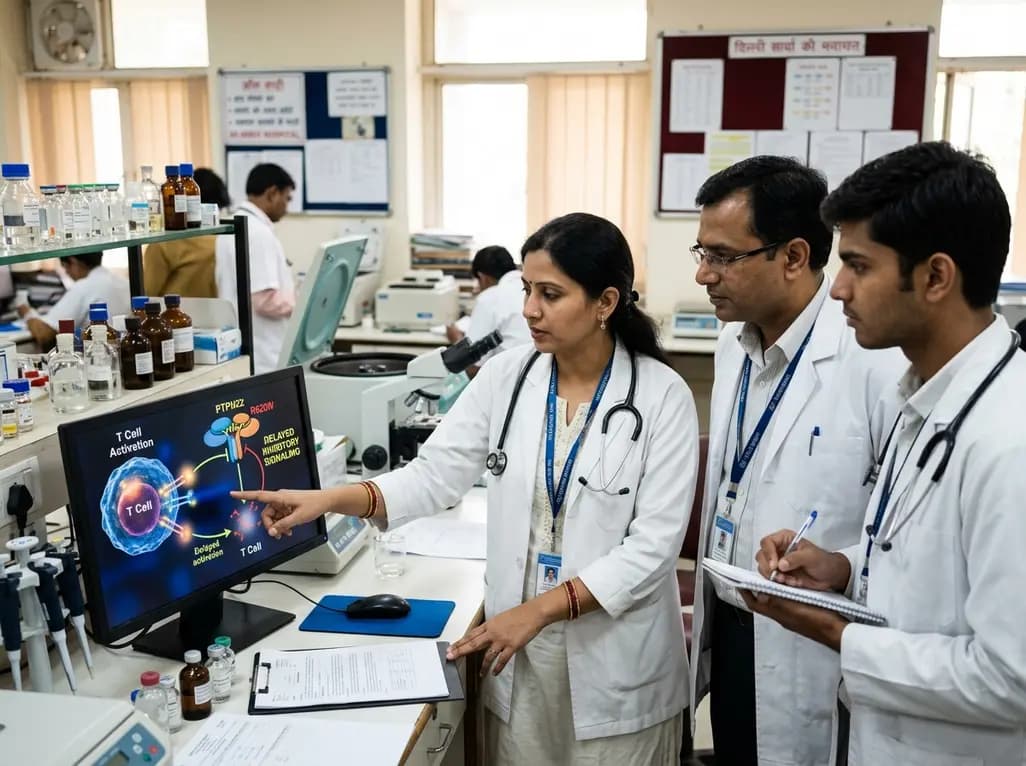
New immunological research reveals how PTPN22 forms a delayed inhibitory signaling complex to restrain T cell activation, explaining how the autoimmune-linked R620W variant disrupts feedback control and promotes persistent inflammation in conditions like rheumatoid arthritis and type 1 diabetes.
Today
