.webp&w=384&q=75)

Loading, please wait...
Loading, please wait...

The management of chronic venous disease (CVD) continues to evolve with the introduction of minimally invasive thermal techniques. One such innovation is the TEThA varicose vein treatment (Transfixing Endovenous Thermal Ablation). This procedure involves the endovenous laser thermal ablation of varicose tributaries. It specifically combines a unique transfixing technique with tumescent anesthesia to target diseased veins. Consequently, this method offers a precise alternative for surgeons aiming to improve both clinical outcomes and patient satisfaction.
A recent prospective single-arm study evaluated the impact of the TEThA technique on 22 patients across the CEAP C2-C6 spectrum. The researchers measured several clinical and quality-of-life parameters at baseline, six weeks, and six months post-procedure. Specifically, they utilized the CIVIQ-14, AVVQ, rVCSS, and CEAP scores to monitor progress. Therefore, the study provided a comprehensive view of how this technique influences long-term patient recovery.
The study results demonstrated significant statistical improvements across all major metrics. For instance, the CIVIQ-14 score decreased from 30.95 to 22.76, while the AVVQ score dropped from 36.43 to 23.49. Furthermore, clinical severity assessments showed a reduction in rVCSS from 7.73 to 4.18 and CEAP from 3.09 to 1.94. These findings suggest that the procedure effectively addresses the physical burden of varicose veins. Additionally, the psychological and social aspects of quality of life improved markedly for the participants.
Safety remains a paramount concern for vascular interventions. Fortunately, the TEThA technique maintained a highly favorable safety profile throughout the follow-up period. There were no reports of significant complications, such as thrombotic events or infections. Moreover, none of the patients required reintervention within the six months following their treatment. Thus, the technique appears to be a safe and reliable option for managing complex varicose tributaries.
The TEThA technique focuses on transfixing and treating varicose tributaries directly with laser thermal energy under tumescent anesthesia. This differs from standard truncal ablation by allowing for more localized and precise treatment of tortuous vein segments.
Patients reported significant improvements in their CIVIQ-14 and AVVQ scores. These metrics reflect a reduction in symptoms like pain and swelling, as well as an improvement in daily functional activities and overall well-being.
Yes, the study included patients from CEAP C2 through C6. The results showed that TEThA is effective even in advanced stages of chronic venous disease, providing significant clinical relief without major complications.
Disclaimer: This content is for informational and educational purposes only. It does not constitute medical advice or establish a doctor-patient relationship. Always seek the advice of a qualified healthcare provider regarding a medical condition. Refer to the latest local and national guidelines for clinical practice.
References
Vasconcelos NMCD et al. Transfixing Endovenous Thermal Ablation (TEThA) for varicose veins treatment - A prospective single-arm study. Phlebology. 2026 Feb 14. doi: 10.1177/02683555261427233. PMID: 41689834.
Gloviczki P et al. The care of patients with varicose veins and associated chronic venous diseases: Clinical practice guidelines of the Society for Vascular Surgery and the American Venous Forum. J Vasc Surg. 2011 May;53(5 Suppl):2S-48S.
"
Read summarized clinical updates, watch expert medical content, and earn CME certifications right from your smartphone.
Open your smartphone camera to scan and install.





A prospective study on the TEThA technique demonstrates significant improvements in clinical and quality-of-life outcomes for patients with varicose veins....
8 months ago
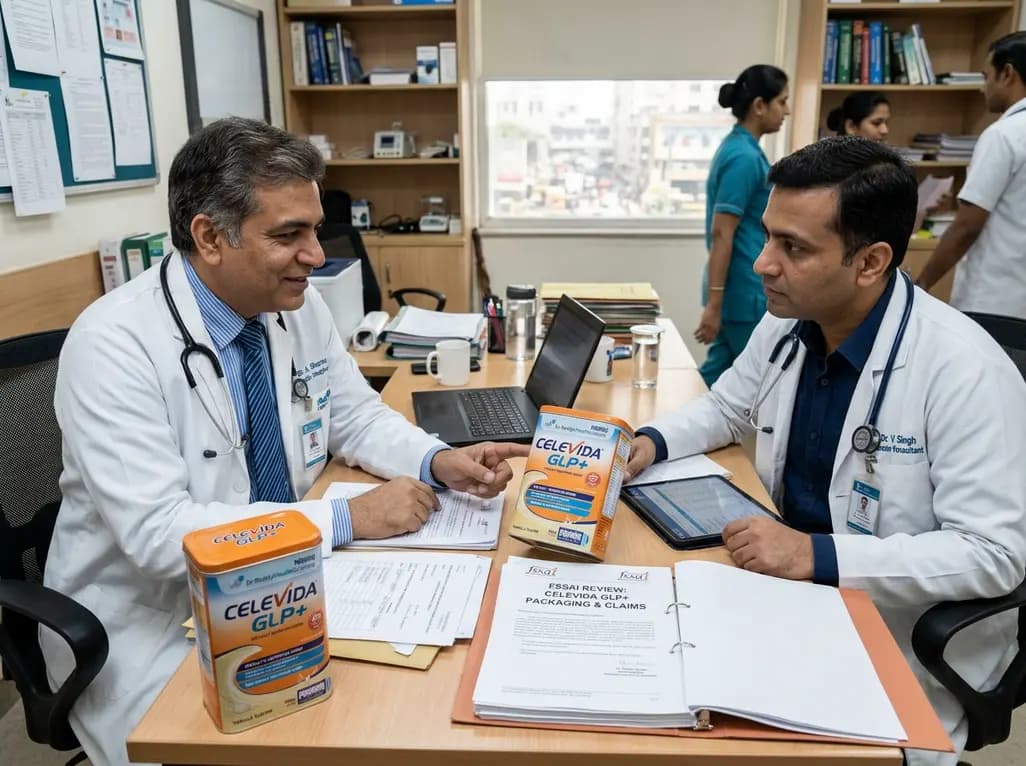
Following regulatory scrutiny from FSSAI regarding promotional representations and lean muscle preservation claims, Dr. Reddy's Laboratories and Nestlé Health Science are currently reviewing the branding and marketing strategy for their joint nutritional supplement Celevida GLP+.
Today

Demanding exhaustive hormonal profiling can inadvertently discourage clinical studies involving females. Methodological standards must align with the specific scientific question to expand, not restrict, equitable evidence for women.
Today

The Directorate General of Health Services directs Indian states to halt the hazardous reuse and reprocessing of single-use medical devices. Discover regulatory implications under the Drugs and Cosmetics Act, critical infection risks, legal liabilities, and operational changes required across clinical specialties.
Today
A novel calcium polyphosphate coacervate enables injectable bone implants with in situ hierarchical porosity via phase separation and gas foaming, significantly enhancing cell proliferation, energy metabolism, and osteogenic differentiation for minimally invasive bone defect repair.
Today

India is advancing preventive healthcare by integrating genomics, artificial intelligence, and quantum technologies. With the SANGAM programme sequencing one million Indian genomes, clinicians can unlock personalized therapies, detect cardiometabolic risks early, and curb the burden of diabetes and heart disease.
Today
