

Loading, please wait...
Loading, please wait...
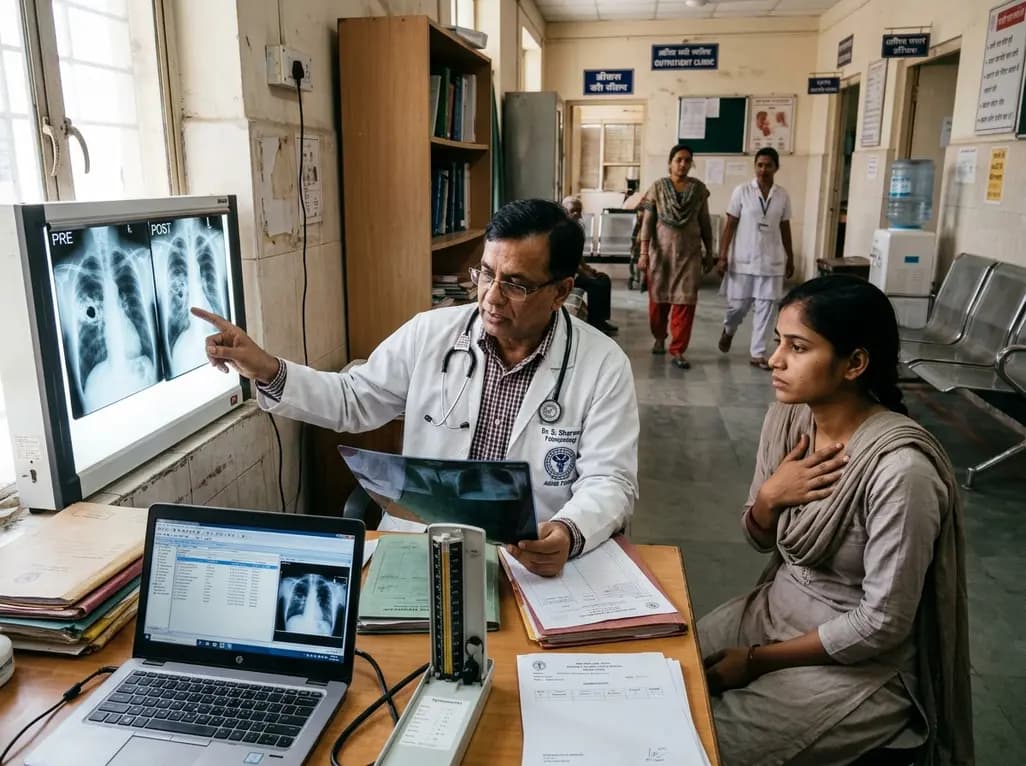
Tuberculosis management has traditionally prioritized microbiological cure as the ultimate endpoint. However, emerging clinical evidence indicates that achieving negative sputum smears does not guarantee complete anatomical or functional recovery. A recent landmark study conducted by the All India Institute of Medical Sciences (AIIMS), Patna, highlights the widespread burden of post-TB lung disease among survivors. The prospective investigation demonstrated that nearly three out of four patients suffer from debilitating respiratory issues within a month of completing curative therapy. Consequently, treating physicians must look beyond mycobacterial clearance and recognize ongoing clinical morbidity. A holistic therapeutic strategy is vital for preventing permanent disability and improving health-related quality of life across Indian healthcare settings.
The observational study, published in BMJ Open, evaluated 256 adult patients shortly after they finished treatment for pulmonary tuberculosis. Researchers conducted comprehensive clinical evaluations under an Indian Council of Medical Research project. Surprisingly, 195 participants (76.2%) reported lingering respiratory symptoms. Chronic cough represented the most prevalent complaint among the cohort. Furthermore, nearly half of the participants experienced substantial breathlessness when walking uphill or climbing stairs. Objective physiological assessments exposed an even more troubling picture. In total, 93.4% of the participants showed persistent structural or functional abnormalities on diagnostic testing. Investigators identified widespread parenchymal scarring and irreversible bronchial dilatation through thoracic imaging. Additionally, spirometry demonstrated marked reductions in forced expiratory volume and vital capacity. Lead author Dr Dipendra Kumar Rai noted that microbiological eradication does not shield patients from continuing respiratory distress. Therefore, relying solely on therapeutic completion criteria leaves numerous symptomatic individuals without necessary medical guidance. Moreover, the investigators noted that these physiological impairments directly hindered daily occupational routines and diminished overall physical stamina. As a result, many treated individuals struggle to resume their prior economic livelihoods. These rigorous findings underscore the urgent necessity for formal post-treatment surveillance protocols throughout primary and tertiary healthcare centers in India.
The pathogenesis behind chronic respiratory symptoms in cured patients involves intricate inflammatory and destructive pathways. During active infection, Mycobacterium tuberculosis triggers robust cell-mediated immune responses. Although these host defenses contain the pathogen, they inevitably cause substantial collateral tissue damage. Matrix metalloproteinases and pro-inflammatory cytokines degrade the delicate extracellular architecture of the pulmonary parenchyma. Consequently, healing often culminates in extensive fibrotic scarring, bronchiectasis, and parenchymal distortion. In addition, chronic vascular obliteration can induce localized ischemic injury and pulmonary vascular remodeling. These architectural disruptions produce both obstructive and restrictive ventilatory defects on pulmonary function testing. Patients with severe cavitary involvement or recurrent infections face particularly heightened risks. Furthermore, damaged airways impair normal mucociliary clearance mechanisms, predisposing individuals to recurrent secondary bacterial infections and colonization by environmental fungi. For instance, chronic pulmonary aspergillosis frequently exploits pre-existing tuberculous cavities. Thus, post-TB lung disease encompasses a broad spectrum of structural and physiological sequelae rather than a uniform clinical entity. Clinicians must understand these pathological mechanisms to anticipate complications and tailor individual treatment regimens effectively.
Primary care physicians and pulmonologists should implement structured follow-up evaluations for every patient completing anti-tubercular therapy. Specifically, clinicians must not assume that treatment completion signifies complete anatomical restoration. A thorough clinical assessment begins with detailed symptom questionnaires evaluating exercise tolerance and chronic cough severity. Furthermore, objective diagnostic testing remains essential for establishing accurate baseline measurements. Spirometry serves as the primary frontline modality to detect airflow obstruction and restrictive patterns. However, standard spirometry alone may underestimate peripheral airway disease. Therefore, clinicians should combine spirometry with diffusing capacity testing whenever resources allow. High-resolution computed tomography provides indispensable anatomical details regarding the true extent of parenchymal scarring and traction bronchiectasis. In addition, radiographic imaging helps exclude fungal ball formation or active disease reactivation in suspicious lesions. Laboratory evaluations, including repeated sputum examinations, remain crucial whenever a patient presents with worsening productive sputum or hemoptysis. Additionally, pulse oximetry provides a rapid, non-invasive assessment of resting and exertional desaturation during routine clinical consultations. Consequently, a multimodality diagnostic approach allows healthcare providers to identify irreversible changes early. By establishing an objective baseline, doctors can distinguish chronic architectural deficits from acute infectious exacerbations during subsequent clinical reviews.
Beyond physical impairments, the AIIMS Patna investigation revealed an alarming psychological toll among tuberculosis survivors. Specifically, 58.2% of the participants recorded elevated anxiety scores, while 48% suffered from significant depressive symptoms. These troubling figures highlight the profound mental health challenges that persist long after microbiological clearance. Multiple interconnected psychosocial factors drive this emotional distress. For instance, prolonged medical regimens and lingering social stigma create substantial emotional isolation. Furthermore, persistent physical limitations prevent individuals from returning to active work, generating profound economic distress. Patients frequently experience chronic health anxiety, fearing disease recurrence with every coughing episode. Unfortunately, traditional tuberculosis management programs focus almost exclusively on microbiological eradication, completely ignoring mental wellbeing. Therefore, healthcare providers must incorporate routine psychological screening tools into post-TB consultations. Validated questionnaires can swiftly identify individuals requiring psychological counseling or psychiatric pharmacotherapy. Moreover, primary care teams should offer empathetic reassurance, patient education, and community-based support groups. Consequently, treating clinicians should collaborate closely with clinical psychologists and medical social workers to build a resilient support network. Integrating mental health services into routine pulmonary follow-up care ensures comprehensive healing and alleviates debilitating emotional burdens for recovering patients.
Effective long-term management of post-cure respiratory impairment demands a multidisciplinary clinical strategy. First, medical therapy should address measurable physiological deficits. Clinicians may prescribe long-acting inhaled bronchodilators and anti-inflammatory agents for patients demonstrating fixed or reversible airflow limitation. However, physicians should avoid indiscriminate systemic corticosteroid use due to reactivation risks. Additionally, aggressive airway clearance techniques help mobilize thick bronchial secretions in patients suffering from secondary bronchiectasis. Pulmonary rehabilitation represents a cornerstone intervention that substantially improves physical functional capacity. Structured exercise training strengthens peripheral muscles and markedly decreases exertion dyspnea. Furthermore, dedicated breathing retraining exercises optimize ventilatory mechanics and alleviate feelings of suffocation. In addition, nutritional counseling remains essential to restore lean muscle mass and replenish chronic micronutrient deficiencies commonly observed in convalescing patients. Lifestyle modifications also play a decisive role in long-term preservation of lung health. Healthcare professionals must firmly advise patients to abstain from smoking and tobacco consumption. Similarly, individuals should avoid exposure to indoor biomass smoke, vehicle emissions, and occupational airborne dust. Routine pneumococcal and seasonal influenza immunizations provide indispensable protection against secondary pulmonary infections. Ultimately, proactive supportive care enables TB survivors to regain daily independence and prevents rapid decline into respiratory failure.
Q1: What clinical signs suggest that a patient has developed post-TB lung disease?
Patients with this condition typically present with persistent daily cough, production of sputum, reduced exercise tolerance, and breathlessness during normal physical activities. Clinicians often detect wheezing or localized crackles upon chest auscultation. Furthermore, physiological assessments show abnormal spirometry results, including obstructive or restrictive ventilatory defects. High-resolution computed tomography frequently reveals parenchymal fibrosis, architectural distortion, or bronchiectasis despite documented microbiological cure.
Q2: When should physicians schedule follow-up assessments after anti-tubercular therapy?
Clinicians should ideally schedule the first post-treatment review within one month of completing anti-tubercular medications. This initial visit enables early detection of residual respiratory symptoms and psychological distress. Subsequently, healthcare providers should recommend clinical evaluations every three to six months during the first year. However, patients with severe baseline lung damage, ongoing dyspnea, or frequent exacerbations require more frequent monitoring and early specialist referral.
Q3: How does pulmonary rehabilitation help patients recovering from tuberculosis?
Pulmonary rehabilitation provides a structured, multidisciplinary program that significantly enhances functional independence and quality of life. Supervised endurance and resistance exercises strengthen peripheral muscles, reducing overall oxygen demands during daily activities. Additionally, specialized breathing retraining and chest physiotherapy improve airway mucus clearance and reduce feelings of breathlessness. Consequently, patients experience less exertional fatigue, lower anxiety levels, and improved confidence during physical exertion.
Disclaimer: This content is for informational and educational purposes only. It does not constitute medical advice or replace professional judgment. Refer to the latest local and national guidelines for clinical practice.
References

Read summarized clinical updates, watch expert medical content, and earn CME certifications right from your smartphone.
Open your smartphone camera to scan and install.





A landmark AIIMS Patna study highlights that microbiological cure in pulmonary tuberculosis does not equal functional recovery. Clinicians must actively evaluate patients for structural damage, persistent airflow limitation, and comorbid psychological distress to deliver comprehensive post-cure respiratory rehabilitation.
Today

A large cohort study demonstrates that fetal growth restriction in a first pregnancy raises maternal cardiovascular risk within five years postpartum, including elevated rates of heart failure, stroke, and myocardial infarction. Clinicians must initiate proactive postpartum screening and cardiovascular prevention.
Yesterday

A multicenter observational study evaluated an 8-week digital health monitoring platform using wearable sensors in ambulatory heart failure. While participants achieved high daily wear-time of 11.7 hours and 80% completion, initial recruitment revealed significant technology-related onboarding barriers.
Today

A paired cadaveric study compared triple and quintuple percutaneous Achilles tendon lengthening. While quintuple hemisection showed numerically greater elongation, differences were not statistically significant.
Yesterday

A clinical decision-support framework using health checkup data from 231,683 adults predicts incident obesity with high discrimination (AUROC 0.918). The system integrates temporal survival analysis and risk-factor explanations to prioritize individualized preventive interventions.
Today
