.webp&w=384&q=75)

Loading, please wait...
Loading, please wait...

Standardized language batteries often fail to capture how stroke survivors communicate in daily life. Consequently, speech-language pathologists and neurologists increasingly evaluate connected speech to measure functional recovery. A recent psychometric study evaluated the test-retest reliability of core lexicon analysis in individuals with aphasia and healthy older adults. By examining measurement consistency across repeated sessions, this investigation delivers critical benchmark data for clinical trials and routine neurorehabilitation practice.
Traditional diagnostic tools frequently emphasize isolated naming, word repetition, and single-sentence comprehension. However, these impairment-level metrics do not always reflect real-world functional interaction. Spoken discourse requires speakers to retrieve relevant vocabulary, organize thoughts coherently, and execute complex syntax simultaneously. Therefore, capturing monologic discourse provides a meaningful window into an individual's authentic communication capacity. Despite these advantages, clinicians historically avoided discourse metrics because transcription and linguistic analysis demanded excessive clinical time. Automated scoring procedures and structured checklists have transformed this landscape, making discourse analysis clinically feasible. Core lexicon analysis evaluates whether an individual generates essential, topic-specific vocabulary items during standardized speaking tasks. When clinicians measure these targeted words, they gain objective insights into word retrieval during narrative speech. In post-stroke care, establishing stable linguistic indices remains paramount for evaluating recovery. Clinicians must distinguish actual therapeutic gains from natural test score fluctuations. Establishing robust test-retest reliability for discourse measures therefore provides the necessary foundation for evidence-based neurorehabilitation.
To establish psychometric precision, researchers analyzed transcripts from the extensive AphasiaBank database. The cohort comprised 50 healthy control participants and 61 individuals with chronic post-stroke aphasia. Each participant completed two distinct testing sessions separated by an interval of approximately one week. The administration followed the standardized AphasiaBank discourse protocol, incorporating five diverse monologic speaking tasks. Specifically, the tasks included a single picture scene, two sequential picture descriptions, a story retelling task, and an everyday procedural narrative. The researchers processed the transcripts through Computerized Language Analysis software, scoring each production against previously established normative core vocabularies. Furthermore, the investigators applied a generalizability theory framework to quantify measurement stability across repeated sessions. This statistical approach allowed the research team to partition measurement error, compare score fluctuations across time, and determine which elicitation contexts achieve adequate reliability. In addition, the team derived minimal detectable change scores at the ninety-five percent confidence level for both clinical and control groups.
The statistical findings revealed that individuals with aphasia achieved good-to-excellent test-retest reliability across discourse elicitation contexts. Unlike unconstrained free speech, structured stimuli provide stable cognitive and visual anchors for word retrieval. Consequently, individuals with aphasia demonstrated remarkable consistency in their lexical selection when retested one week later. Reliability coefficients remained sufficiently high to endorse core lexicon scoring for group-level clinical trials and cohort studies. Furthermore, the analysis confirmed that longer elicitation tasks yielded superior stability compared to brief single-picture scenes. When researchers averaged scores across multiple shorter stimuli, reliability improved substantially, surpassing the threshold required for individual clinical monitoring. Importantly, repeated testing did not introduce meaningful practice effects among stroke survivors. The absence of practice effects ensures that longitudinal score improvements reflect genuine neurological recovery or therapeutic success rather than task familiarity. Thus, clinicians can confidently implement these protocols to track response to speech therapy, noninvasive brain stimulation, and pharmacotherapy.
In contrast to the aphasia cohort, healthy control participants exhibited variable test-retest reliability that ranged from poor to good. Healthy older adults possess rich, flexible lexical repertoires. Consequently, when describing a picture or retelling a story a second time, unimpaired speakers often select alternative synonyms or alter their narrative approach without linguistic constraints. This natural expressive variability reduces individual test-retest consistency on brief, single-stimulus tasks. However, researchers demonstrated that aggregating scores across multiple discourse tasks effectively resolves this psychometric limitation. When clinicians average core lexicon scores across longer narratives or multiple brief stimuli, measurement reliability increases markedly in healthy adults. Therefore, protocols designed to monitor cognitive-linguistic aging must incorporate multi-task composite scores rather than isolated assessments. Geriatricians and neuropsychologists can leverage these aggregated measures to screen for subtle word-finding difficulties associated with mild cognitive impairment or early neurodegenerative disease. Longitudinal stability improves when clinicians standardize elicitation instructions and sample adequate language output across varied contexts.
Beyond broad reliability coefficients, clinical practice requires concrete statistical thresholds to interpret individual performance changes over time. Minimal detectable change scores define the smallest change in score that falls outside the margin of measurement error. By establishing minimal detectable change thresholds for each discourse task, the study equips clinicians with precise mathematical benchmarks. For example, when a patient with chronic stroke undergoes intensive speech and language therapy, post-treatment gains must exceed the task-specific threshold to verify authentic progress. Without these psychometric parameters, therapists risk mistaking random test-retest variability for therapeutic benefit or disease progression. In neurorehabilitation wards and outpatient clinics, demonstrating measurable change beyond the threshold justifies continuing insurance coverage and validating treatment intensity. In addition, these values enable clinical researchers to power interventional trials accurately by establishing clear boundaries for true treatment effects. Standardized change scores thus bridge the divide between theoretical aphasiology and practical clinical management.
In India, stroke incidence continues to escalate, leaving thousands of patients with chronic post-stroke aphasia every year. Neurologists and multidisciplinary rehabilitation teams face substantial challenges due to high clinical caseloads and linguistic diversity. Implementing standardized, automated discourse measures can enhance objective documentation across recovery trajectories. Clinicians should adopt structured narrative protocols, such as sequential picture descriptions and procedural explanations, while avoiding reliance on single brief stimuli. Furthermore, clinicians must interpret retest scores against validated change thresholds to distinguish true therapeutic gains from normal variability. Incorporating multi-stimulus core vocabulary tracking into electronic health records can standardize documentation across tertiary centers. As speech-language therapy gains broader integration into comprehensive neurotrauma and stroke units across India, psychometrically sound metrics will elevate clinical quality and improve patient outcomes.
Standard aphasia batteries primarily evaluate isolated language components, such as single-word confrontation naming, repetition, or word-to-picture matching. In contrast, core lexicon analysis examines functional communication within continuous spoken discourse. It measures whether patients successfully generate typical, topic-relevant words during natural storytelling or procedural explanations, providing a more ecologically valid reflection of everyday functional communication abilities.
Healthy older adults have preserved, expansive vocabularies and intact cognitive flexibility. Therefore, when repeating a narrative task one week later, they frequently choose alternative synonyms, varied sentence structures, or novel descriptive details. This unconstrained stylistic variability lowers individual test-retest consistency on single brief tasks, necessitating multi-task averaging to achieve stable longitudinal measurements.
Minimal detectable change scores establish the precise numerical threshold required to distinguish true clinical improvement from natural test-retest measurement error. By applying these specific values, clinicians can definitively determine whether a patient's post-treatment progress represents authentic neuroplastic recovery, ensuring accurate therapy evaluation and justifying continued speech-language rehabilitation services.
Disclaimer: This content is for informational and educational purposes only... Refer to the latest local and national guidelines for clinical practice.
References

Read summarized clinical updates, watch expert medical content, and earn CME certifications right from your smartphone.
Open your smartphone camera to scan and install.





A psychometric evaluation demonstrates good-to-excellent test-retest reliability for core lexicon analysis in individuals with aphasia, offering clinicians reliable metrics and minimal detectable change scores to track neurorehabilitation progress and monitor cognitive-linguistic aging.
Today

India's antidepressant market crossed Rs 2,842 crore in 2026 even as unit sales declined. Clinicians analyze the shift toward newer drugs, widespread clonazepam combination use, social media-driven self-diagnosis, and persistent treatment gaps to assess genuine therapeutic recovery across diverse patient groups.
Today

Integrating adult genetic services into reproductive and pregnancy care substantially alters clinical management. A study reveals that diagnostic genetic evaluations directly inform maternal, fetal, and neonatal care in nearly 57% of tested patients, highlighting the value of preconception and antenatal genomics.
Today
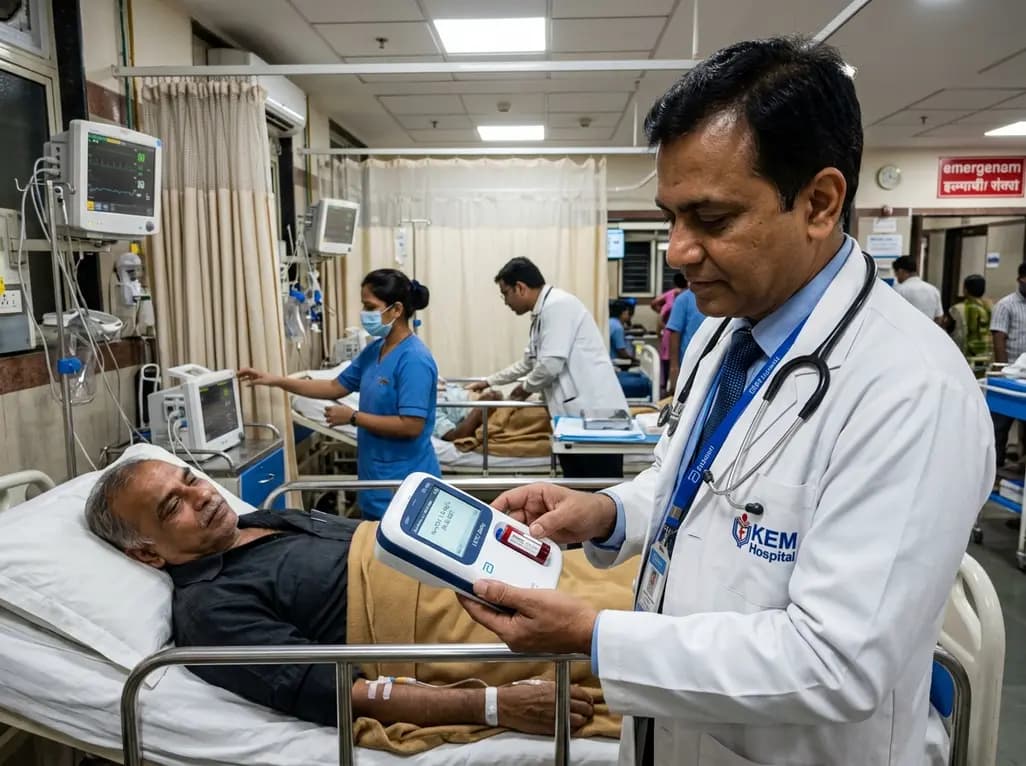
A real-world emergency department evaluation demonstrates that the Abbott i-STAT Alinity point-of-care high-sensitivity troponin I assay achieves excellent analytical precision and safely rules out myocardial infarction without false negatives, offering rapid bedside results to decongest acute care pathways.
Today
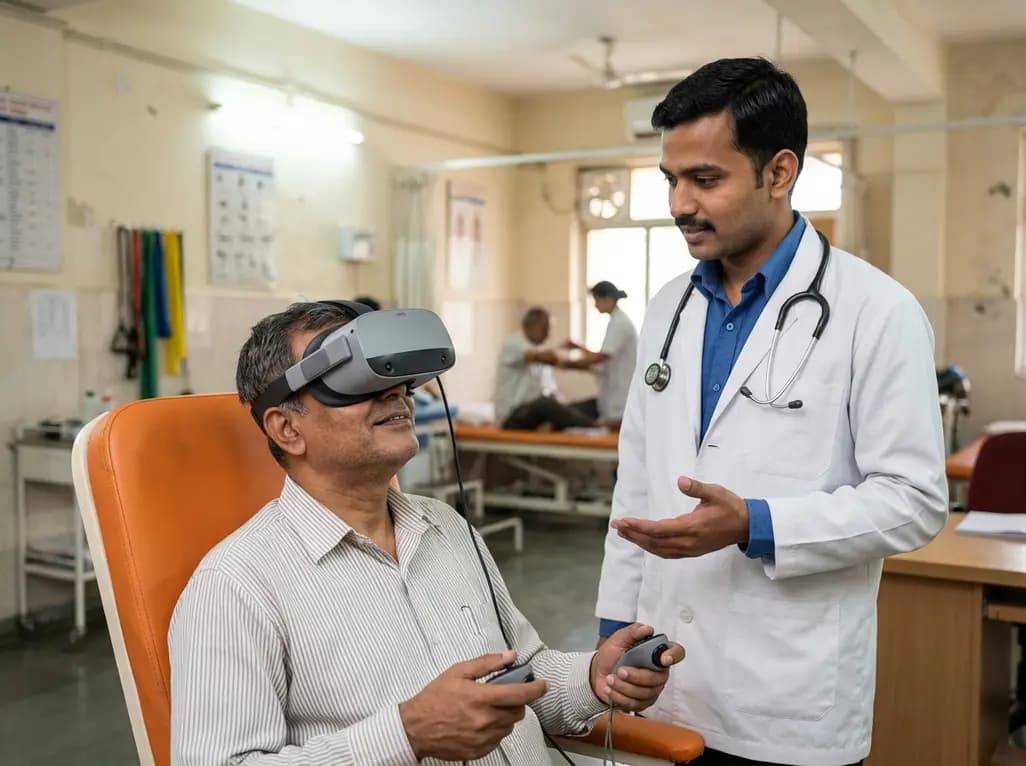
A recent scoping review highlights the efficacy, usability, and patient satisfaction of virtual reality pain management for chronic musculoskeletal pain, emphasizing psychotherapy-based VR protocols.
Today

A cross-sectional study in Nepal evaluates cardiovascular risk factors among adults working above 4,000 meters. The findings reveal unexpected rates of diabetes, hypertension, and mountain sickness, underscoring the urgent need for targeted cardiometabolic screening in high-altitude occupational cohorts.
Today
