.webp&w=384&q=75)

Loading, please wait...
Loading, please wait...

Recent breakthroughs show that Temporal Interference Stimulation offers a powerful, non-invasive method for deep brain neuromodulation. While traditional treatments often rely on invasive implants, this technique utilizes multiple kHz-range electric fields to reach deep brain structures safely. Researchers recently validated its ability to promote neural regeneration in the central nervous system. Specifically, they demonstrated that modulating the stimulation at theta-band frequencies enhances the maturation of embryonic neural progenitor cells. Consequently, these results provide a promising path toward treating neurodegenerative conditions without complex surgery. Therefore, the medical community views this as a major step forward for regenerative medicine.
The primary mechanism of Temporal Interference Stimulation involves overlapping high-frequency fields to create a localized low-frequency envelope. This specific envelope targets the hippocampus to trigger endogenous neurogenesis, which is crucial for memory and learning. Furthermore, experimental models of Alzheimer's disease demonstrate that this approach effectively increases the proliferation of stem cells. Notably, the procedure avoids the side effects of pharmacological interventions because it relies solely on electrical patterns. Moreover, this focal stimulation spares the superficial cortex, ensuring that only the intended deep-brain regions receive the therapeutic signal. For instance, the safety profile appears superior to current electrode-based methods. However, we must continue testing these effects in diverse patient populations. Similarly, other researchers are now exploring its use for Parkinson's disease and chronic pain. Ultimately, this technology represents a significant shift in how we approach brain repair.
Integrating this non-invasive strategy could revolutionize geriatric care and neurology in India. Although deep brain stimulation currently requires expensive surgery, this new technology might offer a more accessible alternative for a larger patient population. Additionally, its potential to control stem cell fate through frequency-specific signals suggests a new paradigm in restorative therapies. Overall, this technology enables clinicians to target neurodegeneration with high precision and minimal patient risk. Besides the clinical benefits, the non-invasive nature allows for more frequent and flexible treatment schedules. As a result, patients may experience improved cognitive outcomes with fewer complications.
Temporal interference is entirely non-invasive and does not require surgical electrode implantation. Consequently, it reduces the risk of infection and intracranial hemorrhage while reaching the same deep brain targets.
Because the technique uses high-frequency kHz fields that neurons do not respond to at the surface, it minimizes scalp sensation. Therefore, it is generally more comfortable for patients than other transcranial electrical stimulation methods.
Research suggests that theta-band frequencies specifically guide the maturation of neural progenitor cells. This frequency-specific control allows for targeted augmentation of brain repair processes.
Disclaimer: This content is for informational and educational purposes only and does not constitute professional medical advice, diagnosis, or treatment. Always seek the advice of your physician or other qualified health provider with any questions you may have regarding a medical condition. Refer to the latest local and national guidelines for clinical practice.
References
Peressott S et al. Temporal Interference Stimulation Enhances Neural Regeneration. Adv Sci (Weinh). 2026 Apr 28. doi: 10.1002/advs.202524341. PMID: 42047177.
Grossman N, et al. Noninvasive Deep Brain Stimulation via Temporal Interference. Cell. 2017;169(4):729-741.e16.
Wessel MJ, Hummel FC. Non-invasive deep brain stimulation: entering the next era. Trends Neurosci. 2023;46(3):238-251.

Read summarized clinical updates, watch expert medical content, and earn CME certifications right from your smartphone.
Open your smartphone camera to scan and install.





Temporal Interference Stimulation offers a non-invasive way to enhance neural regeneration and treat neurodegenerative diseases like Alzheimer's....
5 months ago

Explore vital recurrent stroke predictors in lacunar stroke patients managed with intensive blood pressure lowering. This analysis examines trial findings from SPS3 to uncover residual vascular risks, metabolic factors, and targeted secondary prevention strategies for high-risk neurological patients.
Today

Odisha has established India's first state-level clinical protocol specifically tailored for pregnant women with sickle cell disease. Developed with NHM and UNICEF, the framework provides structured antenatal screening, crisis mitigation, standardized referral pathways, and specialized interdisciplinary care.
Today

India is advancing preventive healthcare by integrating genomics, artificial intelligence, and quantum technologies. With the SANGAM programme sequencing one million Indian genomes, clinicians can unlock personalized therapies, detect cardiometabolic risks early, and curb the burden of diabetes and heart disease.
Today
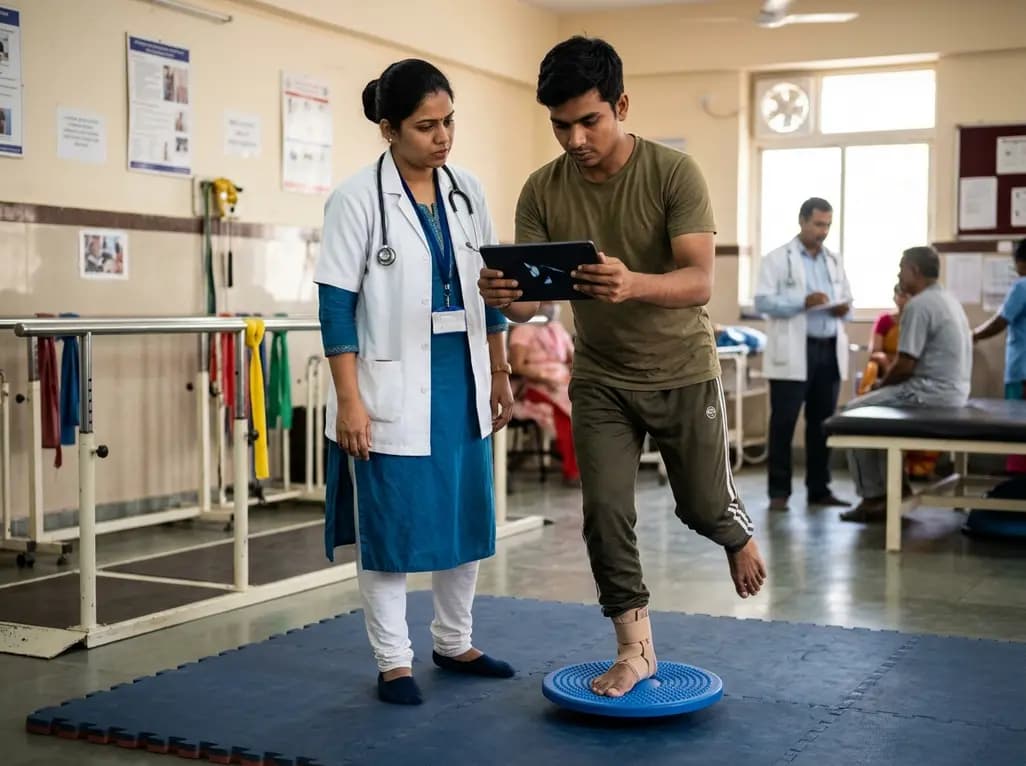
A randomized controlled trial demonstrates that an eight-week dual-task training intervention significantly improves static and dynamic postural control over standard balance exercises in individuals with chronic ankle instability, addressing critical neurocognitive deficits during athletic and daily activities.
Today

A retrospective cohort study of 7,716 ICU patients from the MIMIC-IV database demonstrates that Gradient Boosting Decision Trees significantly outperform traditional SOFA scores in predicting in-hospital mortality among patients with sepsis and diabetes, with SHAP analysis providing clinical interpretability.
Today
