.webp&w=384&q=75)

Loading, please wait...
Loading, please wait...
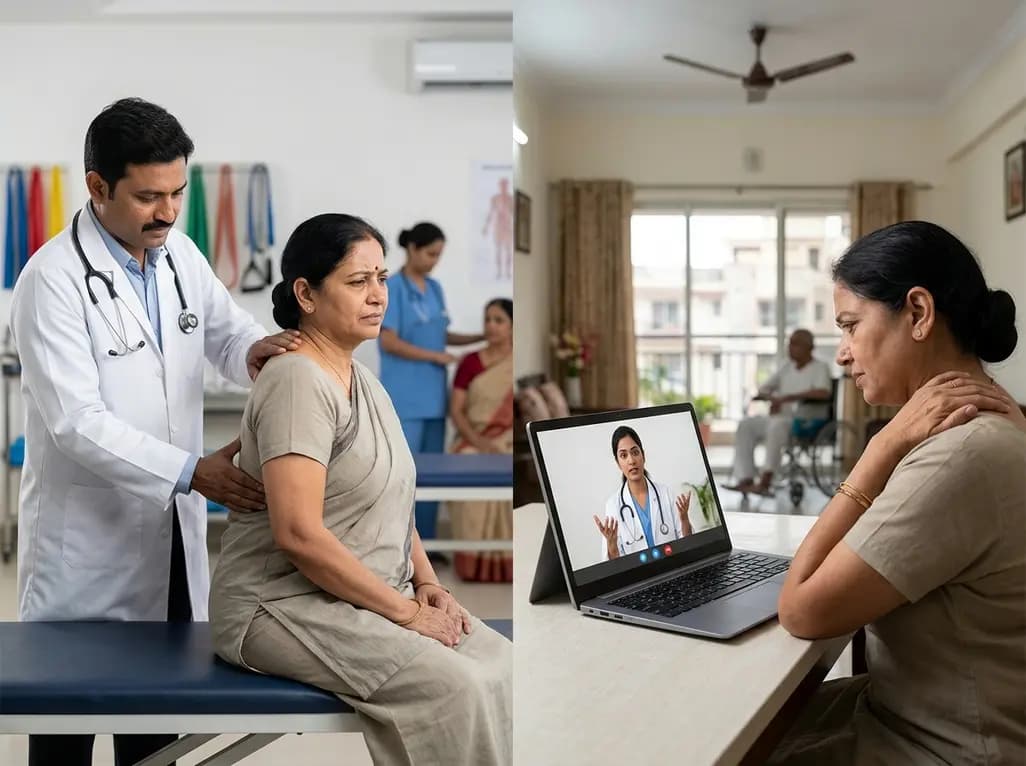
Caregivers of individuals with special needs often face significant physical and emotional strain, leading to persistent musculoskeletal issues. A recent study highlights the potential of telerehabilitation for chronic pain as a superior alternative to traditional in-person visits. This approach effectively addresses common barriers such as time constraints and travel difficulties. By providing remote access to structured exercises, digital health tools may offer a more sustainable solution for those with demanding caregiving roles.
The randomized controlled trial involved thirty caregivers aged 20 to 60 years who suffered from chronic neck and back pain. Researchers divided participants into three distinct groups to assess various clinical outcomes. Specifically, the first group engaged in a 12-week digitally monitored telerehabilitation program. The second group received four weeks of supervised in-person treatment followed by eight weeks of unsupervised home exercise. Finally, the third group served as a control. This design allowed for a direct comparison between modern digital interventions and standard clinical care.
Results revealed that the telerehabilitation group achieved greater improvements in all measured areas compared to both the conventional and control groups. Consequently, participants reported significant reductions in pain intensity, fatigue, and overall caregiver burden. Furthermore, their quality of life scores improved remarkably over the study period. While the results are promising, experts suggest that the intensity of digital monitoring and regular supervision likely played a crucial role in these superior outcomes.
One of the primary advantages of digital platforms is the ability to provide consistent oversight. Conventional therapy often relies on patients performing exercises at home without direct feedback after the initial supervised period. In contrast, telerehabilitation allows for real-time adjustments and better adherence tracking. Therefore, clinicians should consider digital interventions to ensure long-term patient engagement and better functional recovery for those unable to attend regular clinic sessions.
Yes, recent studies indicate that telerehabilitation can be as effective, or even more effective, than conventional therapy for chronic musculoskeletal pain. This success is often due to higher adherence rates and more frequent digital monitoring compared to unsupervised home programs.
Caregivers, individuals in rural areas, and those with limited mobility benefit significantly from these services. It removes the physical and logistical barriers of traveling to a clinic while maintaining high-quality professional guidance.
Disclaimer: This content is for informational and educational purposes only and does not constitute medical advice or a professional relationship. Always seek the advice of your physician or other qualified health provider with any questions you may have regarding a medical condition. Refer to the latest local and national guidelines for clinical practice.
References
Bugday B et al. Comparing telerehabilitation and conventional physical therapy for chronic neck and back pain in caregivers of individuals with special needs. Work. 2026 Jun 02. doi: 10.1177/10519815261434557. PMID: 42228384.
Hinman RS et al. Telerehabilitation consultations with a physiotherapist for chronic knee pain: a randomized trial. Lancet. 2024;403(10433):1267-1278.
World Health Organization. WHO guideline on health provider-to-client telemedicine. Geneva: World Health Organization; 2023.

Read summarized clinical updates, watch expert medical content, and earn CME certifications right from your smartphone.
Open your smartphone camera to scan and install.





A study comparing telerehabilitation and conventional physical therapy for managing chronic neck and back pain in caregivers of people with special needs....
4 months ago

Discover the crucial role of glymphatic dysfunction in stroke, where perivascular clearance failure and neuroinflammation exacerbate cerebral edema and post-stroke brain injury.
Today

A prenatal case highlights severe glutaric acidemia type II presenting as bilateral hyperechoic cystic kidneys at 18 weeks. Whole-exome sequencing revealed a novel homozygous ETFDH frameshift variant, demonstrating the power of rapid genetic testing in fetal renal anomalies.
Today

Review how tailored exercise programs benefit frail older patients with heart failure. Explore pathophysiological mechanisms, individualized training prescriptions, and strategies to overcome adherence barriers in clinical practice.
Yesterday

This comparative study evaluates posterior labral tears with and without glenohumeral instability, highlighting distinct demographic patterns, MRI underestimation in stable shoulders, and successful arthroscopic repair outcomes.
Yesterday

A clinical study demonstrates that early intervention with tocilizumab, either as monotherapy or bridged with corticosteroids, achieves significant proptosis reduction and resolves active inflammation in treatment-naive thyroid eye disease.
Yesterday
