.webp&w=384&q=75)

Loading, please wait...
Loading, please wait...
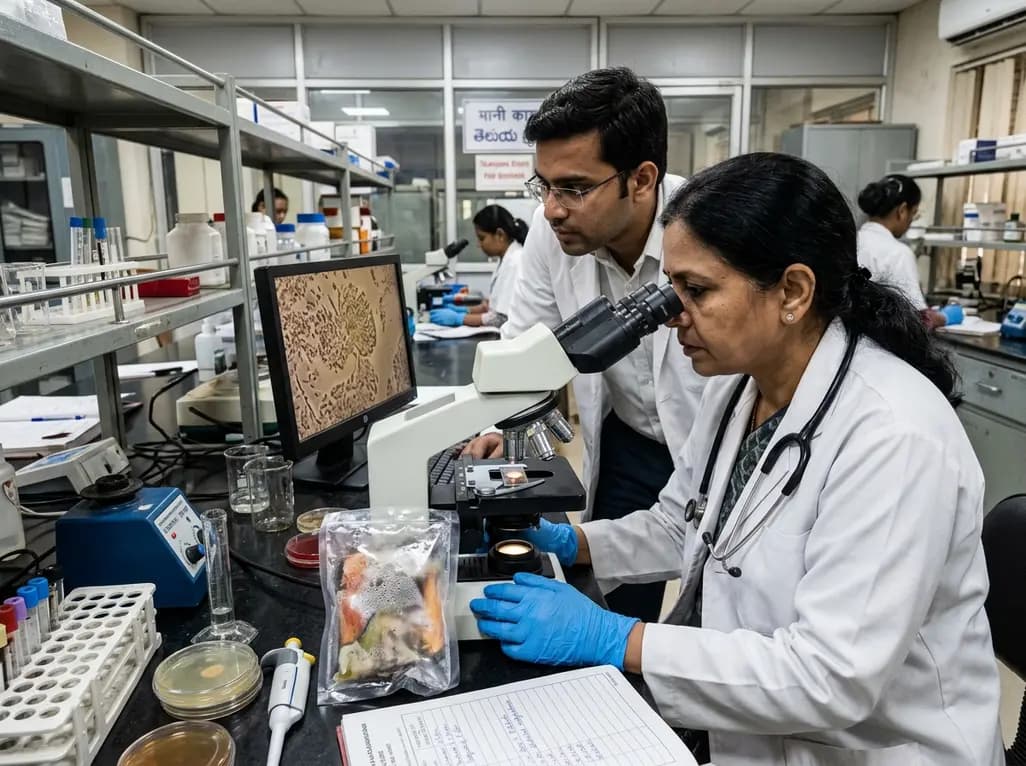
Recent enforcement drives across Hyderabad have brought dark store food safety into urgent clinical focus. Rapid grocery delivery networks rely on localized fulfillment warehouses to maintain ten-minute delivery windows. However, recent state inspections exposed alarming sanitation breakdowns in these facilities. Consequently, healthcare practitioners must understand the biological hazards and infection risks emerging from quick-commerce distribution hubs.
During a targeted enforcement drive, TG SAFE deployed ten specialized inspection teams comprising food safety officers and police personnel. They audited sixteen quick-commerce storage centers operated by leading digital delivery platforms across Hyderabad. As a direct result of these audits, authorities suspended the operating licences of four high-volume dark stores due to acute health hazards. Specifically, regulators shut down two Swiggy Instamart facilities, one Flipkart fulfillment center, and one Zepto outlet. In addition, inspectors issued show-cause notices to five locations and formal improvement notices to three others.
Enforcement teams observed pervasive structural and hygienic violations throughout the inspected premises. Officials documented rusted shelving, extensive cobwebs, dirty flooring, and haphazard product organization. Furthermore, authorities collected fifteen food samples under suspicion of statutory adulteration. Quick-commerce facilities often prioritize turnaround speed over warehouse sanitation and stock rotation. Therefore, expired inventory frequently languishes on shelves next to fresh groceries. Inspectors also discovered chemical household cleaners stored directly beside packaged foods, creating severe cross-contamination risks. Consequently, these enforcement measures highlight widespread operational lapses across modern urban grocery logistics. Officials confirmed that rigorous compliance audits will govern store reopenings.
Inspection teams uncovered intense cockroach infestations and rodent activity across several warehouse locations. In storage facilities, pests represent an acute biological vector for enteric pathogens. Cockroaches routinely transmit virulent strains of Salmonella, Escherichia coli, Shigella, and parasitic cysts on their bodies. When these insects forage across unsealed food packaging or open produce, they deposit infectious organisms directly onto consumables.
Moreover, pest feces, shed exoskeletons, and saliva introduce potent environmental allergens into the facility air. Inhalation of these allergens can provoke severe attacks of bronchial asthma and allergic rhinitis in susceptible consumers. In addition, mechanical pathogen transmission from contaminated storage surfaces causes acute infectious gastroenteritis in domestic households. Patients typically present with sudden onset watery diarrhea, severe abdominal cramps, low-grade fever, and vomiting. Furthermore, heavy pest presence accelerates the decomposition of perishables. As a result, contaminated food reaching homes presents severe complications for young children and elderly adults. Clinicians should maintain high diagnostic suspicion when evaluating unexplained gastrointestinal illness in urban areas.
During their inspections, regulators discovered spoiled vegetables covered in visible mould growth inside dark stores. Fungal species like Aspergillus, Penicillium, and Fusarium multiply aggressively in humid, poorly ventilated storage environments. When perishables decay, these filamentous fungi synthesize hazardous chemical byproducts known as mycotoxins. Aflatoxins, ochratoxin A, and patulin represent dangerous fungal toxins that remain stable during conventional culinary washing and heating.
Consequently, consuming mould-contaminated food exposes patients to notable acute and chronic toxicities. Acute toxic ingestion often causes severe nausea, abdominal cramping, and toxic hepatitis in vulnerable individuals. Furthermore, sustained dietary exposure to mycotoxins carries proven hepatotoxic and nephrotoxic risks over time. Broken packaging and delayed dispatch trap moisture inside crates, which accelerates fungal proliferation. In addition, mould rapidly spreads across neighboring vegetable crates during order sorting. Warehouse selectors operating under tight delivery schedules often overlook early fungal growth on produce. As a result, toxic spores enter domestic households undetected. Therefore, medical practitioners should remind patients that rinsing mouldy vegetables cannot eliminate deeply permeated fungal toxins.
Another significant violation documented by TG SAFE was improper temperature maintenance in facility cold-rooms. Perishable products such as dairy goods, poultry, ready-to-eat batters, and meat require continuous cold chain preservation. When warehouse operators fail to keep storage chillers below five degrees Celsius, pathogenic bacteria multiply rapidly. Microorganisms like Listeria monocytogenes, Campylobacter jejuni, and Staphylococcus aureus thrive under fluctuating chill temperatures.
Additionally, erratic temperature management causes internal condensation inside sealed plastic packaging, generating optimal conditions for bacterial growth. Pathogenic enterotoxins produced by Staphylococcus aureus and Bacillus cereus remain completely heat-stable despite boiling or frying. Consequently, ingesting preformed toxins induces sudden, violent emesis and diarrhea within hours. Furthermore, cold chain failures compromise sensitive dairy derivatives like paneer and cheese. Temperature abuse triggers rapid microbial spoilage, yielding foul odours and harmful degradation products. When delivery platforms compromise refrigeration to trim operating overheads, consumer safety margins disappear completely. Clinicians should recognize that ten-minute delivery speed cannot compensate for broken warehouse refrigeration. Transporting chilled items in uninsulated bags under ambient heat further compounds these hazards.
Physicians must adjust their clinical evaluation strategies when managing patients with sudden foodborne illnesses in metropolitan settings. When patients present with acute gastroenteritis, doctors should take a thorough 72-hour dietary history that specifically investigates quick-commerce grocery purchases. Clinicians must assess patients for signs of severe dehydration, electrolyte imbalances, and systemic sepsis. In most uncomplicated cases of acute food poisoning, oral rehydration therapy forms the cornerstone of clinical recovery.
However, patients exhibiting high fever, bloody stools, or persistent vomiting require structured diagnostic workups. Physicians should request stool cultures, fecal microscopy, and complete blood counts to isolate causative pathogens. Furthermore, clinicians must avoid empirical antibiotic prescribing for mild toxin-mediated gastroenteritis, because unnecessary antimicrobials worsen dysbiosis and propagate resistance. Instead, targeted antimicrobial therapy should remain reserved for confirmed invasive infections such as campylobacteriosis or severe salmonellosis. Moreover, physicians must notify municipal health authorities regarding suspicious foodborne illness clusters. Prompt epidemiological notification enables health departments to inspect compromised supply chains and prevent broader community outbreaks. Astute clinical management therefore plays a pivotal role in maintaining public health.
Q1: Why are quick-commerce dark stores particularly vulnerable to food safety violations?
Dark stores prioritize rapid order assembly and high delivery turnover within tight spaces. Consequently, warehouse personnel often neglect basic sanitation practices like routine pest eradication, deep cleaning, and rack maintenance. Furthermore, rapid inventory turnover causes poor shelf monitoring, allowing expired items to remain unsegregated. Inadequate cold-room maintenance and mixing food with toxic chemicals further amplify severe contamination risks in these neighborhood fulfillment hubs.
Q2: What specific pathogens do cockroaches transmit to stored food products?
Cockroaches serve as significant mechanical vectors for dangerous enteric bacteria, including Salmonella enterica, Escherichia coli, Shigella dysenteriae, and Klebsiella species. In addition, their bodies carry parasitic cysts like Entamoeba histolytica and fungal spores. When these pests crawl across food packaging or fresh produce, they deposit viable microbes through their feces and vomitus. Consuming items exposed to cockroach secretions frequently triggers acute gastroenteritis, toxic dysentery, and protracted illness.
Q3: How can consumers protect themselves when ordering groceries from quick-commerce apps?
Consumers should inspect every package immediately upon delivery, verifying expiry dates and checking tamper-evident seals. Furthermore, households must examine fresh fruits and vegetables closely for discolouration, mould growth, or insect damage before storage. Chilled products must arrive cold to the touch; otherwise, buyers should reject them immediately. Finally, consumers must store groceries separately from household cleaning chemicals and wash produce under running water to minimize acute risks.
Disclaimer: This content is for informational and educational purposes only. It does not constitute medical advice or replace professional judgment. Refer to the latest local and national guidelines for clinical practice.
References

Read summarized clinical updates, watch expert medical content, and earn CME certifications right from your smartphone.
Open your smartphone camera to scan and install.





Following extensive regulatory inspections across Hyderabad, Telangana authorities halted operations at several quick-commerce fulfillment centers. Regulators identified severe hazards, including pest infestations, expired goods, and compromised cold chains, raising vital clinical awareness on foodborne illnesses.
Today

According to WHO data, average lifespan reached 73.3 years in 2023, recovering from pandemic lows. However, healthy life expectancy lags at 62.8 years due to surging noncommunicable conditions like cardiovascular disease and dementia, demanding proactive primary screening and sustained chronic care.
Today

A nationwide South Korean study shows underreporting of smoking among women dropped from 57.4% to 36.4% between 2008 and 2021. However, over one-third of female smokers still conceal their habit, highlighting the critical role of cotinine verification in clinical risk assessment.
Today

Medical robotics is transitioning beyond operative suites into diagnostics, cardiology, and endocrinology. Explore how innovations in tele-robotics, AI integration, and nanomedicine are overcoming geographical barriers and transforming precision healthcare delivery across India's evolving disease landscape.
Today

A new study evaluates the rheological stability of decellularized peripheral nerve matrix hydrogels under varied storage conditions. Findings show -80°C storage and freeze-drying preserve gelation kinetics and mechanical stiffness, offering key insights for shipping and translational clinical applications.
Today

A qualitative meta-synthesis highlights the complex interplay between gender dysphoria, minority stress, and eating disorders in transgender and gender-diverse individuals. Clinicians must recognize these distinct drivers to offer supportive, gender-affirming, and interdisciplinary eating disorder care.
Today
