

Loading, please wait...
Loading, please wait...

Entering medical school represents a monumental academic transition. First-year medical trainees encounter an extraordinary volume and rapid pace of biomedical knowledge that often overwhelm their previous study habits. Consequently, traditional passive memorization strategies prove insufficient for long-term clinical retention. Medical educators must guide students toward adaptive metacognitive strategies and self-regulated habits early in training. Implementing structured team-based learning offers a proven pedagogical pathway to achieve these foundational goals.
Medical students frequently arrive at medical college with high academic records built on rote memorization. However, modern competency-based medical education demands immediate conceptual application and critical inquiry. When students rely solely on familiar undergraduate habits, they quickly experience cognitive overload. Educators must intervene early to redirect these efforts toward evidence-based adult learning. A structured, two-hour module provides trainees with explicit instruction in self-regulated study strategies. Moreover, introducing team-based learning during orientation helps bridge the gap between passive reception and active inquiry. Trainees learn to view academic challenges as opportunities for self-assessment rather than personal shortcomings. Therefore, early orientation sessions ease transitional anxiety and encourage adaptive intellectual resilience. Students also examine the cognitive science behind active recall, interleaving, and spaced practice. By replacing superficial review with robust cognitive techniques, future physicians cultivate habits that protect against academic distress. Medical institutions thus build a stronger educational foundation that sustains rigorous professional training across preclinical and clinical years.
Clinical practice evolves rapidly, requiring physicians to continually update diagnostic and therapeutic approaches. Consequently, medical educators prioritize developing the master adaptive learner mindset among trainees. This psychological and cognitive framework centers on planning, learning, assessing, and adjusting educational behaviors. During introductory collaborative sessions, students explore complex scenarios that challenge their baseline metacognitive assumptions. Furthermore, faculty facilitate discussions that urge students to identify personal blind spots and study inefficiencies. Trainees evaluate how their current study routines align with cognitive science and professional expectations. Therefore, self-reflection becomes an explicit curricular exercise rather than an accidental byproduct. When students recognize that medical competence demands iterative adjustment, they welcome objective assessment. Additionally, cultivating self-regulation empowers students to monitor their comprehension accurately during high-stakes training. This cognitive shift ensures that learners remain self-directed investigators throughout their subsequent clerkships and postgraduate residencies. Developing adaptability early prepares doctors for modern, evidence-driven healthcare environments.
Clinical medicine requires coordinated interprofessional collaboration rather than isolated individual effort. Nevertheless, competitive admissions processes often condition incoming medical students to work in isolation. Small-group formats counter this tendency by prioritizing shared accountability and collective problem-solving. In typical cohorts, most incoming students lack prior exposure to structured collaborative learning. Therefore, an introductory session provides a safe, low-stakes setting to navigate team dynamics. Students complete individual readiness tests before engaging in consensus-building team discussions. Through this process, they establish vital group norms regarding respectful debate, active listening, and punctual preparation. Moreover, peer discussions expose trainees to alternate problem-solving perspectives, reinforcing that diverse clinical viewpoints enrich decision-making. Working through clinical vignettes helps students discover that collective reasoning frequently outperforms individual assessment. Consequently, teams build psychological safety and trust that benefit their shared academic trajectory. These interpersonal skills serve as crucial training for subsequent ward rounds and multidisciplinary clinical teams.
Medical institutions offer extensive support networks, yet junior trainees frequently hesitate to seek assistance. Stigma, imposter phenomenon, and unfamiliarity with institutional hierarchies often impede timely help-seeking. Structured active learning modules purposefully integrate scenarios where hypothetical trainees encounter academic roadblocks. Consequently, students explore actionable pathways to access learning specialists, peer tutors, and mental health counselors. Discussing these scenarios in peer groups normalizes academic struggle as an expected component of medical training. Furthermore, faculty clarify specialized educational terminology, demystifying institutional rubrics and competency benchmarks. When learners understand available institutional resources before acute academic distress arises, they utilize support services more proactively. Peer consensus during small-group exercises further reinforces that seeking guidance reflects professional maturity rather than inadequacy. Medical schools thus foster an inclusive environment that protects trainee well-being. Ultimately, demystifying academic support mechanisms improves student satisfaction, enhances educational equity, and reduces unnecessary attrition across preclinical cohorts.
Transitioning from traditional didactic lectures to active small-group methodologies requires intentional instructional design. Facilitators must design application exercises that present complex, authentic scenarios requiring collective decisions. Moreover, educators should reserve class time for high-level synthesis rather than basic knowledge delivery. Initial student feedback confirms that introductory workshops successfully demystify active learning formats while building confidence. When medical colleges embed these orientation workshops into their foundational curricula, students transition into subsequent modules smoothly. Additionally, faculty development remains essential to ensure teachers facilitate discussions effectively without reverting to lecturing. Facilitators must comfortably guide debates, prompt clarifying questions, and manage group dynamics. As regulatory councils emphasize self-directed learning and small-group discussions, active pedagogy becomes indispensable. Therefore, integrating structured group orientation sessions aligns institutional practices with modern accreditation standards. Adopting these educational models creates an interactive learning environment that directly enhances professional competency.
The primary objective is to familiarize incoming medical students with adult learning principles and active educational methodologies. Trainees discover how to transition from passive memorization to active inquiry and self-regulated study habits. Furthermore, the session introduces essential educational terminology, outlines institutional academic resources, and establishes collaborative team norms. This foundation prepares students for subsequent curricular demands and fosters lifelong clinical problem-solving skills.
The structured format introduces inexperienced students to group problem-solving within a low-stakes, supportive learning environment. Because individual readiness assurance precedes team problem-solving, learners prepare independently before engaging in group discussions. This sequence builds individual accountability while offering psychological safety. Consequently, students learn to articulate reasoning, resolve intellectual disagreements, and appreciate diverse peer perspectives without fear of evaluation penalties.
The master adaptive learner model teaches trainees to continuously assess their knowledge gaps and adapt to evolving medical science. Clinical guidelines change rapidly, making rote knowledge obsolete over time. By developing strong metacognition and self-regulated learning habits during medical school, physicians learn to critique their clinical decisions, integrate new evidence, and maintain long-term professional competence throughout their medical careers.
Disclaimer: This content is for informational and educational purposes only... Refer to the latest local and national guidelines for clinical practice.
References
Solitro AR et al. Learning to Learn: A Team-Based Learning Activity to Introduce Medical Students to Adult Learning. MedEdPORTAL. 2026 undefined undefined. doi: 10.15766/mep_2374-8265.11658. PMID: 43080565.
Burgess A, van Diggele C, Roberts C, Mellis C. Facilitating small group learning in medical education. BMC Med Educ. 2020;20(Suppl 2):457. doi: 10.1186/s12909-020-02282-3.
Parmelee D, Michaelsen LK, Cook S, Hudes PD. Team-based learning: a practical guide: AMEE Guide No. 65. Med Teach. 2012;34(5):e275-e287. doi: 10.3109/0142159X.2012.651179.

Read summarized clinical updates, watch expert medical content, and earn CME certifications right from your smartphone.
Open your smartphone camera to scan and install.





A structured team-based learning activity introduces first-year medical students to adult learning principles, fostering metacognitive strategies, peer collaboration, and self-regulated learning habits essential for navigating complex medical curricula and lifelong clinical education.
Today
Researchers have engineered dual adenosine-modulating nanoparticles that systematically deliver CD73 and FTO inhibitors. This nanomedicine platform dismantles extracellular adenosine and intracellular m6A checkpoints, restoring cytotoxic CD8+ T cell immunity and preventing post-surgical cancer metastasis.
Today
A qualitative study examines the barriers and opportunities surrounding HPV vaccine awareness and uptake in Bangladesh. The findings reveal key adolescent knowledge gaps, socio-cultural hesitancies, and healthcare delivery hurdles, providing vital lessons for cervical cancer prevention programs across South Asia.
Today
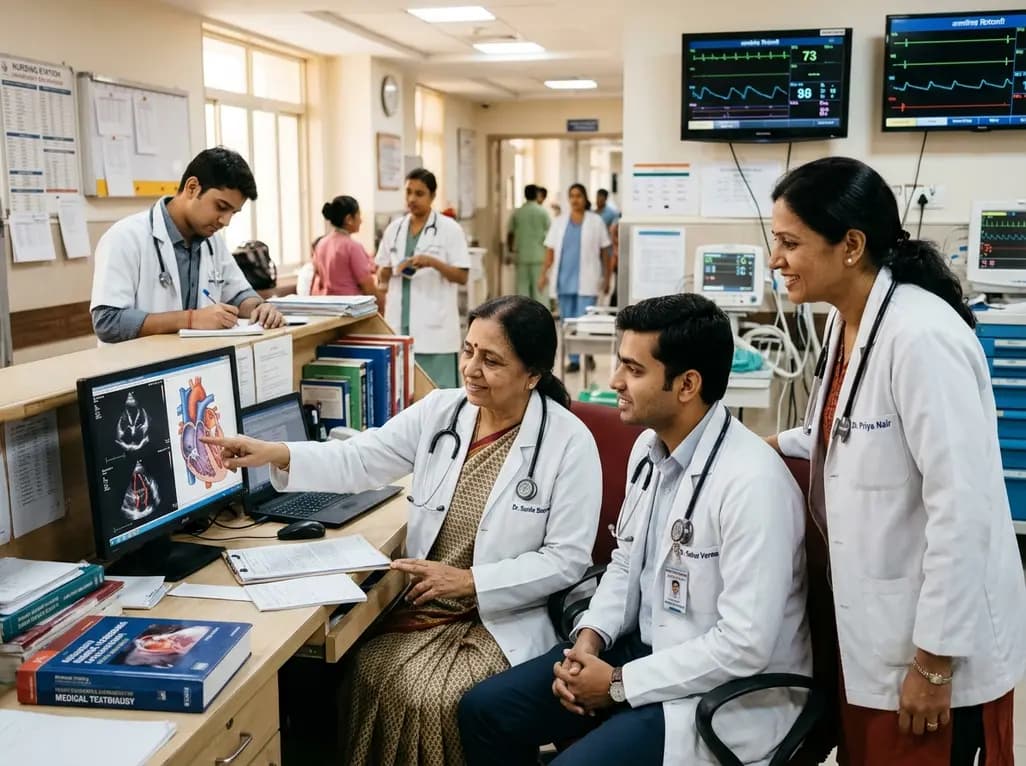
Discover how structured coaching, mentoring, and sponsorship frameworks sustain congenital cardiologists across their careers, enhancing technical competence, well-being, and equity.
Today
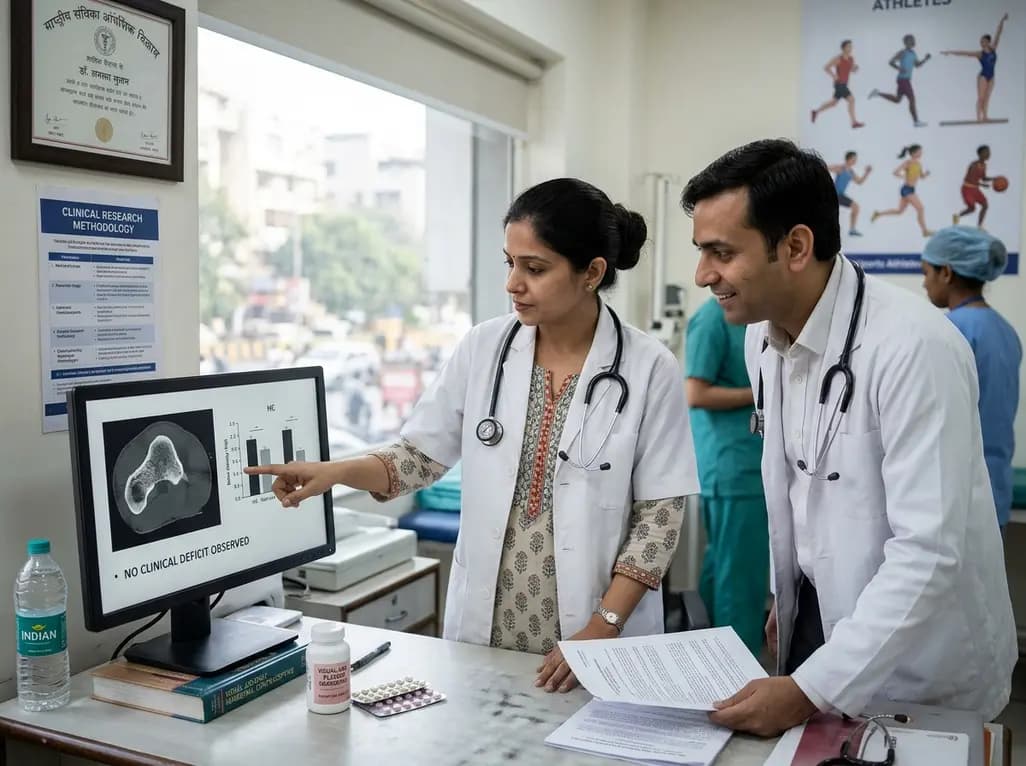
A recent Canadian study evaluates the relationship between hormonal contraceptive use, sport discipline, and volumetric bone density in elite female athletes. Using HR-pQCT, researchers found no clinically meaningful deficits, offering reassuring evidence for sports medicine and gynecology clinicians.
Today
A clinical evaluation in India reveals that pupillary dilation significantly improves image gradeability from 67% to 90% in older adults undergoing AI diabetic retinopathy detection. Pharmacological mydriasis overcomes senile miosis and media opacities, enhancing early diagnostic yield and screening reliability.
Today
