

Loading, please wait...
Loading, please wait...

Cervical cancer remains one of the most pressing oncological threats affecting women across low- and middle-income countries. In South Asia, persistent infection with high-risk human papillomavirus genotypes drives thousands of preventable deaths each year. Consequently, health authorities have introduced prophylactic immunization initiatives to shield young cohorts before potential viral exposure. However, expanding HPV vaccine awareness continues to challenge regional public health managers and primary healthcare teams. In 2023, Bangladesh launched a nationwide campaign providing free immunization for young girls aged 10 to 14. Despite this critical policy step, overall uptake has lagged behind national expectations.
A qualitative study led by Mostari and colleagues investigated the underlying behavioral and structural reasons for this shortfall. Their investigation reveals that public knowledge regarding viral oncogenesis and vaccine efficacy remains fragmented. Furthermore, cultural taboos hinder open dialogue regarding sexually transmitted viral agents. Therefore, clinicians must understand the multifaceted obstacles preventing broad adolescent participation. Primary care physicians play an essential role in transforming clinical guidelines into trusted community action.
The qualitative findings highlight profound gaps in baseline comprehension among young recipients and their guardians. Specifically, adolescent girls exhibited minimal knowledge regarding cervical cancer etiology, presenting symptoms, and preventative immunization options. Many students could not distinguish between routine therapeutic injections and prophylactic viral protection. Furthermore, widespread cultural conservatism creates hesitation when families discuss reproductive tract health. In rural communities, parents frequently express unfounded anxieties concerning long-term reproductive side effects and prospective fertility.
Religious sensitivities also amplify parental reluctance, as some community members associate the vaccine with non-traditional moral values. Consequently, misinformation spreads rapidly through social networks and informal gatherings without objective counter-messaging. Without clear guidance from trusted clinical authorities, families often adopt a watchful waiting posture rather than immunizing their daughters. In addition, educational materials rarely reach isolated households or marginalized settlements. As a result, parents fail to appreciate that early immunization offers lifesaving protection against malignant cervical transformation. Overcoming these entrenched beliefs requires respectful engagement, clear scientific facts, and structured community dialogues.
Healthcare providers and frontline staff directly influence community vaccine acceptance and uptake. However, the study revealed surprising inconsistencies in understanding among community health workers and local educators. In several rural outposts, frontline workers themselves harbored reservations about safety protocols and vaccine efficacy. Consequently, their counseling efforts lacked the conviction necessary to overcome pervasive parental hesitancy. When frontline messengers display uncertainty, public trust erodes rapidly.
Moreover, administrative bottlenecks and cold-chain distribution challenges impeded reliable vaccine delivery in remote districts like Cox's Bazar and Chittagong. Expanded Program on Immunization managers noted that insufficient pre-campaign orientation left field personnel poorly prepared for public skepticism. In addition, health centers often faced staffing shortages during mass campaigns, which hindered comprehensive patient counseling. Therefore, health systems must invest in rigorous clinical training for all grassroots personnel before launching major immunization drives. When community health workers possess deep scientific understanding, they can effectively communicate safety profiles and counter prevailing myths.
Despite these substantial obstacles, the research identified powerful opportunities to accelerate immunization rates through localized partnerships. Specifically, school-based health initiatives offer an exceptional platform for reaching adolescent cohorts directly. Participants emphasized that structured teacher-parent meetings provide safe venues to discuss cervical cancer prevention openly. When teachers actively champion immunization, parental skepticism diminishes noticeably across diverse economic backgrounds.
Furthermore, collaborating with respected faith leaders and village elders helps demystify the vaccine within conservative circles. When religious leaders validate the intervention as a proactive health measure, parental confidence rises substantially. In addition, peer-led awareness programs within secondary schools enable young girls to support one another and discuss prevention without embarrassment. Multi-media campaigns, utilizing localized dialects and clear visual materials, can also reinforce factual messaging across diverse demographics. Thus, combining institutional education with grassroots community mobilization establishes an empowering environment for preventive health.
These qualitative insights offer urgent lessons for healthcare professionals and policymakers across India. India bears a substantial proportion of global cervical cancer mortality, making widespread adolescent immunization an absolute clinical priority. The rollout of domestic indigenous vaccines like Cervavac presents an unprecedented opportunity to scale coverage sustainably. However, Indian clinicians encounter socio-cultural barriers and informational voids remarkably similar to those documented in Bangladesh.
Consequently, Indian pediatricians, gynecologists, and family physicians must champion proactive communication in daily clinical practice. Clinicians should routinely evaluate the immunization status of adolescent patients during routine health consultations. Furthermore, medical associations must collaborate with school health programs and municipal authorities to ensure equitable vaccine access. By implementing culturally sensitive counseling and engaging community leaders, healthcare teams can dismantle hesitancy. Ultimately, concerted clinical leadership will drive South Asia toward the World Health Organization cervical cancer elimination targets.
Early administration of the human papillomavirus vaccine protects adolescents well before potential exposure to high-risk viral genotypes. Clinical trials consistently confirm that administering the vaccine between ages nine and fourteen elicits a robust immune response. Furthermore, vaccinating girls prior to sexual debut provides nearly complete protection against oncogenic strains responsible for cervical malignancy. Consequently, clinicians must prioritize timely adolescent immunization to establish long-term population immunity and effectively lower regional cervical cancer incidence.
Healthcare professionals must actively dispel safety misconceptions and cultural taboos surrounding reproductive health interventions. Doctors should explain that HPV vaccination specifically prevents deadly malignancies rather than influencing sexual activity. Moreover, engaging respected community elders and religious leaders fosters shared trust and overcomes entrenched hesitation. In addition, routine family discussions during pediatric checkups allow physicians to provide transparent scientific evidence. As a result, empathetic communication reassures cautious parents and significantly enhances vaccine acceptance.
Multi-sectoral collaboration unites healthcare systems, educational boards, community leaders, and local governments to optimize public health delivery. School-based vaccination campaigns reliably achieve high coverage because they access eligible cohorts directly in structured educational environments. Furthermore, coordinated alliances facilitate transparent resource distribution, culturally tailored education, and efficient cold-chain logistics. Therefore, cross-sector cooperation dismantles administrative and informational hurdles. Ultimately, these integrated partnerships build strong community ownership, ensuring sustained uptake and accelerating cervical cancer elimination goals.
Disclaimer: This content is for informational and educational purposes only... Refer to the latest local and national guidelines for clinical practice.
References

Read summarized clinical updates, watch expert medical content, and earn CME certifications right from your smartphone.
Open your smartphone camera to scan and install.





A qualitative study examines the barriers and opportunities surrounding HPV vaccine awareness and uptake in Bangladesh. The findings reveal key adolescent knowledge gaps, socio-cultural hesitancies, and healthcare delivery hurdles, providing vital lessons for cervical cancer prevention programs across South Asia.
Today
Researchers have engineered dual adenosine-modulating nanoparticles that systematically deliver CD73 and FTO inhibitors. This nanomedicine platform dismantles extracellular adenosine and intracellular m6A checkpoints, restoring cytotoxic CD8+ T cell immunity and preventing post-surgical cancer metastasis.
Today

Discover how structured coaching, mentoring, and sponsorship frameworks sustain congenital cardiologists across their careers, enhancing technical competence, well-being, and equity.
Today
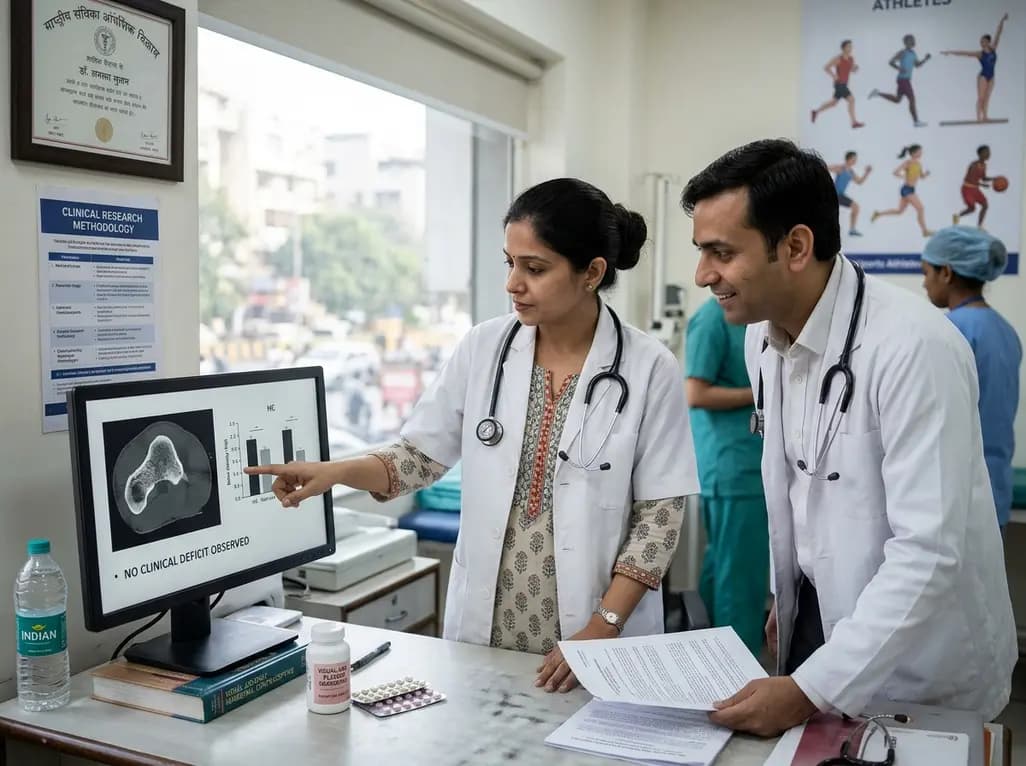
A recent Canadian study evaluates the relationship between hormonal contraceptive use, sport discipline, and volumetric bone density in elite female athletes. Using HR-pQCT, researchers found no clinically meaningful deficits, offering reassuring evidence for sports medicine and gynecology clinicians.
Today
A clinical evaluation in India reveals that pupillary dilation significantly improves image gradeability from 67% to 90% in older adults undergoing AI diabetic retinopathy detection. Pharmacological mydriasis overcomes senile miosis and media opacities, enhancing early diagnostic yield and screening reliability.
Today
