.webp&w=384&q=75)

Loading, please wait...
Loading, please wait...

Adolescent smoking remains a significant public health challenge in India, where tobacco initiation often begins during the school years. Engaging teachers in adolescent smoking prevention discussions can bridge the gap between clinical advice and daily social influences. A recent study published in JMIR Pediatrics and Parenting explores why some educators take on this informal role while others remain silent. By understanding these motivational drivers, healthcare providers can better support school-based health promotion.
According to the research, a teacher's decision to initiate adolescent smoking prevention discussions depends heavily on their perception of responsibility. Researchers applied Attribution Theory to evaluate these behaviors. The findings indicate that when teachers attribute the responsibility for health education to the school itself—a concept known as internal attribution—they report higher levels of concern. Furthermore, these teachers engage in more frequent preventive communication with their students. However, the study suggests that personal concern alone is not always enough to trigger consistent action.
Indeed, the study highlights a fascinating interaction between personal concern and contextual sanctions. For instance, teachers who had previously enforced classroom rules or sanctions felt more empowered to speak up. In contrast, for those in environments with fewer established sanctions, high concern did not significantly increase their participation in smoking-related talks. Consequently, school-wide policies act as a necessary scaffold that empowers concerned teachers. Moreover, in the Indian context, where programs like Project MYTRI have shown success, integrating these behavioral insights could optimize future school-based interventions. Therefore, practitioners should advocate for clear institutional guidelines to help educators feel responsible and supported.
Specifically for pediatricians and family physicians in India, understanding these drivers allows for better community collaboration. Doctors can proactively encourage school authorities to implement "Tobacco-Free School" guidelines. This approach clarifies the teacher's role, making them more likely to lead effective adolescent smoking prevention discussions. Ultimately, a multi-stakeholder approach involving doctors, teachers, and parents remains the most effective way to curb the tobacco epidemic among the youth.
Internal attribution occurs when teachers believe the school has a professional duty to address student health. This belief increases their emotional concern and makes them significantly more likely to initiate preventive conversations about health risks like smoking.
The presence of clear rules and previous experience with sanctions provide a framework for educators. When a teacher is concerned about smoking, they are more likely to act if they feel supported by a system of established school policies and consequences.
Disclaimer: This content is for informational and educational purposes only. It is not a substitute for professional medical advice, diagnosis, or treatment. Refer to the latest local and national guidelines for clinical practice.
References
Russ AJ et al. Motivational Drivers for Teachers as Informal Health Educators to Initiate In-Class Discussions With Adolescents About Smoking: Moderated Mediation Study Using Attribution Theory. JMIR Pediatr Parent. 2026 Apr 17. doi: 10.2196/81959. PMID: 41996155.
Reddy KS et al. Preventing Tobacco Use Among Young People in India: Project MYTRI. Am J Public Health. 2006;96(1):67-71. doi:10.2105/AJPH.2004.053801.
Pimple SA et al. LifeFirst: Impact of a school-based tobacco and supari cessation intervention among adolescent students in Mumbai, India. Popul Med. 2021;3(May):14. doi:10.18332/popmed/135118.

Read summarized clinical updates, watch expert medical content, and earn CME certifications right from your smartphone.
Open your smartphone camera to scan and install.





Teachers' motivation for smoking prevention discussions depends on internal responsibility and school sanctions, according to a 2026 study in JMIR....
6 months ago

Explore vital recurrent stroke predictors in lacunar stroke patients managed with intensive blood pressure lowering. This analysis examines trial findings from SPS3 to uncover residual vascular risks, metabolic factors, and targeted secondary prevention strategies for high-risk neurological patients.
Today
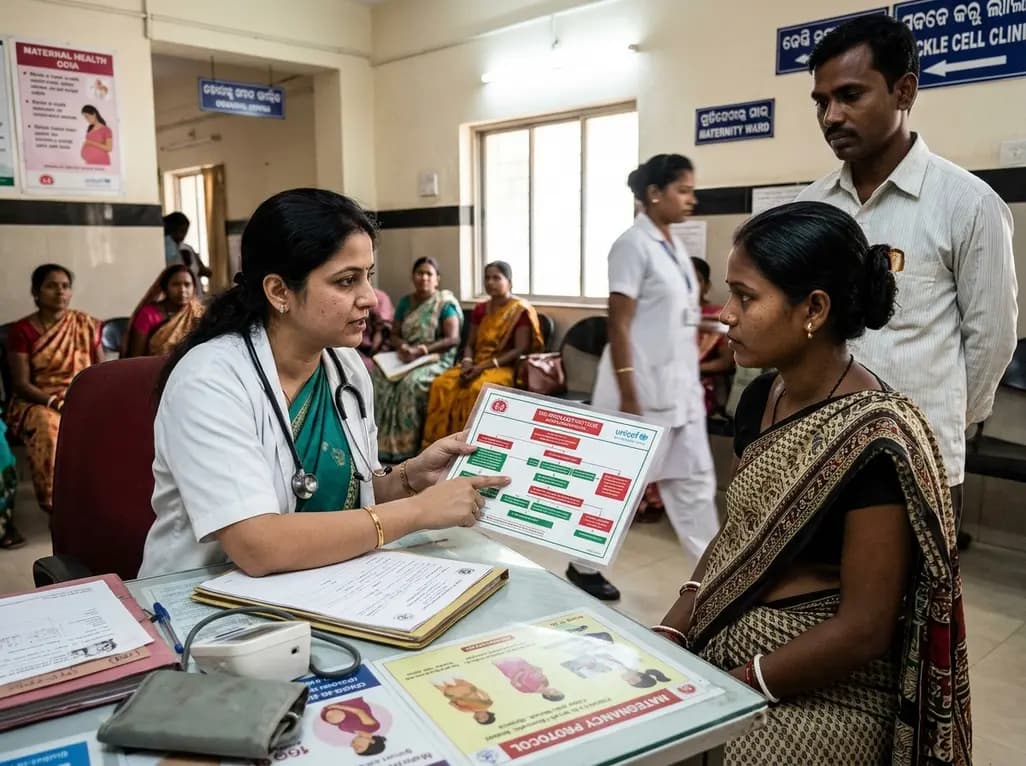
Odisha has established India's first state-level clinical protocol specifically tailored for pregnant women with sickle cell disease. Developed with NHM and UNICEF, the framework provides structured antenatal screening, crisis mitigation, standardized referral pathways, and specialized interdisciplinary care.
Today

India is advancing preventive healthcare by integrating genomics, artificial intelligence, and quantum technologies. With the SANGAM programme sequencing one million Indian genomes, clinicians can unlock personalized therapies, detect cardiometabolic risks early, and curb the burden of diabetes and heart disease.
Today
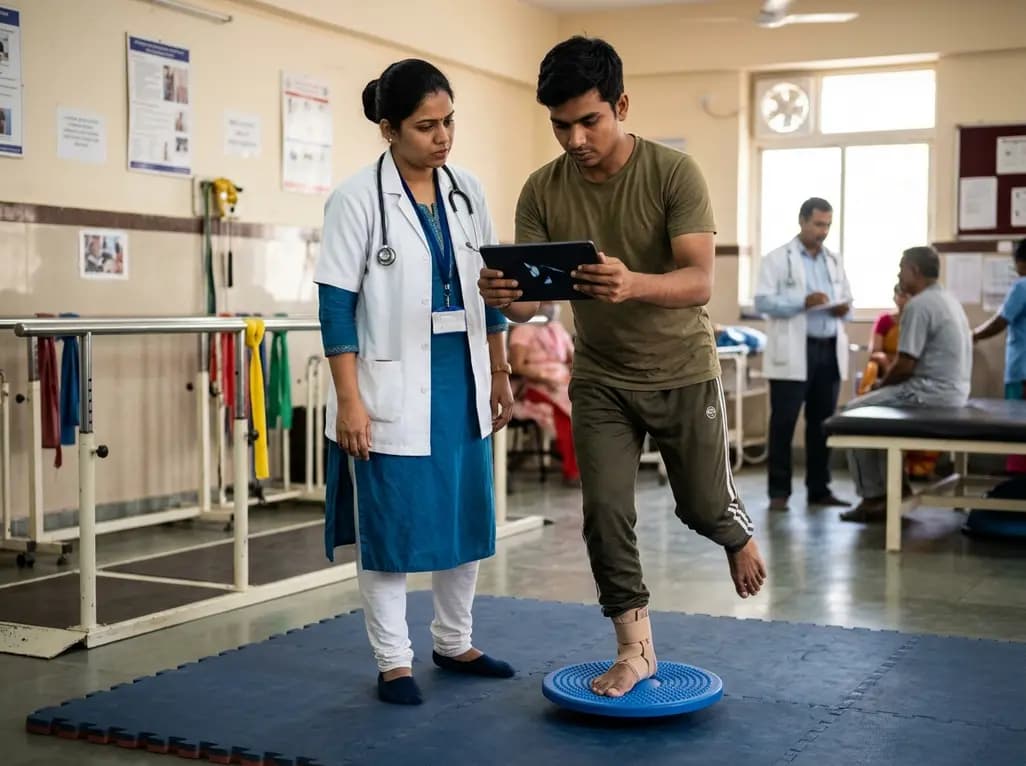
A randomized controlled trial demonstrates that an eight-week dual-task training intervention significantly improves static and dynamic postural control over standard balance exercises in individuals with chronic ankle instability, addressing critical neurocognitive deficits during athletic and daily activities.
Today

A retrospective cohort study of 7,716 ICU patients from the MIMIC-IV database demonstrates that Gradient Boosting Decision Trees significantly outperform traditional SOFA scores in predicting in-hospital mortality among patients with sepsis and diabetes, with SHAP analysis providing clinical interpretability.
Today
