.webp&w=384&q=75)

Loading, please wait...
Loading, please wait...

A recent study in the Rwenzori region of Uganda highlights the transformative power of TB service integration within existing social support frameworks. Traditionally, tuberculosis (TB) screening for orphans and vulnerable children (OVC) relied on passive clinical visits. However, researchers found that moving from facility-based waiting to community-based action dramatically changes outcomes. By embedding TB screening into the OVC program, health workers reached high-risk households directly.
The results of this integration were remarkable. Specifically, household members were three times more likely to be screened for TB following the program change. Furthermore, the rate of TB diagnosis doubled during the implementation period. Community-based staff performed in-home screenings and specimen collections. Consequently, they removed significant travel and cost barriers for these families. This proactive approach ensures that cases do not remain hidden in the community.
Moreover, the study observed a substantial improvement in treatment success rates. While passive screening often leads to delayed diagnosis, active integration allows for earlier intervention. Therefore, healthcare providers can initiate treatment before the disease reaches advanced stages. Additionally, the integrated model provided consistent adherence counseling, which is critical for long-term recovery. This model offers a scalable solution for other regions with high TB and HIV burdens.
Children in OVC programs often face malnutrition and poverty, which increases their susceptibility to TB. Integration ensures they receive screening as part of their routine social support rather than waiting for symptoms to appear.
By conducting screenings in the home, health workers identify cases that might never reach a hospital due to financial or geographical barriers. This active case-finding approach catches infections earlier in the transmission cycle.
Disclaimer: This content is for informational and educational purposes only. It does not constitute professional medical advice, diagnosis, or treatment. Always seek the advice of your physician or other qualified healthcare provider with any questions you may have regarding a medical condition. Refer to the latest local and national guidelines for clinical practice.
References
Kekitiinwa AR et al. Integrating tuberculosis services with the Orphans and Vulnerable Children Program in Rwenzori region, Uganda, 2022-2023. AIDS. 2026 Mar 26. doi: 10.1097/QAD.0000000000004503. PMID: 41891214.
World Health Organization. WHO consolidated guidelines on tuberculosis: Module 2: Screening - Systematic screening for tuberculosis disease. 2021.
"
Read summarized clinical updates, watch expert medical content, and earn CME certifications right from your smartphone.
Open your smartphone camera to scan and install.





A Ugandan study demonstrates that integrating TB screening into OVC programs triples screening rates and doubles diagnosis among vulnerable household member...
6 months ago

Explore vital recurrent stroke predictors in lacunar stroke patients managed with intensive blood pressure lowering. This analysis examines trial findings from SPS3 to uncover residual vascular risks, metabolic factors, and targeted secondary prevention strategies for high-risk neurological patients.
Today

Odisha has established India's first state-level clinical protocol specifically tailored for pregnant women with sickle cell disease. Developed with NHM and UNICEF, the framework provides structured antenatal screening, crisis mitigation, standardized referral pathways, and specialized interdisciplinary care.
Today

India is advancing preventive healthcare by integrating genomics, artificial intelligence, and quantum technologies. With the SANGAM programme sequencing one million Indian genomes, clinicians can unlock personalized therapies, detect cardiometabolic risks early, and curb the burden of diabetes and heart disease.
Today
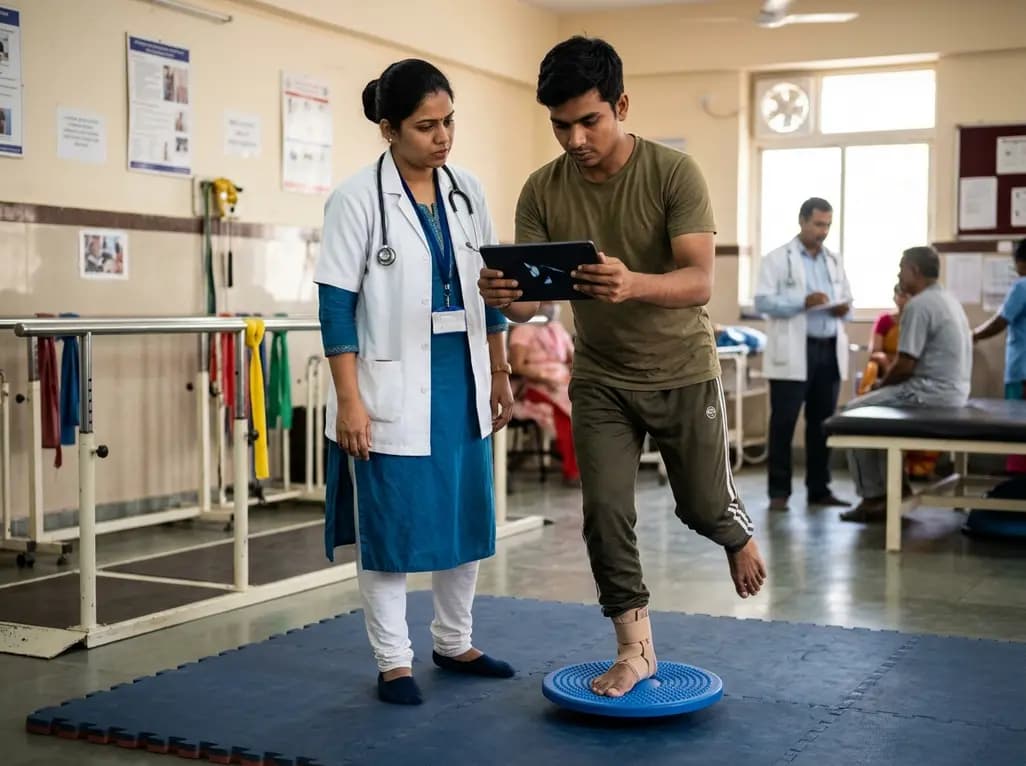
A randomized controlled trial demonstrates that an eight-week dual-task training intervention significantly improves static and dynamic postural control over standard balance exercises in individuals with chronic ankle instability, addressing critical neurocognitive deficits during athletic and daily activities.
Today

A retrospective cohort study of 7,716 ICU patients from the MIMIC-IV database demonstrates that Gradient Boosting Decision Trees significantly outperform traditional SOFA scores in predicting in-hospital mortality among patients with sepsis and diabetes, with SHAP analysis providing clinical interpretability.
Today
