.webp&w=384&q=75)

Loading, please wait...
Loading, please wait...
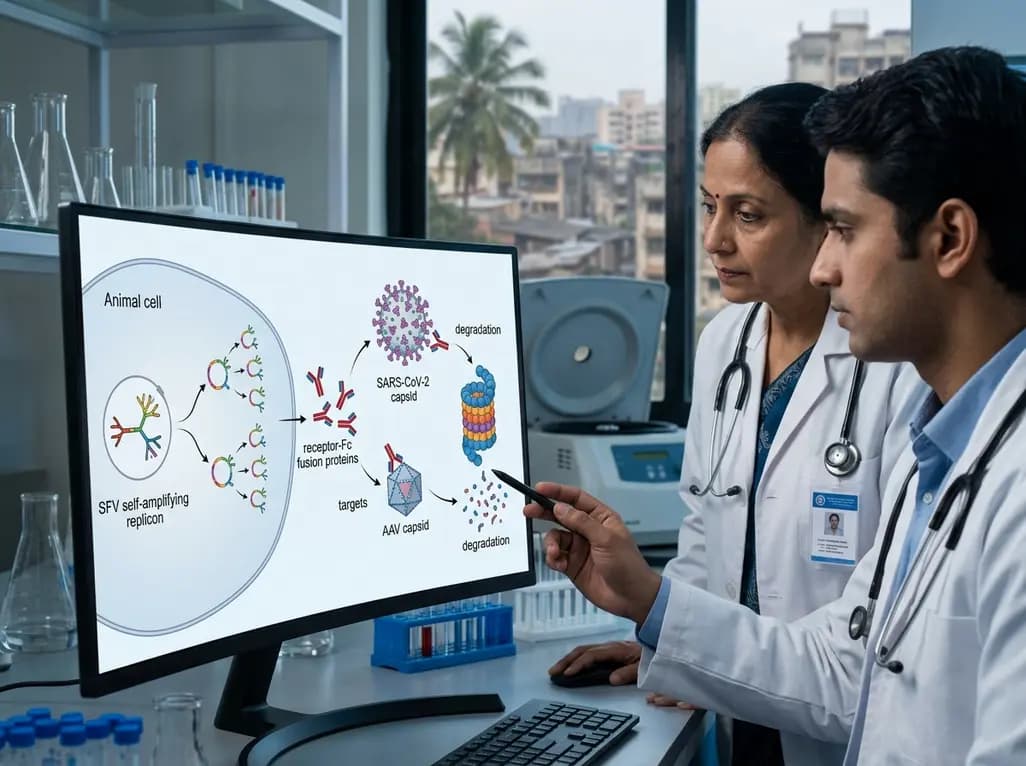
Global health crises, such as the recent pandemic, underscore the critical necessity for advanced antiviral strategies. Traditional interventions, including small-molecule inhibitors and monoclonal antibodies, frequently encounter hurdles like drug resistance and limited target specificity. Consequently, the scientific community has shifted its focus toward innovative methods that do not merely block viral function but eliminate the viral components entirely. The concept of targeted viral protein degradation represents a significant paradigm shift in this endeavor. By hijacking the cell's internal machinery, researchers can now direct the destruction of specific viral proteins. This approach offers a more durable solution compared to traditional methods that viruses can easily evade through minor mutations. Furthermore, this strategy addresses the inefficiency often associated with RNA interference, providing a more direct route to viral suppression. Specifically, the introduction of the Trim-Away system has opened new doors for intracellular protein management. This platform utilizes the ubiquitin-proteasome pathway to identify and degrade targets with high precision. Therefore, understanding the mechanics of this system is essential for future medical interventions. Clinicians in India and globally are closely watching these developments as they promise a more versatile toolkit against emerging infectious diseases.
At the heart of this innovation lies the E3 ubiquitin ligase TRIM21, a naturally occurring protein that identifies antibody-bound pathogens. The newly developed platform optimizes this process by employing receptor-Fc fusion proteins. These engineered proteins act as highly specific bridges, connecting the intracellular viral targets to the TRIM21 ligase. When the receptor-Fc protein binds to its viral target, TRIM21 recognizes the Fc region and initiates a rapid ubiquitination process. Subsequently, the proteasome degrades the entire complex, effectively removing the viral protein from the cell. This mechanism is particularly robust because it operates within the cytoplasm, where many viruses replicate. Moreover, the use of receptor-Fc fusions allows for greater flexibility than traditional antibodies. Researchers can engineer these receptors to match various viral ligands, ensuring that the system remains effective even as viruses evolve. Additionally, this method bypasses the need for complex protein purification, as the components are expressed directly within the target cells. Because the system utilizes endogenous cellular pathways, it maintains high efficiency while minimizing off-target effects. This elegant synergy between bioengineering and cellular biology provides a powerful foundation for the next generation of antiviral therapies.
A pivotal innovation in this study is the integration of the Semliki Forest virus (SFV) self-amplifying replicon. Unlike standard plasmid delivery, the SFV replicon (pSFV) possesses the unique ability to replicate its own RNA within the host cell. This self-amplification leads to sustained and robust expression of the Trim-Away components, ensuring a continuous supply of the degradation machinery. Consequently, the system achieves high potency even when administered at low dosages, which is a major advantage for clinical applications. Furthermore, the pSFV platform eliminates many of the delivery challenges associated with conventional RNA-based therapies. It streamlines the entire process by allowing for plasmid-based delivery, which is more stable and easier to manufacture than purified proteins. In addition to improving efficiency, this approach reduces the risk of an overwhelming immune response that often accompanies high-dose treatments. Notably, the self-amplifying nature of the replicon means that a single successful delivery can result in a significant therapeutic effect over an extended period. This durability is crucial for treating chronic viral infections or preventing rapid viral spread during an outbreak. Therefore, the pSFV-driven Trim-Away system represents a major technological leap in the field of targeted viral protein degradation.
The practical utility of the platform was rigorously tested against one of the most significant modern threats: SARS-CoV-2. Specifically, the researchers targeted the spike proteins of both the wild-type virus and the highly infectious Omicron variant. The results were remarkably consistent, demonstrating that the system could effectively achieve targeted viral protein degradation across different strains. This success is particularly noteworthy because the spike protein is the primary site for mutations that allow the virus to escape neutralization by existing vaccines and antibodies. By targeting the protein for degradation rather than just blocking its binding site, the Trim-Away system remains effective regardless of most surface mutations. Moreover, the in vivo assays confirmed that the platform maintains its potency in living organisms. The researchers observed a marked reduction in viral protein expression, highlighting the system's potential as a clinical therapeutic. Additionally, the ability to target the Omicron variant suggests that this platform can be rapidly adapted to meet new variants as they emerge. This adaptability is a game-changer for public health, as it allows for a more proactive response to viral evolution. Consequently, the platform stands as a formidable tool in the ongoing battle against COVID-19 and its future iterations.
Beyond the immediate focus on SARS-CoV-2, the researchers explored the system's versatility by targeting adeno-associated virus (AAV) capsid proteins. These proteins are fundamental to the structure and delivery of various gene therapies and viral vectors. The study successfully demonstrated that the pSFV-driven system could degrade AAV capsids, leading to a significant reduction in AAV-encoded luciferase expression. This finding is highly significant as it suggests the platform is not limited to a single family of viruses. Instead, it serves as a versatile and adaptable framework for diverse antiviral interventions. Furthermore, the ability to modulate AAV-mediated expression has profound implications for the field of gene therapy. It provides a method to control the activity of viral vectors, potentially improving the safety and precision of these treatments. In addition, the receptor-Fc strategy allows for the rapid redesign of the system to target virtually any viral protein with a known receptor. This scalability is essential for preparing for "Disease X" or other unforeseen viral threats. As researchers continue to refine this platform, we can expect to see its application in a wider range of clinical scenarios. Ultimately, the integration of SFV replicons and Trim-Away technology establishes a new benchmark for antiviral research and development.
The findings presented in this study offer a promising outlook for the future of antiviral intervention. For healthcare providers, especially those in regions frequently impacted by viral outbreaks like India, these technological advancements provide a sense of renewed hope. The pSFV-driven Trim-Away system addresses many of the critical flaws in current treatment modalities. Its high specificity, potency at low doses, and adaptability to mutations make it a superior candidate for future clinical trials. Moreover, the streamlined manufacturing process associated with plasmid delivery could eventually lead to more affordable and accessible treatments. This is particularly important for resource-limited settings where efficient delivery and stability are paramount. Although further research is needed to fully understand the long-term safety profile in humans, the initial data is overwhelmingly positive. As the medical community moves toward more personalized and precise therapies, targeted viral protein degradation will undoubtedly play a central role. Consequently, staying informed about these developments is vital for clinicians who wish to provide the best possible care for their patients. This research not only expands our understanding of viral mechanics but also equips us with a sophisticated new weapon against global viral threats.
Traditional antiviral drugs typically work by inhibiting specific enzymes or blocking viral entry into cells. While effective, these methods often allow the virus to develop resistance through minor mutations. In contrast, the Trim-Away system achieves targeted viral protein degradation by physically destroying the viral protein itself. By utilizing the cell's natural ubiquitin-proteasome pathway, it removes the viral components entirely, making it much harder for the virus to escape or persist within the host cell.
The Semliki Forest virus (SFV) replicon is a self-amplifying RNA system. Its primary significance lies in its ability to produce high levels of the Trim-Away components from a very low initial dose. Because the RNA replicates itself within the cytoplasm, it ensures a sustained and robust therapeutic effect. This self-amplification overcomes the delivery inefficiencies often seen with standard mRNA or plasmid treatments, making the platform both more potent and more durable in a clinical setting.
Yes, one of the greatest strengths of this platform is its adaptability. The system uses a receptor-Fc fusion strategy, where the receptor part can be engineered to bind to various parts of a viral protein. If a virus mutates and escapes one receptor, researchers can quickly swap it for another that targets a more conserved region. This flexibility allows the platform to stay ahead of rapidly mutating viruses like SARS-CoV-2, providing a versatile defense against new variants.
Disclaimer: This content is for informational and educational purposes only. It is not intended as a substitute for professional medical advice, diagnosis, or treatment. Always seek the advice of your physician or other qualified health provider with any questions you may have regarding a medical condition. Refer to the latest local and national guidelines for clinical practice.
References
Han Y et al. A receptor-Fc based SFV replicon Trim-Away platform for targeted viral protein degradation. Virol J. 2026 Jul 04. doi: 10.1186/s12985-026-03235-w. PMID: 42401976.
Zeng J et al. Target-induced clustering activates Trim-away of pathogens and proteins. Nat Struct Mol Biol. 2021;28(3):278-289. doi:10.1038/s41594-021-00560-2.
Foss S et al. TRIM21—From Intracellular Immunity to Therapy. Front Immunol. 2019;10:2049. doi:10.3389/fimmu.2019.02049.

Read summarized clinical updates, watch expert medical content, and earn CME certifications right from your smartphone.
Open your smartphone camera to scan and install.





Researchers have developed a potent Trim-Away platform using SFV self-amplifying replicons and receptor-Fc fusion proteins. This system enables targeted viral protein degradation of SARS-CoV-2 and AAV capsids, offering a highly adaptable and efficient strategy for future antiviral interventions.
3 months ago

Novel diimide and hydrazone scaffolds, particularly compound #C4, synergistically reactivate latent HIV-1 when combined with JQ1 or PKC activators. Demonstrating donor-matched proviral transcription ex vivo and non-canonical signaling, these findings advance shock and kill strategies toward reservoir eradication.
Today

A comparative cohort study evaluates vNOTES vs TLH hysterectomy for benign conditions, demonstrating shorter operative duration, faster return to daily activities, and equivalent female sexual function scores without increased dyspareunia.
Today

Review how tailored exercise programs benefit frail older patients with heart failure. Explore pathophysiological mechanisms, individualized training prescriptions, and strategies to overcome adherence barriers in clinical practice.
Yesterday

This comparative study evaluates posterior labral tears with and without glenohumeral instability, highlighting distinct demographic patterns, MRI underestimation in stable shoulders, and successful arthroscopic repair outcomes.
Yesterday

A clinical study demonstrates that early intervention with tocilizumab, either as monotherapy or bridged with corticosteroids, achieves significant proptosis reduction and resolves active inflammation in treatment-naive thyroid eye disease.
Today
