

Loading, please wait...
Loading, please wait...

Psychiatric emergency services encounter severe communicative breakdowns daily, where formal thought disorder remains one of the most striking hallmarks of severe psychiatric illness. Clinicians observe disorganized communication across schizophrenia, bipolar mania, and severe major depressive episodes. However, identifying the true latent architecture underlying these complex speech disturbances continues to provoke debate. Historically, diagnostic manuals categorized thought pathology under broad descriptive rubrics, which frequently failed to capture nuanced cognitive mechanisms. Consequently, psychiatrists often struggled to differentiate primary semantic disintegration from executive goal-directed derailment during rapid triage. Contemporary psychiatric research emphasizes dimensional phenotyping to resolve these classification dilemmas. By investigating how specific symptom clusters interact during acute decompensation, clinicians can better understand illness trajectories and tailor therapeutic strategies effectively.
Formal thought disorder comprises diverse clinical phenomena rather than a unitary cognitive deficit. Historically, clinicians grouped various communicative anomalies under general concepts such as loose associations or thought incoherence. However, modern psychopathology recognizes crucial boundaries between linguistic fragmentation and executive goal maintenance. Furthermore, patients experience these disruptions through two distinct perspectives, namely objective behavioral signs and subjective cognitive complaints. Objective symptoms manifest as observable communicative failures, including tangentiality, neologisms, and poverty of speech. Conversely, subjective symptoms involve internal experiences of cognitive slowing, pressure of thought, or racing ideation that patients perceive directly. In acute crisis, severe agitation and cognitive overload frequently mask these subjective phenomena. Therefore, clinicians require structured assessment tools that evaluate both subjective perception and objective behavioral output systematically. Standardizing these phenomenological boundaries allows practitioners to monitor treatment responses with greater precision and reliability.
To address historical assessment limitations, researchers developed the Thought and Language Disorder (TALD) scale. This comprehensive thirty-item instrument systematically evaluates both objective and subjective manifestations across positive and negative psychopathological domains. In a pivotal psychometric investigation, researchers recruited 250 acute psychiatric inpatients admitted with psychotic and affective disorders. Clinicians conducted thorough clinical evaluations at admission to capture acute psychopathology before extensive pharmacological stabilization occurred. Subsequently, the investigative team performed exploratory factor analysis using minimum residual extraction and promax rotation. They further implemented second-order factor analysis combined with Schmid-Leiman orthogonalization to assess hierarchical structure. This robust methodological approach tested whether theoretical dimensional constructs remain stable under severe acute distress. Moreover, assessing patients during acute admission provides invaluable data, as inpatient presentations reflect the rawest expression of communicative disruption encountered in emergency psychiatry.
The hierarchical factor analysis identified four distinct first-order factors that accounted for 48.6 percent of the total variance. These primary factors included Thought Disorganization, Schizophasia, Objective Negative FTD, and Subjective Negative FTD. Furthermore, these four components converged into two higher-order dimensions representing positive and negative formal thought disorder. The second-order factors explained 64 percent of the common variance, confirming an overarching hierarchical organization. However, the first-order factors did not merge completely into these higher domains. Specifically, items loading onto Schizophasia and Objective Negative FTD retained substantial first-order specific variance. This statistical retention indicates that these subdomains capture unique neurobiological mechanisms beyond general symptom severity. Consequently, clinicians must not treat positive or negative thought disorders as completely homogeneous entities. Preserving the distinction between global severity and subdomain specificity ensures more accurate diagnostic formulation.
A central finding from this inpatient analysis was the structural separation within positive formal thought disorder. While the original scale validation identified a single positive objective domain, the acute cohort separated into Thought Disorganization and Schizophasia. Thought disorganization primarily encompasses goal-directed disruptions, such as circumstantiality, tangentiality, and derailment. In contrast, schizophasia represents severe syntactico-semantic dissolution, characterized by neologisms, incoherence, and syntactic fragmentation. Moreover, the expected subjective positive factor failed to emerge as an independent dimension. The researchers suggested that severe illness acuity at admission explains this absence, because acutely psychotic patients struggle to articulate internal metacognitive experiences. Therefore, clinicians evaluating emergency admissions should focus primarily on observable speech syntax and conceptual flow. Recognizing schizophasia as a distinct entity highlights severe linguistic network impairment that may require specialized diagnostic attention.
These psychometric insights carry practical implications for clinical psychiatry, particularly in high-volume inpatient settings. First, distinguishing schizophasia from generalized thought disorganization aids differential diagnosis and neurocognitive prognostication. Conceptual disorganization often responds promptly to dopamine antagonists during acute mania or psychosis. In contrast, prominent schizophasia frequently reflects profound frontotemporal dysfunction, signaling greater cognitive impairment and requiring targeted rehabilitation. Second, evaluating objective and subjective negative dimensions separately prevents clinicians from overlooking subtle cognitive blunting. In addition, adopting dimensional frameworks aligns with the National Institute of Mental Health Research Domain Criteria, fostering precision psychiatry. For psychiatrists managing resource-intensive psychiatric units across India, standardized dimensional assessments improve clinical documentation and handover accuracy. Ultimately, moving beyond simplistic binary categories allows practitioners to tailor therapeutic interventions to the patient's specific neurocognitive profile.
The Thought and Language Disorder scale systematically captures both objective communication impairments and subjective cognitive complaints across psychotic and affective disorders. Unlike earlier unidimensional tools, it evaluates positive and negative dimensions comprehensively. Consequently, clinicians gain a more granular assessment of latent linguistic disruptions during acute psychiatric presentations.
Patients in acute psychiatric crisis often struggle to self-report subtle subjective phenomena due to cognitive overload, severe agitation, or profound thought disorganization. Therefore, acute psychopathology tends to manifest primarily through observable behavioral disorganization. Consequently, objective behavioral signs overshadow subjective positive experiences in acute inpatient admissions.
Distinguishing severe syntactico-semantic fragmentation, or schizophasia, from broader conceptual disorganization enables precise neurocognitive profiling. Specifically, schizophasia reflects profound linguistic network disruptions that may warrant targeted cognitive remediation. In contrast, general disorganization frequently responds to standard antipsychotic titration. Thus, this differentiation optimizes individualized treatment trajectories.
Disclaimer: This content is for informational and educational purposes only and should not be considered medical advice. Always consult a qualified healthcare professional regarding any medical condition or treatment. While the author has made every effort to provide accurate and up-to-date information, medicine is an ever-evolving field, and clinical practices may change over time. Readers are strongly encouraged to confirm the information with other reliable sources and consult the latest medical guidelines and prescribing information. The authors and the publisher are not liable for any direct or indirect damage or loss resulting from the use or misuse of the information contained in this content. The opinions expressed here are personal and do not reflect any organization. Refer to the latest local and national guidelines for clinical practice.
References

Read summarized clinical updates, watch expert medical content, and earn CME certifications right from your smartphone.
Open your smartphone camera to scan and install.





A psychometric investigation of the Thought and Language Disorder (TALD) scale in 250 acute inpatients reveals a hierarchical structure of formal thought disorder, isolating schizophasia and thought disorganization within the positive domain to guide targeted psychiatric intervention.
Today

A randomized crossover trial evaluated fifth-year medical students interacting with an AI standardized patient versus a human standardized patient. The study revealed key differences in Mini-CEX scores, active engagement, and interview dynamics.
Today

A comparative evaluation of INNO-LiPA, Cobas 4800, and Amplicor highlights significant assay-dependent variation in high-risk HPV detection, emphasizing the clinical distinction between analytical sensitivity and screening specificity.
Today

A Canadian nutrition study reveals that higher diet costs predict lower dietary energy density and higher fruit intake, but also increase sodium and processed meat consumption.
Today
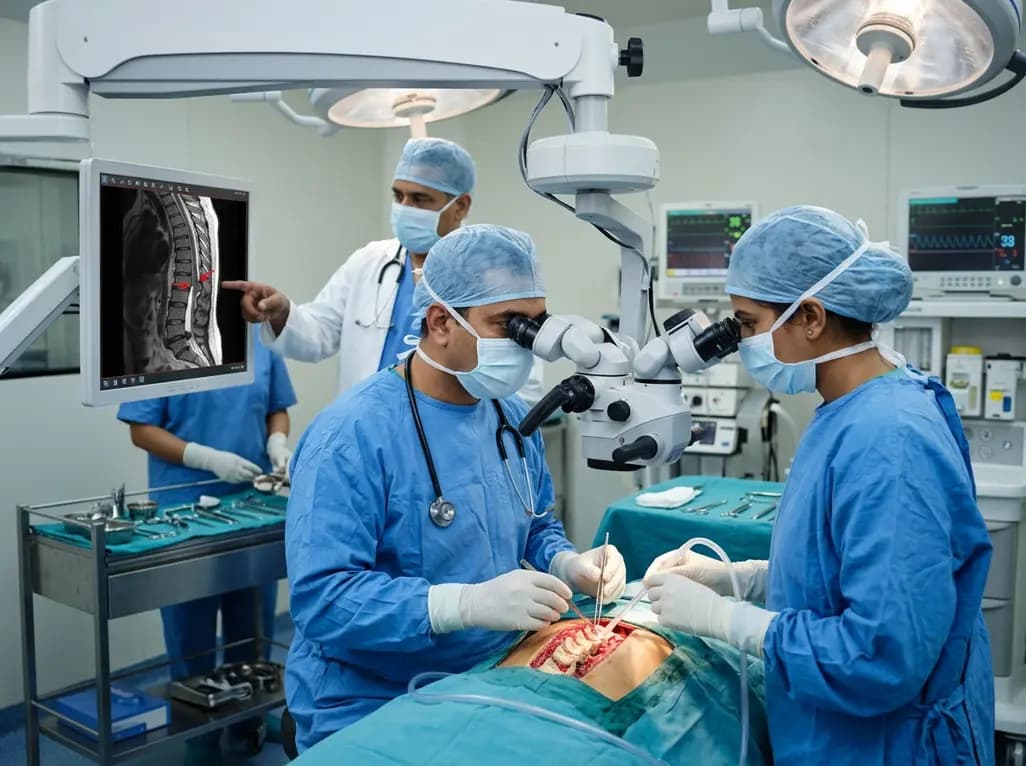
Idiopathic spinal cord herniation is a rare pathology presenting with progressive thoracic myelopathy. Early MRI identification and meticulous microsurgical reduction with dual bolstered dural defect repair prevent irreversible neurological deterioration.
Today

A novel smartphone-assisted biosensor utilizing molecularly imprinted polymers and catalytic nanozymes offers antibody-free, enzyme-free urinary microalbumin testing, enabling rapid, low-cost point-of-care screening for early chronic kidney disease.
Today
