

Loading, please wait...
Loading, please wait...

Persistent infection with high-risk human papillomavirus represents the established etiological foundation of cervical carcinoma worldwide. Consequently, molecular testing has progressively displaced conventional cytology as the primary frontline modality in contemporary cervical prevention programs. Reliable HPV DNA detection assays allow clinicians to identify precancerous lesions long before cytological dysplastic changes become visible microscopically. However, commercial molecular platforms differ markedly in their design, primer selection, analytical targets, and underlying clinical validation. Selecting an inappropriate diagnostic assay can produce high false-positive rates, which triggers substantial psychological distress, unnecessary colposcopies, and costly diagnostic overtreatment. Conversely, assays lacking analytical fidelity risk missing critical transforming lesions. Understanding the clinical nuances between broad epidemiological genotyping and high-throughput diagnostic screening tests is essential for gynecologists, oncologists, and laboratory directors. Recent evidence systematically compares established platforms in real-world high-risk populations, highlighting critical performance gaps that dictate everyday clinical decisions.
Modern laboratories employ diverse diagnostic architectures to identify oncogenic papillomaviruses. In a comparative evaluation from Algeria, investigators assessed three distinct molecular platforms: the INNO-LiPA HPV Genotyping Extra assay, the Cobas 4800 HPV system, and the Amplicor HPV test. These platforms operate on distinct biochemical principles that directly impact diagnostic throughput and clinical output. For example, INNO-LiPA uses reverse-hybridization line probe technology after SPF10 PCR amplification to identify an extensive panel of individual genotypes. In contrast, Cobas 4800 uses automated real-time PCR targeting the L1 gene, providing concurrent identification of HPV16 and HPV18 alongside a pooled cohort of twelve other oncogenic genotypes. Meanwhile, the Amplicor platform performs qualitative pooled target amplification of thirteen high-risk strains. Therefore, laboratory leaders must weigh the operational benefits of automated sample-to-answer systems against the granular diagnostic yields offered by manual or semi-automated multiplex genotyping strips when choosing institutional platforms.
Analytical performance demonstrated striking divergence across patient cohorts when evaluated side by side. Among 94 cervical specimens evaluated simultaneously by both INNO-LiPA and Cobas, high-risk HPV positivity reached 54.3% with INNO-LiPA but only 29.8% with Cobas. Furthermore, INNO-LiPA detected HPV16 and HPV18 with significantly greater frequency than the Cobas system. In an 18-specimen subset tested across all three platforms, overall positivity reached 27.8% on INNO-LiPA, 33.3% on Cobas, and 50.0% on Amplicor. Consequently, pairwise agreement varied widely across comparative pairings, generating Cohen kappa coefficients ranging from weak to substantial (κ = 0.116 to 0.667). Notably, analytical discordance correlated strongly with the presence of multiple concurrent viral infections (odds ratio 5.88; 95% confidence interval 1.29 to 26.85; p = 0.012). Primer competition during multiplex PCR amplification frequently causes unequal amplification efficiency, which explains why single-target platforms often underperform when mixed infections are present.
High-risk viral positivity exhibited a positive correlation with baseline cytological abnormalities across tested specimens. Specifically, INNO-LiPA showed the most pronounced correlation with abnormal cytology, generating an odds ratio of 4.9 (95% confidence interval 1.5 to 15.9; p = 0.005). However, clinical accuracy metrics revealed a fundamental trade-off between analytical sensitivity and clinical specificity. Using a composite reference standard, INNO-LiPA demonstrated exceptional clinical sensitivity at 93%, but its clinical specificity remained relatively low at 62%. In contrast, Cobas 4800 delivered balanced clinical performance, achieving 71% sensitivity paired with a superior clinical specificity of 88%. These results emphasize that hyper-sensitive detection methods may detect transient, clinically insignificant infections with very low viral copies. As a result, assays with high analytical sensitivity cannot automatically substitute for clinically validated primary screening tests without risking extensive false-positive referral cascades.
These clinical findings establish clear operational boundaries for assay implementation. Highly granular genotyping tools like INNO-LiPA provide immense value in academic research, post-vaccination surveillance, and molecular epidemiology. Specifically, identifying uncommon non-vaccine strains or tracking persistent type-specific infections requires extensive genotyping panels. Nevertheless, primary cervical cancer screening programs demand platforms with optimized clinical cutoffs tailored specifically to detect high-grade cervical intraepithelial neoplasia (CIN2+). Assays such as Cobas 4800 prevent excessive colposcopy referrals by maintaining stringent clinical thresholds that ignore transient, self-limiting viral shedding. Therefore, clinicians must avoid conflating analytical sensitivity with clinical utility. High-throughput national screening programs require robust automation, standardized internal controls, validated clinical cutoffs, and reproducible throughput. Conversely, complex research assays should remain reserved for specialized tertiary reference centers and dedicated translational research cohorts.
Cervical cancer prevention requires strict adherence to standardized diagnostic protocols. Clinicians must recognize that an isolated positive molecular result on a high-sensitivity genotyping strip does not uniformly warrant immediate invasive interventions. Instead, practitioners should integrate clinical risk stratification, patient age, cytology findings, and partial genotyping outputs. When using platforms that delineate HPV16 and HPV18, immediate colposcopy referral remains standard for positive cases, given the disproportionate oncogenic hazard associated with these genotypes. Conversely, positivity for pooled non-16/18 high-risk types generally warrants reflex cytological triage to avoid unnecessary cervical biopsies. Furthermore, laboratories must maintain rigorous quality assurance protocols to minimize cross-contamination and false-positive interpretations. By selecting validated, regulatory-approved platforms for routine screening and reserving extended genotyping for complex discordant cases, healthcare teams can maximize cancer prevention while minimizing procedural harms.
Analytical sensitivities differ because platforms utilize diverse target genes, primer designs, and detection chemistries. While assays like INNO-LiPA employ highly sensitive short-fragment primers that detect minimal viral copy numbers, clinically validated screening tests such as Cobas employ adjusted operational cutoffs. These intentional thresholds prevent the over-detection of transient, low-copy infections that typically resolve spontaneously without causing high-grade dysplastic cervical lesions.
Clinicians must interpret discordant results by assessing the underlying clinical validation of each testing platform. Analytical discordance frequently occurs in multiple concurrent infections due to competitive primer binding or low viral loads. Therefore, management should follow results from clinically validated primary screening assays rather than research-grade tools, integrating reflex liquid-based cytology and colposcopy whenever high-grade disease cannot be excluded.
Extended genotyping identifies dozens of specific viral strains, offering exceptional value for epidemiological monitoring and tracking post-vaccination genotype replacement. However, it is not recommended as a standalone primary screening tool. Routine cervical screening relies on limited genotyping—principally identifying HPV16 and HPV18—to streamline risk stratification, optimize colposcopy referrals, and prevent substantial diagnostic overtreatment in primary healthcare settings.
Disclaimer: This content is for informational and educational purposes only... Refer to the latest local and national guidelines for clinical practice.
References
Masdoua N et al. Comparative performance of three HPV DNA detection assays for cervical cancer screening in Algeria. Afr J Reprod Health. 2026 Nov 16. doi: undefined. PMID: 43036861.
World Health Organization. WHO guideline for screening and treatment of cervical pre-cancer lesions for cervical cancer prevention: use of human papillomavirus (HPV) DNA genotyping. Geneva: World Health Organization; 2026.
Arbyn M, et al. European guidelines for quality assurance in cervical cancer screening: requirements for human papillomavirus testing. Int J Cancer. 2015;136(6):E488-E499.

Read summarized clinical updates, watch expert medical content, and earn CME certifications right from your smartphone.
Open your smartphone camera to scan and install.





A comparative evaluation of INNO-LiPA, Cobas 4800, and Amplicor highlights significant assay-dependent variation in high-risk HPV detection, emphasizing the clinical distinction between analytical sensitivity and screening specificity.
Today

The randomized EARLY-RESYNC trial reveals that early left bundle branch pacing combined with guideline-directed medical therapy significantly improves LVEF and reduces LV end-systolic volume compared to medical therapy alone in patients with complete LBBB and mildly reduced ejection fraction (36%-50%).
Today
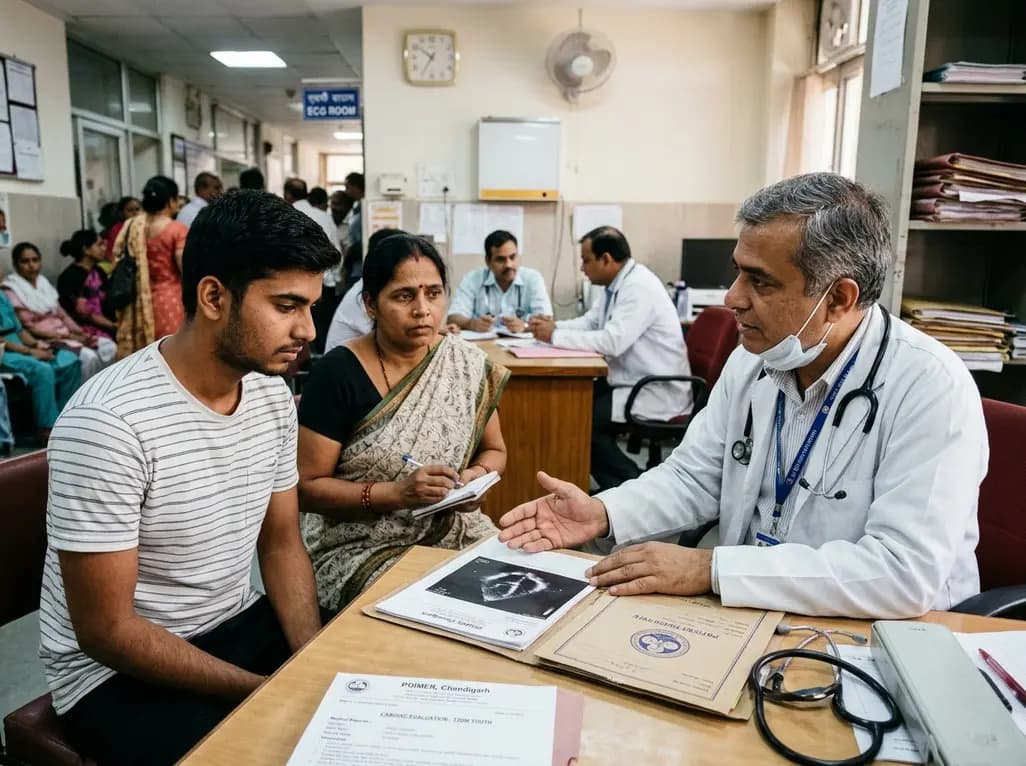
Recent data from PGIMER reveals that young adults diagnosed with type 2 diabetes face an aggressive disease trajectory. They encounter severe cardiovascular and microvascular damage within five years, occurring at higher rates than in type 1 diabetes despite lower mean blood glucose levels.
Today

A clinical overview of resveratrol supplementation in mitigating exercise-induced muscle damage. This narrative review explores physiological mechanisms, reductions in soreness markers like creatine kinase, dosage strategies, and bioavailability enhancements for sports medicine and nutrition practitioners.
Today

A novel smartphone-assisted biosensor utilizing molecularly imprinted polymers and catalytic nanozymes offers antibody-free, enzyme-free urinary microalbumin testing, enabling rapid, low-cost point-of-care screening for early chronic kidney disease.
Today
