

Loading, please wait...
Loading, please wait...

Medical education continuously evolves to prepare students for real-world patient encounters. Standardized patients have long served as the benchmark for teaching communication and history-taking skills. However, recent advances in large language models present innovative training avenues. A landmark randomized crossover trial at Chiba University Hospital evaluated clinical clerkship trainees interacting with an AI standardized patient versus a human standardized patient. This study provides crucial objective data regarding how simulated conversational software influences medical interview performance, clinical competence, and learner perceptions.
Medical educators frequently face logistical challenges when recruiting and preparing human actors for clinical simulations. Consequently, digital alternatives have garnered immense interest across academic institutions. In this randomized crossover trial, researchers investigated whether an AI standardized patient could replicate the educational value of trained human actors. Fifth-year medical students participated in structured encounters covering both psychiatric and surgical scenarios. Specifically, the trial utilized depression and acute appendicitis cases to test clinical breadth. The artificial intelligence system operated as a text-based simulated persona powered by GPT-4o. Meanwhile, experienced human standardized patients enacted the same diagnostic scenarios under identical case constraints. Therefore, the trial created an ideal experimental environment to compare verbal history gathering against text-based digital exchanges. Faculty instructors sought to understand whether conversational algorithms could faithfully stimulate diagnostic inquiry. Furthermore, the investigators evaluated whether students accepted artificial platforms as realistic training tools. By addressing these foundational questions, the study established essential baseline benchmarks for software-driven medical simulation.
The investigators implemented a rigorous randomized crossover methodology to minimize individual learner bias. Forty-eight fifth-year medical students undertaking clinical clerkships completed the protocol. Participants initially entered either the software simulation arm or the human interaction arm. Subsequently, they crossed over to the alternate condition after a mandatory washout period of at least three days. This interval prevented immediate recall bias between the two clinical presentations. Each trainee completed both diagnostic scenarios within each allocated arm. During the software-driven interviews, the computational system recorded full chat logs for retrospective faculty evaluation. Following completion of both cases, a supervising physician reviewed the digital transcripts and delivered structured feedback. In contrast, researchers video-recorded the human actor encounters. In that arm, the physician portraying the patient provided immediate verbal feedback after each session. General medicine specialists independently rated student performance using selected items from the validated Mini-Clinical Evaluation Exercise rubric. Additionally, participants completed a comprehensive seven-point Likert scale questionnaire to record their subjective educational experiences.
The quantitative results demonstrated discernible differences between the two training modalities. Trainees achieved a significantly higher mean total score on the Mini-Clinical Evaluation Exercise during human interactions than during digital sessions. Specifically, students scored an average of 23.9 points with human actors versus 22.7 points with the conversational model. This statistically significant variance highlighted superior performance in history taking and general clinical competence during live human interactions. Two independent general medicine evaluators demonstrated substantial interrater reliability, confirming consistent rubric application across participants. Several factors explain why students performed better with human actors. Human actors provide subtle interpersonal cues, physical inflections, and spontaneous pauses that naturally guide diagnostic inquiry. Conversely, text-based software requires typed queries, which may alter cognitive pacing. Furthermore, the absence of nonverbal feedback in text interfaces complicates emotional attunement during sensitive psychiatric assessments. Nevertheless, both groups achieved commendable diagnostic benchmarks, suggesting that algorithmic platforms still provide substantial structural practice for novice clinicians.
Subjective feedback from participating students offered valuable nuances regarding educational acceptability. Interestingly, learners reported no statistically significant differences regarding overall learning satisfaction between the two conditions. Students rated human encounters at an average of 5.9 points and digital encounters at 6.0 points on the seven-point scale. Similarly, perceived rapport formation showed comparable ratings across both arms. Trainees established adequate communicative comfort regardless of whether they typed messages or spoke directly to an actor. Remarkably, active engagement in history taking scored significantly higher in the software arm. Trainees reported a mean score of 6.2 with the algorithmic patient compared to 5.8 with human actors. This elevated engagement likely stemmed from the focused cognitive effort required to formulate explicit text queries. When interacting with software, students must actively direct the diagnostic pathway without relying on intuitive nonverbal prompts. Additionally, students experienced minimal performance anxiety when communicating with an algorithm, which encouraged exploratory questioning and thorough systemic reviews.
These findings demonstrate that conversational software provides a valuable adjunct rather than a complete replacement for human standardized patients. Academic medical centers face persistent resource constraints, including scheduling logistics and high financial costs associated with professional actors. Therefore, scalable algorithmic systems can bridge critical educational gaps by providing continuous, on-demand history-taking practice. Trainees can repeatedly refine their diagnostic questioning, rehearse psychiatric screenings, and organize differential diagnoses in a low-stakes environment. However, educators must recognize the limitations inherent to text-based interaction. True bedside medicine demands acute observation of posture, facial expressions, eye contact, and emotional distress. Because digital text platforms lack these nonverbal dimensions, faculty should combine automated platforms with live experiential training. A balanced hybrid curriculum allows junior students to master systemic inquiry through digital simulations before entering high-stakes interpersonal encounters. Ultimately, thoughtful curricular integration will maximize diagnostic rigor while preserving the indispensable human elements of patient care.
An AI standardized patient uses conversational language models to generate simulated text or voice responses to clinical queries. In contrast, human standardized patients are trained actors who portray realistic physical, emotional, and nonverbal symptoms. While algorithmic platforms offer unlimited practice and exceptional consistency, human actors provide nuanced nonverbal communication, physical examination findings, and spontaneous emotional reactions that text-based software cannot fully replicate.
Current evidence indicates that artificial intelligence simulation cannot entirely replace human actors, especially in high-stakes clinical examinations. Human interactions elicit superior overall clinical competence and realistic interpersonal rapport. Nevertheless, artificial platforms serve as exceptional preparatory tools. They allow students to practice structured history taking, rehearse differential diagnosis, and build confidence prior to interacting with human standardized patients or real patients.
Students reported higher active engagement because text-based simulation requires deliberate, self-directed clinical reasoning. Without nonverbal clues or spontaneous conversational assistance from a human actor, learners must carefully formulate specific questions to elicit diagnostic information. Additionally, the lower-stakes digital environment reduces social anxiety, encouraging trainees to explore comprehensive diagnostic avenues without fear of judgment from an observer.
Disclaimer: This content is for informational and educational purposes only... Refer to the latest local and national guidelines for clinical practice.
References
Yanagita Y et al. Medical Interview Performance Using an AI-Based Standardized Patient vs a Human Standardized Patient: Randomized Crossover Trial. JMIR Med Educ. 2026 Nov 16. doi: 10.2196/111030. PMID: 43038524.
Takahashi H, Shikino K, Kondo T, et al. AI- vs Human-Based Assessment of Medical Interview Transcripts in a Generative AI-Simulated Patient System: Cross-Sectional Validation Study. JMIR Med Educ. 2026;12:e81673. doi: 10.2196/81673.
Cleland J, Durning SJ. Simulation-based medical education: an evolving landscape. Med Educ. 2022;56(1):14-23. doi: 10.1111/medu.14620.

Read summarized clinical updates, watch expert medical content, and earn CME certifications right from your smartphone.
Open your smartphone camera to scan and install.





A randomized crossover trial evaluated fifth-year medical students interacting with an AI standardized patient versus a human standardized patient. The study revealed key differences in Mini-CEX scores, active engagement, and interview dynamics.
Today
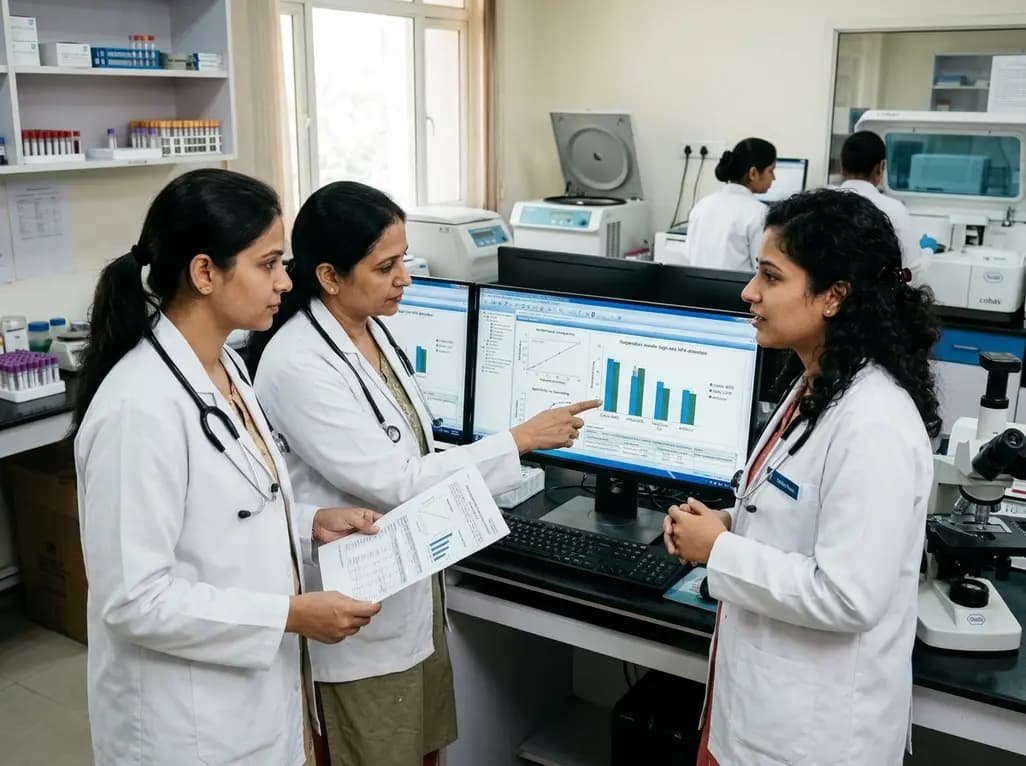
A comparative evaluation of INNO-LiPA, Cobas 4800, and Amplicor highlights significant assay-dependent variation in high-risk HPV detection, emphasizing the clinical distinction between analytical sensitivity and screening specificity.
Today

A Canadian nutrition study reveals that higher diet costs predict lower dietary energy density and higher fruit intake, but also increase sodium and processed meat consumption.
Today
Idiopathic spinal cord herniation is a rare pathology presenting with progressive thoracic myelopathy. Early MRI identification and meticulous microsurgical reduction with dual bolstered dural defect repair prevent irreversible neurological deterioration.
Today
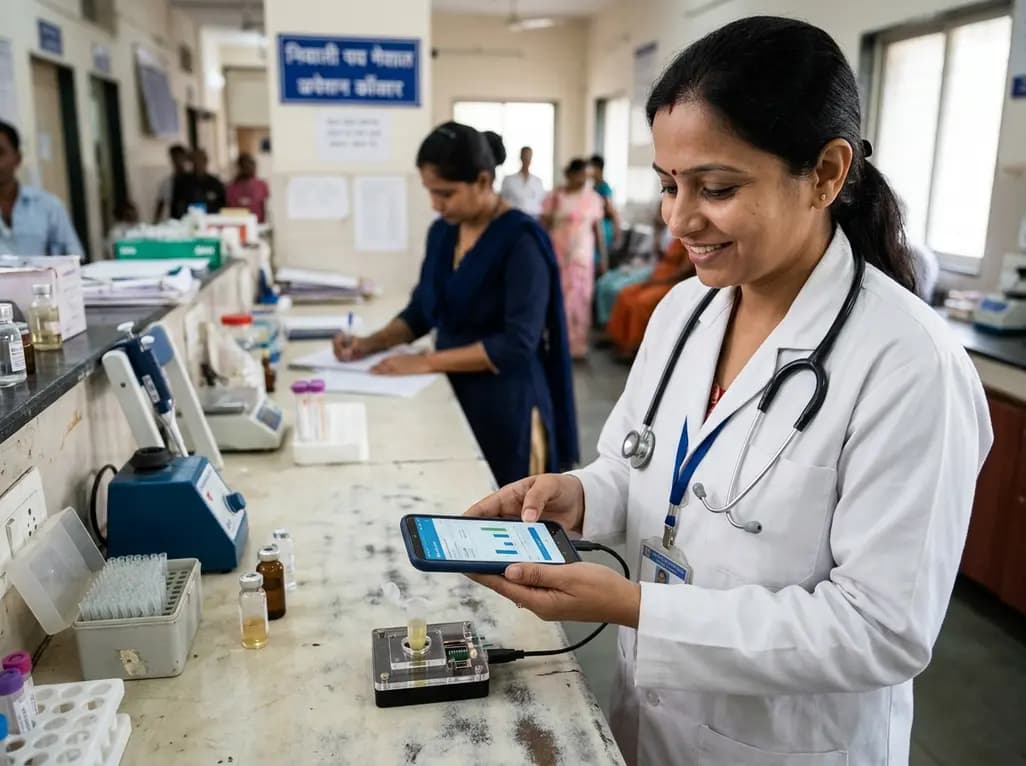
A novel smartphone-assisted biosensor utilizing molecularly imprinted polymers and catalytic nanozymes offers antibody-free, enzyme-free urinary microalbumin testing, enabling rapid, low-cost point-of-care screening for early chronic kidney disease.
Today
