.webp&w=384&q=75)

Loading, please wait...
Loading, please wait...

Human social interaction relies heavily on the capacity to perceive the physical and social world from another person's standpoint. Spatial perspective-taking represents this vital cognitive process, allowing individuals to mentally project themselves into another person's spatial coordinates. Historically, developmental psychologists evaluated this capacity primarily through visual paradigms, such as three-dimensional landscape tasks or avatar tracking models. However, perception operates across diverse sensory channels. Clinical researchers now increasingly recognize that tactile inputs also convey critical spatial information. Children with neurodevelopmental disorders, notably autism spectrum disorder (ASD) and developmental coordination disorder (DCD), exhibit documented atypicalities in visual viewpoint adoption. Because ASD and DCD frequently co-occur, identifying shared and divergent perceptual characteristics is essential for developmental science. While visual perspective-taking requires complex ocular tracking and mental rotation, tactile perspective-taking depends directly on embodied somatosensory representations. Consequently, exploring tactile modalities clarifies how children construct internal representations of their physical bodies in relation to external space. When clinicians understand how sensory inputs shape cognitive frames of reference, they can better assess subtle developmental deficits. Recent investigations specifically probe these dynamics to clarify whether viewpoint adoption deficits stem from universal multimodal impairments or sensory-specific dysfunctions.
To evaluate tactile processing mechanisms, researchers implemented an innovative graphesthesia paradigm. Graphesthesia traditionally tests somatosensory cortical integrity through the manual identification of numbers or letters traced on the skin. In this experimental framework, investigators inscribed ambiguous tactile letters—specifically lowercase \"b\", \"d\", \"p\", and \"q\"—onto each participant's abdomen. These specific characters are geometrically ambiguous because their meaning depends entirely on the spatial reference frame adopted by the perceiver. For example, a character traced as a \"b\" from an internal egocentric view appears as a \"d\" from an external observer's decentered viewpoint. The study enrolled 107 children aged between 6 and 17 years. The cohort included 74 typically developing control participants and 33 children diagnosed with neurodevelopmental conditions, comprising 24 children with ASD and 9 with DCD. The experiment comprised distinct sessions designed to test spontaneous interpretation alongside imposed spatial orientations. First, investigators recorded spontaneous perspective choices without external coaching. Subsequently, they explicitly directed participants to interpret the tactile letters from either an egocentric or a decentered perspective. Through this structured approach, the protocol clearly separated innate spatial preferences from the cognitive capacity to execute flexible perspective shifts.
During the initial spontaneous session, both groups exhibited a pronounced preference for egocentric spatial reference frames. Specifically, 82 percent of typically developing children and 77 percent of neurodivergent children interpreted the ambiguous stomach stimuli from an internal vantage point. Statistical analyses confirmed no significant difference between the two cohorts during spontaneous trials. Thus, both typically developing and neurodivergent children naturally default to body-centered interpretations when resolving somatosensory ambiguities. This finding confirms that children anchor tactile perception fundamentally to their own physical embodiment. Furthermore, participants predominantly referenced either head-centered or trunk-centered axes rather than spontaneously assuming the external examiner's view. This alignment reveals that spontaneous somatosensory decoding does not inherently falter in autism or developmental coordination disorder. Instead, baseline somatic awareness functions similarly across diagnostic groups under unconstrained conditions. Pediatric neurologists often observe that children interpret direct tactile sensations through immediate physical sensations rather than abstract projections. Consequently, these initial baseline results challenge assumptions that autism spectrum disorder causes total disruption across all perspective-taking domains. Rather, difficulties appear only when external demands force an explicit departure from this natural, highly ingrained egocentric anchor.
Marked group differences emerged when examiners introduced structured constraints in subsequent experimental sessions. During sessions where examiners imposed a specific perspective, task accuracy improved with age across both cohorts. This upward trajectory confirms that cognitive maturation continuously enhances spatial manipulation skills throughout adolescence. Nevertheless, the neurodevelopmental disorder group demonstrated significantly lower accuracy during the second session compared to neurotypical peers. In addition to lower accuracy, response latency patterns revealed critical processing differences between the cohorts. Reaction times remained largely comparable across groups during egocentric conditions. However, when examiners mandated an imposed decentered perspective, children with neurodevelopmental disorders exhibited significantly prolonged reaction times. To interpret the stimulus from an external viewpoint, the child must deliberately suppress their natural bodily anchor and mentally transpose themselves into the examiner's coordinates. This cognitive realignment creates a high processing burden for children with ASD and DCD. As a result, the delayed reaction times reflect the strenuous cognitive effort required to detach from internal somatic sensations. Therefore, neurodivergent children struggle not with the somatic perception itself, but with the mental flexibility needed to disengage from self-centered reference frames.
These findings illuminate the underlying neuropsychological mechanisms governing social and spatial cognition in neurodivergent populations. Successfully adopting an external viewpoint requires robust executive function, especially inhibitory control and cognitive flexibility. In children with ASD and DCD, immature inhibitory control likely hinders the suppression of immediate, potent tactile inputs from the abdomen. Because somatic signals generate intense internal feedback, overriding them requires substantial executive resources. Furthermore, multisensory integration deficits compound this challenge. Children must synthesize proprioceptive, tactile, and visual-spatial coordinates to construct an external mental model. When sensory integration is sluggish, mentally rotating oneself into an examiner's position demands excessive time and cognitive bandwidth. Clinicians should recognize that difficulties with empathy, theory of mind, and social communication may partly reflect these foundational sensory-motor bottlenecks. When a child struggles to perceive another person's physical orientation, inferring emotional and mental states becomes equally challenging. By identifying these somatosensory obstacles, developmental pediatricians and therapists can design more targeted interventions. Specifically, occupational and cognitive therapies can incorporate tactile-spatial rotation drills alongside visual exercises to build multimodal perspective flexibility.
Tactile graphesthesia evaluates perspective-taking by tracing ambiguous letters, such as \"b\" and \"d\", onto the skin. Because these shapes look different depending on whether the child reads them from an internal body-centered view or an external observer's view, the child's answers reveal their chosen spatial perspective.
Children with neurodevelopmental disorders face difficulties due to reduced inhibitory control and multisensory integration challenges. Suppressing immediate somatic sensations to adopt an external viewpoint requires intensive executive functioning. Consequently, children with ASD and DCD display significantly reduced accuracy and prolonged response latencies during decentered tasks.
Clinicians can integrate multimodal spatial training into pediatric occupational and behavioural therapy regimens. Combining body-awareness exercises with explicit perspective-taking drills helps children decouple from strict egocentric frames. Over time, structured somatosensory and visual rotation tasks strengthen cognitive flexibility and support broader social communication skills.
Disclaimer: This content is for informational and educational purposes only. It is not intended to be a substitute for professional medical advice, diagnosis, or treatment. Always seek the advice of your physician or another qualified healthcare provider with any questions you may have regarding a medical condition or treatment. Never disregard professional medical advice or delay in seeking it because of something you have read here. Refer to the latest local and national guidelines for clinical practice.
References

Read summarized clinical updates, watch expert medical content, and earn CME certifications right from your smartphone.
Open your smartphone camera to scan and install.





A landmark cross-sectional study investigates spatial perspective-taking through tactile graphesthesia in children with ASD and DCD, uncovering distinct cognitive challenges when adopting decentered viewpoints.
Today

A multicenter propensity-matched study evaluated DOAC plus single versus dual antiplatelet therapy after carotid artery stenting. Findings revealed comparable intracranial hemorrhage and ischemic stroke rates, supporting DOAC plus SAPT as a viable antithrombotic strategy in high-risk patients.
Today

Meghalaya recorded a historic 55% reduction in maternal deaths, dropping from 244 to 107 over five years. Through the MOTHER app, dedicated transit homes, and expanded infrastructure like the 150-bed Tura Maternity Hospital with its first public NICU, the state demonstrates an effective public health model.
Today
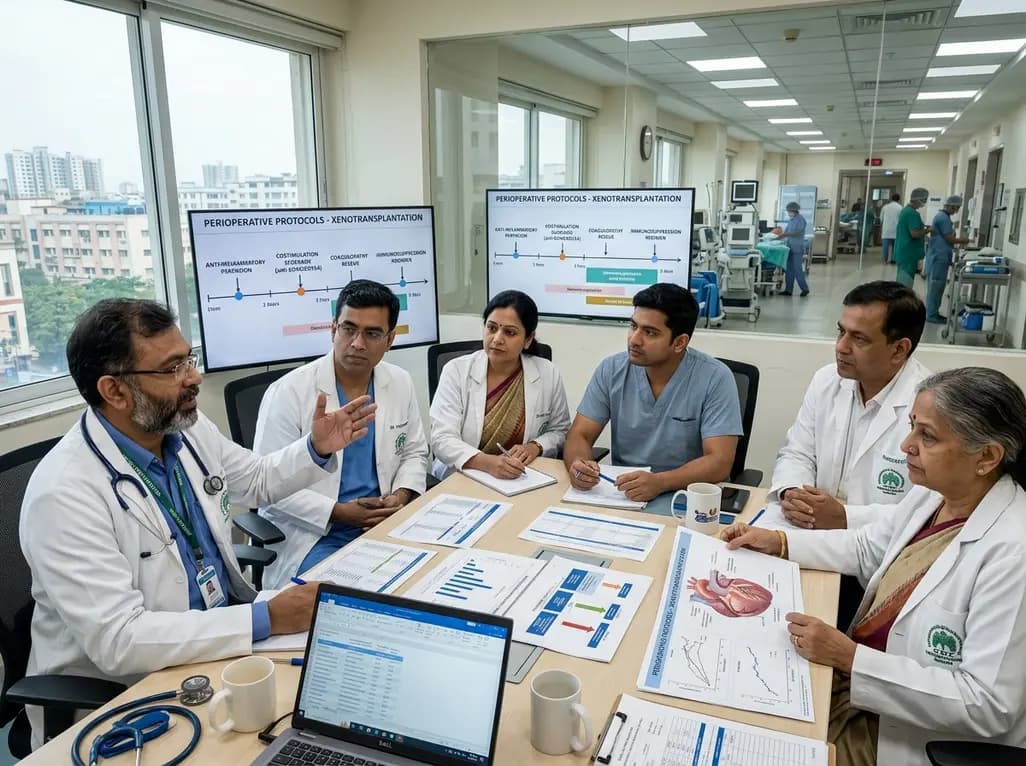
Explore modern perioperative management protocols for clinical xenotransplantation. Learn how costimulation blockade, anti-inflammatory perfusion, and coagulopathy rescue overcome interspecies hurdles.
Yesterday

A cross-sectional study reveals that sarcopenic obesity independently increases functional impairment and severe disc degeneration in patients with degenerative lumbar spinal stenosis, highlighting the need for body composition assessment.
Today
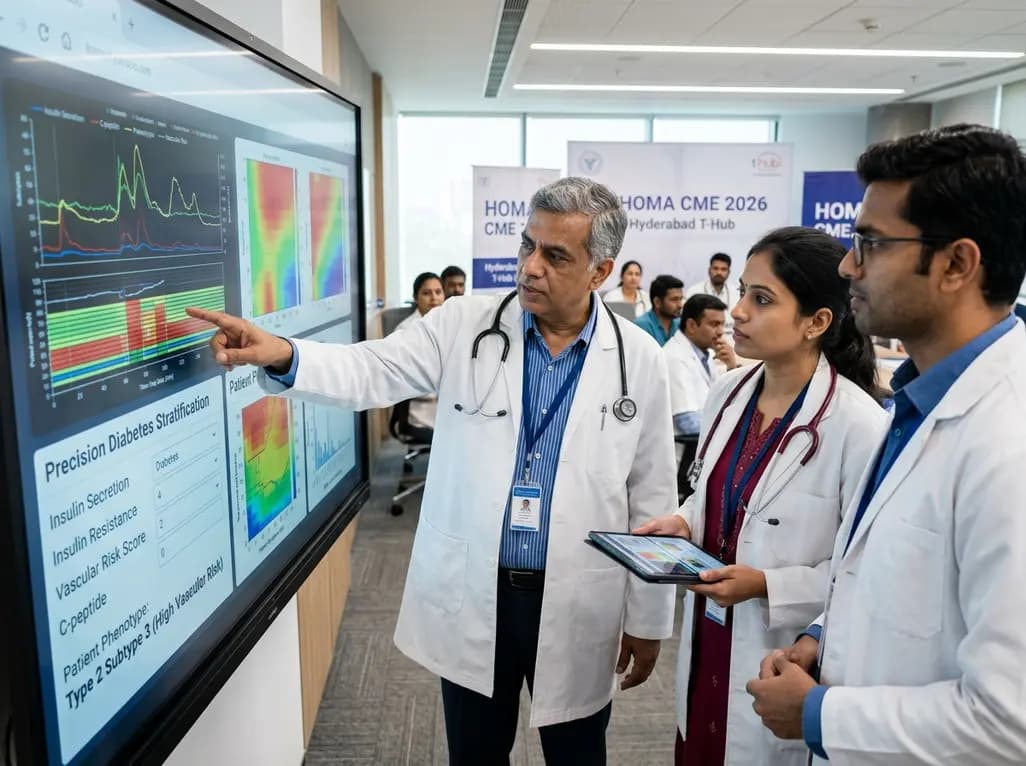
At Homa CME 2026 at Hyderabad's T-Hub, healthcare leaders emphasized moving beyond routine metrics through digital calculators and precision stratification. Discover why characterizing individual insulin secretion, resistance patterns, and vascular risks transforms chronic metabolic care in India.
Yesterday
