.webp&w=384&q=75)

Loading, please wait...
Loading, please wait...

Modern surgical practice increasingly relies on real-world clinical data to assess outcomes, refine techniques, and improve safety. Consequently, nationwide quality registries provide unmatched clinical insights that traditional trials often miss. Worldwide, spine surgery registries serve as pivotal instruments for continuous quality improvement and benchmarking. The Swedish Spine Register, known internationally as Swespine, stands as one of the oldest prospective registries in modern healthcare. A landmark bibliometric study published in the European Spine Journal recently characterized decades of scientific literature derived from Swespine. This analysis provides spine specialists in India and globally with valuable perspectives on surgical trends and registry-driven evidence.
Historically, orthopedic and neurosurgical procedures depended heavily on smaller single-center cohort studies. However, the establishment of nationwide data collection transformed spinal research by enabling robust longitudinal tracking. The bibliometric study evaluated 157 published articles extracted from PubMed and EMBASE through March 2026. Interestingly, scientific production demonstrated significant expansion over time, reaching peak activity in 2022 and 2025. This progressive upward trend highlights the growing reliance on registry data to address clinical dilemmas. Most studies utilized retrospective observational designs, encompassing 134 publications. In contrast, researchers conducted 12 prospective randomized investigations and 5 prospective non-randomized cohort studies. Therefore, real-world data collection predominantly fuels retrospective epidemiological evaluations while continuously complementing prospective clinical trials.
Understanding citation metrics helps clinicians evaluate the real-world visibility and influence of registry research. The bibliometric evaluation demonstrated a median citation count of 12 per article, with an interquartile range between 4 and 39. Furthermore, citation frequencies correlated strongly with journal impact factors, displaying correlation coefficients between 0.85 and 0.91. Most publications appeared in premier spine-focused journals, including the European Spine Journal, Spine, and The Spine Journal. Consequently, high-impact journals prioritize registry reports because these data sets reflect routine surgical reality across diverse healthcare settings. For surgeons evaluating new technologies, highly cited registry publications offer objective safety assessments beyond company-sponsored trials. Thus, bibliometric tracking proves that registry data decisively steer international scientific discourse.
Clinical focus areas within the Swespine literature reflect the most prevalent pathologies encountered in day-to-day practice. Specifically, degenerative lumbar spine conditions, including lumbar spinal stenosis and lumbar disc herniation, constituted the vast majority of investigated topics. Researchers actively scrutinized surgical decompression versus fusion, patient-reported outcome measures, and complication profiles. Additionally, cervical spine degenerative disorders and adult spinal deformity represented secondary areas of ongoing research interest. By collecting standardized patient-reported outcomes before and after surgery, the register consistently reveals tangible improvements in quality of life. Furthermore, investigators frequently assessed the influence of baseline comorbidities, smoking history, and preoperative symptom duration. These detailed evaluations provide actionable prognostic indicators that clinicians can directly integrate into patient counseling.
Although Swespine reflects Swedish demographics, its methodological framework offers crucial lessons for developing healthcare environments like India. Spine surgeons in India manage an immense volume of complex degenerative, traumatic, and infectious conditions. However, multi-center documentation remains fragmented across private and public sectors. Adopting standardized data gathering, modeled after mature European registers, can bolster national audit programs. Professional societies, such as the Association of Spine Surgeons of India, are actively expanding nationwide data registries. Registry-derived insights help Indian surgeons benchmark surgical complication rates, reoperation hazards, and implant longevity against international standards. Moreover, analyzing prospective patient-reported outcomes ensures that therapeutic decisions focus primarily on long-term functional recovery rather than solely radiographic correction.
Clinicians must routinely translate broad registry findings into personalized care pathways for individual surgical candidates. Registry evidence excels at identifying rare adverse events and long-term implant performance over decades of follow-up. For instance, Swespine publications clearly define which patient subsets benefit most from fusion addition during decompression for degenerative spondylolisthesis. Similarly, registry trends show that persistent smoking and prolonged symptom duration correlate with inferior functional scores postoperatively. Surgeons can effectively utilize this evidence during preoperative shared decision-making to optimize modifiable risk factors. Ultimately, embedding structured registry documentation into surgical departments elevates institutional transparency, refines patient selection, and drives higher standards of patient-centered spinal care.
Registries capture diverse patient populations treated in standard clinical environments, reflecting true everyday practice rather than ideal trial conditions. Consequently, surgeons analyze registry findings to benchmark complication rates, identify risk factors for reoperation, and assess realistic patient-reported outcomes. This comprehensive evidence guides clinicians when discussing anticipated recovery, conservative versus surgical choices, and realistic functional expectations with candidates facing spinal interventions.
National registers continuously collect prospective clinical and outcome information from thousands of patients during standard care. Researchers subsequently query these extensive databases to evaluate outcomes across specific cohorts, making retrospective analysis highly cost-effective, rapid, and practical. Although prospective randomized studies provide higher internal validity, retrospective registry studies offer exceptional sample sizes to detect rare complications and evaluate decades of surgical outcomes.
Establishing comprehensive registries in large nations requires substantial infrastructure, standardized digital platforms, and consistent institutional compliance. Furthermore, high patient volumes, diverse socioeconomic factors, and patient migration between healthcare centers make long-term postoperative follow-up demanding. However, collaborative initiatives through national surgical societies and mobile digital health platforms increasingly simplify data collection, enabling accurate clinical auditing and surgical benchmarking across diverse regional hospitals.
Disclaimer: This content is for informational and educational purposes only... Refer to the latest local and national guidelines for clinical practice.
References
1. de Wilde D et al. Swespine in the literature: a bibliometric analysis of trends and characteristics of publications. Eur Spine J. 2026 Sep 22. doi: 10.1007/s00586-026-10316-5. PMID: 42771026.
2. Fritzell P, Hägg O, Jonsson B, Strömqvist B. Swespine: the Swedish spine register. Eur Spine J. 2014;23(Suppl 6):760-768.
3. Glassman SD, Carreon LY. Role of national spine registries in surgical decision-making and quality improvement. Spine. 2019;44(2):145-151.

Read summarized clinical updates, watch expert medical content, and earn CME certifications right from your smartphone.
Open your smartphone camera to scan and install.





A comprehensive bibliometric analysis evaluates 157 studies from the Swedish Spine Register (Swespine), highlighting evolving research trends, citation metrics, and the indispensable role of real-world registries in advancing spinal surgery outcomes and evidence-based practice.
Today
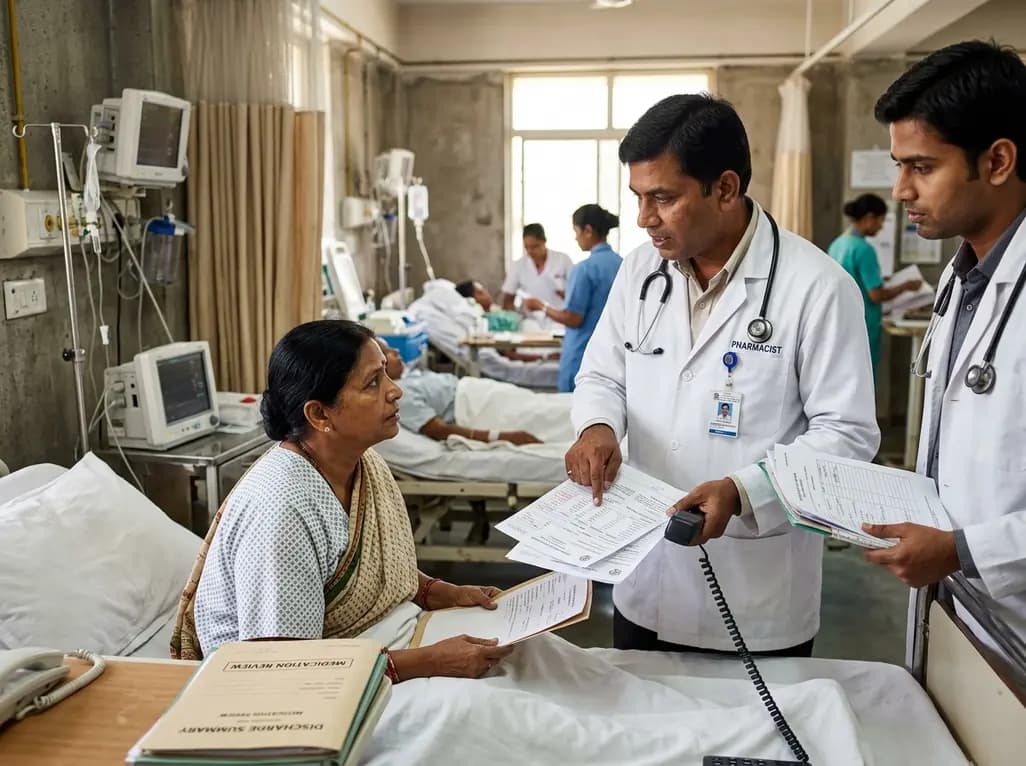
A retrospective cohort study demonstrates that comprehensive pharmacy transitions of care—including admission medication history, discharge review, and 72-hour telephone follow-up—significantly reduced 30-day readmission rates in acute care patients, highlighting the value of pharmacist-led clinical interventions.
Today
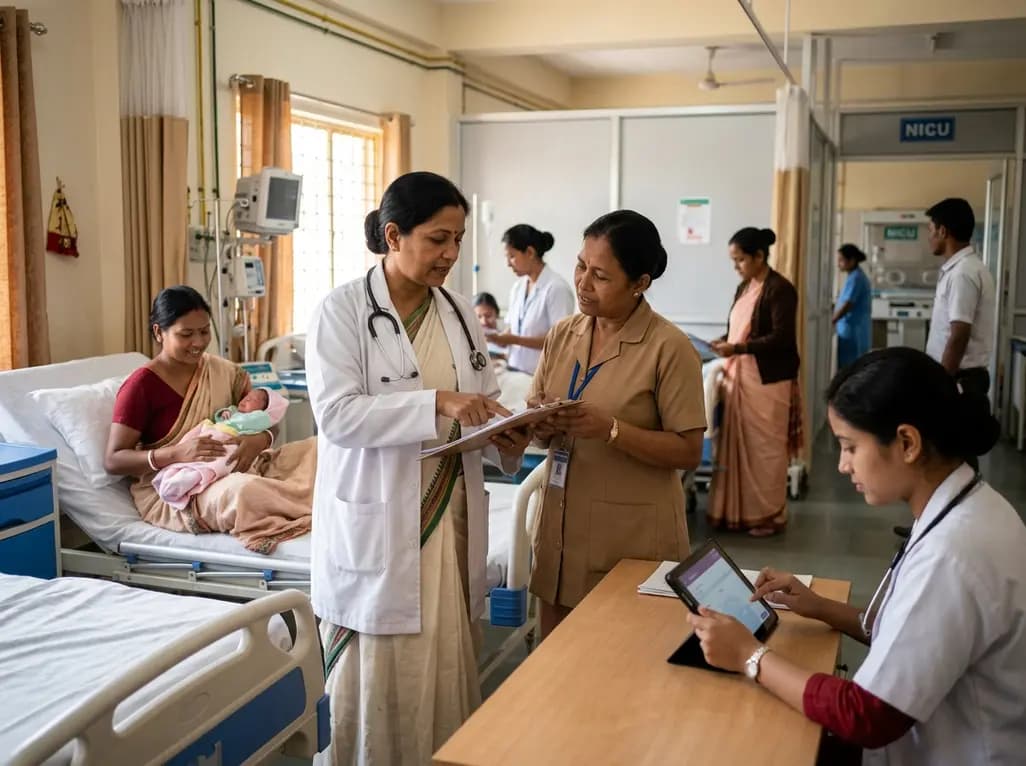
Meghalaya recorded a historic 55% reduction in maternal deaths, dropping from 244 to 107 over five years. Through the MOTHER app, dedicated transit homes, and expanded infrastructure like the 150-bed Tura Maternity Hospital with its first public NICU, the state demonstrates an effective public health model.
Today
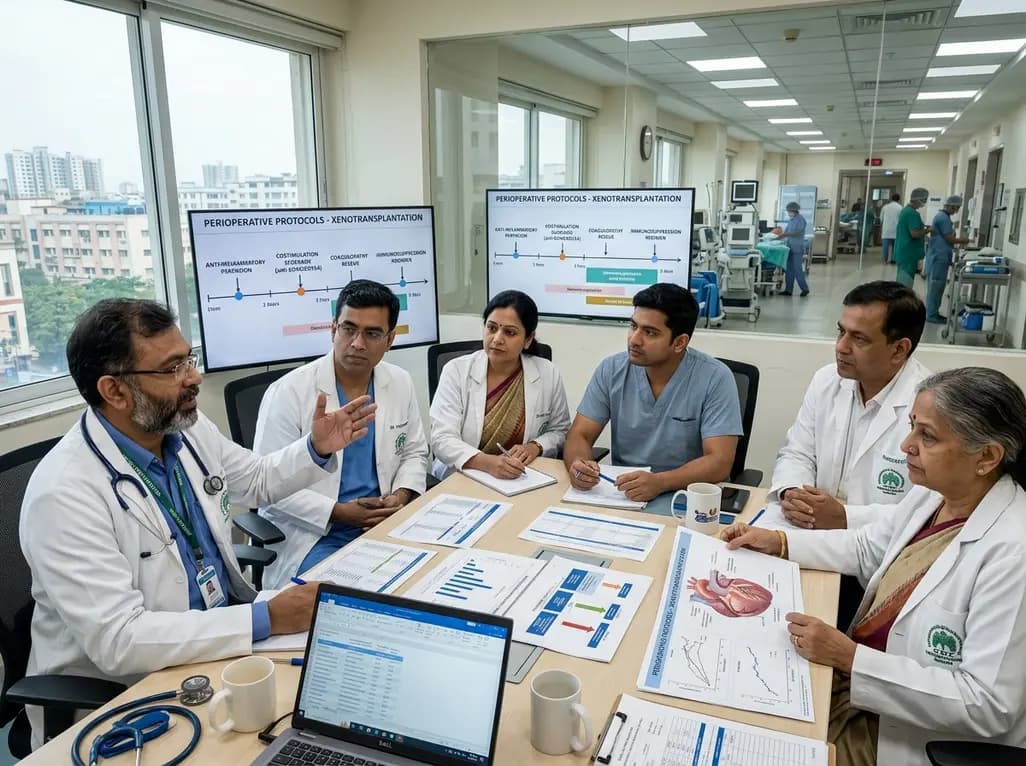
Explore modern perioperative management protocols for clinical xenotransplantation. Learn how costimulation blockade, anti-inflammatory perfusion, and coagulopathy rescue overcome interspecies hurdles.
Today
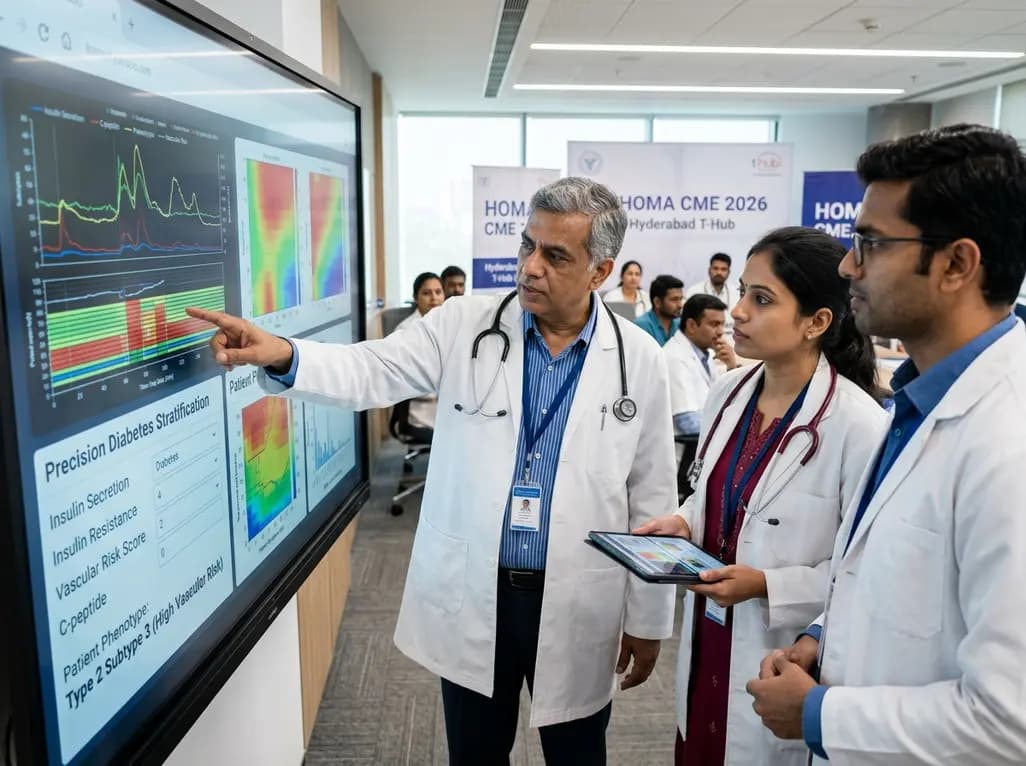
At Homa CME 2026 at Hyderabad's T-Hub, healthcare leaders emphasized moving beyond routine metrics through digital calculators and precision stratification. Discover why characterizing individual insulin secretion, resistance patterns, and vascular risks transforms chronic metabolic care in India.
Today
