.webp&w=384&q=75)

Loading, please wait...
Loading, please wait...
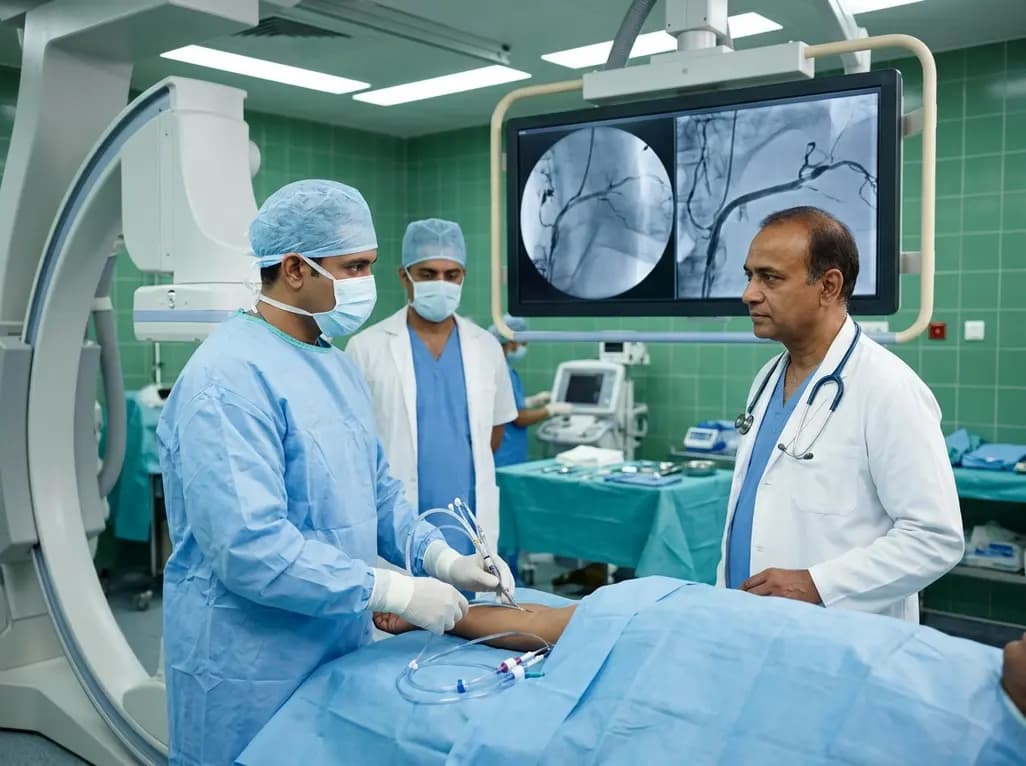
Chronic kidney disease remains a significant health burden across India, necessitating efficient renal replacement therapy. For the majority of these patients, hemodialysis provides a life-sustaining treatment modality. However, the success of this therapy relies heavily on the long-term patency of vascular access. Hemodialysis access thrombosis represents the primary cause of access failure, frequently leading to treatment interruptions and increased healthcare costs. Consequently, clinicians are constantly seeking advanced solutions for hemodialysis access thrombosis management to ensure patient safety and procedure longevity. Historically, maintaining these access sites involved complex surgical revisions or pharmacological thrombolysis. Modern interventional nephrology now favors minimally invasive techniques that provide rapid restoration of blood flow. The introduction of the SWAM (Separator With Aspirator for Mechanical Thrombectomy) device marks a notable advancement in this field. This technique specifically addresses the limitations of standard aspiration catheters by integrating a mechanical separator. Therefore, it offers a more robust approach to clearing both acute and organized clots. By improving thrombus clearance efficiency, this innovation helps reduce the time patients spend without a functioning dialysis lifeline. Furthermore, the procedure minimizes the risks associated with major open surgeries. As clinicians adopt these new tools, the overall management of vascular access complications continues to evolve toward safer and more predictable outcomes.
Understanding why arteriovenous fistulas and grafts fail is crucial for effective intervention. Thrombus formation usually occurs due to underlying anatomical abnormalities, such as venous outflow stenosis. This narrowing increases turbulence and reduces blood flow velocity, which naturally predisposes the blood to clot. Furthermore, frequent needle cannulation can damage the vessel wall and trigger localized inflammatory responses. In India, where many patients present late with complex vascular anatomy, managing these complications requires precise tools. Specifically, the development of a thrombus can be sudden and catastrophic, leading to immediate access occlusion. If the clinician does not address the clot quickly, the access site may become permanently unusable. Traditional methods like balloon angioplasty often fail to remove the entire clot burden. Therefore, mechanical thrombectomy has emerged as a superior alternative for debulking the vessel. It directly removes the obstructive material rather than just compressing it against the vessel wall. Additionally, the type of thrombus—whether acute, subacute, or chronic—dictates the difficulty of the clearance procedure. Acute clots are typically soft and easily aspirated, whereas chronic clots are more fibrotic and adherent. Consequently, mechanical systems must be versatile enough to handle varying clot textures. Modern devices now prioritize wall-to-wall clearance to prevent early re-thrombosis. By targeting the root cause of the occlusion, physicians can extend the functional life of the access significantly.
The SWAM technique represents a sophisticated refinement of traditional endovascular aspiration. This procedure utilizes a large-bore catheter designed for high-efficiency, negative-pressure aspiration. However, the defining feature is the concurrent use of an embolus separator. This separator works within the catheter to disrupt the intraluminal thrombus actively. Specifically, it prevents the catheter from clogging during the aspiration of large or dense clots. Therefore, the clinician can maintain continuous suction without needing to remove the device for cleaning. Furthermore, the separator assists in fragmenting organized thrombus that would otherwise resist simple suction. During the procedure, the interventionalist advances the catheter into the thrombosed segment under fluoroscopic guidance. Once positioned, the combination of mechanical disruption and negative pressure clears the lumen effectively. Additionally, this technique allows for a more controlled removal of the clot, reducing the risk of distal embolization. Since the separator maintains catheter patency, the overall procedural flow remains uninterrupted. Consequently, this leads to a higher technical success rate in both arteriovenous fistulas and grafts. The ability to manage central venous catheter thrombosis further expands the utility of this device. Ultimately, the SWAM system provides a comprehensive solution for clearing complex blockages in a single session. This mechanical synergy ensures that the vascular lumen is restored to its optimal diameter quickly.
Recent clinical data highlights the impressive efficiency of the SWAM technique in real-world settings. One of the most significant advantages is the marked reduction in procedural time. Specifically, the ability to clear thrombus continuously allows surgeons to finish cases much faster than traditional methods. Furthermore, research indicates that this approach achieves favorable therapeutic efficacy for acute thrombus. Even in cases involving chronic or partially organized clots, the SWAM device demonstrates a high degree of success. Therefore, it offers a reliable alternative when standard pharmacomechanical techniques prove insufficient. Results from various clinical cases show that the restoration of access function is both rapid and durable. Additionally, the minimally invasive nature of the procedure leads to fewer local complications compared to open surgical thrombectomy. Patients typically experience less trauma at the access site and can often undergo dialysis immediately after the intervention. Consequently, this efficiency translates to better resource utilization within busy Indian hospitals. Furthermore, the reduction in blood loss during the procedure is a critical benefit for hemodialysis patients who may already be anemic. By shortening the time required for thrombus clearance, the SWAM technique minimizes the patient's exposure to radiation and contrast media. Thus, it represents a significant step forward in optimizing the safety profile of vascular interventions. Clinical success rates consistently remain high across different types of vascular access configurations.
The landscape of hemodialysis access thrombosis management is shifting toward device-based solutions that prioritize speed and lumen restoration. The SWAM device perfectly exemplifies this trend by addressing the physical challenges of clot removal. Furthermore, the integration of this technology into standard practice could revolutionize how interventionalists approach thrombosed fistulas. In India, the high volume of dialysis patients makes the need for efficient declotting procedures even more urgent. Therefore, adopting mechanical thrombectomy systems like SWAM can help reduce the backlog of patients waiting for access salvage. Moreover, the ability to treat chronic thrombus to a certain extent provides hope for older access sites that were previously considered unsalvageable. Additionally, these advancements reduce the reliance on thrombolytic drugs, which can carry a risk of systemic bleeding. Consequently, the procedure becomes safer for patients with contraindications to anticoagulation or fibrinolysis. Looking forward, the continued refinement of these mechanical tools will likely lead to even higher patency rates. Furthermore, training programs for Indian nephrologists and radiologists are increasingly focusing on these advanced endovascular techniques. This shift ensures that more practitioners can offer state-of-the-art care to their patients. By focusing on mechanical efficiency and safety, the medical community can better manage the "lifeline" of the dialysis patient. Ultimately, the SWAM technique provides a robust and versatile alternative for maintaining vascular access integrity.
The SWAM device introduces a mechanical embolus separator that works inside a large-bore aspiration catheter. Unlike traditional catheters that rely solely on suction, this system actively disrupts the thrombus. This mechanism prevents the catheter from clogging during the removal of large or organized clots. Consequently, it maintains continuous negative pressure and patency throughout the procedure. Therefore, it is more efficient than standard catheters at clearing complex and dense clot burdens.
Research indicates that the SWAM technique achieves favorable results for acute thrombus and is effective to a certain extent for chronic thrombus. The mechanical separator helps fragment older, more organized clots that simple aspiration might miss. Furthermore, it allows for better debulking of the vessel wall. While acute clots are easier to remove, the SWAM device provides a critical therapeutic alternative for managing older clots in established vascular access sites.
The primary benefits include shorter procedural times and a minimally invasive approach that avoids open surgery. Patients experience less trauma and can often return to their dialysis schedule immediately. Furthermore, the technique reduces the need for thrombolytic medications, which minimizes the risk of bleeding complications. By quickly restoring blood flow, the SWAM device helps preserve the patient's vascular access and prevents the need for temporary central venous catheter placement.
Disclaimer: This content is for informational and educational purposes only and does not constitute medical advice. It is not intended to be a substitute for professional medical advice, diagnosis, or treatment. Always seek the advice of your physician or other qualified health provider with any questions you may have regarding a medical condition. Refer to the latest local and national guidelines for clinical practice.
References
Li L et al. Utility of the SWAM (Separator With Aspirator for Mechanical Thrombectomy) Device in Managing Hemodialysis Access Thrombosis. Hemodial Int. 2026 Jul 05. doi: 10.1111/hdi.70111. PMID: 42402675.
AVATAR Foundation. Interventional Nephrology Guidelines for Dialysis Access and Kidney Biopsy. Indian J Nephrol. 2025;35:S1-S74. doi: 10.25259/IJN_51_2025.
National Kidney Foundation. KDOQI Clinical Practice Guideline for Vascular Access: 2019 Update. Am J Kidney Dis. 2020;75(4 Suppl 2):S1-S164. doi: 10.1053/j.ajkd.2019.12.001.

Read summarized clinical updates, watch expert medical content, and earn CME certifications right from your smartphone.
Open your smartphone camera to scan and install.





Hemodialysis access thrombosis is a major cause of failure. The novel SWAM (Separator With Aspirator for Mechanical Thrombectomy) device offers a minimally invasive, effective solution for restoring access function by combining negative-pressure aspiration with intraluminal thrombus disruption.
3 months ago

Discover the crucial role of glymphatic dysfunction in stroke, where perivascular clearance failure and neuroinflammation exacerbate cerebral edema and post-stroke brain injury.
Today

A prenatal case highlights severe glutaric acidemia type II presenting as bilateral hyperechoic cystic kidneys at 18 weeks. Whole-exome sequencing revealed a novel homozygous ETFDH frameshift variant, demonstrating the power of rapid genetic testing in fetal renal anomalies.
Today

Review how tailored exercise programs benefit frail older patients with heart failure. Explore pathophysiological mechanisms, individualized training prescriptions, and strategies to overcome adherence barriers in clinical practice.
Yesterday

This comparative study evaluates posterior labral tears with and without glenohumeral instability, highlighting distinct demographic patterns, MRI underestimation in stable shoulders, and successful arthroscopic repair outcomes.
Yesterday

A clinical study demonstrates that early intervention with tocilizumab, either as monotherapy or bridged with corticosteroids, achieves significant proptosis reduction and resolves active inflammation in treatment-naive thyroid eye disease.
Yesterday
